
“Henkel’s best in class simulation solutions empower our customers to rapidly and effectively optimize their EV battery designs to enhance performance, safety and circularity,” said Tobias Knecht, Global Market Strategy Head for E-Mobility at Henkel. “Advanced modeling and simulation accelerate innovation, allowing for earlier material selection, faster battery development, less development cycles to shorten the overall time-to-market.”
Feb 26, 2025 Düsseldorf / Germany
Charging ahead: Henkel launches new modeling and simulation capabilities for e-mobility
In the race to electrify mobility, the ability to rapidly prototype and test new battery designs underpins the success of automotive OEMs and battery manufacturers. As a leading partner to the industry, Henkel is introducing new capabilities in advanced modelling and simulation. Combined with its capabilities in material application, testing and validation, Henkel is closing the loop between digital and real-world design and testing to accelerate innovation cycles and time-to-market.
By creating digital twins of battery designs and of Henkel’s advanced materials, Henkel’s battery experts can collaborate with engineers at OEMs and battery manufacturers at the earliest stages of the design and prototype phase. This allows for numerous scenarios to be simulated to help the customer optimize the design, performance, and circularity of the battery with the help of advanced materials (e.g. adhesives, thermal interface materials, and battery safety materials).
Henkel now offers four main types of simulation including structural simulation, thermal management simulation, thermal event simulation, and material application simulation. “This comprehensive breath of new capabilities is saving our customers time, cost, and resources by enabling them to run digital simulations before physical lab trials,” explains Keon Lee, Senior Manager Product Development for Battery Solutions at Henkel. “For example, structural simulation enables a battery’s structure and adhesives to be optimized for both lower weight and durability. With thermal management simulation, we can define optimum parameters of thermal interface designs of a battery system, which then guarantees reliable performance under circumstances of fast-charging, long excessive load, extreme weather, etc. Thanks to the precision of our digital models, our customers can better anticipate real life challenges and innovate with confidence.”
Thermal management simulation
Modeling the performance of thermal interface materials is crucial for enhancing battery safety, performance, and lifespan by maintaining optimal temperature ranges. Effective heat dissipation during demanding conditions like fast charging and extreme climates – improves cooling and heating efficiency. Advanced thermal management insights help minimize battery aging and reduce the risk of overheating.
Thermal event simulation
Prediction of heat flow through different mechanisms and pathways help design a safer battery system with optimized utilization of safety materials. The heat transfer from the cell under thermal runaway to the other can be delayed or stopped to prevent following damage. The heat to the passenger space can be isolated. Hot gas is guided out to minimize the impact on components.
Structural simulation
The modern trend of battery pack design is functional integration of components, leading to higher energy density. Integration by identification and deletion of unnecessary parts are crucial. Structural simulation evaluates the potential risk of a new design and provides joining strategies with structural adhesives and thermally conductive adhesives to make the battery system robust and reliable under various loading scenarios such as crash, crush and vibration.
Material application simulation
EV production lines rely on precise material application to ensure efficient assembly and long-term battery performance. One key challenge is applying precise forces during material compression to prevent damage to sensitive battery components. By using material simulation, manufacturers can predict the behavior of adhesives and sealants under various conditions, optimizing application parameters such as dispensing pattern, and minimizing risks like uneven material distribution, void formation, excessive squeeze-out, and component stress, all of which can compromise battery performance, durability, and safety.
Bringing together digital simulation and real-life material application, testing, and validation
With the new modeling and simulation solutions, Henkel now offers a unique end-to-end battery engineering solution for OEMs and battery manufacturers, with everything from digital simulation, material application, and testing and validation, all available in-house from Henkel. The new digital solutions build on the pioneering in-house testing and validation capabilities provided at its recently launched Battery Test Center in Duesseldorf, Germany. Two new Battery Engineering Centers are in plans to open in Shanghai, China and Madison Heights, USA.
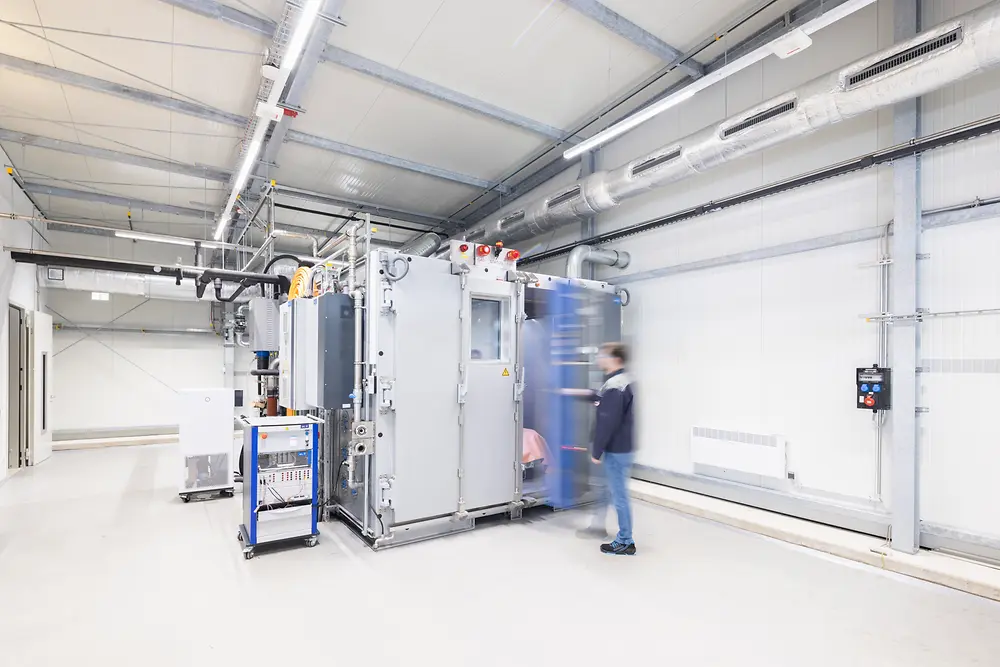

Modeling the performance of thermal interface materials is crucial for enhancing battery safety, performance, and lifespan by maintaining optimal temperature ranges.
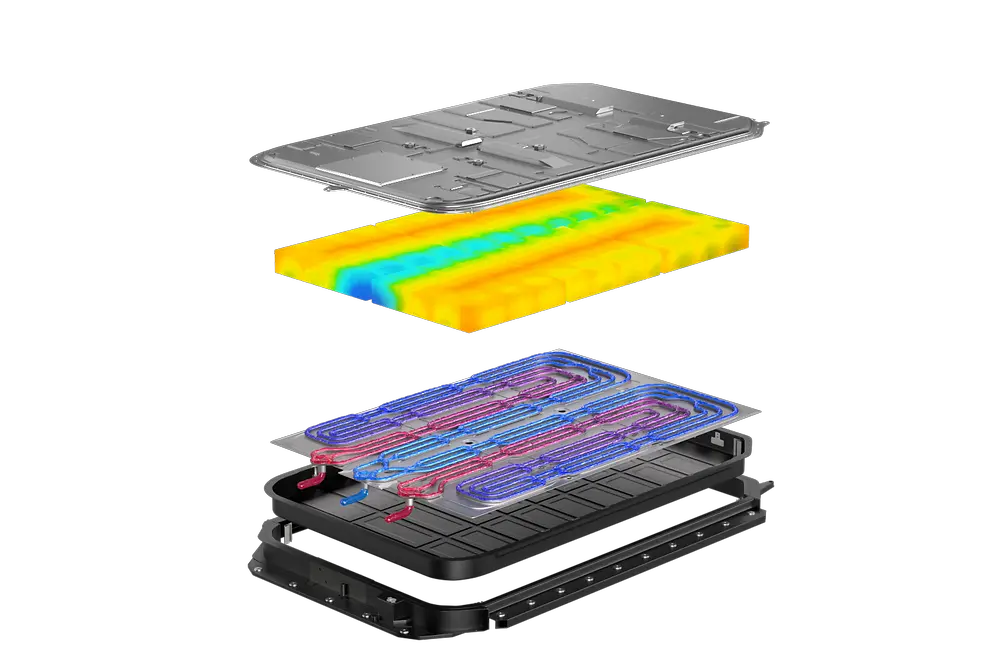
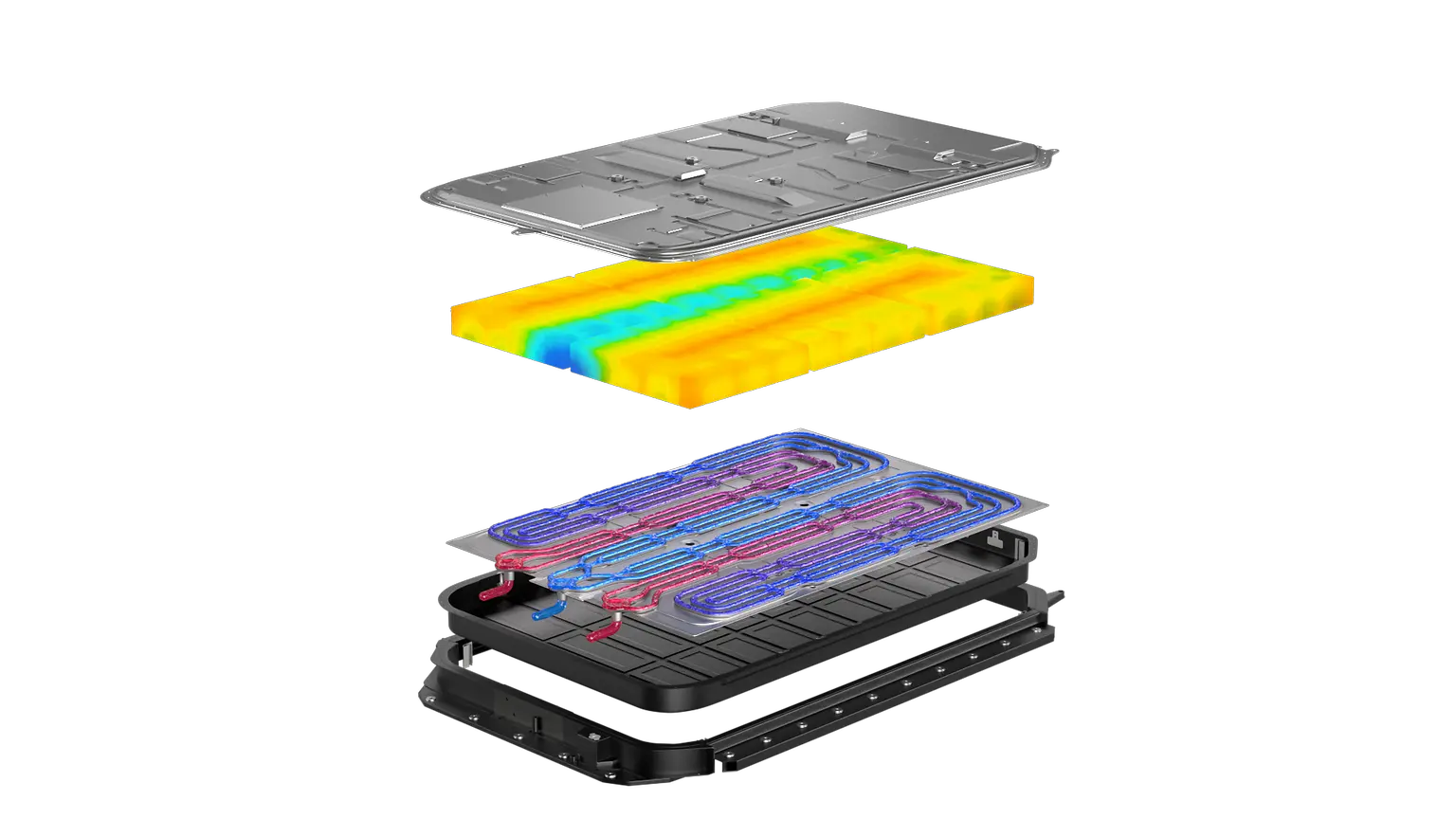
Prediction of heat flow through different mechanisms and pathways help design a safer battery system with optimized utilization of safety materials.
1 of 2
