
In Henkel's Packaging Recyclab in Düsseldorf and Shanghai, the focus is on a question that is often decided incidentally in everyday life: What happens to paper packaging once it has fulfilled its purpose? Experts at Henkel examine how paper and paper-based packaging, coatings, and adhesives behave during industrial recycling. They cut up packaging, expose it to water, filter, and evaluate. They trace the journey from waste back to raw material.
Story
Designed to be recycled – What we learn about packaging in Henkel's Recyclab
In this story, you will learn:
- How the experts‘ professional recycling lens carries into everyday moments
- What the work in the Recyclab looks like in practice
- Why not all paper packaging is recyclable
- What the PPWR will change for packaging in Europe
- How the Recyclab in Shanghai supports global customers
- How digital tools streamline data collection in the lab
- Why the Recyclab’s work helps shape the future of packaging
What do food-stained pizza boxes, wrapping paper, and receipts have in common? Yes, they are all somehow made of paper. But no, none of these materials should categorically end up in waste paper. This is due to contamination and oily residues – as seen on pizza boxes – or plastic films that make packaging resistant to moisture, grease, and heat. What makes packaging practical in everyday life can become a problem in the recycling process. At Henkel's Packaging Recyclab, this is precisely what is being investigated: How paper packaging behaves in industrial recycling. What remains – and what doesn’t.
A habit of the profession
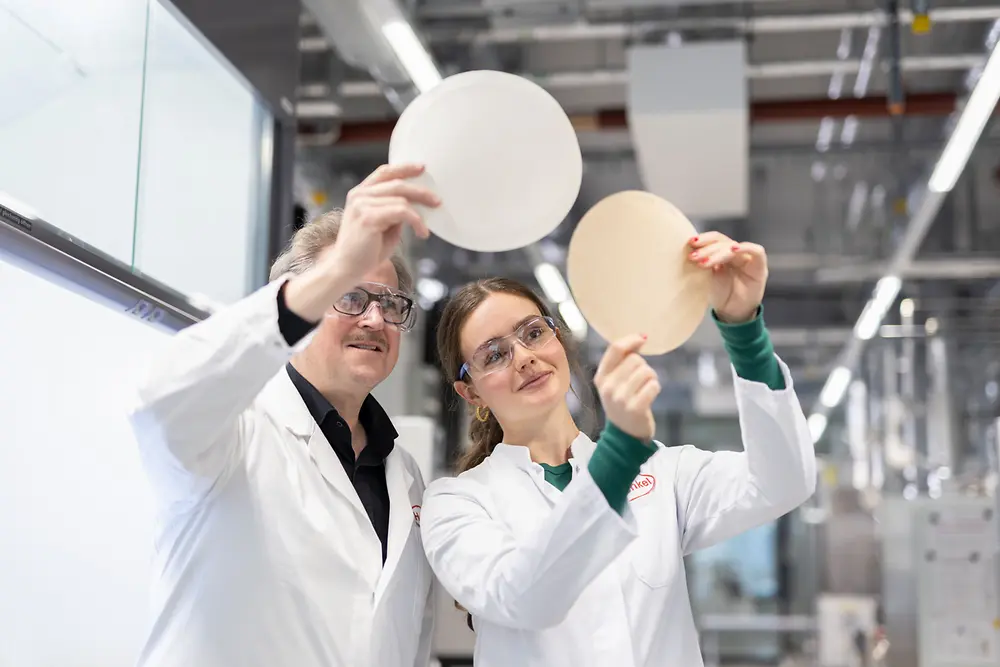
Early in the morning, Robin Leif Krug stands in the lab, powers up the systems, and looks at what is on the table. New samples. Often coated papers meant for specific uses, blank and unprinted. He cuts them into squares of three-by-three centimeters. Robin has been with Henkel for 17 years; a chemical laboratory technician who has worked in polymer chemistry, cosmetics, and application technology. Today, he tests packaging for recyclability. In the process, he has developed a perspective that he can no longer switch off. "It’s a habit of the profession, you can’t get out of it anymore," he says. Anyone who knows what really happens in a recycling process even looks at the cereal box in the supermarket differently. “At the Recyclab, we break packaging down to its core – fibers, coatings, polymer films, adhesives – to understand what really remains in the recycling process,” he illustrates.

Our tests reveal how paper packaging really behaves in recycling. Only then can we improve it.
Robin Leif Krug, Chemical Laboratory Technician in the Recyclab at Henkel in Düsseldorf
Building a representative sample
The snippets Robin cuts are meant to represent the packaging as a whole: all components, all layers, in realistic proportions. A detergent package can have up to 30 different parts. "In the end, we have to representatively reduce 200 grams down to our 50 grams," says Robin. That alone is quite a task. Then comes water, just like in a real paper mill. The fibers separate from each other, creating pulp, a kind of paper slurry. What follows are several screening and filtration steps. Coarse impurities get caught. This is repeated several times, filtered finer and finer. Finally, a test sheet of paper is pressed from the prepared fiber pulp.
What counts here: how much fiber remains at all, and how clean the new paper is. Particularly critical are sticky particles – stickies, as they are called in technical jargon. These are polymers that melt at 130 degrees and leave sticky spots in the paper. In a real paper mill, these could cause the paper web to tear. Production comes to a standstill. “Our tests reveal how paper packaging really behaves in recycling. Only then can we improve it,” explains Robin.
Brown paper, big surprise
Some packaging is surprising. A plain brown paper, barely printed – and yet in the test, nothing dissolves. "You throw it into the pulper, and suddenly nothing defibers," says Robin. In this case, the paper had been so heavily treated that it simply repelled water – a reminder of how important material design is for true recyclability. Sometimes packaging may only look like paper on the outside. But plastic components can be so deeply integrated into the fiber that the material no longer behaves like paper in recycling. "In such cases, the packaging is not recyclable through the paper stream. And not recyclable means, that it is no longer allowed on the market from 2030 on due to the packaging and packaging waste regulation," explains Dr. Nadine Höglsperger, Head of the Recyclab in Düsseldorf. Findings like these help the Recyclab team work with partners and customers to improve packaging design – ensuring that what looks like paper also behaves like paper in the recycling process.
A GLIMPSE INTO THE RECYCLAB IN DÜSSELDORF
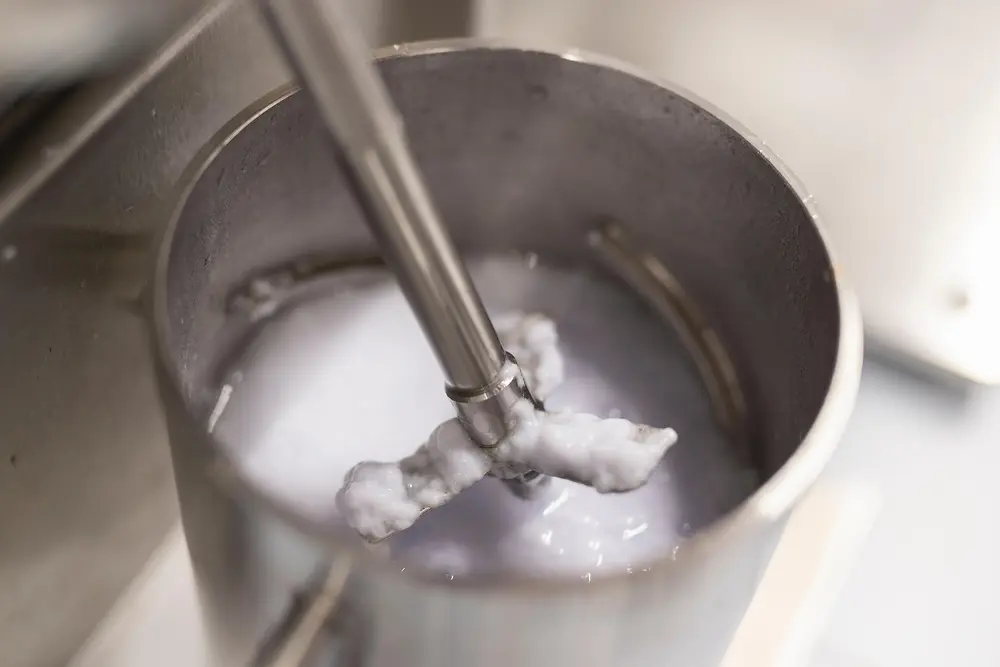
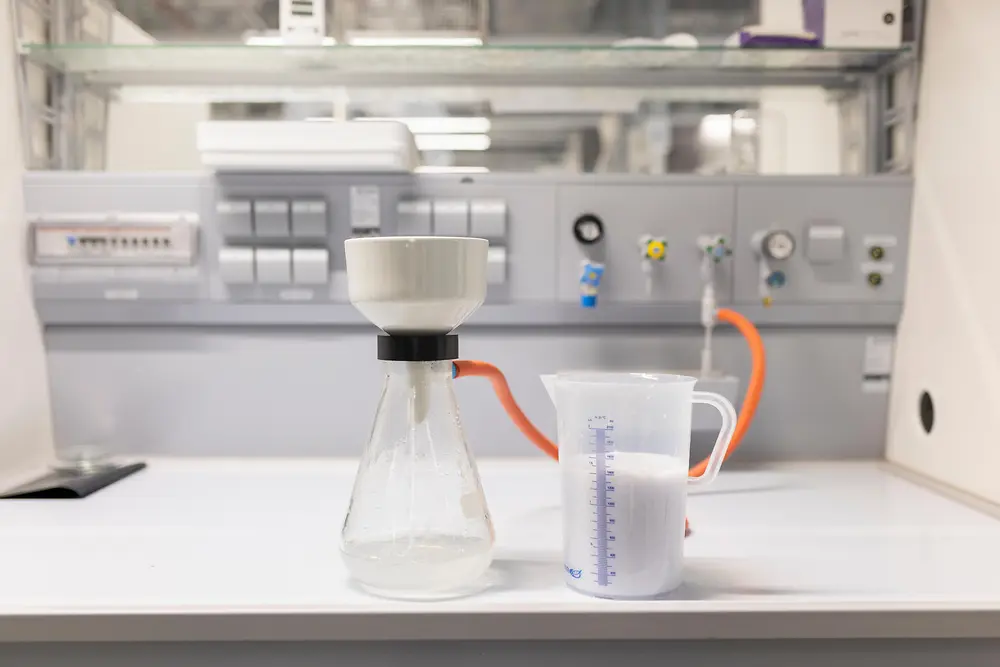
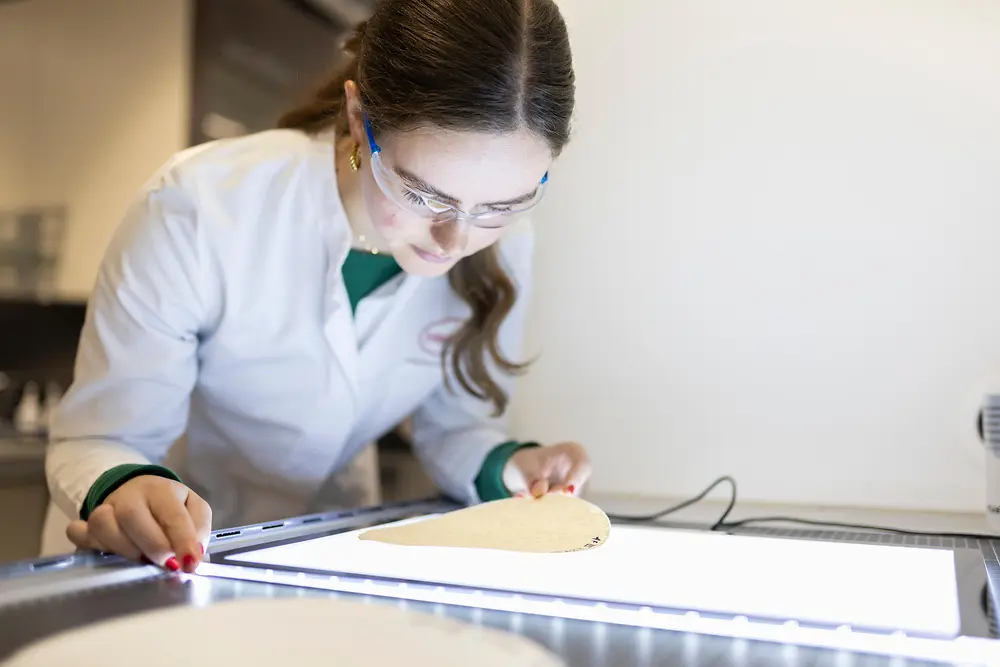
In the filtration step, the amount of dissolved and colloidal substances in the pulp water is measured to evaluate circular water use.
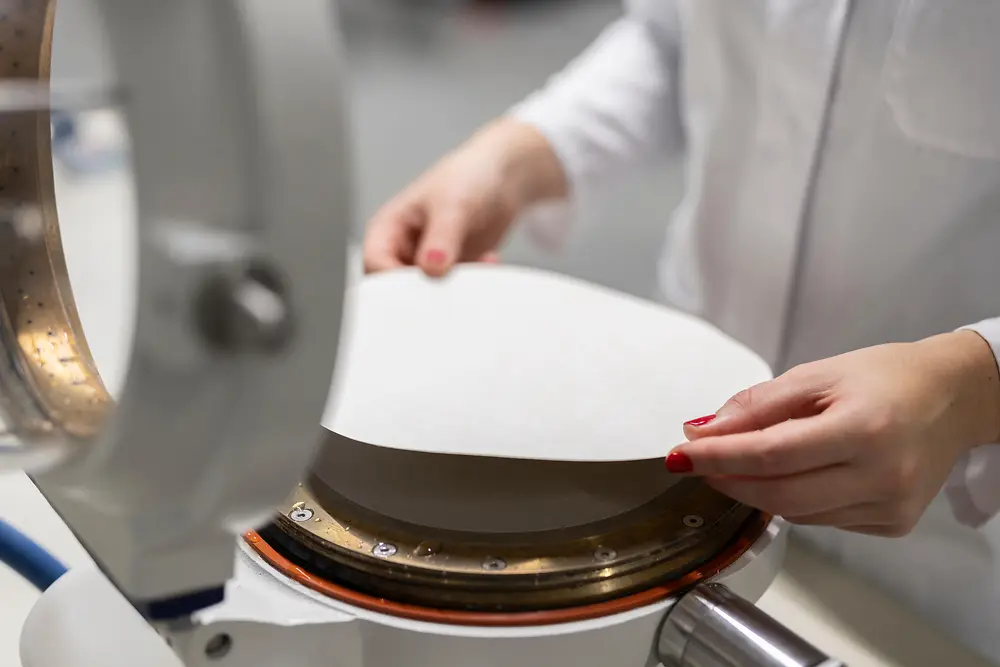
Following a screening process to assess the impurities from the pulp, the wet fibers are formed and dried to create new recycled paper.
1 of 4
On track for 2030
There is a specific reason why recyclability is under such scrutiny today. From January 1, 2030, packaging sold in Europe must be at least 70 percent recyclable. This is mandated by the PPWR, the European Packaging and Packaging Waste Regulation, which was adopted in 2024. "We all know: Without clear boundaries, an entire industry won't change," says Nadine. What is still missing are the exact testing methods. Which standard applies? How is it measured? That is still open. "Companies don't know what to orient themselves toward," says the chemist. A vicious cycle: Those who don’t know the rules cannot develop. Nadine therefore sits on committees: 4evergreen, for example, a European alliance of the paper industry, adhesive manufacturers, and brand owners that is developing testing methods for the PPWR. Henkel contributes its laboratory experience. Together, everyone is thinking about how individual measurement points could be made more precise. "If a methodology decides Europe-wide whether a package is allowed on the market, we should set it up as accurately as possible," says the expert.
Two thousand kilometers further east
The Recyclab exists twice: in Düsseldorf and in Shanghai. Leozezhi Sun, whom everyone calls Leo, works in the lab there. He has over ten years of experience in the adhesive industry, joined Henkel through application technology, and is now the interface between material, process, and customer. The methods are the same as in Düsseldorf: The same screening steps, the same temperatures, the same test sheet at the end. What differs is the context. Many of Henkel's customers in China produce for the European market. "When packaging is exported to Europe, it must be recyclable and comply with the standards there," says Leo. The requirements of the PPWR are thus present daily in Shanghai, via the detour of exports. At the same time, Leo observes a change in China: Since 2021, single-use plastic has been banned in many areas, and more and more packaging is being developed on a paper basis. He, too, is shaped by his profession: He actively tries to avoid single-use plastic and relies on reusable bags when shopping.

We all know: Without clear boundaries, an entire industry won't change.
Dr. Nadine Höglsperger, Head of the Recyclab at Henkel in Düsseldorf
Thirty seconds for twenty pages
Every test in the lab generates data. Every step must be traceable. Previously, Robin filled out spreadsheets, copied values into report templates, and risked errors. This cost hours every day. Time that did not remain for analysis or exchange. Today, there is an app. Developed from the ground up with Henkel dx, the digital innovation department, not purchased. It guides users through the test process, records measurements directly, and automatically generates the complete test report at the end. "A lab technician copying values for three hours is not efficient," says Nadine. "An app that generates a 20-page report in 30 seconds definitely is".
Research for the future
The Recyclab is not a closed place. It is open – for brand owners who want to know if their packaging will withstand upcoming requirements. For partners and external institutes that conduct test series and prepare certifications here. What happens in Düsseldorf and Shanghai has long been more than internal research. It is a collective learning process for an industry that must reinvent itself. Nadine and her team are working on something that seems inconspicuous in everyday life. On boxes, coatings, and adhesives. On things that we rip open, fold, and dispose of, mostly without a second thought. But it is precisely this second thought that is systematically played out here. What happens after use? Will the fibers really disintegrate to use them again? Are fibers left over? Does something new emerge from the old? Research into the future happens unnoticed. But it is happening.

CIRCULAR ECONOMY
TURNING END OF LINE INTO NEW BEGINNINGS
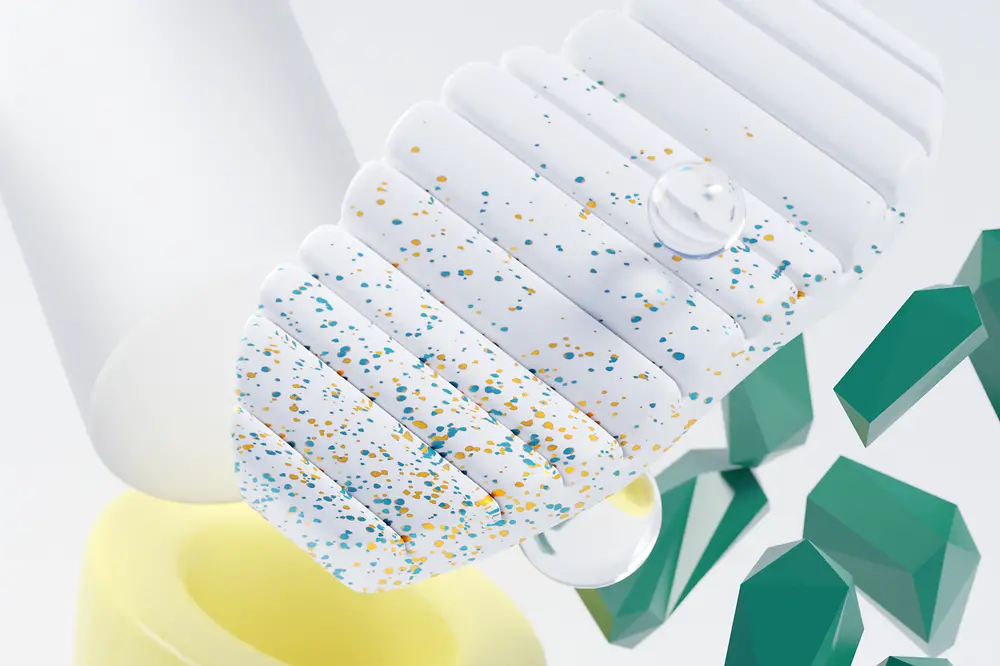
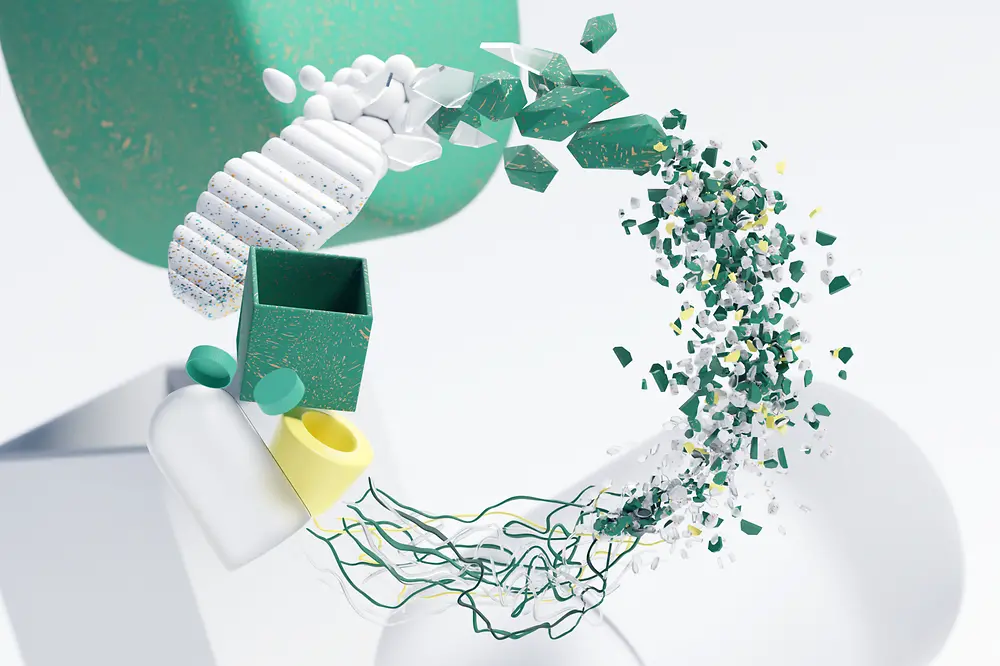
Everyone is talking about it: the circular economy. Packaging materials like plastic have many advantages, but their omnipresence has created a new set of challenges for us. How can we promote a responsible use of plastic within a circular economy and combat the problem of plastic waste through recycling?

1 of 3
EXPLORE OUR
INNOVATION NETWORK
INNOVATION NETWORK
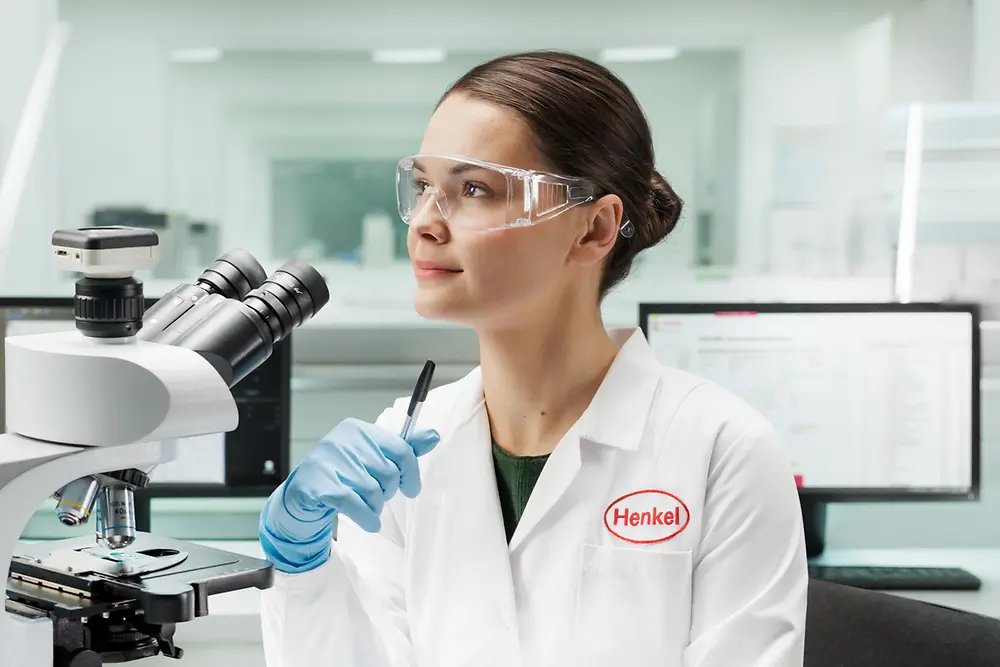
Our global R&D infrastructure supports close collaboration with our customers and consumers enabling us to foster innovation, drive technological advancements and shape the future of several industries. These centers serve as hubs for cutting-edge research and bringing together diverse expertise to tackle complex challenges. Collaboration between global R&D centers and local institutions is also crucial to develop innovative tailor-made solutions and targeted products for our customers and consumers.

1 of 2
SPOTLIGHT
MAGAZINE
MAGAZINE
Discover our features with stories and expert insights on innovation, sustainability, digitalization and Henkel’s pioneering culture.