For 150 years, the pioneering spirit of our company founder Fritz Henkel has inspired our actions. He stands for courage, responsibility, and a clear vision of the future – then as now. On this basis, we develop innovative ideas that contribute to sustainability and use smart technologies to help shape the markets of tomorrow. With market-leading adhesive technologies for various industrial solutions worldwide and iconic consumer brands, we make the lives of millions of people easier and better. To this end, our teams in over 75 countries give their best every day. We think long-term and act responsibly – for our employees, our environment, and society.
The overview shows the most important milestones from the founding of the German family company to today's global corporation.
The early years of today’s global company were driven by true pioneering spirit: Fritz Henkel founded the company and steered it through turbulent early decades, marked by multiple relocations.
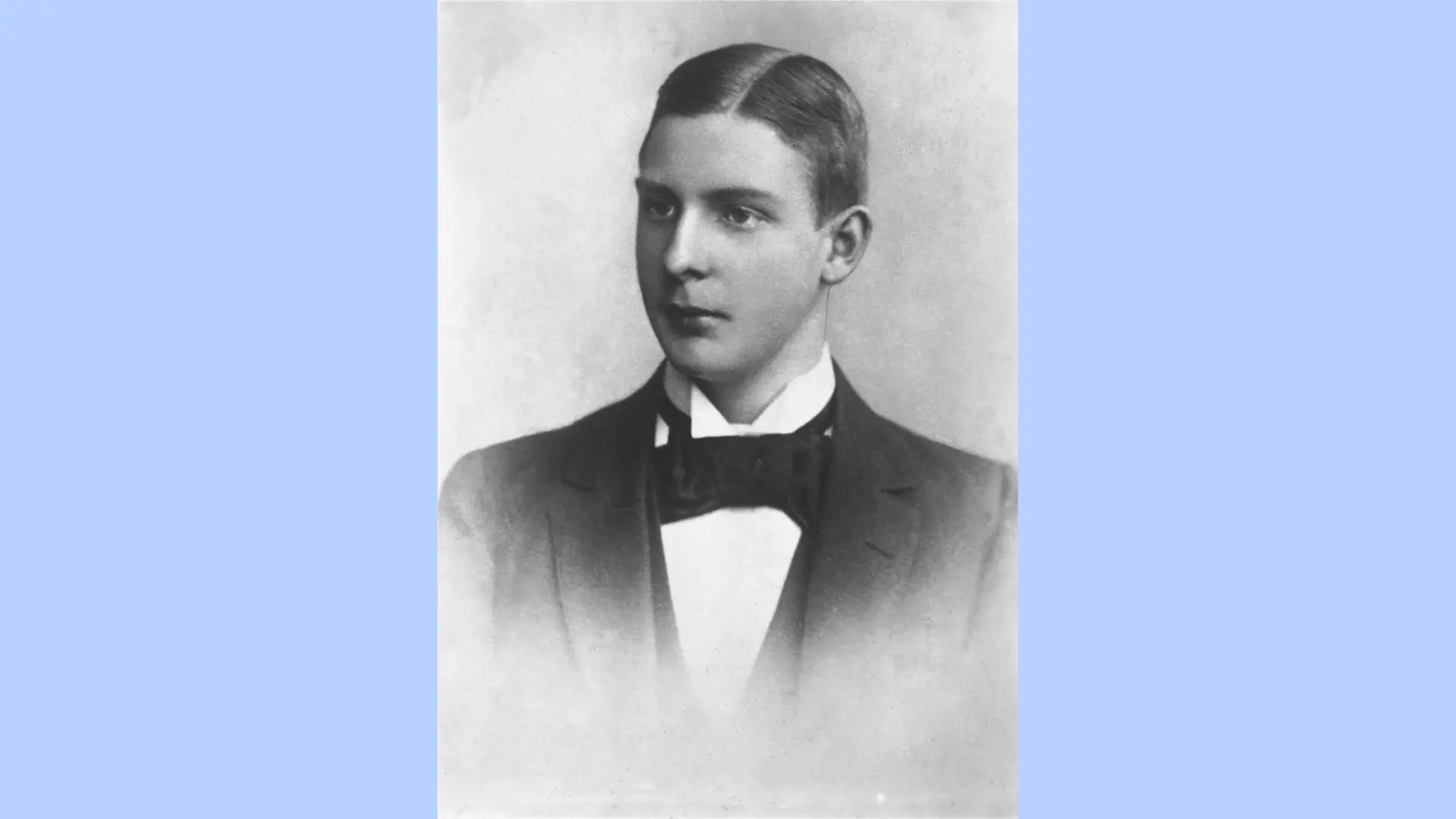
Friedrich Karl “Fritz“ Henkel is born on March 20, 1848 in the Hessian town of Vöhl. He lays the foundation for the long success story of our company in 1876, when he sets up Henkel in Aachen…
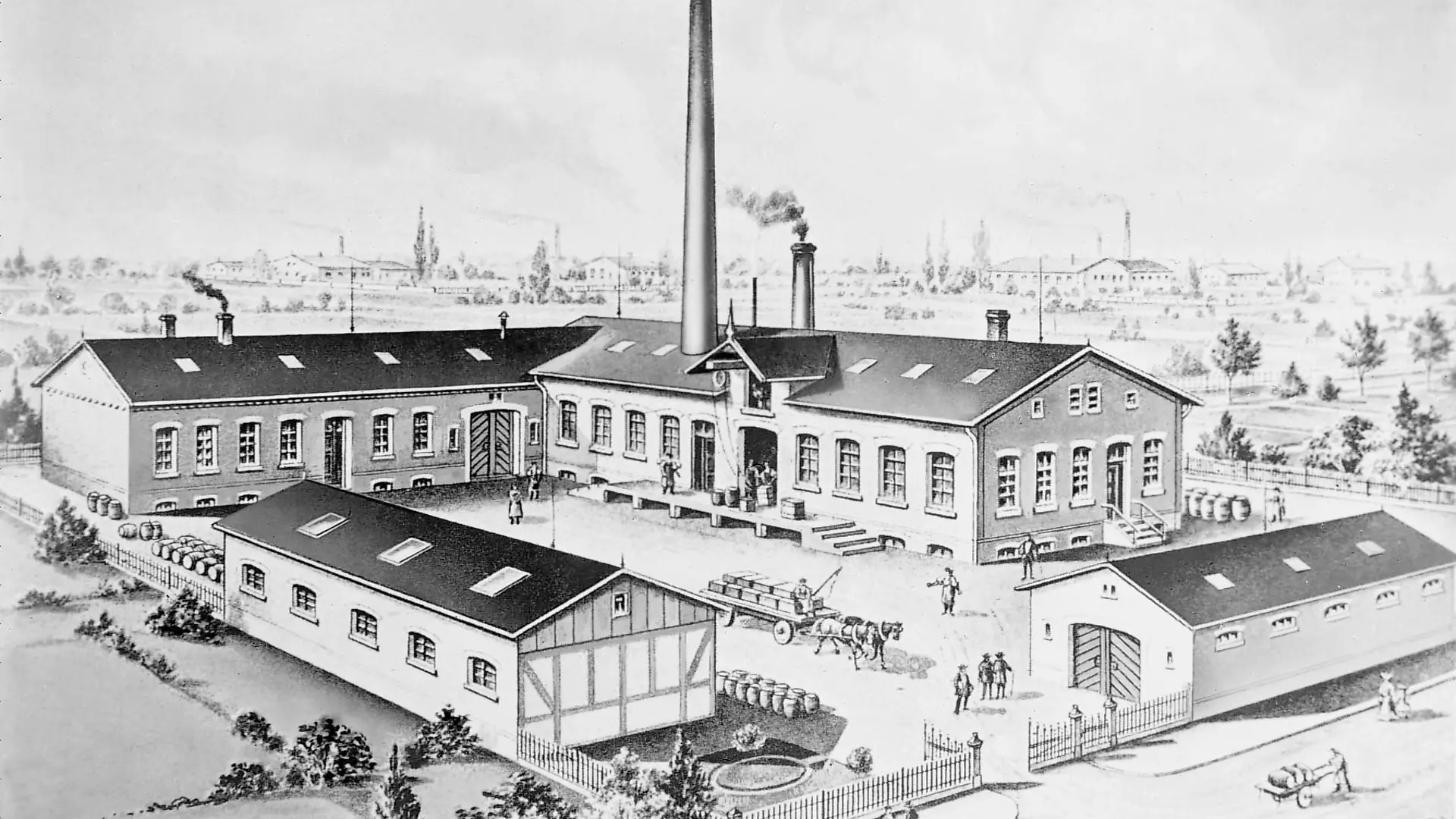
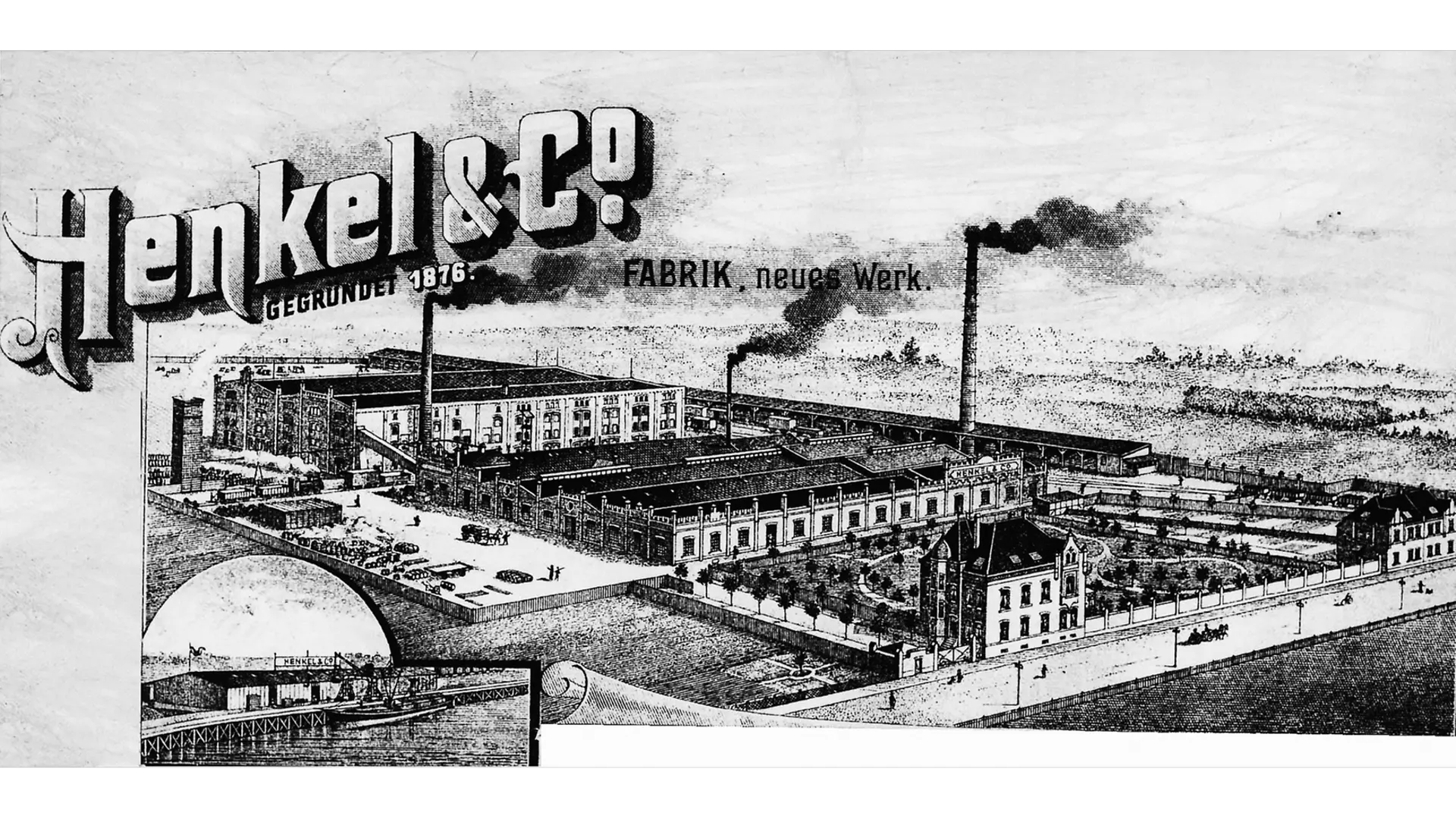
Factory building in the rear courtyard, Aachen (undated)
On September 26, 1876, Fritz Henkel and two business partners formally enter their newly founded company in Aachen’s commercial register under the name Henkel & Cie. Several months later...
Advertisement for Universal-Waschmittel (Universal Detergent) (1876)
The Henkel team launches its first product: Universal-Waschmittel. However, the self-developed detergent is rather expensive in production and fails to be a great success.
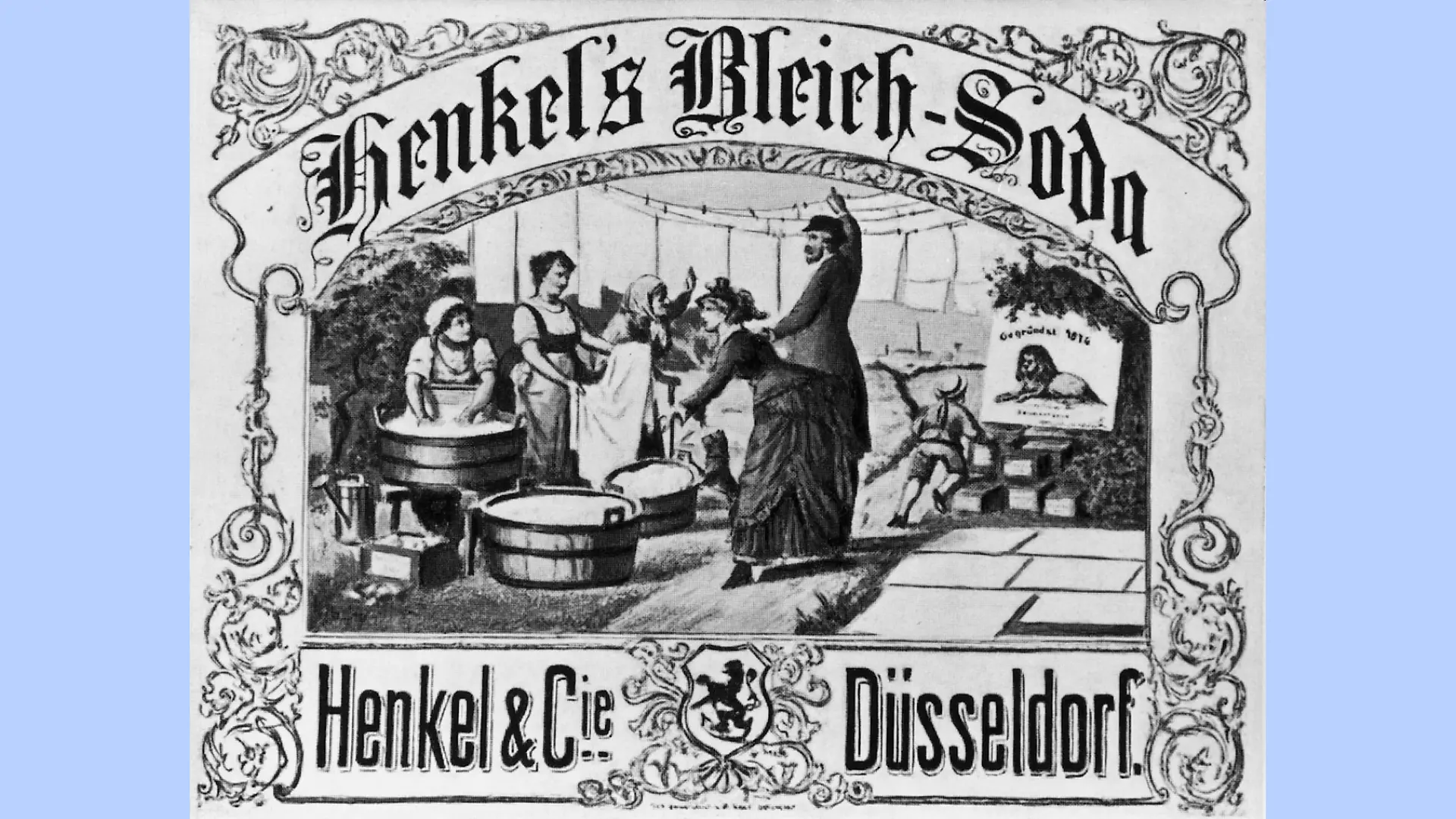
Henkel’s Bleich-Soda (bleaching soda), launched in 1878
Henkel’s Bleich-Soda, also developed by Fritz Henkel himself, becomes an immediate success in 1878. Thanks to its special formulation, containing water glass, the new detergent bleaches yellowed laundry without damaging it – unlike other…
Relocation from Aachen to Düsseldorf-Flingern. This transfer decision brings Henkel’s business closer to major sales markets in the Rhine and Ruhr area…
After two years, the leased factory facility in Düsseldorf-Flingern proves to be too small. The rapidly growing company needs new and larger premises. Fritz Henkel starts looking for an…
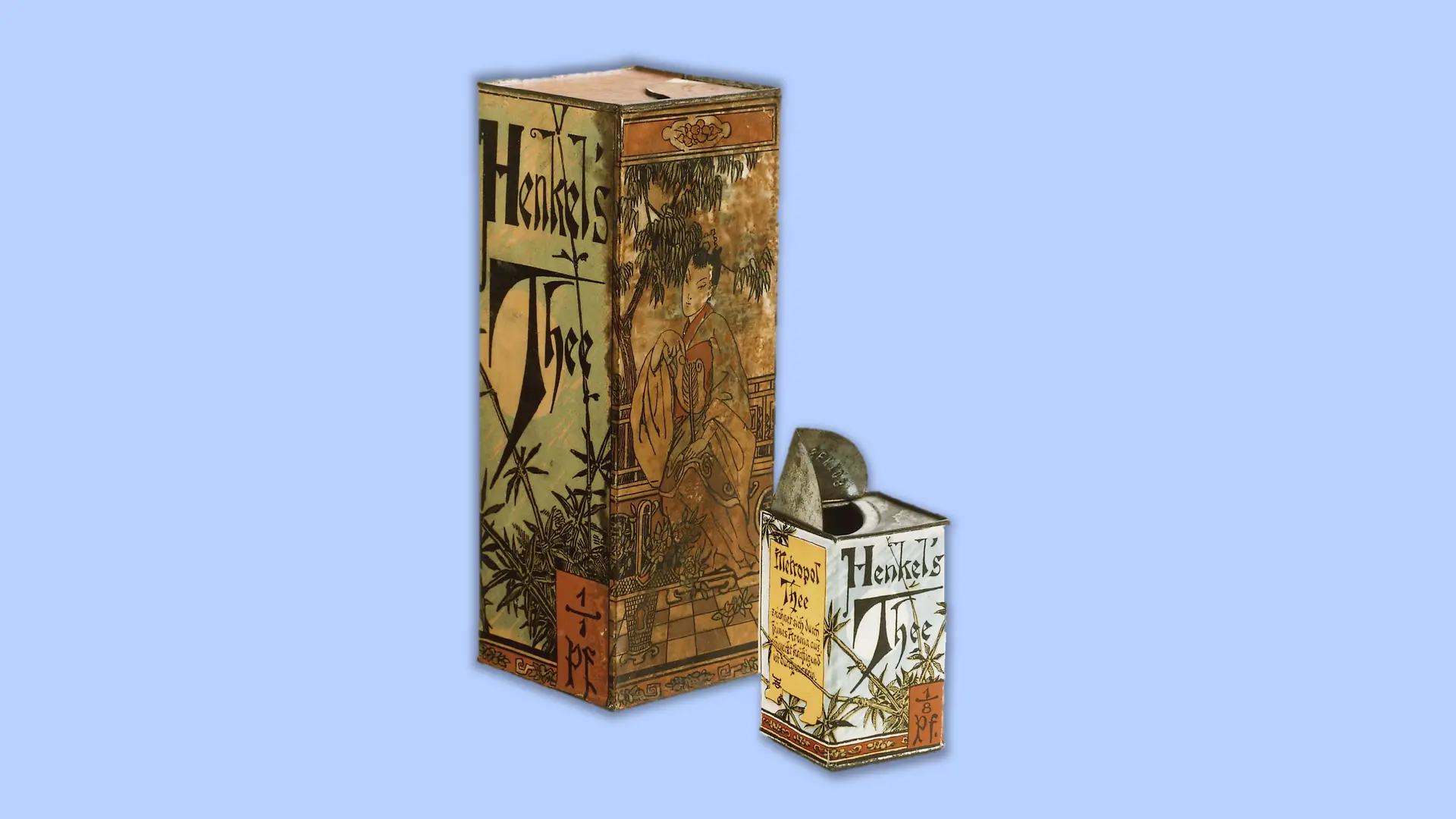
Henkel’s Thee (on the market until 1913) is the first branded tea in Germany to be sold in decorative, aroma-protecting tin boxes. In the early 1890s, the tea sales generate more than 10 percent…
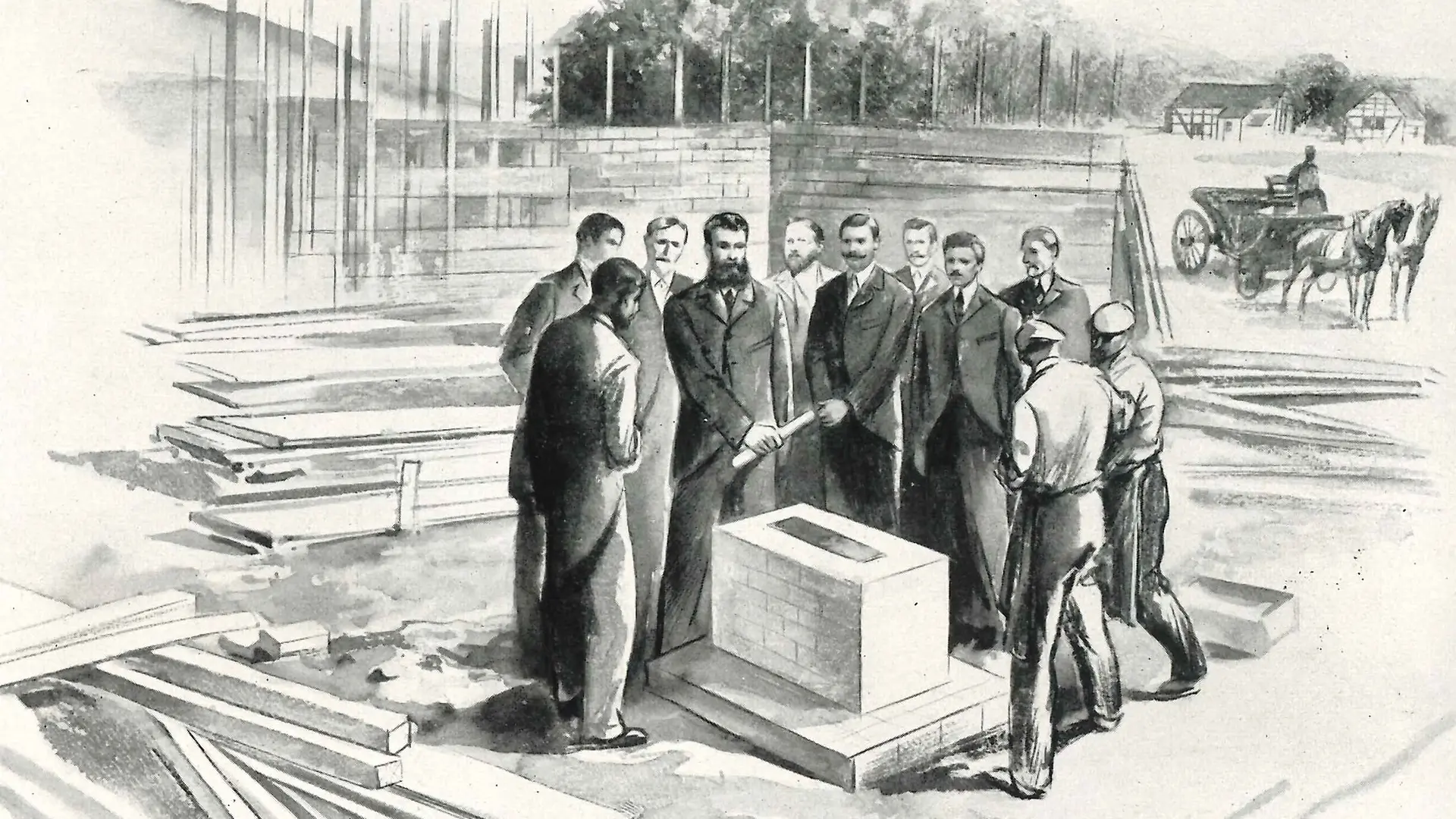
A drawing shows the laying of the foundation stone for the Holthausen plant in 1899
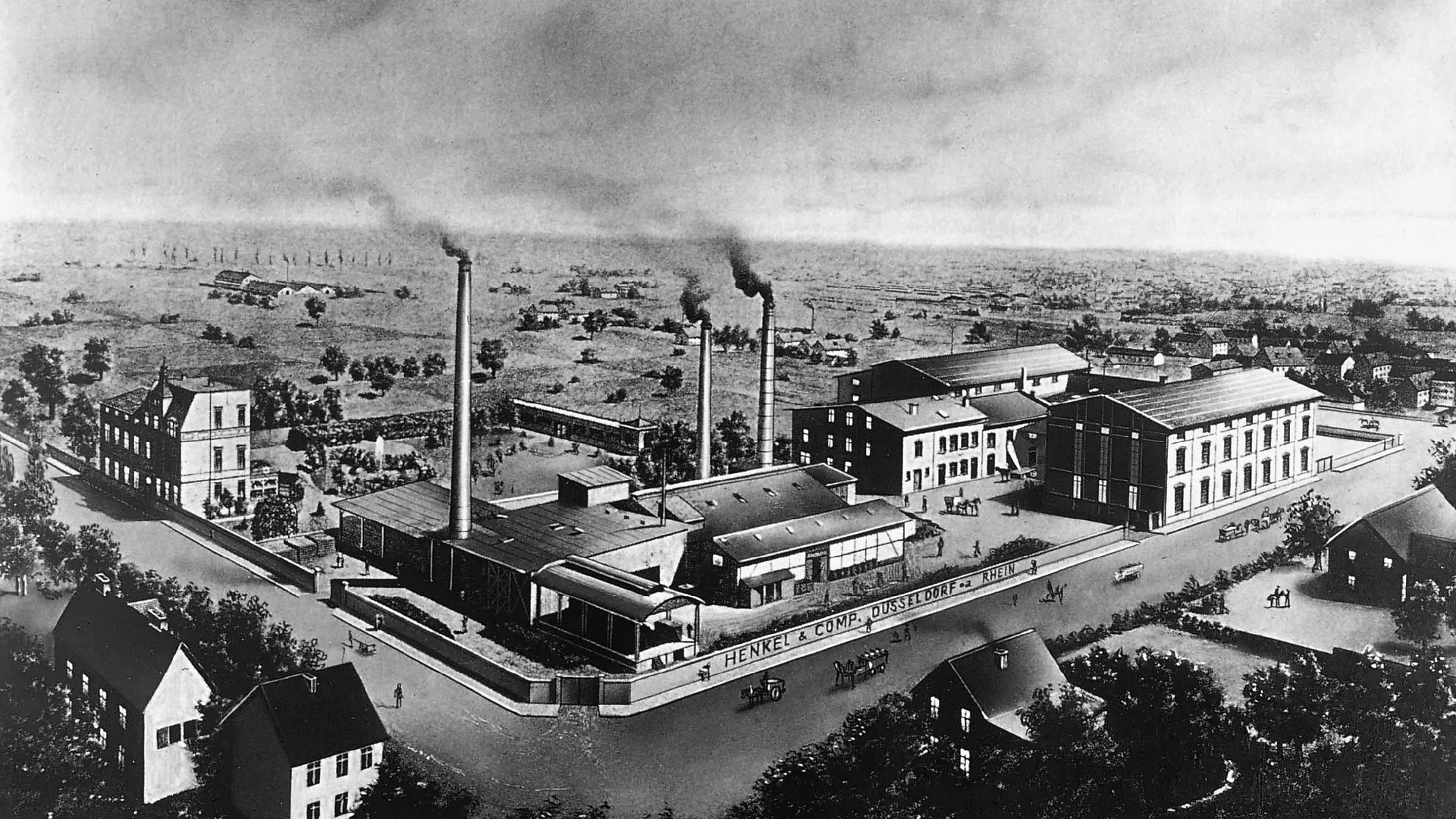
Fritz Henkel acquires a 55,000 square meters plot outside Düsseldorf’s city boundaries (Holthausen becomes part of Düsseldorf in 1929). The premises are located in a recently developed industrial…
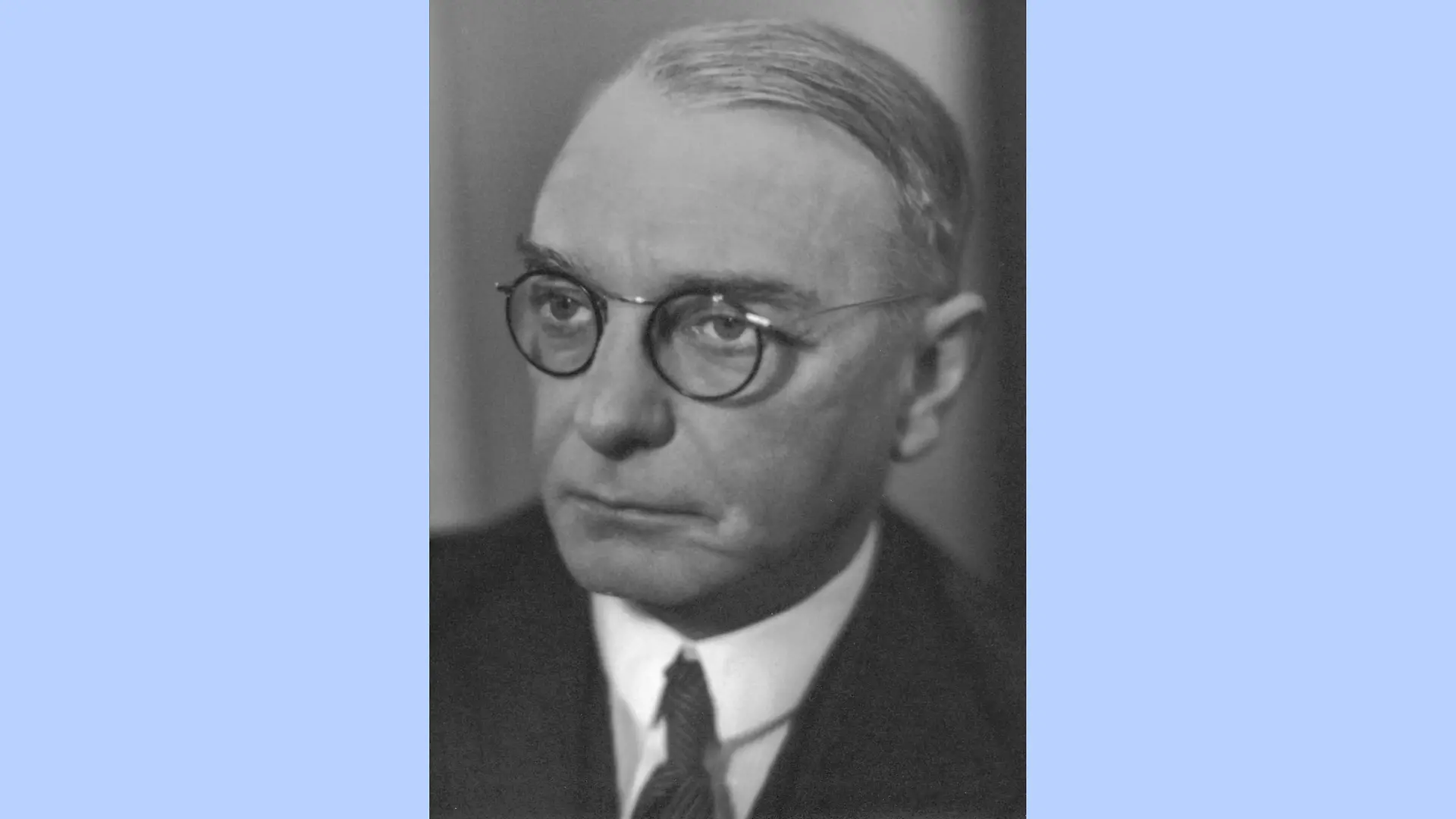
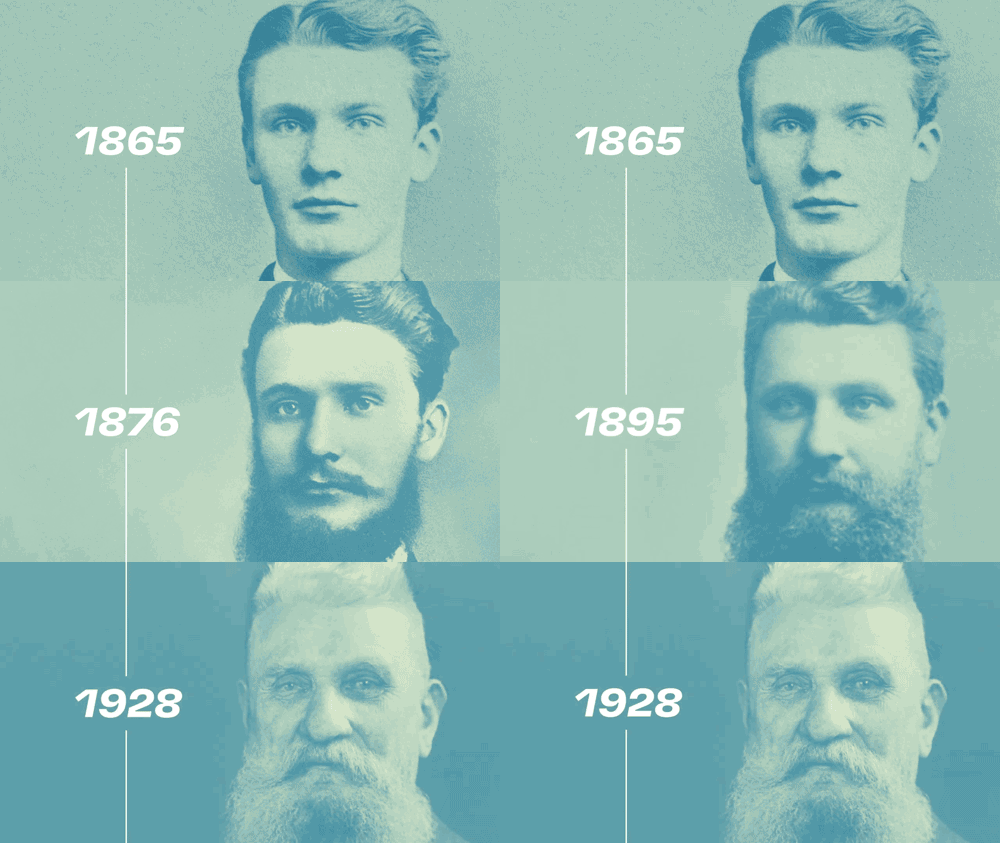
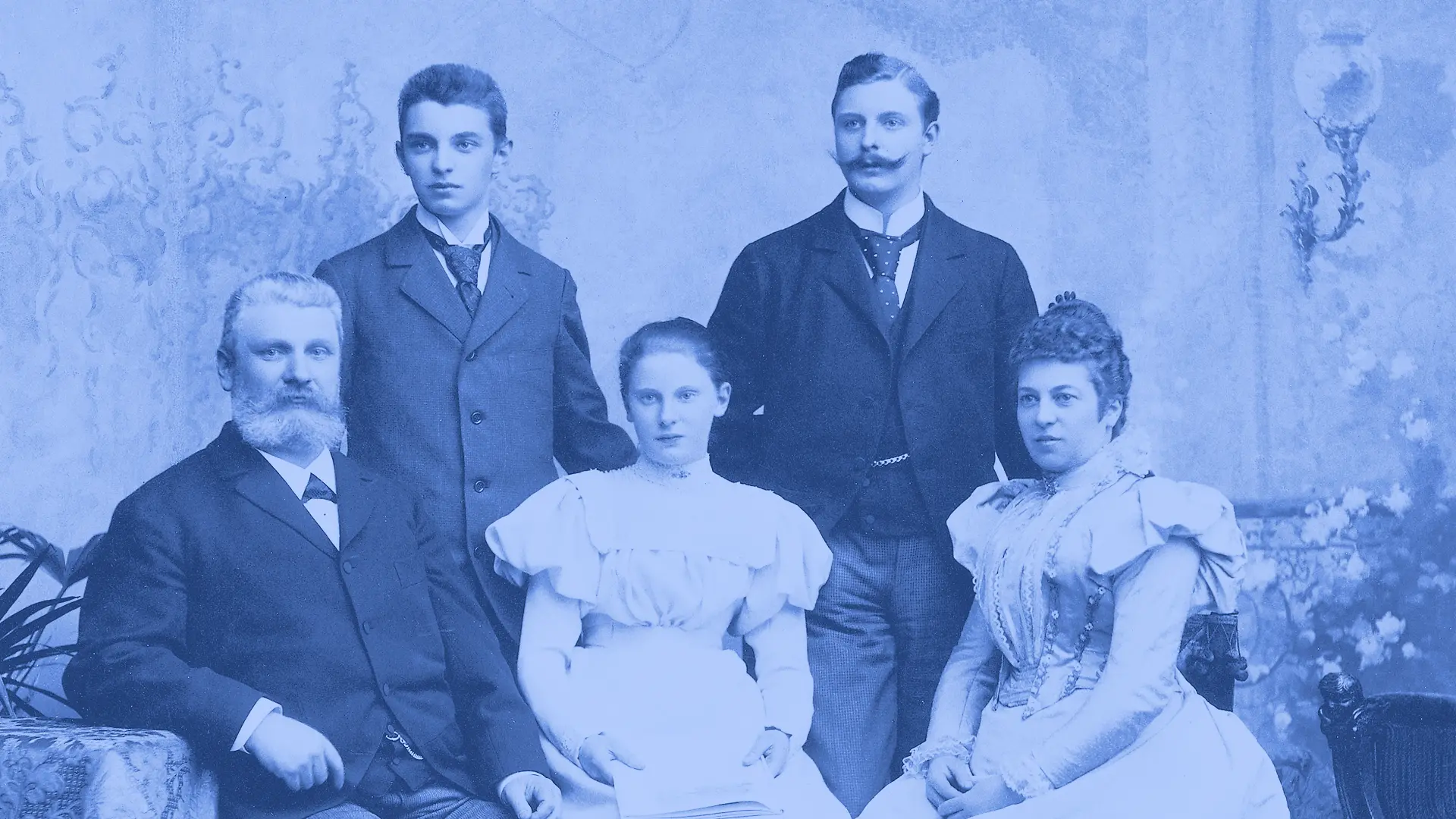
Friedrich Karl “Fritz“ Henkel is born on March 20, 1848 in the Hessian town of Vöhl. He lays the foundation for the long success story of our company in 1876, when he sets up Henkel in Aachen together with two business partners. Fritz Henkel continues to shape the company with his ideas, achievements, and values to this day. The entrepreneur heads the company for more than 50 years until his death in 1930.
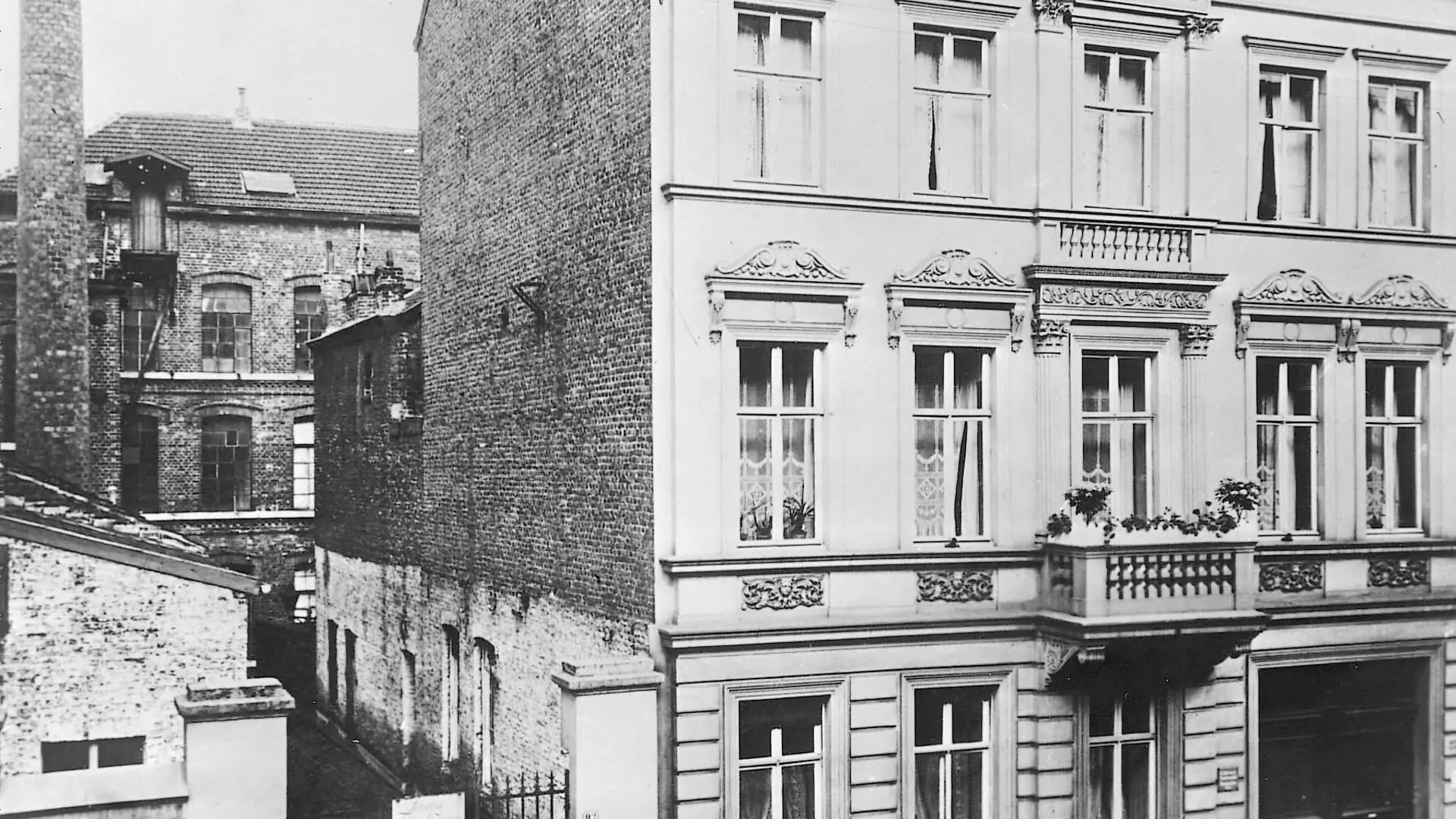
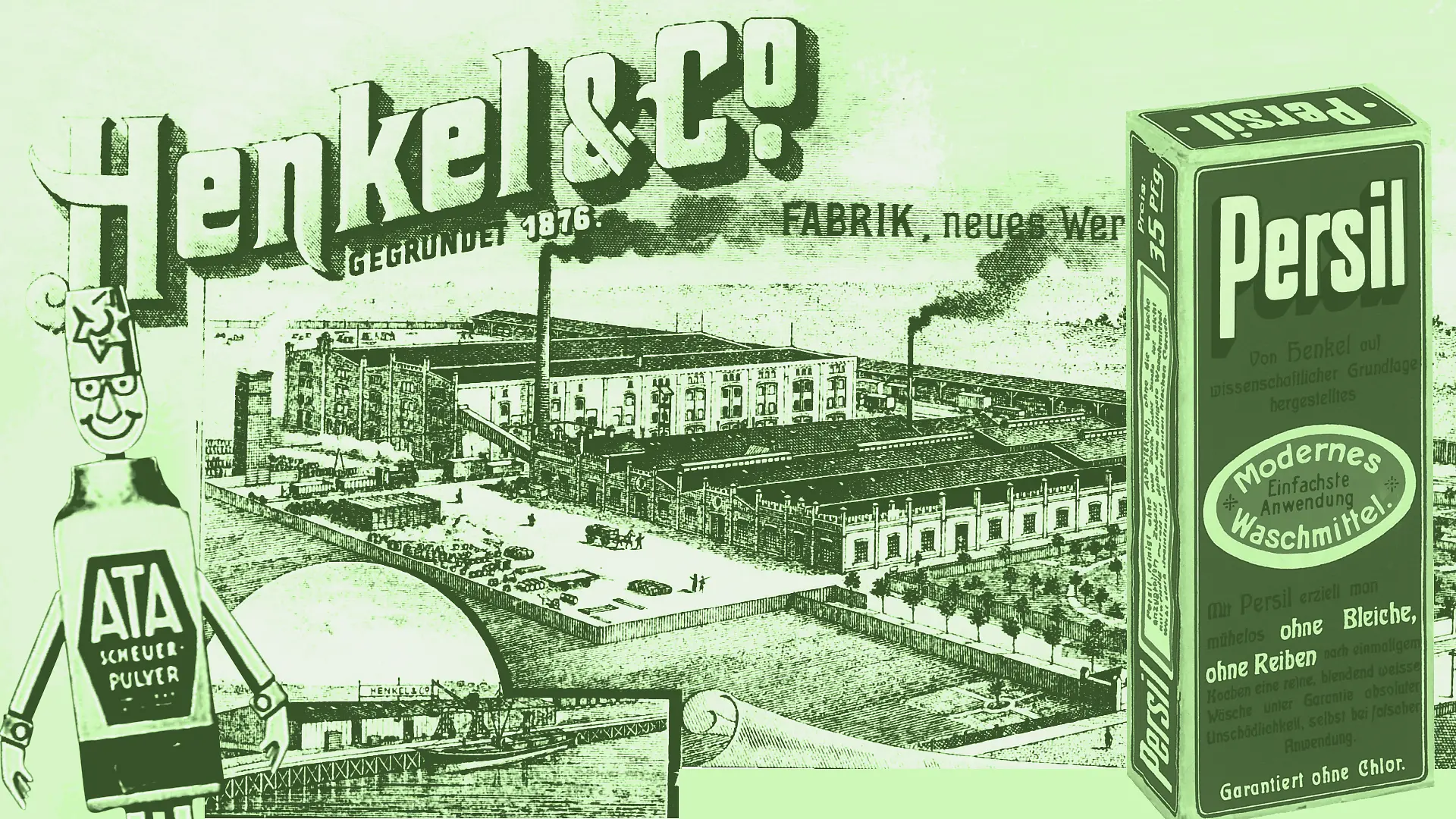
Factory building in the rear courtyard, Aachen (undated)
On September 26, 1876, Fritz Henkel and two business partners formally enter their newly founded company in Aachen’s commercial register under the name Henkel & Cie. Several months later, the company starts operations in a local office and residential building and a former shoe factory in the rear courtyard.
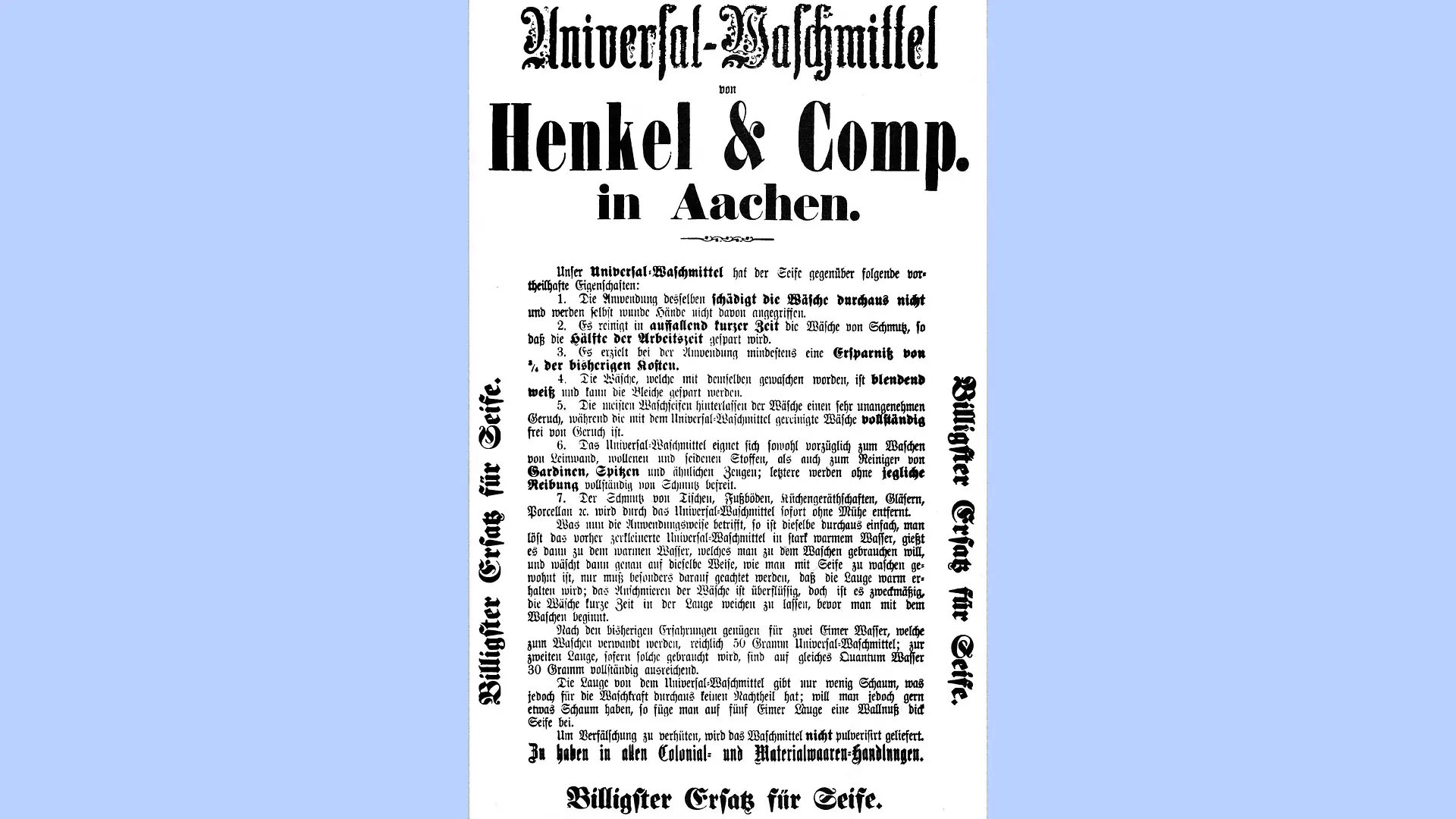
Advertisement for Universal-Waschmittel (Universal Detergent) (1876)
The Henkel team launches its first product: Universal-Waschmittel. However, the self-developed detergent is rather expensive in production and fails to be a great success.
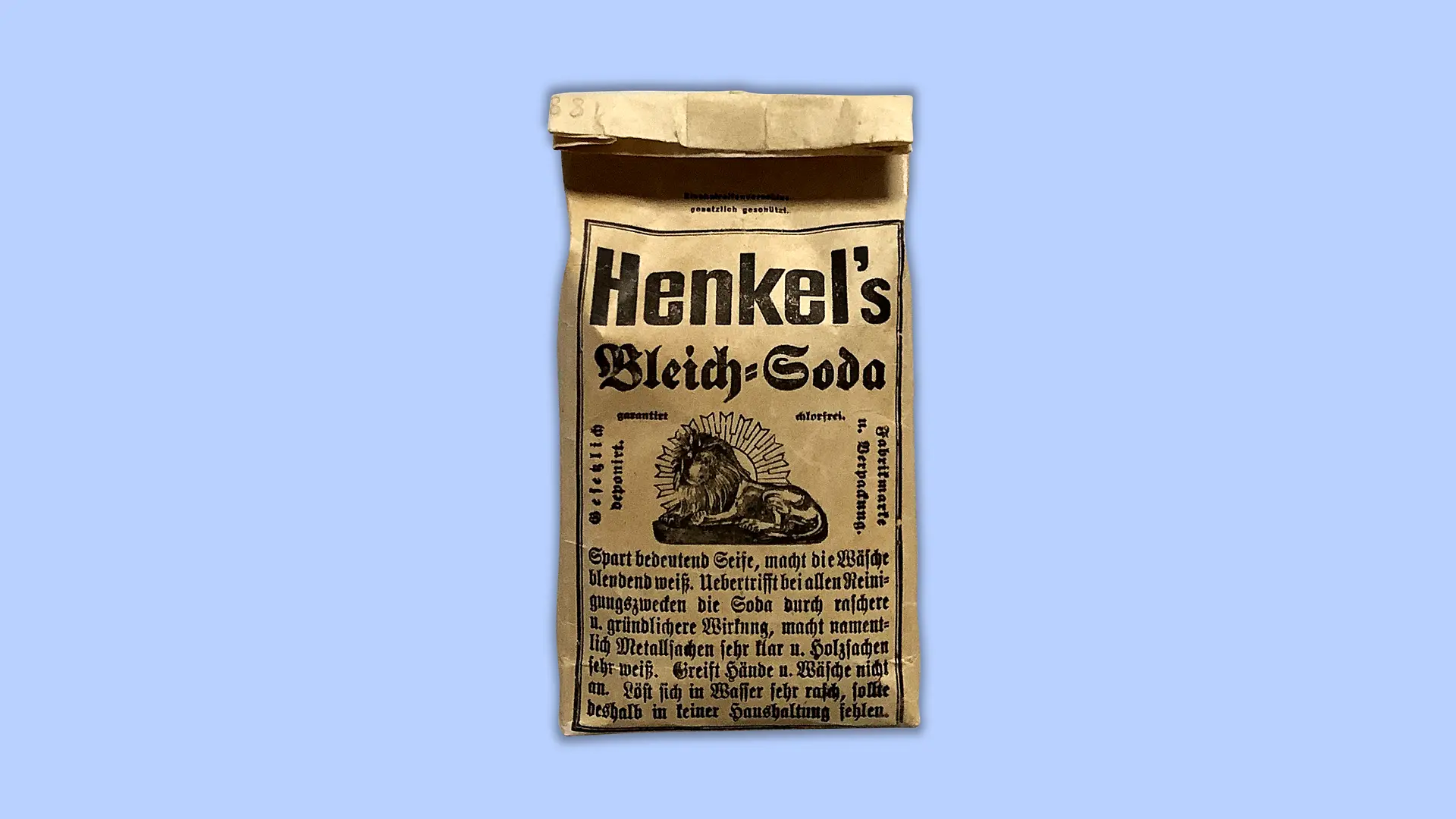
Henkel’s Bleich-Soda (bleaching soda), launched in 1878
Henkel’s Bleich-Soda, also developed by Fritz Henkel himself, becomes an immediate success in 1878. Thanks to its special formulation, containing water glass, the new detergent bleaches yellowed laundry without damaging it – unlike other bleaching detergents.
Another new feature stands out: The detergent comes in a standardized packaging with the brand name printed prominently on the packaging. Together with the lion motif, this ensures high brand recognition.
This transfer decision brings Henkel’s business closer to major sales markets in the Rhine and Ruhr area. In addition, it reduces transportation costs for the company’s detergents that can be manufactured at low cost.
After two years, the leased factory facility in Düsseldorf-Flingern proves to be too small. The rapidly growing company needs new and larger premises. Fritz Henkel starts looking for an alternative site and in 1880 identifies the perfect premises in nearby Düsseldorf-Oberbilk.
Henkel’s Thee (on the market until 1913) is the first branded tea in Germany to be sold in decorative, aroma-protecting tin boxes. In the early 1890s, the tea sales generate more than 10 percent of the company’s total revenues.
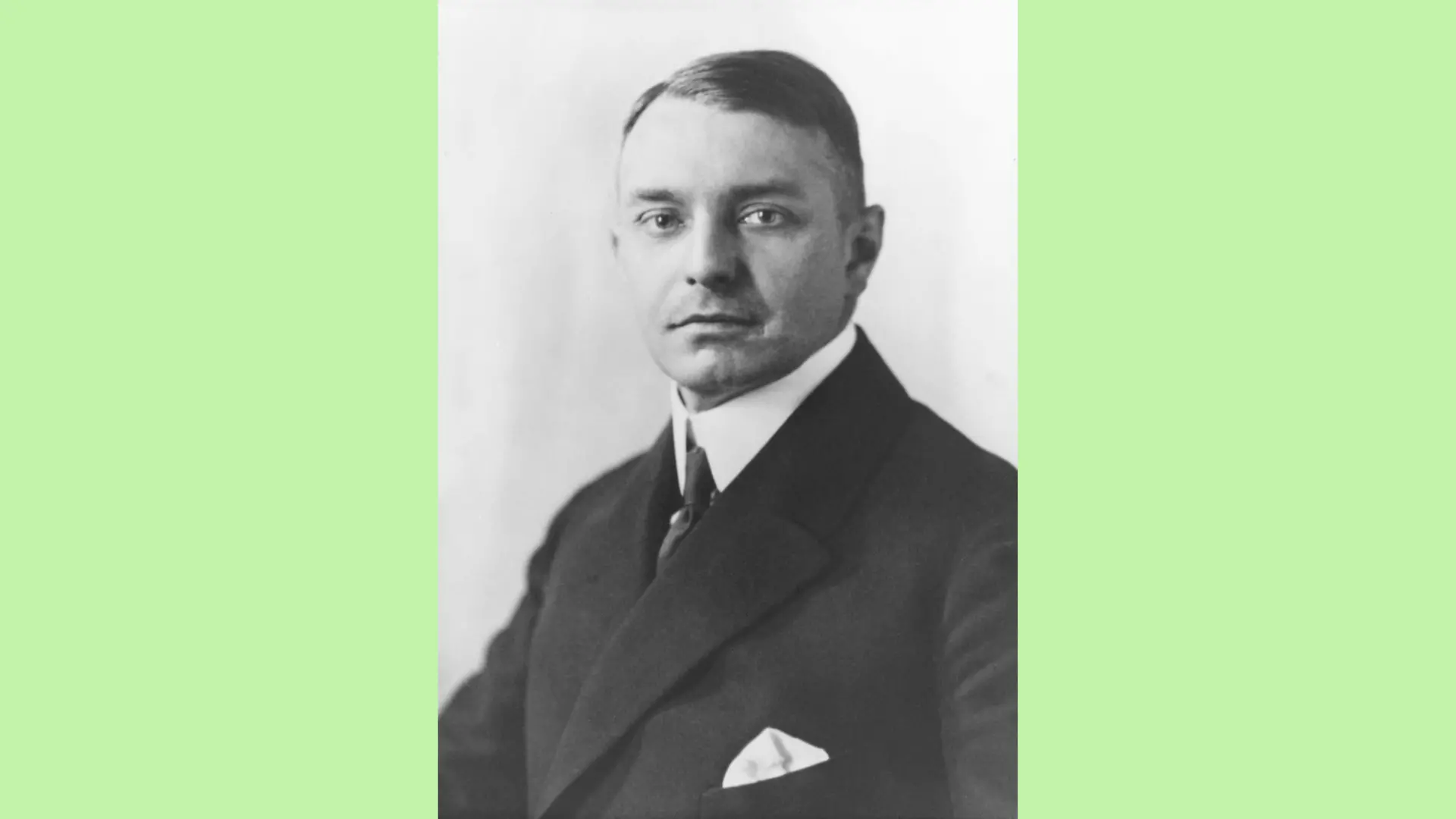
Fritz Henkel Jr. (1875–1930) starts out as a business administration trainee. In 1899, he is granted power of attorney for his father’s company.
In 1904, his father, Fritz Henkel Sr., appoints him as personally liable (general) partner of the company. Fritz Henkel Jr. strengthens the brand business by advancing both the sales force and the successful advertising activities.
1899
Rooted in Tradition: The Düsseldorf-Holthausen Site
A drawing shows the laying of the foundation stone for the Holthausen plant in 1899
Fritz Henkel acquires a 55,000 square meters plot outside Düsseldorf’s city boundaries (Holthausen becomes part of Düsseldorf in 1929). The premises are located in a recently developed industrial zone and feature an urgently needed rail connection and – as of 1901 – a link to the port of Reisholz (Rhine dockyards).
1900 – 1920
The breakthrough
Production begins in March 1900 at the company’s new location in Holthausen (later becoming part of Düsseldorf in 1929). In the following years, the factory site expands rapidly. The reason for this is the great success of the detergent Persil. This marks the international breakthrough for the company.
Hugo (1881–1952), the youngest son, joins his father’s company after obtaining a degree in chemistry. He is the first PhD chemist at Henkel and champions the company’s scientific research and development…
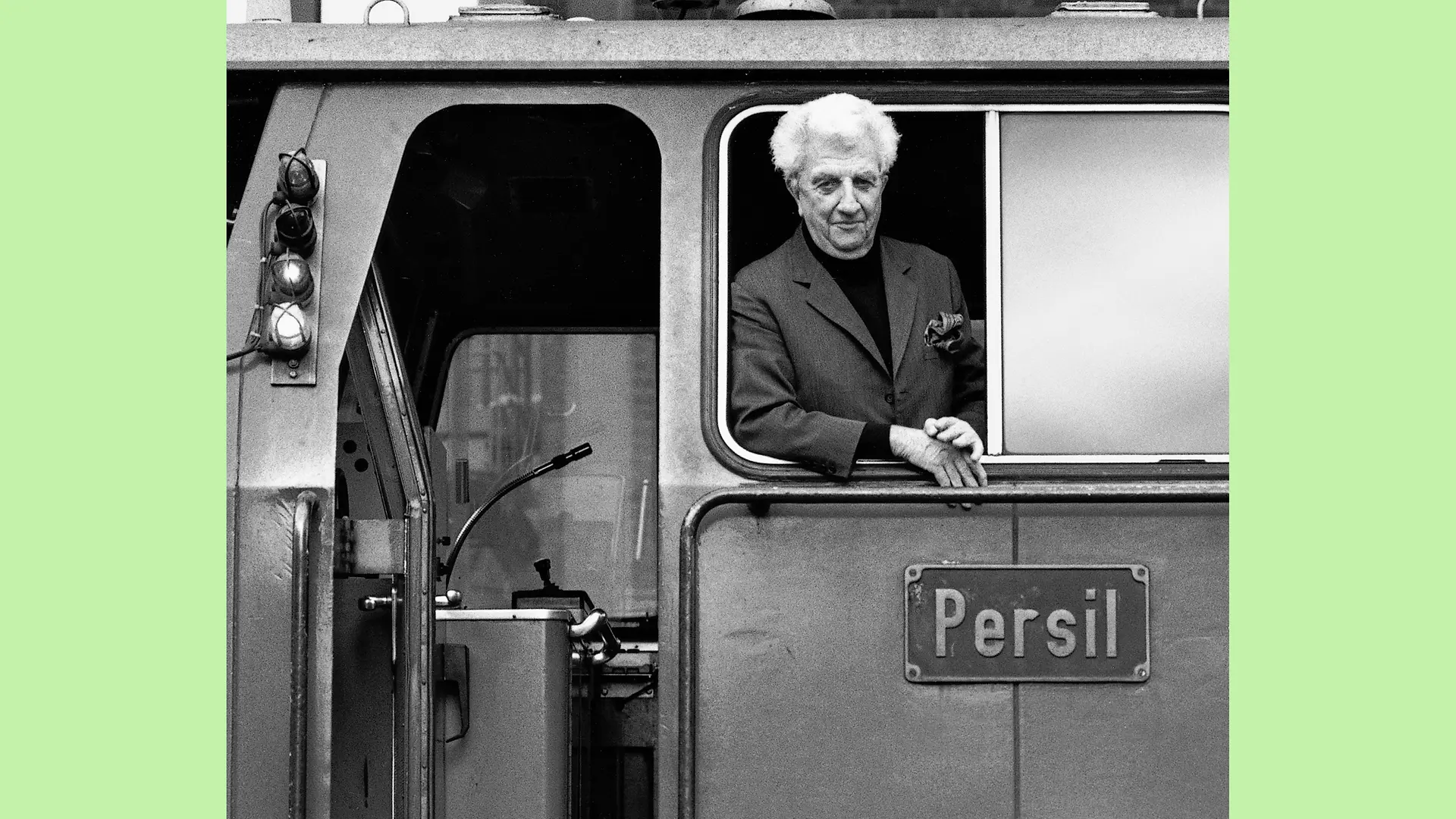
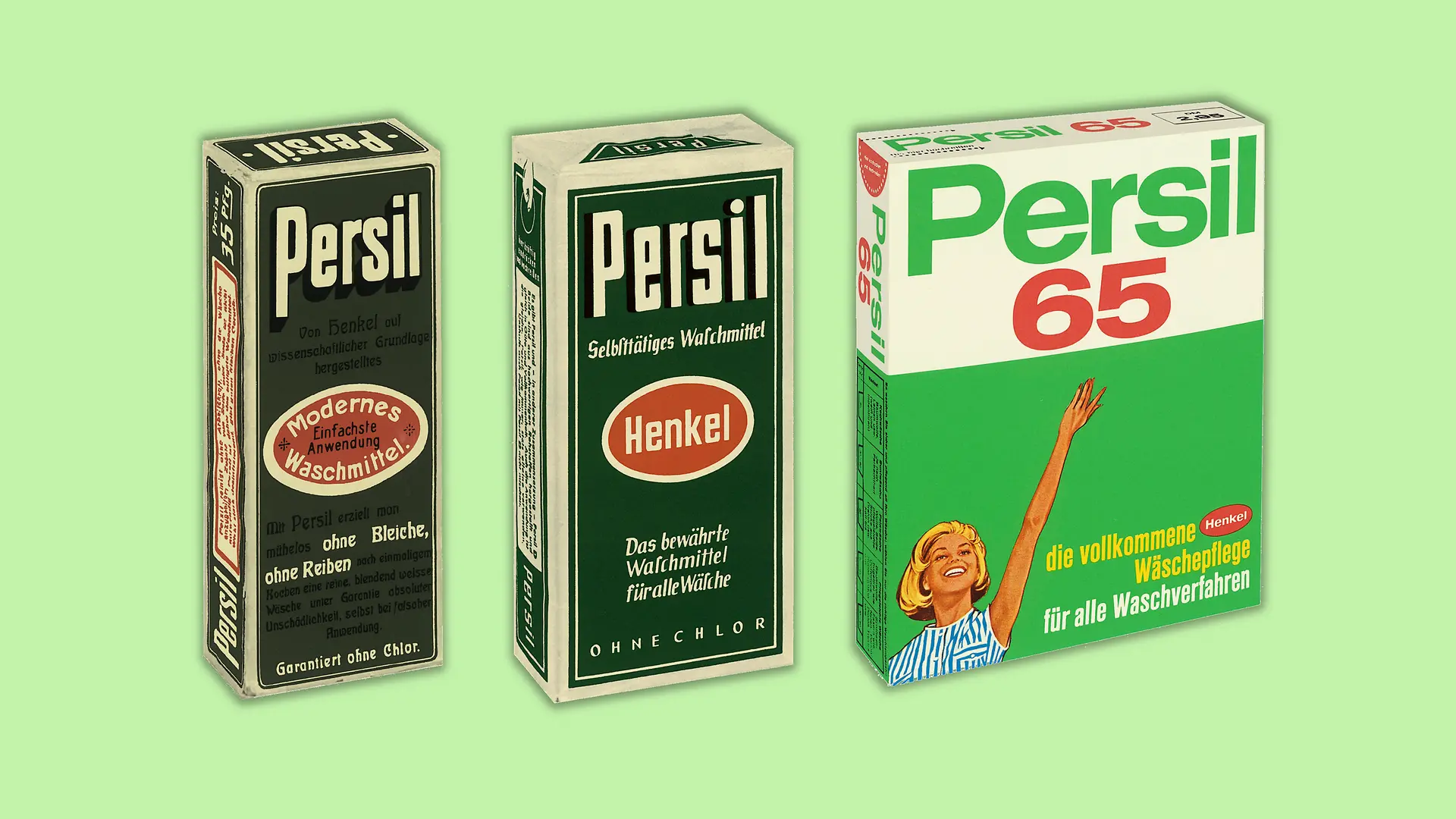
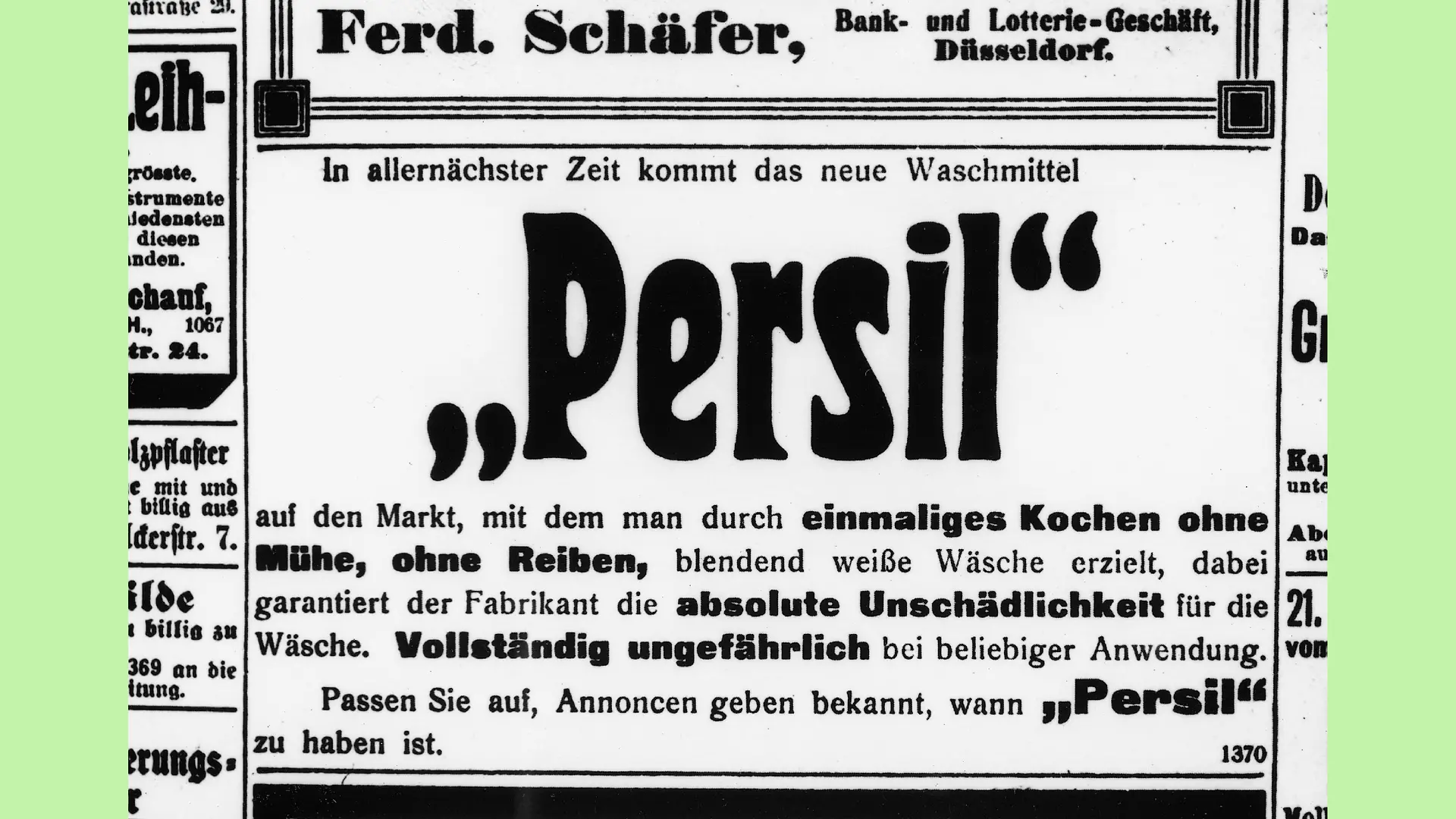
Persil revolutionizes the work in the laundry room. When it is launched in 1907, it is one of the first self-acting detergents in the market. It makes Henkel the undisputed market leader...
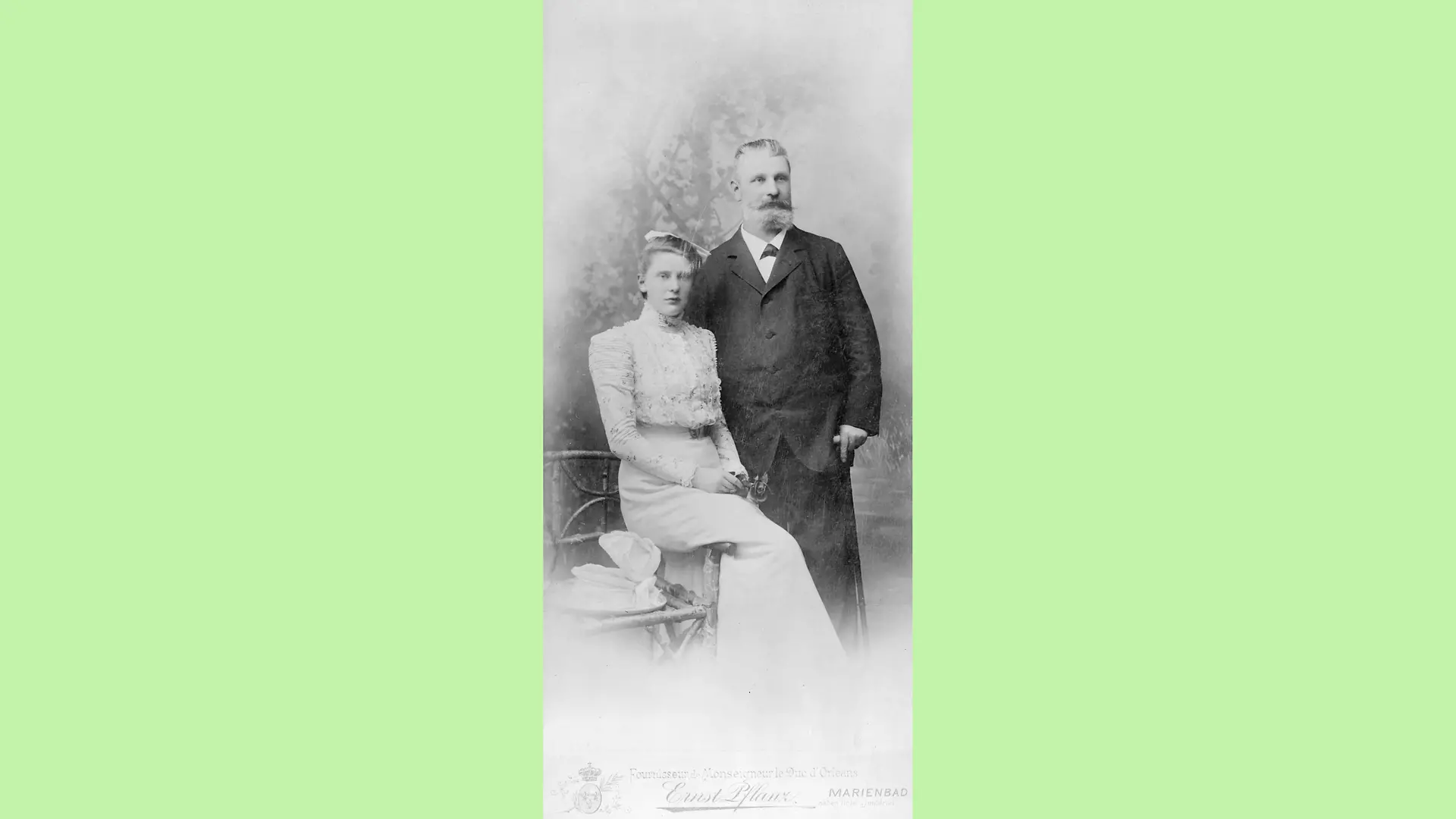
Emmy Lüps and her father Fritz Henkel on her wedding day (1904)
Emmy Lüps (1884–1941), daughter of company founder Fritz Henkel Sr., joins her brothers as personally liable partner in the family business. However, she is not involved in the company’s operational business...
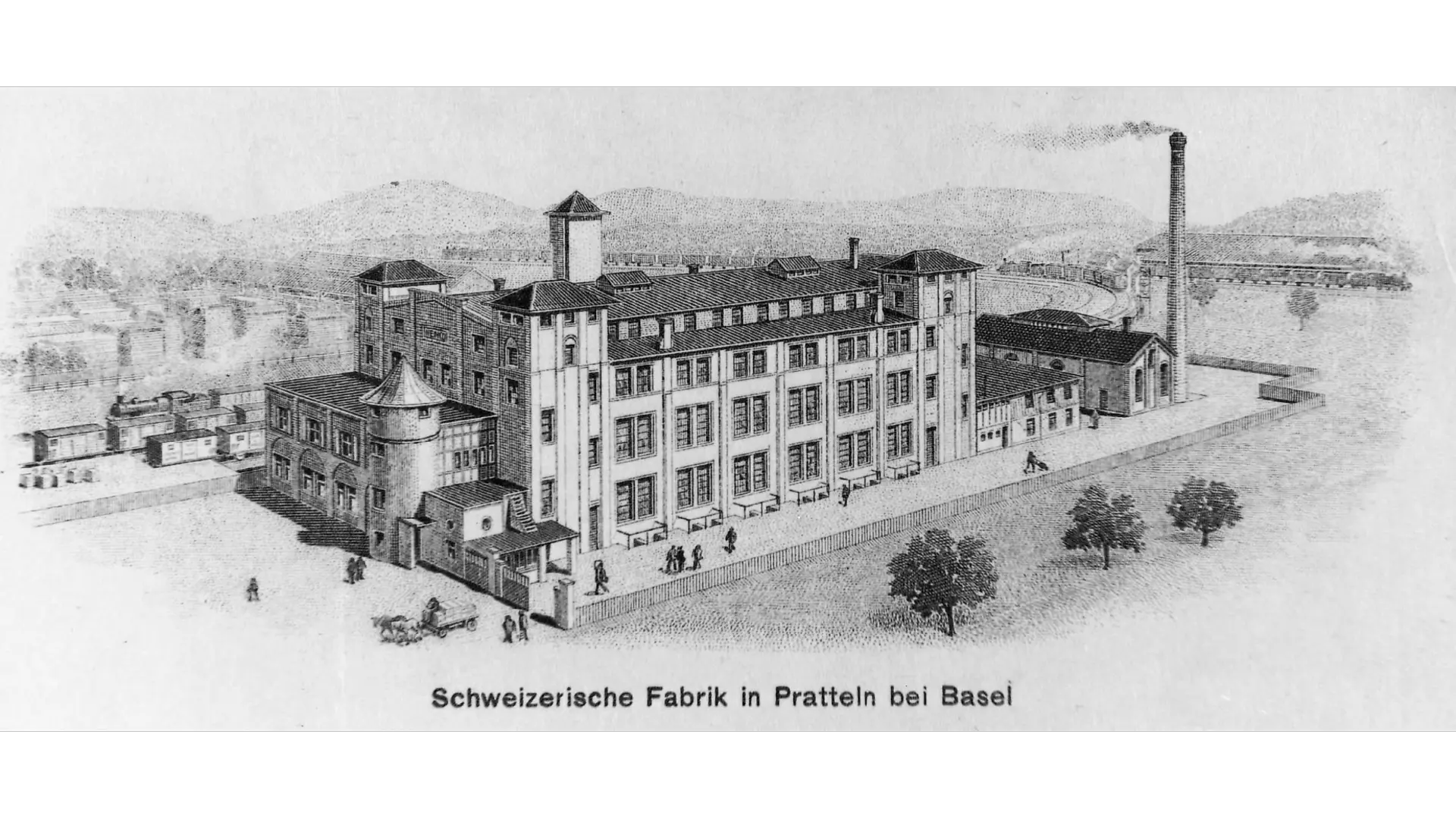
The Pratteln site of Henkel & Cie AG, Basel (1913)
Henkel founded its first production subsidiary in 1913: Henkel & Cie AG, in Basel-Pratteln, Switzerland. Its site covers an area of 9,161 square meters…
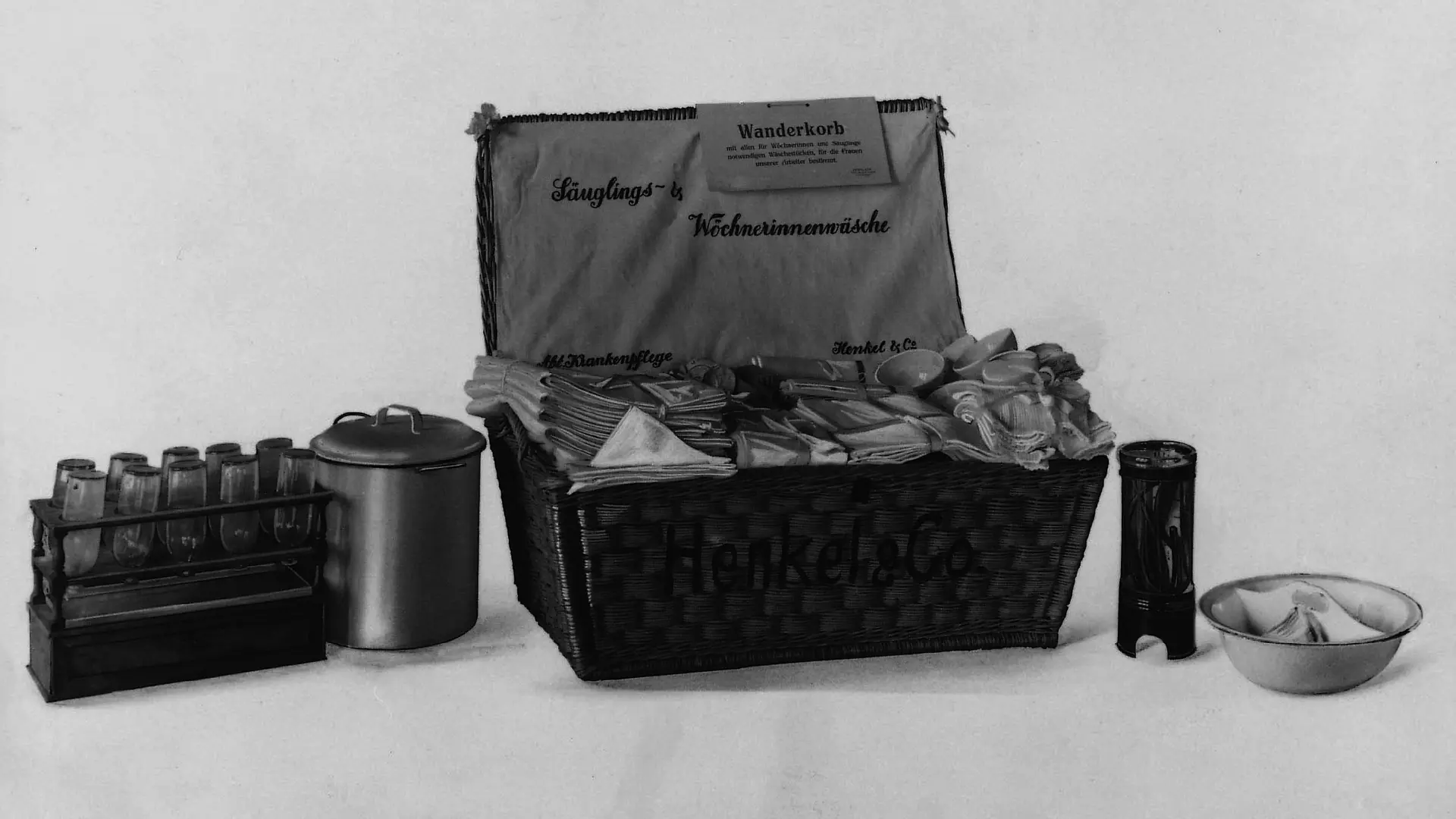
Traveling basket for new mothers with an infant, including bedding and undergarments (from 1913)
1 of 2
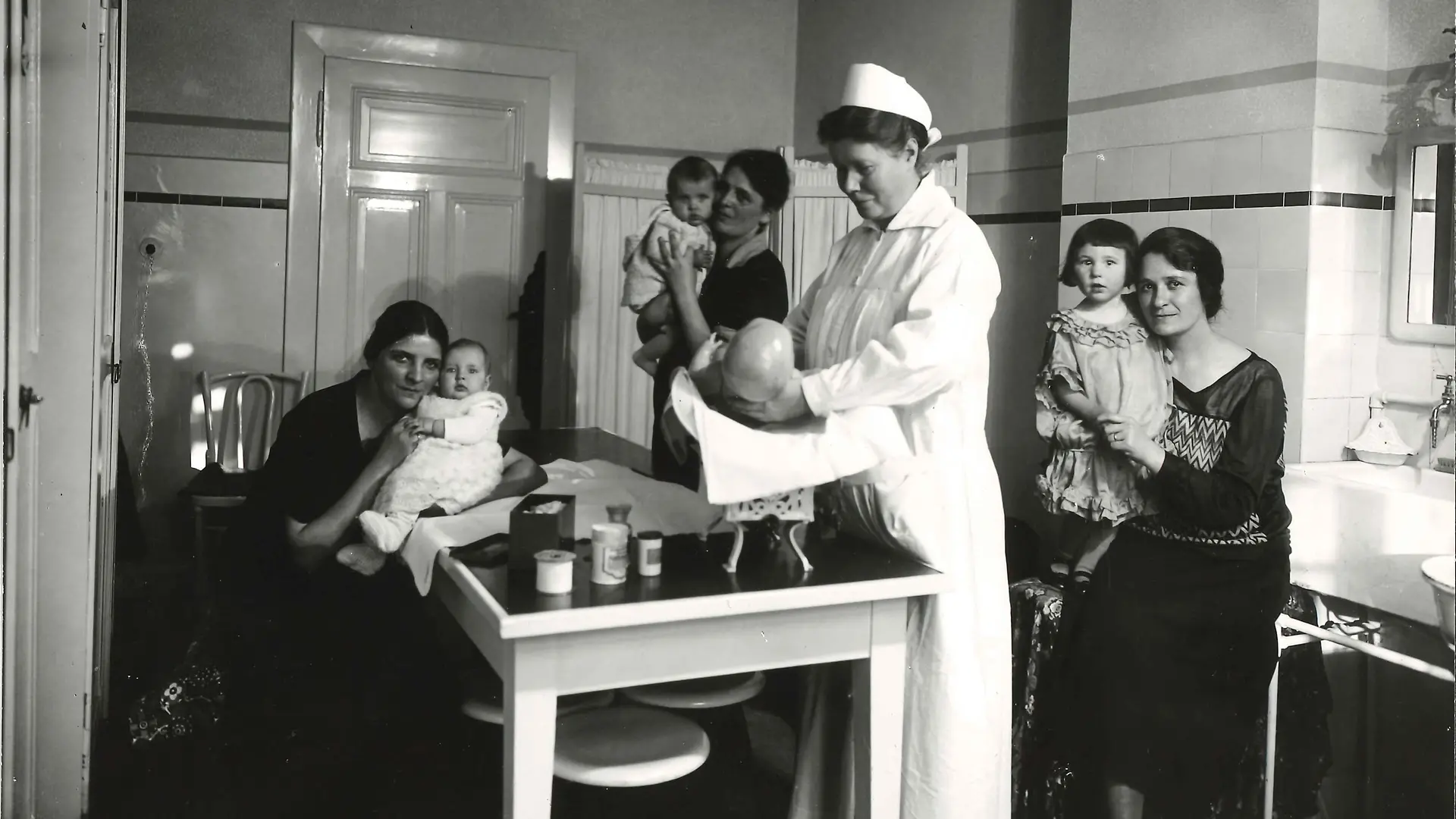
Infant mortality is still high in the early 20th century. To help improve neonatal care for new mothers and their infants, Henkel sets up an assistance scheme…
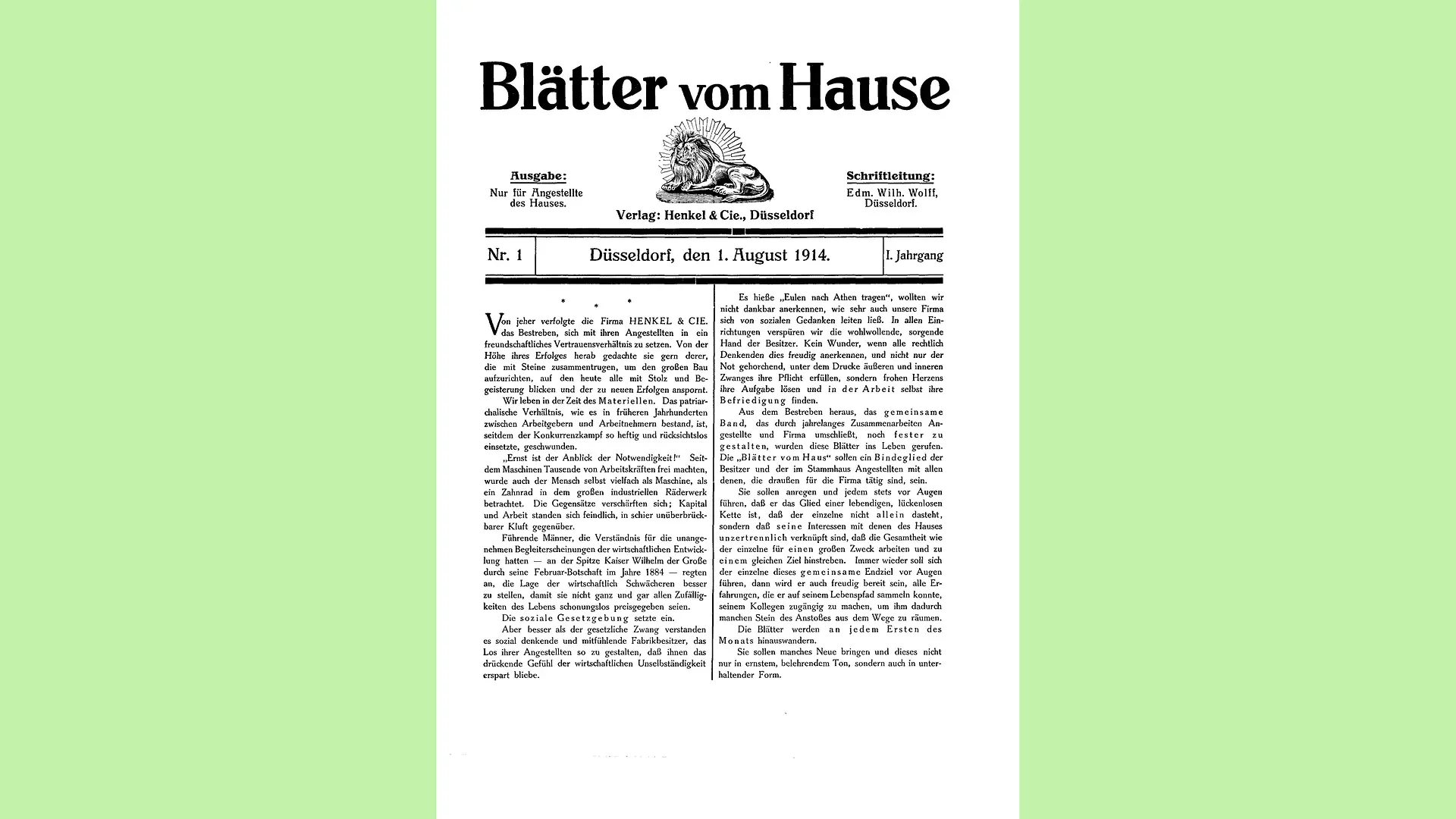
The very first edition of “Blätter vom Hause” (1914)
The Henkel magazine “Blätter vom Hause” was launched in 1914, which makes it one of the earliest employee magazines in Germany. Its goal is to keep employees in the field updated…
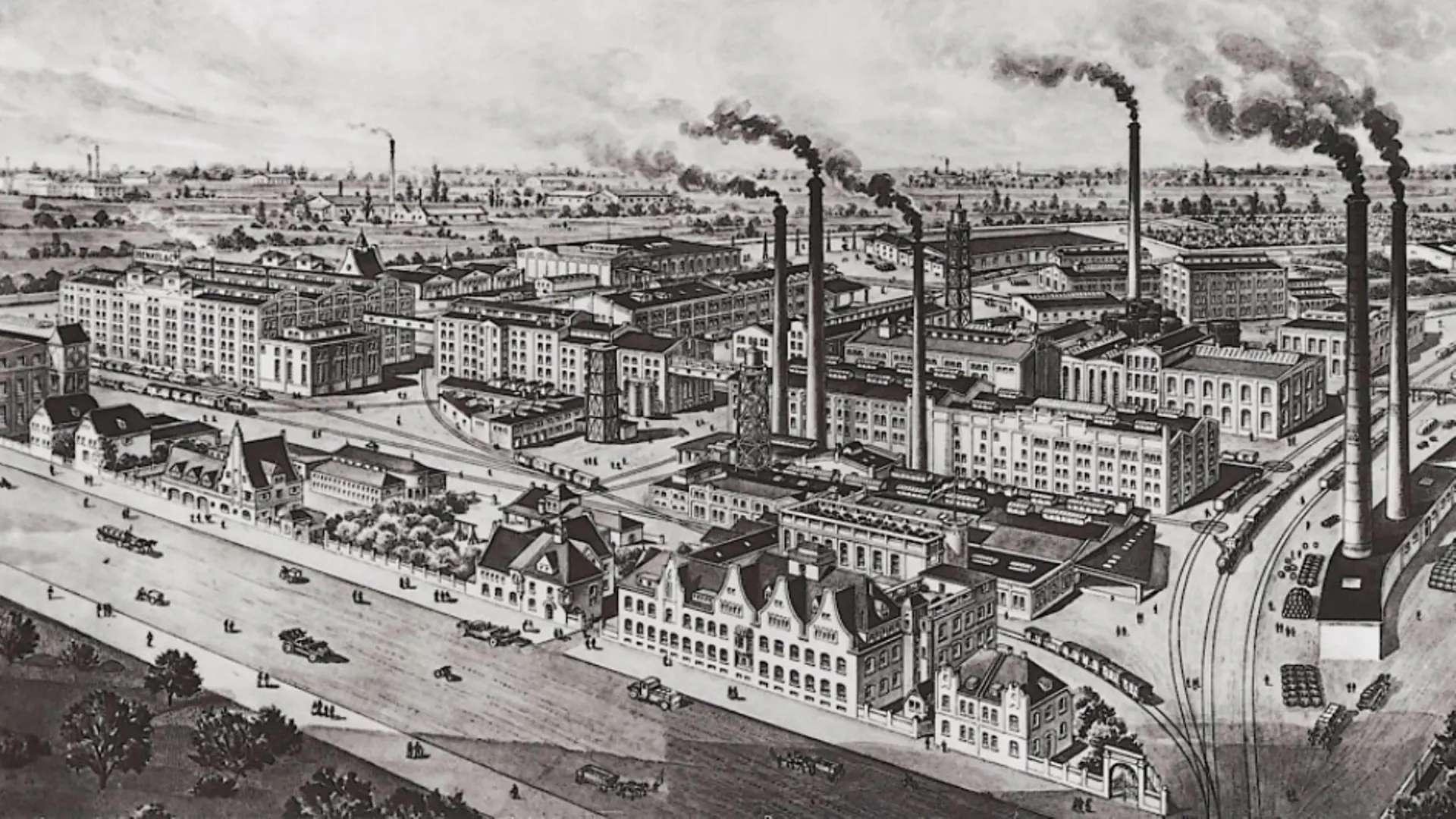
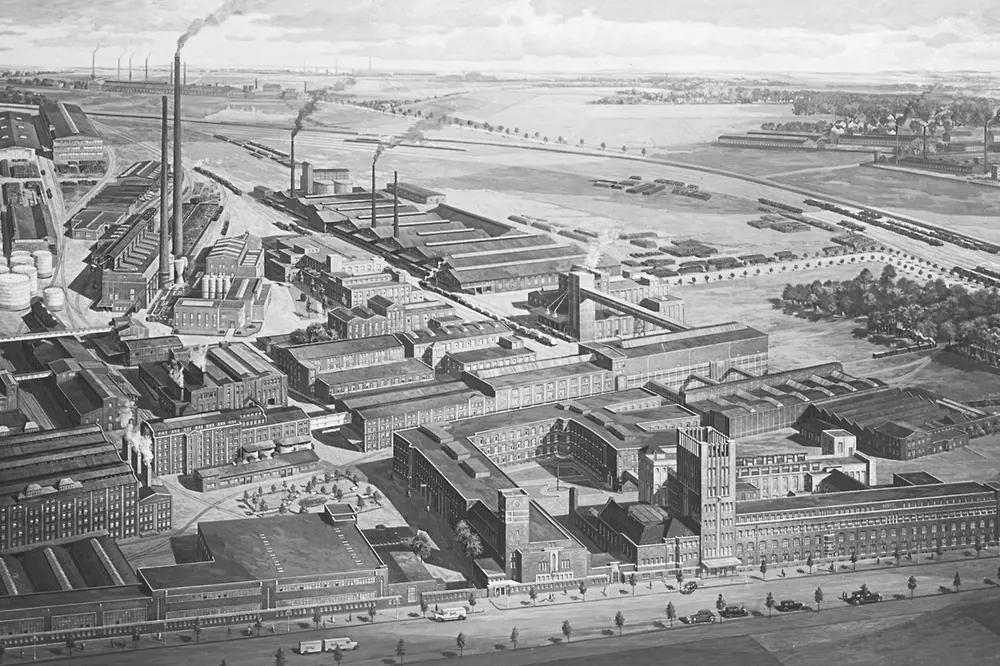
Drawing of the Henkel factory premises in Holthausen (1916)
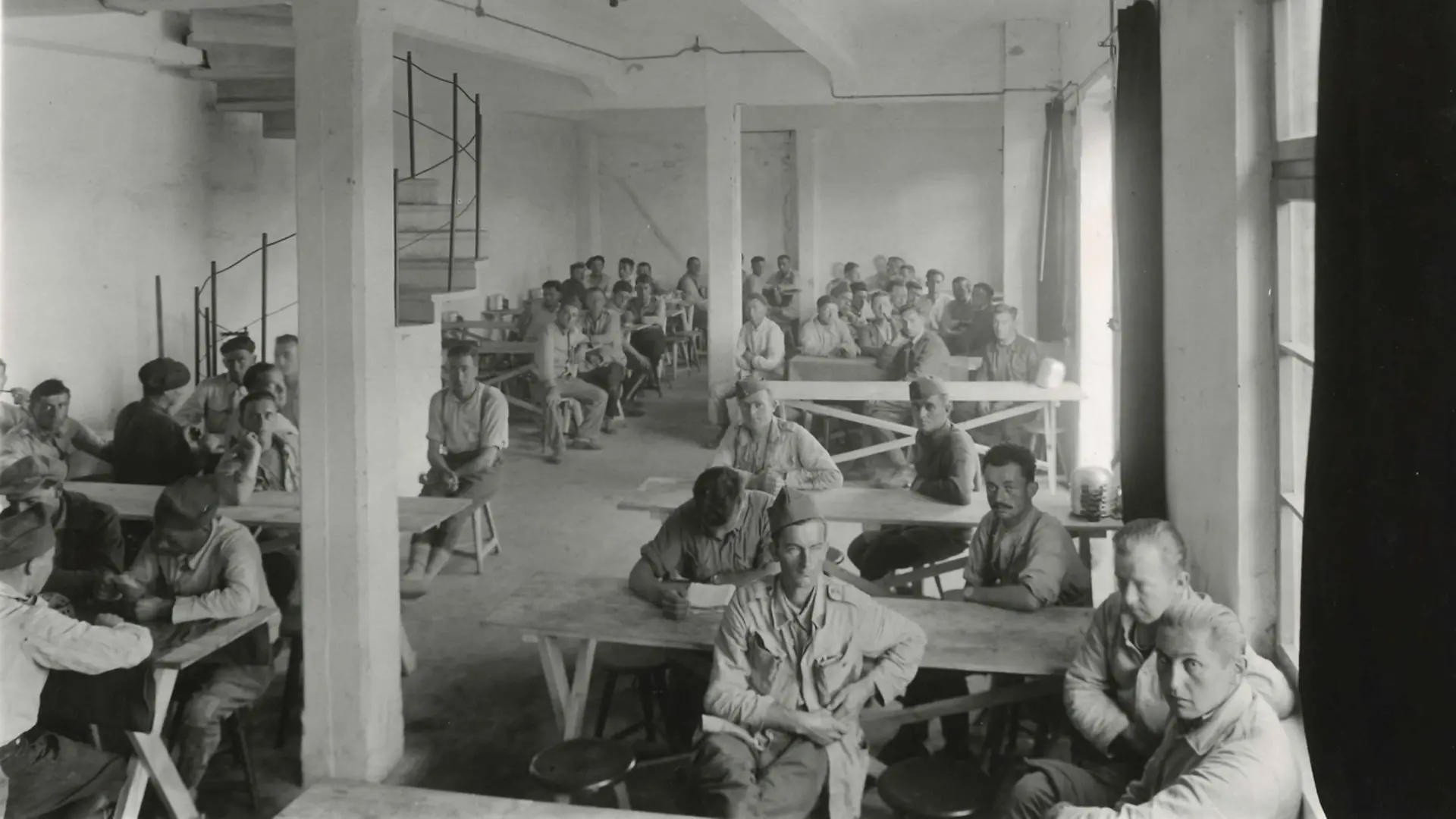
During World War I, more and more men of military age are drafted into the army. To compensate for the loss of employees, Henkel requests Russian prisoners of war. The first of them arrive in Holthausen in February 1916…
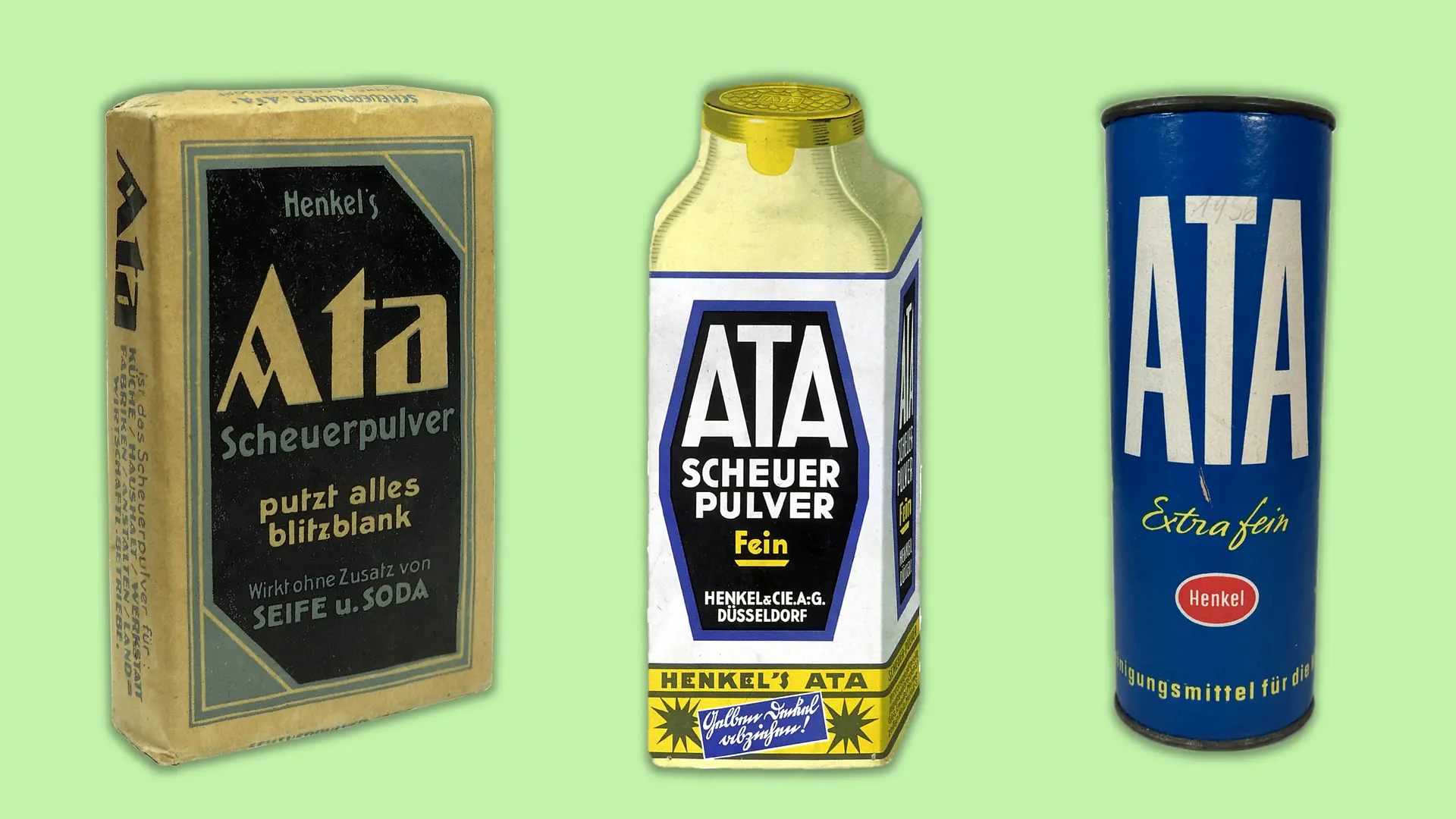
Ata paper pack (1920), Ata cast cardboard bottle (1924) and Ata tin can (1956)
Henkel launches its Ata household cleaner in 300g packs. The scouring powder is designed for a wide range of applications, both in the home and in industry…
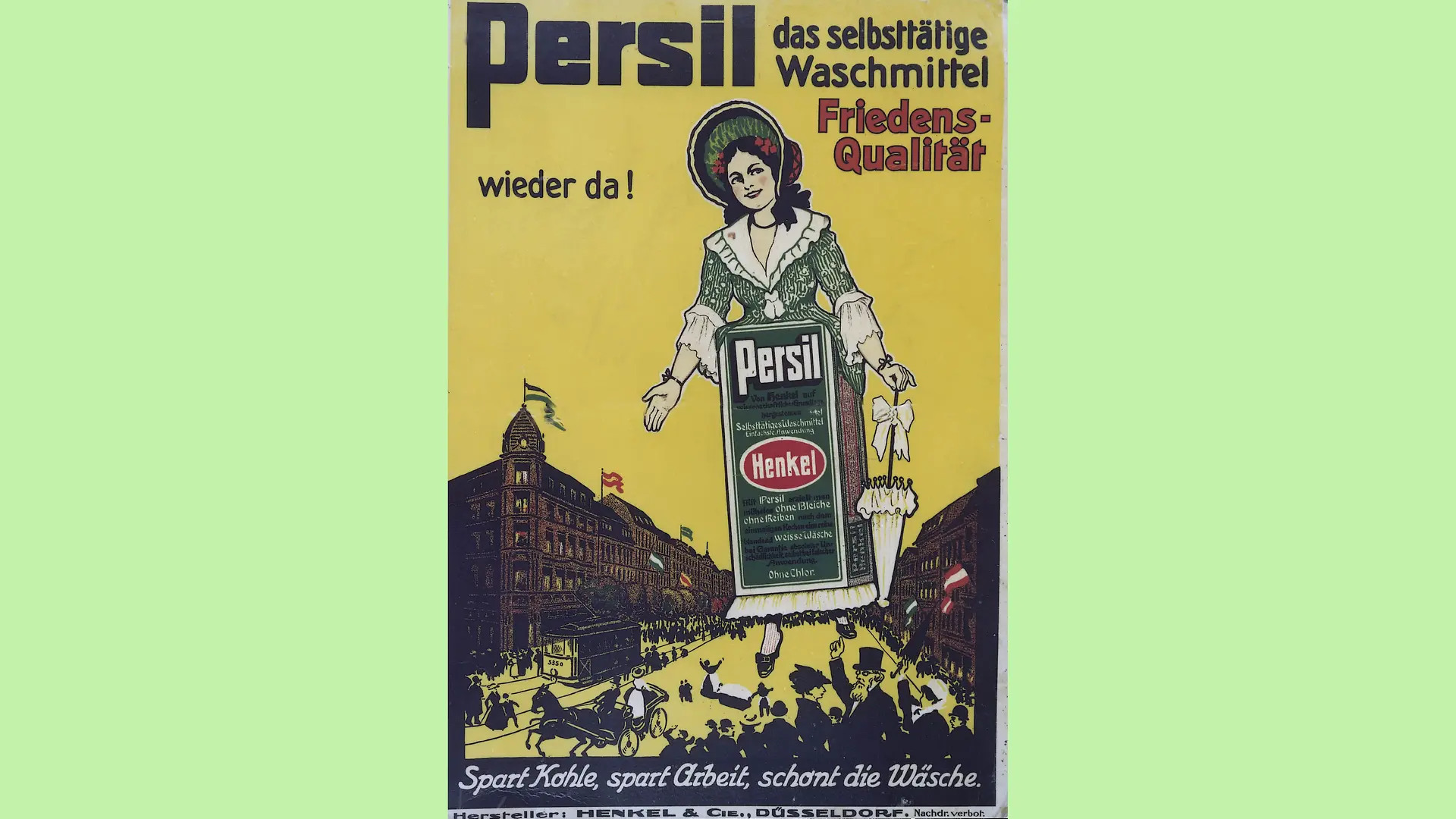
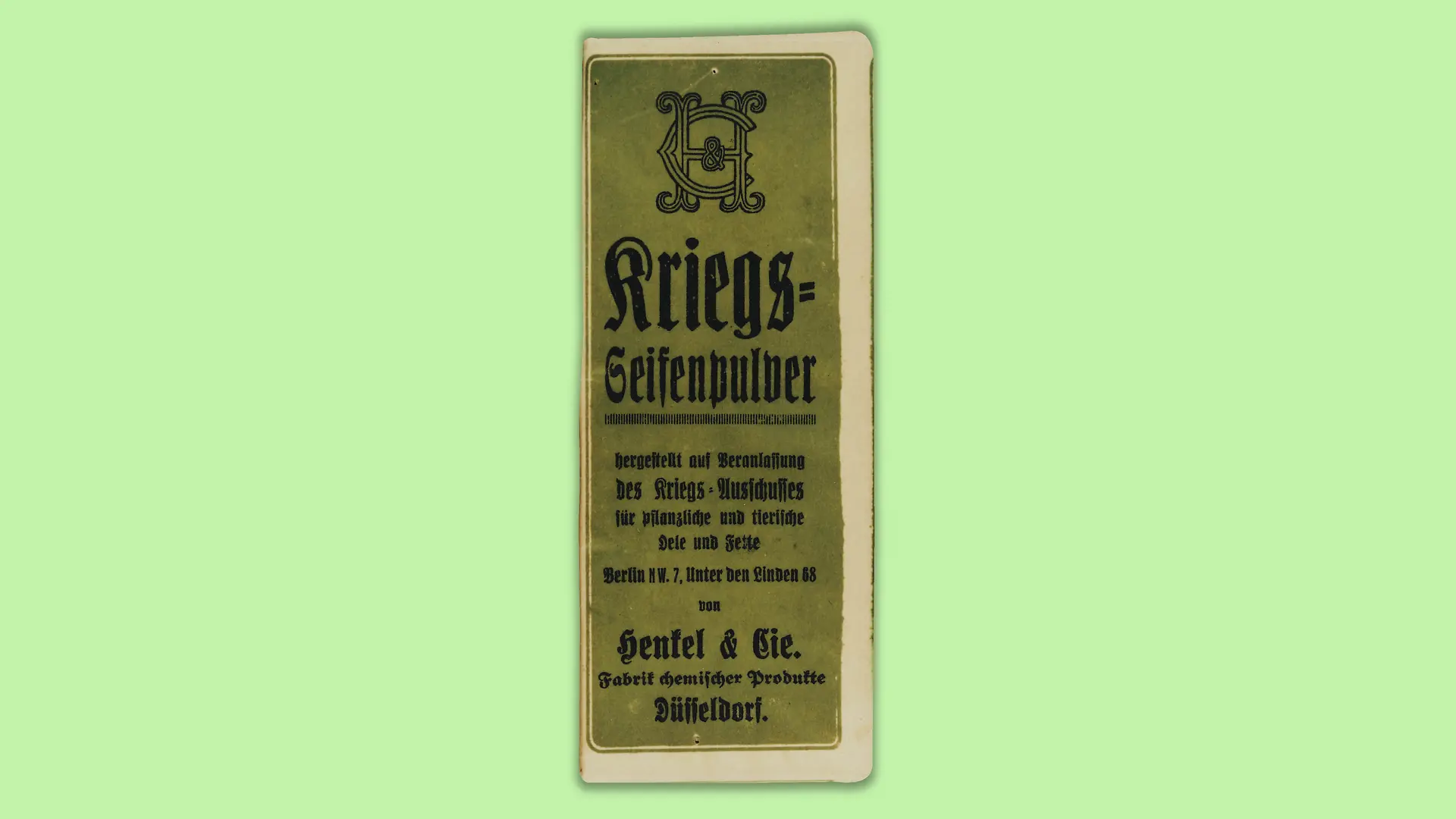
In 1916, the company introduces “Wartime Persil” with reduced fat content. Two years later the branded product is replaced by what was called “wartime soap powder”…
Henkel’s company premises in Düsseldorf-Holthausen (1902)
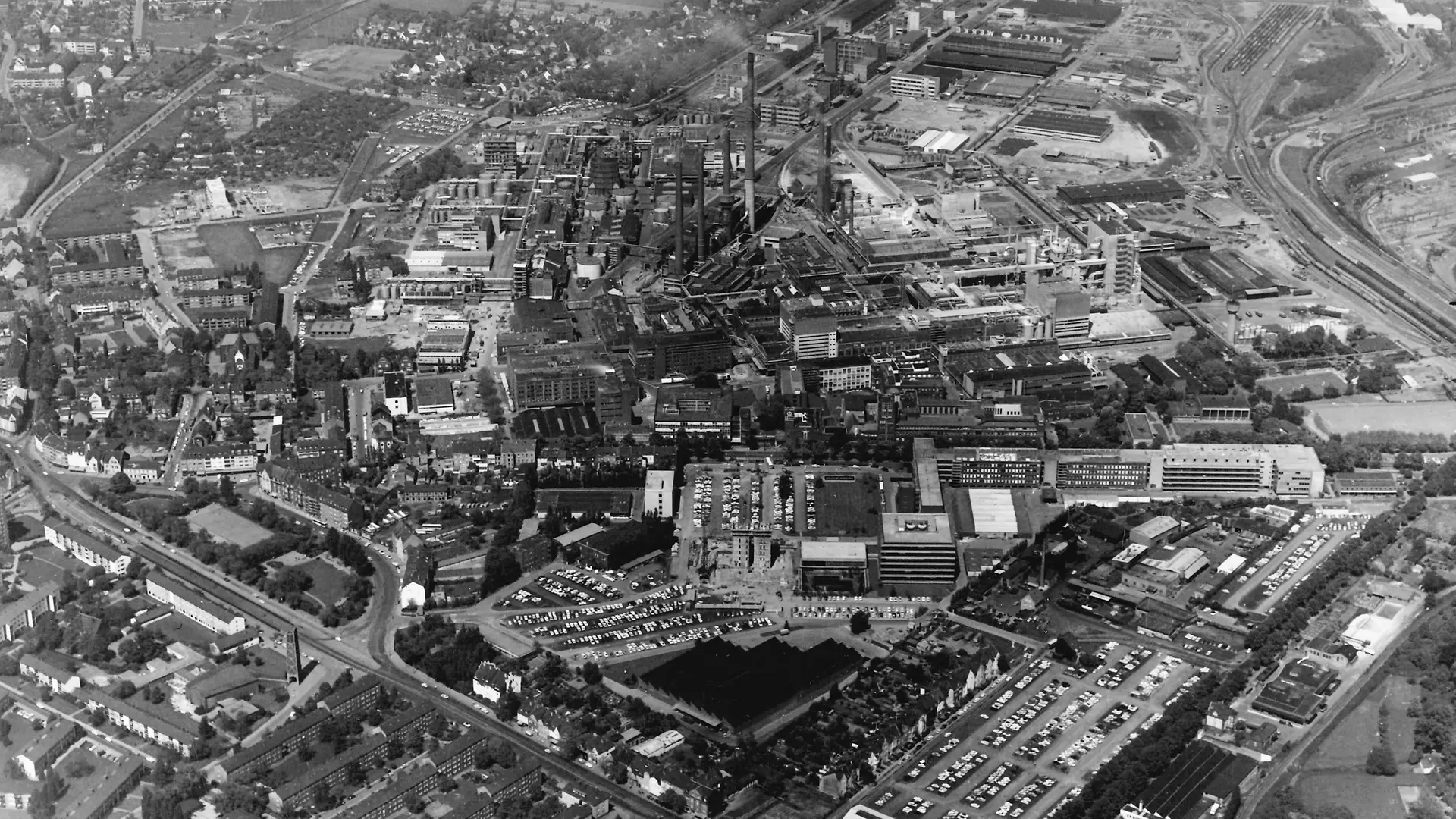
Production operations at the new site in Holthausen start on March 9, 1900, with around 70 blue-collar workers and seven clerks. Operations at the old factory in Düsseldorf-Oberbilk are phased out in the months that follow.
Hugo (1881–1952), the youngest son, joins his father’s company after obtaining a degree in chemistry. He is the first PhD chemist at Henkel and champions the company’s scientific research and development while at the same time heading up production. In 1908, he is appointed personally liable partner.
Persil revolutionizes the work in the laundry room. When it is launched in 1907, it is one of the first self-acting detergents in the market. It makes Henkel the undisputed market leader in the German detergent segment.
A success story: In 1912, Persil’s sales volume has reached 60 million packs, in 1915 it has soared to 102 million packs.
Fun fact: The name Persil is a portmanteau word made of the productʼs two principal chemical components: perborate and silicate.
Emmy Lüps and her father Fritz Henkel on her wedding day (1904)
Emmy Lüps (1884–1941), daughter of company founder Fritz Henkel Sr., joins her brothers as personally liable partner in the family business. However, she is not involved in the company’s operational business.
In his last will, Fritz Henkel bequeaths 40 percent of the company’s capital to each of his sons and 20 percent to his daughter Emmy. The decision to leave company shares to a female offspring was unusual in the early 20th century.
The Pratteln site of Henkel & Cie AG, Basel (1913)
Henkel founded its first production subsidiary in 1913: Henkel & Cie AG, in Basel-Pratteln, Switzerland. Its site covers an area of 9,161 square meters. (Production shut down in 1997)
Traveling basket for new mothers with an infant, including bedding and undergarments (from 1913)
1 of 2
Infant mortality is still high in the early 20th century. To help improve neonatal care for new mothers and their infants, Henkel sets up an assistance scheme. As of 1913, it included returnable care baskets, containing a starter set for infant care as well as sheets and baby underwear. The families also received meals from the factory canteen until ten days after delivery.
The very first edition of “Blätter vom Hause” (1914)
The Henkel magazine “Blätter vom Hause” was launched in 1914, which makes it one of the earliest employee magazines in Germany. Its goal is to keep employees in the field updated with events at Henkel, thus strengthening their bond with the company.
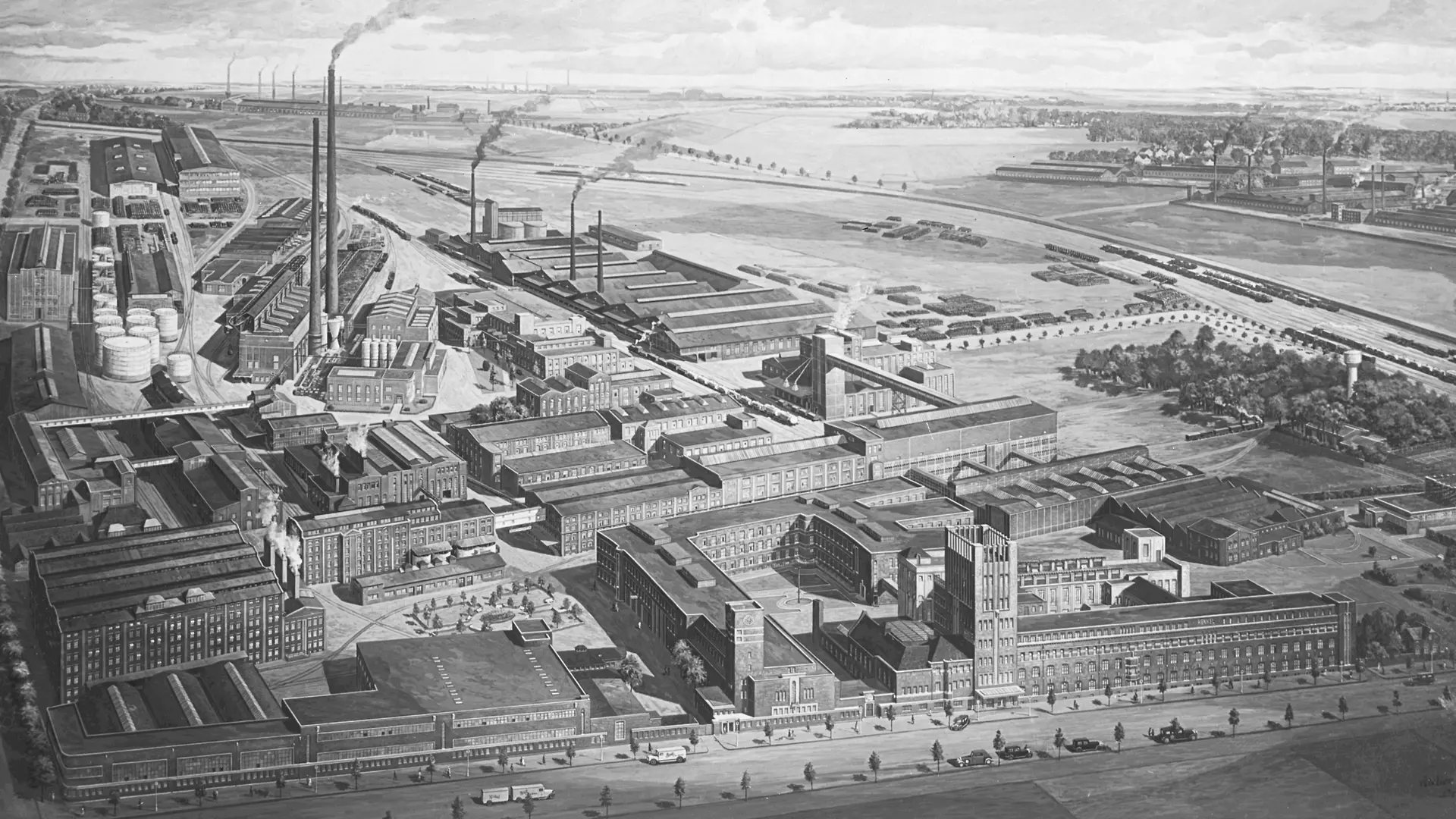
Drawing of the Henkel factory premises in Holthausen (1916)
During World War I, more and more men of military age are drafted into the army. To compensate for the loss of employees, Henkel requests Russian prisoners of war. The first of them arrive in Holthausen in February 1916. The prisoners of war are housed and fed on the premises. Despite these circumstances it must be stated clearly that they did not work for Henkel at their own free will and that they were also increasingly asked to carry out dangerous tasks.
Ata paper pack (1920), Ata cast cardboard bottle (1924) and Ata tin can (1956)
Henkel launches its Ata household cleaner in 300g packs. The scouring powder is designed for a wide range of applications, both in the home and in industry.
Initially still packaged in small paper packs, Ata is marketed in an unusual cast cardboard bottle from 1924 to 1956.
In 1916, the company introduces “Wartime Persil” with reduced fat content. Two years later the branded product is replaced by what was called “wartime soap powder.”
Persil could only be produced in its usual “peacetime quality” again after the compulsory regulations of soap production were abolished in Germany.
1921 – 1932
Turbulent times
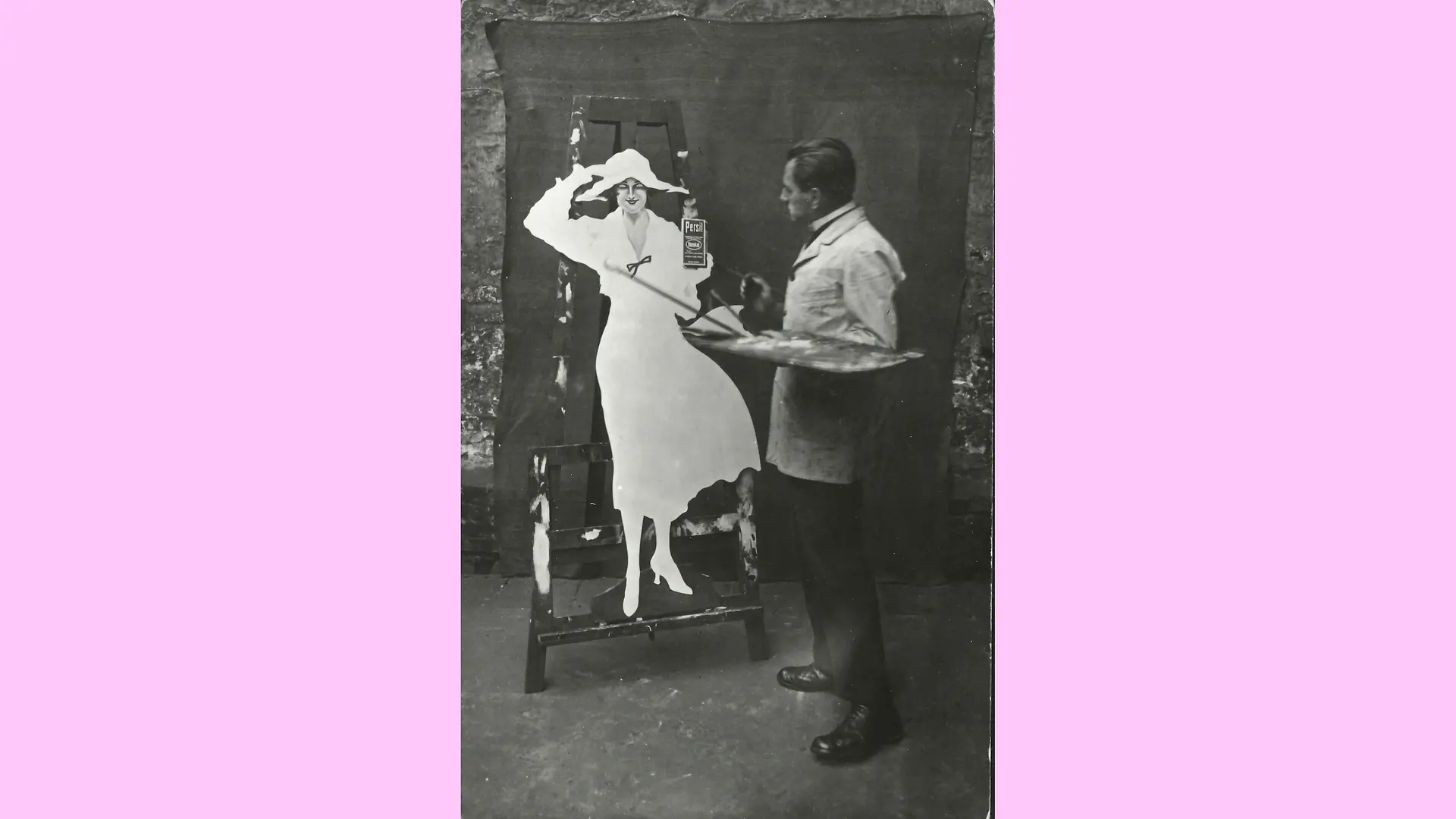
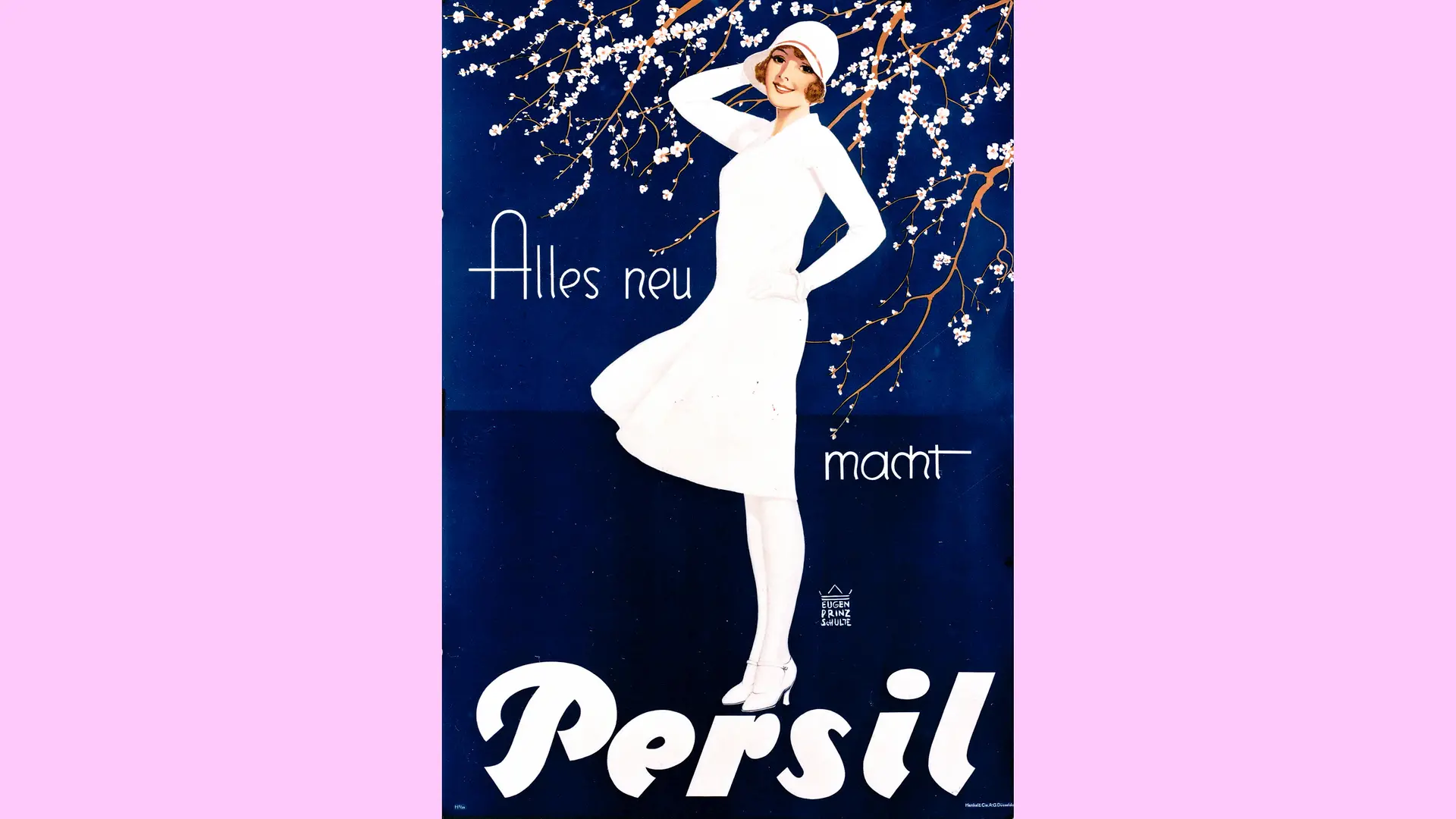
After the end of World War I, the devaluation of currency is in full swing, reaching its peak in 1923 with hyperinflation. Despite the economic crisis, Fritz Henkel invests in innovative advertising strategies to promote its products and reach as many consumers as possible. This leads to the creation of the “Lady in White,” who goes on to become an iconic advertising figure in the following years.
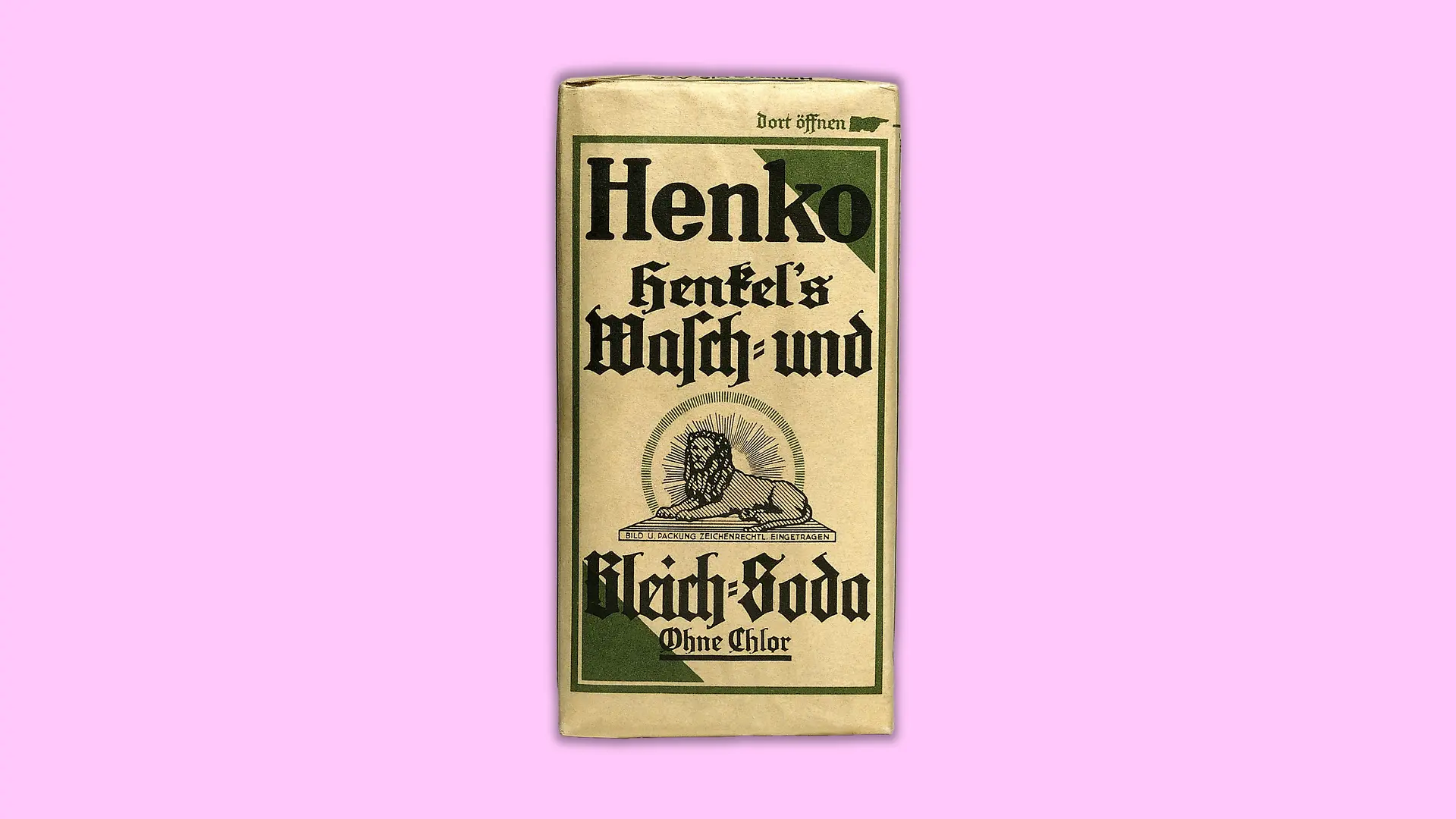
Henkel’s Bleich-Soda (bleaching soda) is relaunched under the name Henko
Henkel’s Bleich-Soda (bleaching soda) is renamed Henko. The soaking powder continues to be on the market until the early 1990s. Over the years, Henko, Persil and Sil become...
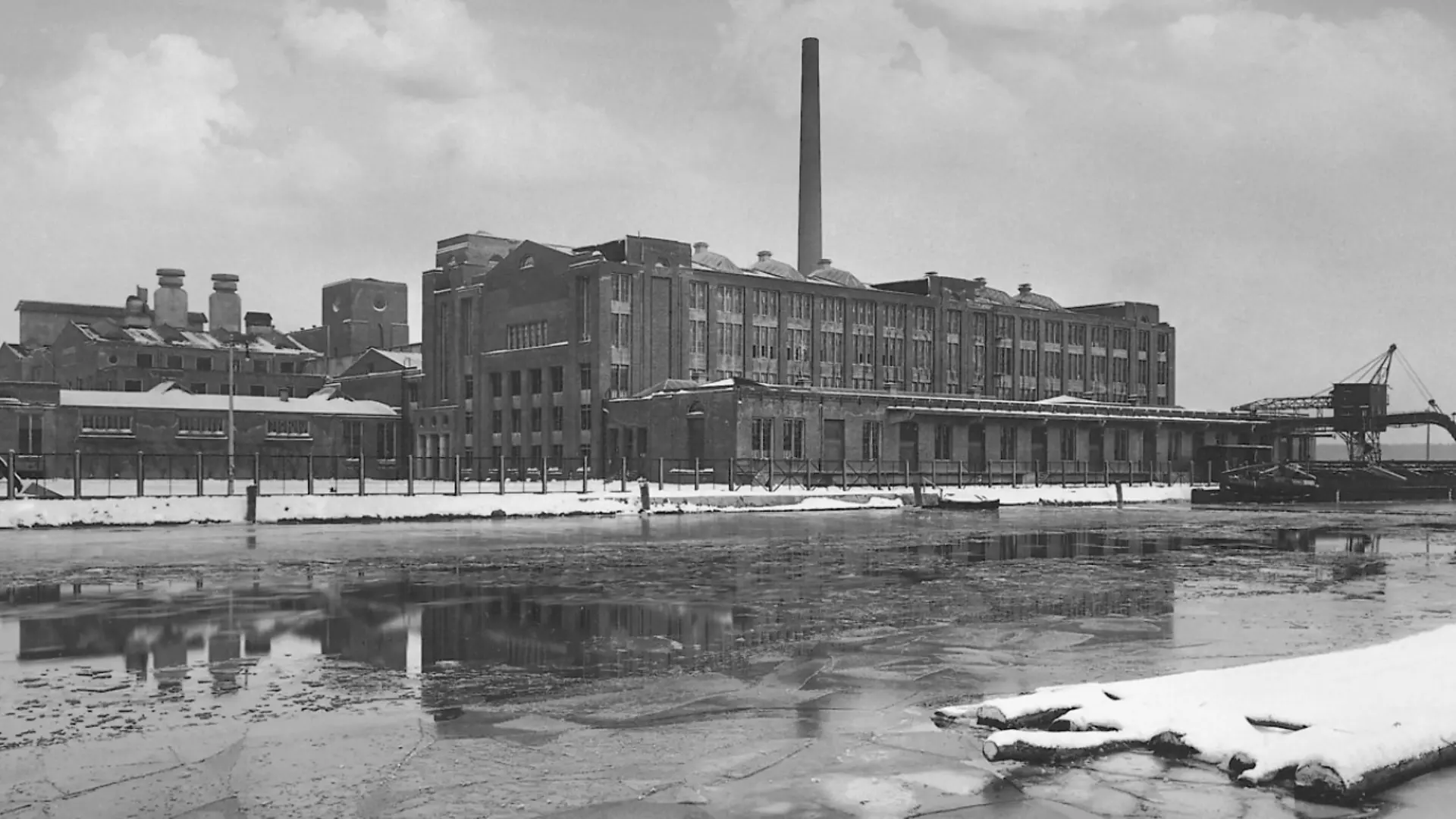
The Henkel plant in Genthin after its completion (1925)
1 of 2
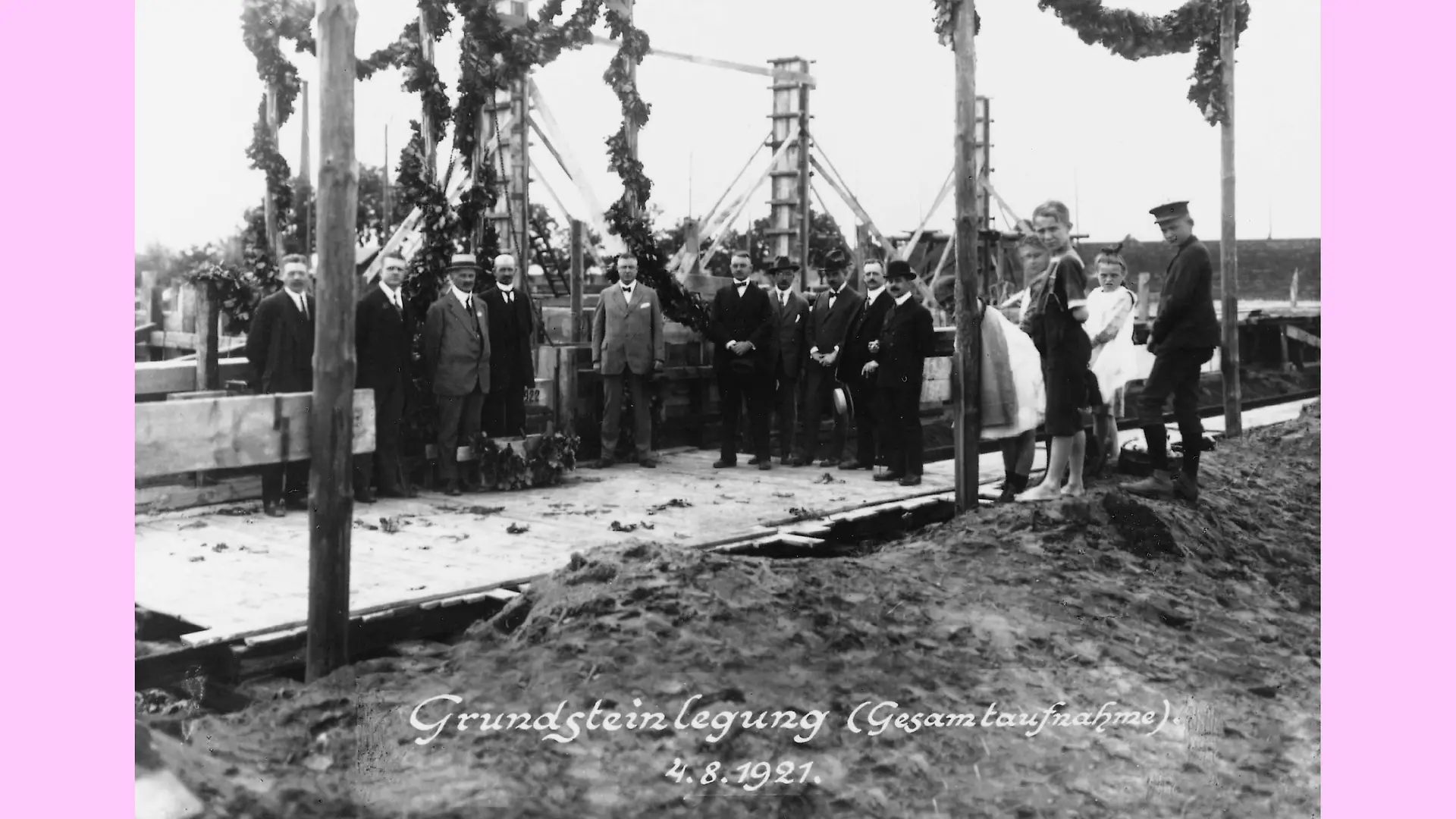
Henkel GmbH in Genthin (Saxony-Anhalt) is founded: in August, Fritz Henkel Jr. and Dr. Hugo Henkel lay the foundation stone for the new production facility...
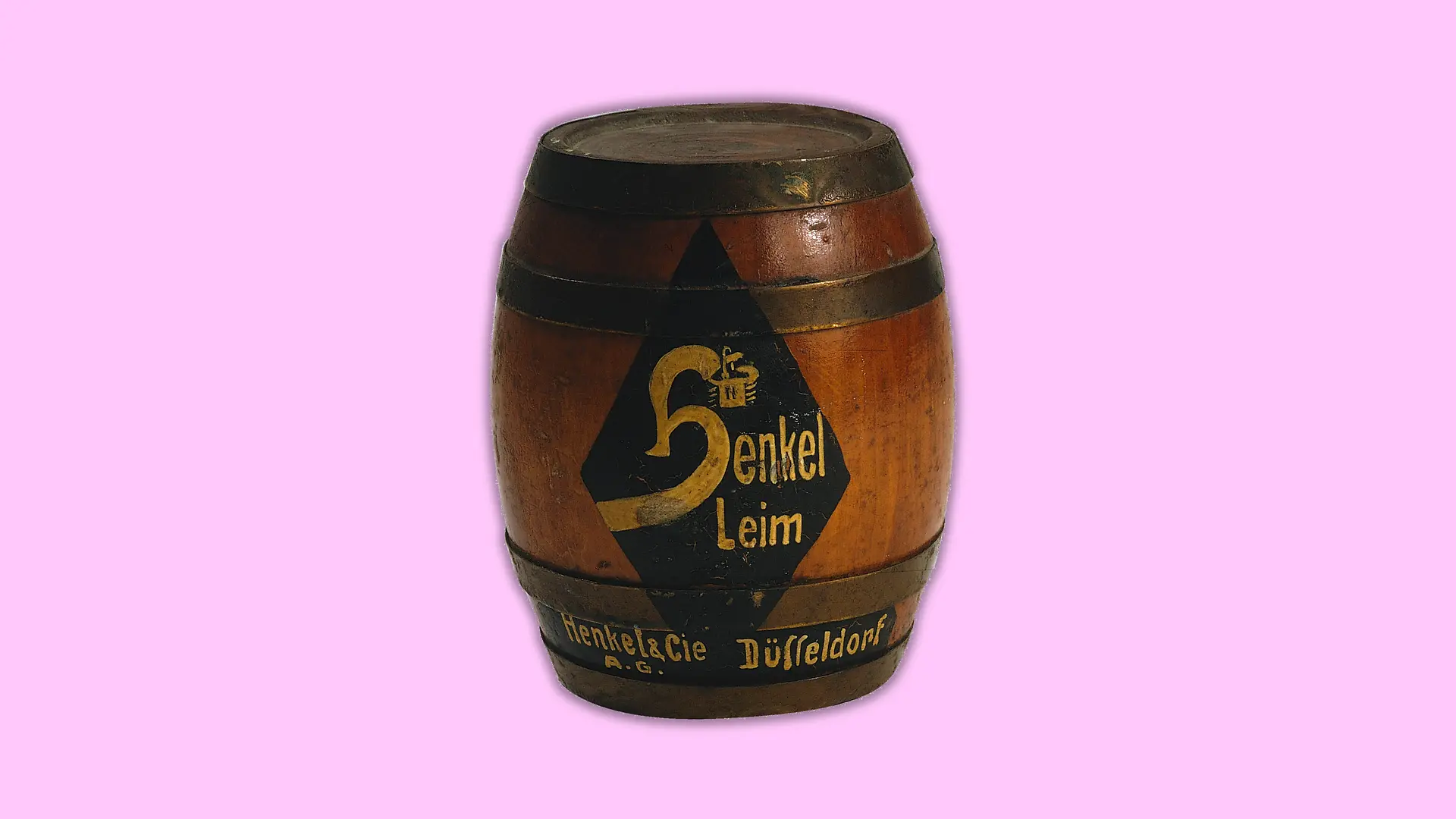
Miniature replica of a printed Henkel glue drum from 1925
As Persil rides the wave of success, the company requires huge amounts of glue to seal its packaging. Due to the aftermath of World War I, Henkel fears that their supplier…
When clicking the button below external content will be loaded which involves transfer of personal data (e.g. IP address) to external servers. This may involve that cookies are set by the external content provider. Please see Data Protection Statement for further information.
Deactivate loading external content from YouTube.
1 of 3
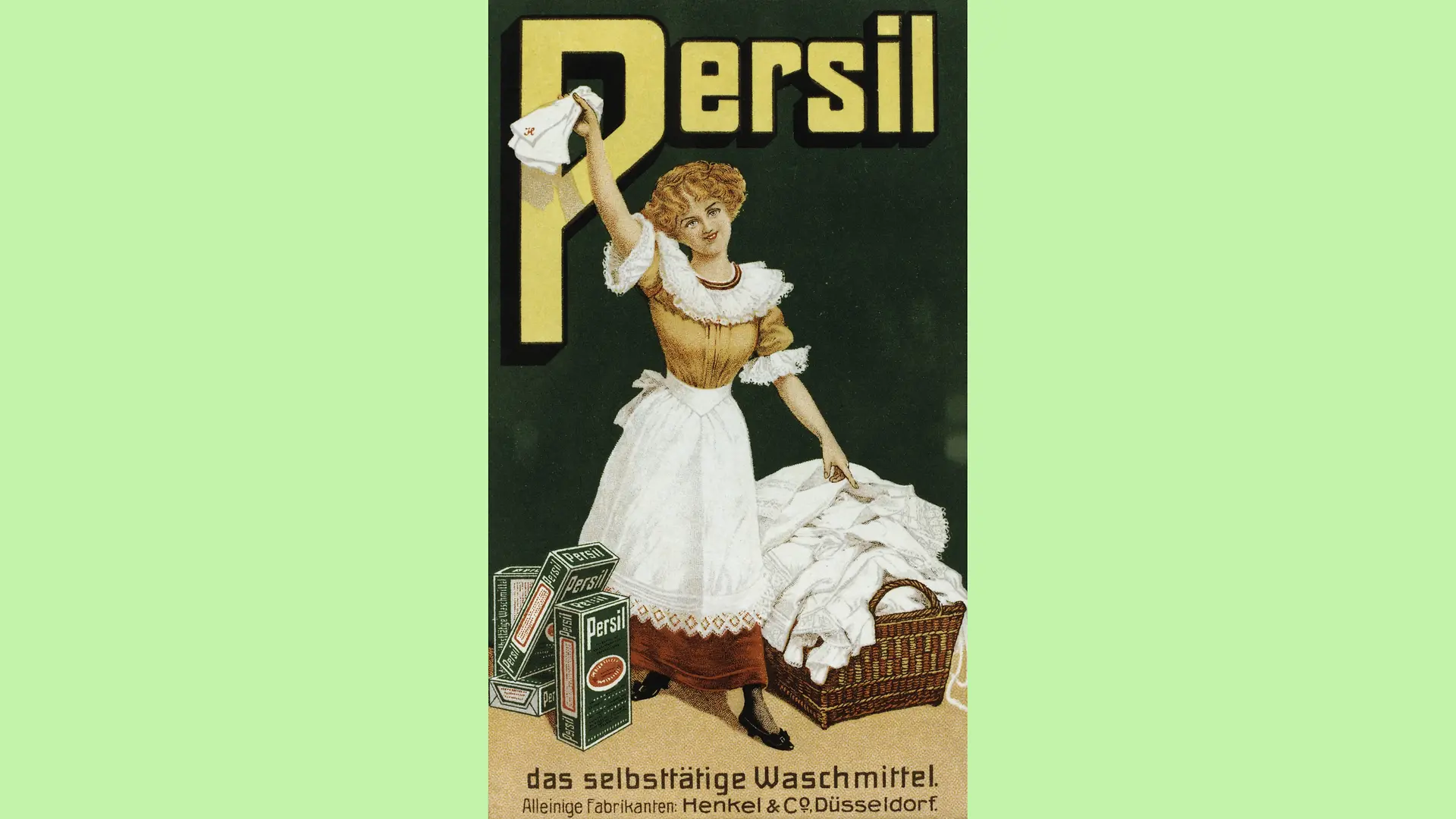
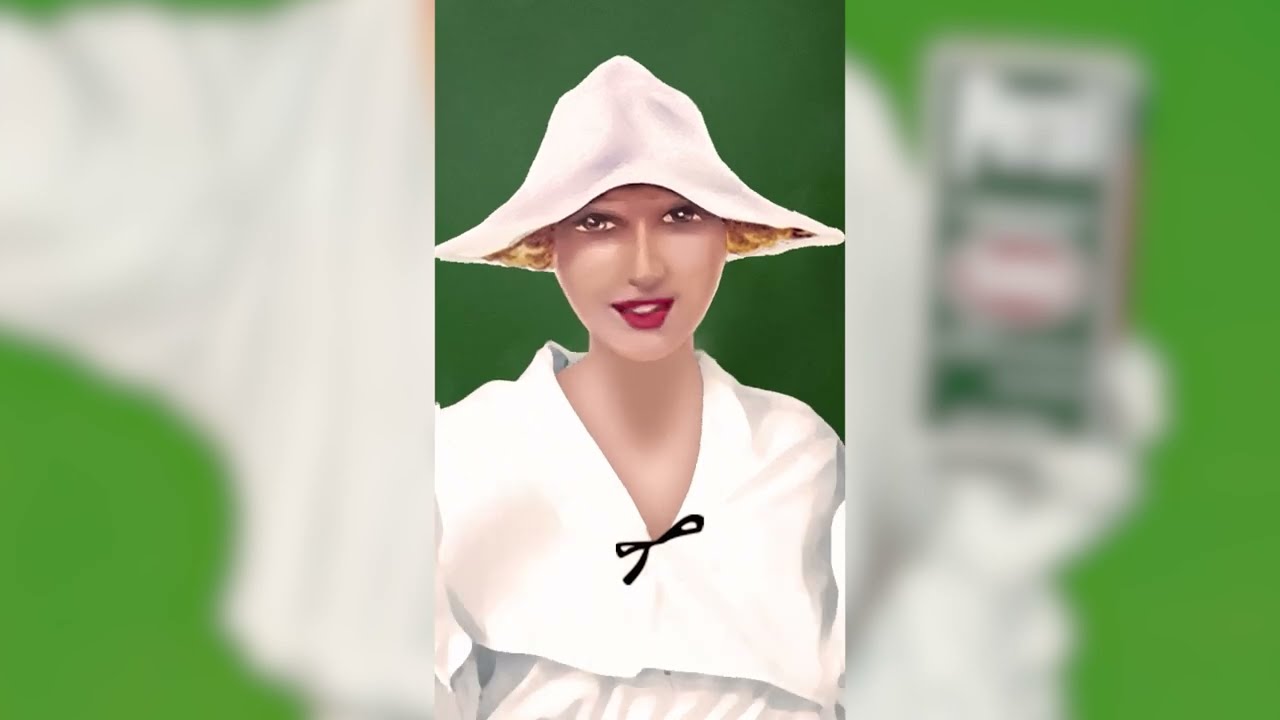
1922 sees the creation of the company’s most famous advertising figure: the Lady in White. Until well into the 1960s, the Lady in White promotes Persil
Innovative advertising methods of the 1920s and 1930s
Very early on, Fritz Henkel realizes that a strong brand presence is a key success factor. So he uses highly innovative ways to promote Persil. Eye-catching promotions include…
In 1925, Henkel starts to offer systematic vocational training. Initially apprenticeships were open for soon-to-be locksmiths, lathe operators, plumbers, carpenters and printers...
The GeSoLei pavilion (1926). After the end of the exhibition, the building is extended and becomes part of the Henkel administration building
GeSoLei in Düsseldorf: the trade fair on GEsundheitspflege, SOziale Fürsorge und LEIbesübungen (Healthcare, Social welfare and Physical exercise) takes place on a…
The film “Wäsche – Waschen – Wohlergehen” ("Laundry – Washing – Well-being") was released on the big screen in 1932 (here: UFA-Palast cinema Pfalzbau-Ludwigshafen)
The promotional poster for the film “Wäsche – Waschen – Wohlergehen” (“Laundry – Washing – Well-being”) is a real eye-catcher at the time
1 of 2
As of 1927, Henkel commissions a whole series of documentaries and feature films for the main programs of the big movie theaters. In 1927, for example, the silent movie...
The P3 range opens up a new market segment in industrial cleaning. The name P3 derives from the chemical compound tri-sodium-phosphate. P3 is used for cleaning purposes in the industrial...
In January, Dr. h.c. Fritz Henkel Jr. dies unexpectedly at the age of 55. Two months later Fritz Henkel Sr. dies at the age of 81. PhD chemist Dr. Hugo Henkel takes over sole...
Henkel’s Bleich-Soda (bleaching soda) is relaunched under the name Henko
Henkel’s Bleich-Soda (bleaching soda) is renamed Henko. The soaking powder continues to be on the market until the early 1990s. Over the years, Henko, Persil and Sil become the “iconic threesome” of laundrycare, covering all requirements and stages of the washing process.
The Henkel plant in Genthin after its completion (1925)
1 of 2
Henkel GmbH in Genthin (Saxony-Anhalt) is founded: in August, Fritz Henkel Jr. and Dr. Hugo Henkel lay the foundation stone for the new production facility. Two years later, production of detergents and cleaning agents begins at the new Henkel plant.
Miniature replica of a printed Henkel glue drum from 1925
As Persil rides the wave of success, the company requires huge amounts of glue to seal its packaging. Due to the aftermath of World War I, Henkel fears that their supplier – adhesive producer Sichel in Hannover – might no longer be able to deliver adhesives to the Rhineland. Dr. Hugo Henkel, who is responsible for production, therefore decides to take precautionary action and starts to produce the necessary adhesives in-house.
As of 1923, Henkel even sells its adhesives to neighboring companies, thus establishing a new line of business. It marked the beginning of a global success story.
When clicking the button below external content will be loaded which involves transfer of personal data (e.g. IP address) to external servers. This may involve that cookies are set by the external content provider. Please see Data Protection Statement for further information.
Deactivate loading external content from YouTube.
1 of 3
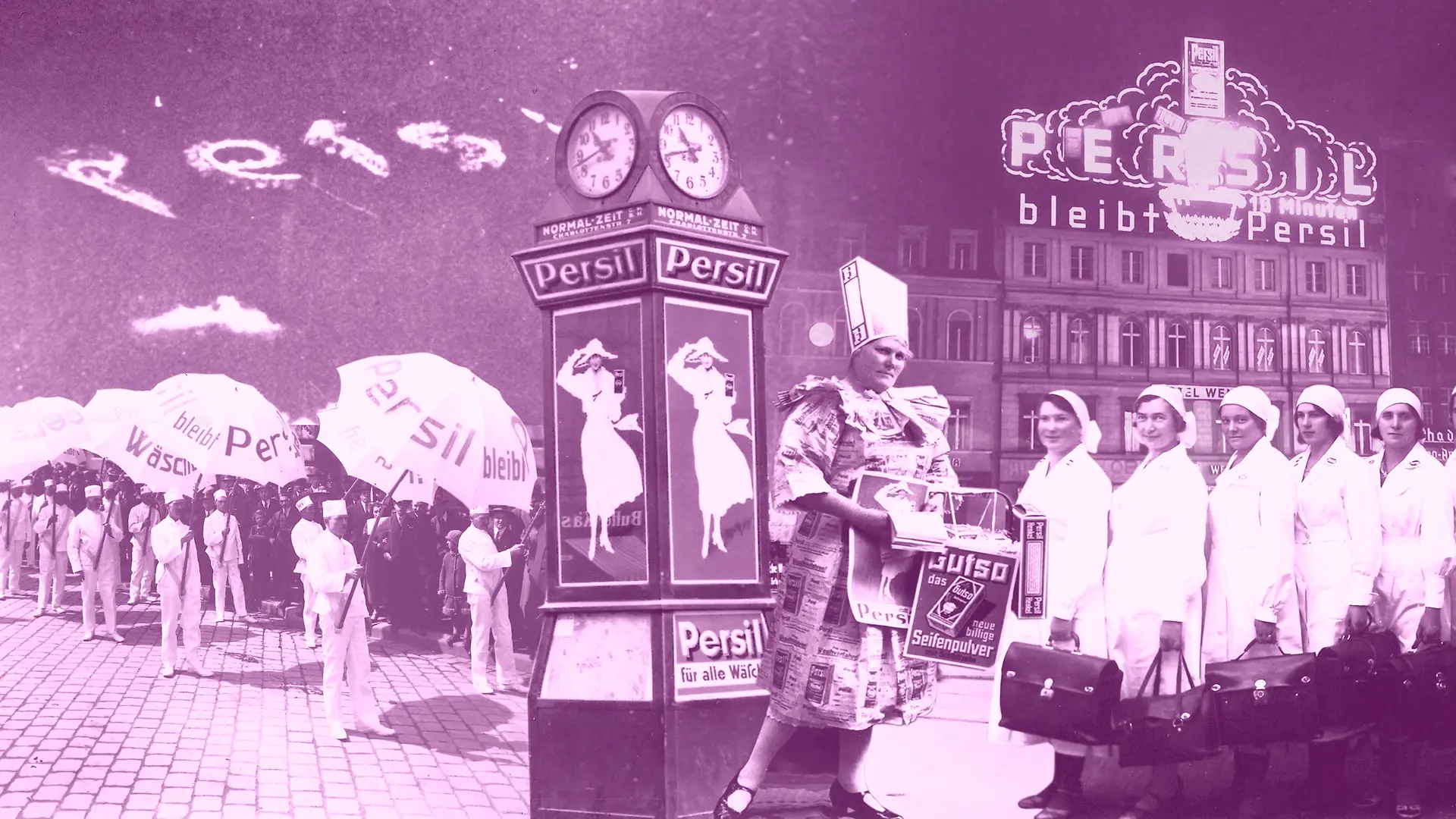
1922 sees the creation of the company’s most famous advertising figure: the Lady in White. Until well into the 1960s, the Lady in White promotes Persil in advertising media such as newspapers, posters and enamel signs, thus contributing significantly to the brand’s success.
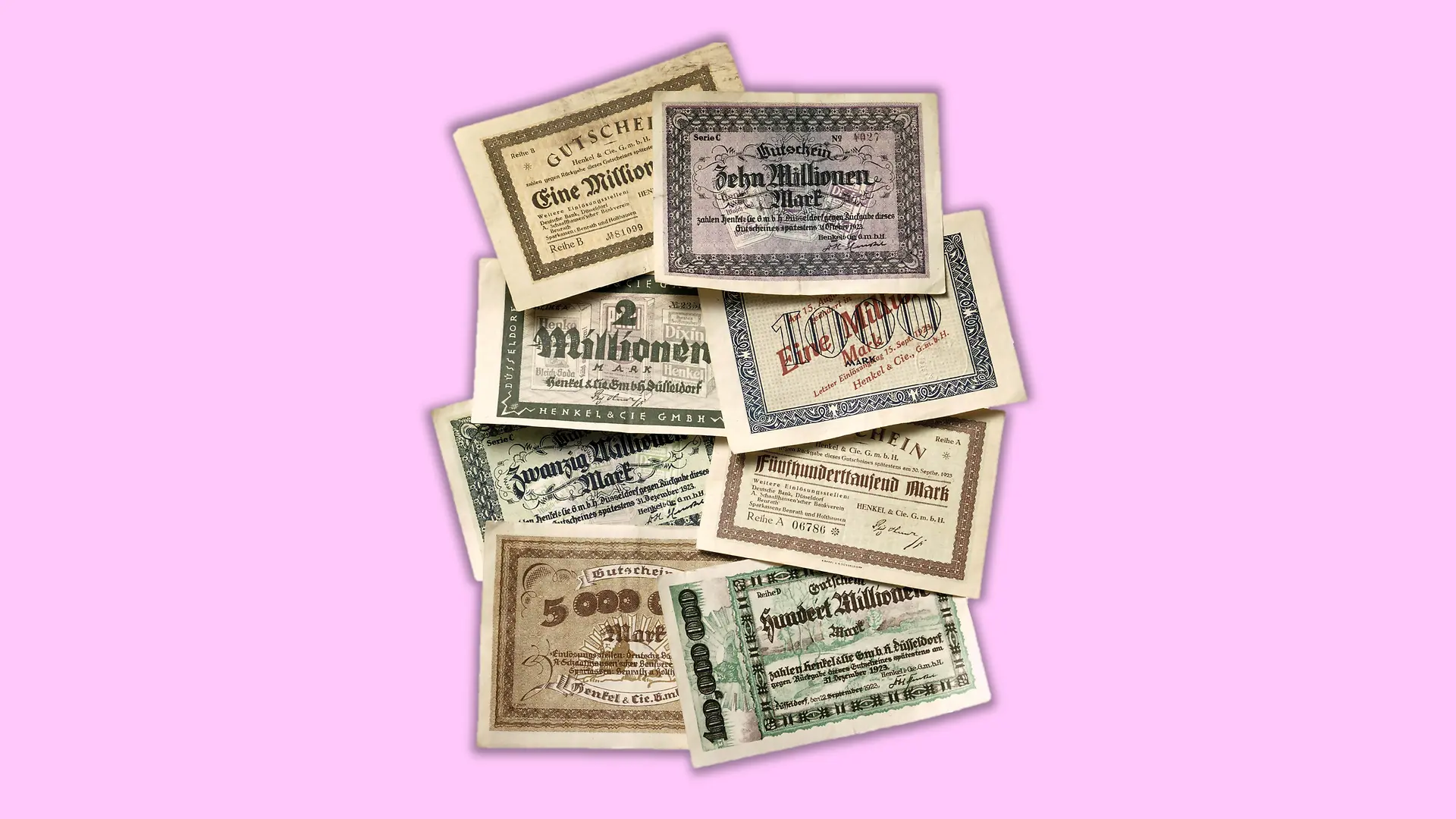
Henkel’s own printed emergency money with values of up to one hundred million marks
As of 1914, the German government fires up the money printing press: first to finance World War I and later to pay war reparations (indemnity payments to the victorious wartime enemies) under the peace treaty of Versailles.
The huge increase in money supply leads to strong currency devaluation which turns into hyperinflation in 1923. At the peak of the inflation period, a Persil pack costs 1.2 trillion marks.
People’s lack of purchasing power impacts the business significantly: In 1923, production goes down by 70 percent over the previous year.
Innovative advertising methods of the 1920s and 1930s
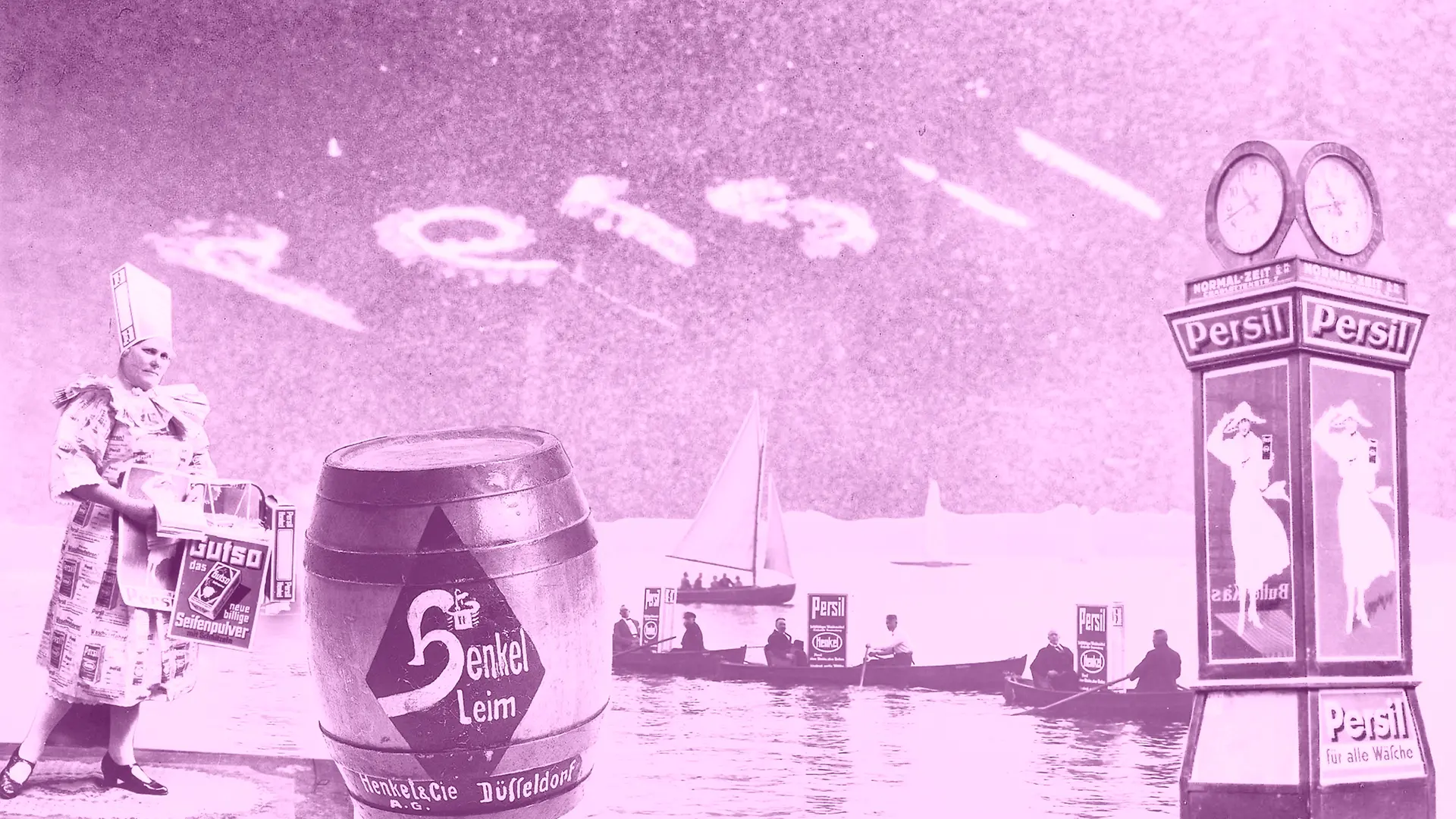
Very early on, Fritz Henkel realizes that a strong brand presence is a key success factor. So he uses highly innovative ways to promote Persil. Eye-catching promotions include white-clad men strolling busy shopping streets and causing quite a stir with their Persil parasols (1926); or Persil ladies whose fancy costumes consist of printed Persil ads (as of 1924). In 1927, he starts promoting Persil using the emerging radio broadcasting medium.
From illuminated advertisements to movies or the famous Persil clocks: Henkel keeps using novel promotional methods and shows a good instinct for their impact. Advertising activities are supported by the so-called “traveling instructresses” and the traveling salesmen who promote Henkel products in the field.
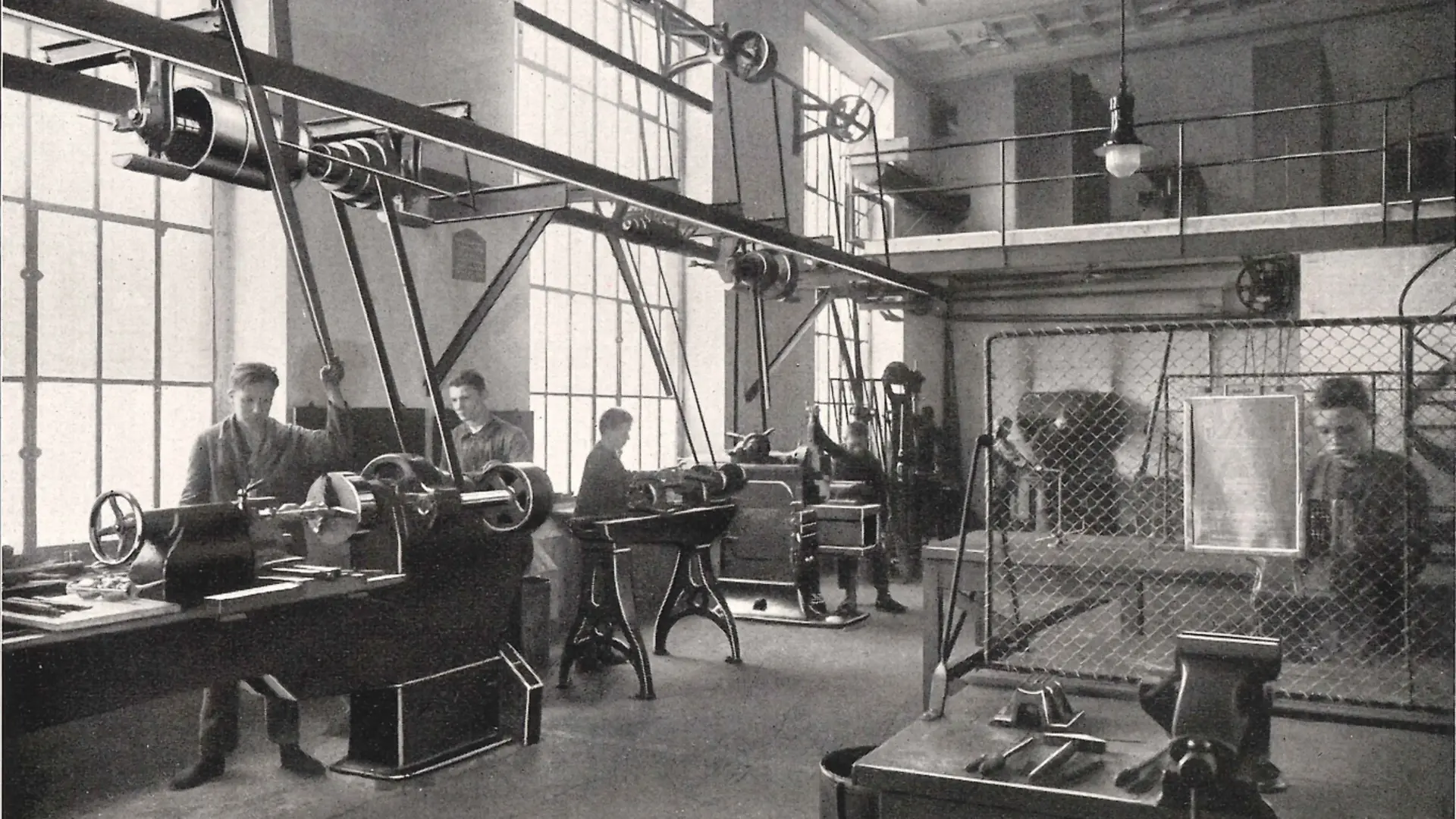
In 1925, Henkel starts to offer systematic vocational training. Initially apprenticeships were open for soon-to-be locksmiths, lathe operators, plumbers, carpenters and printers. Today, Henkel offers over 30 vocational training programs in Germany alone.
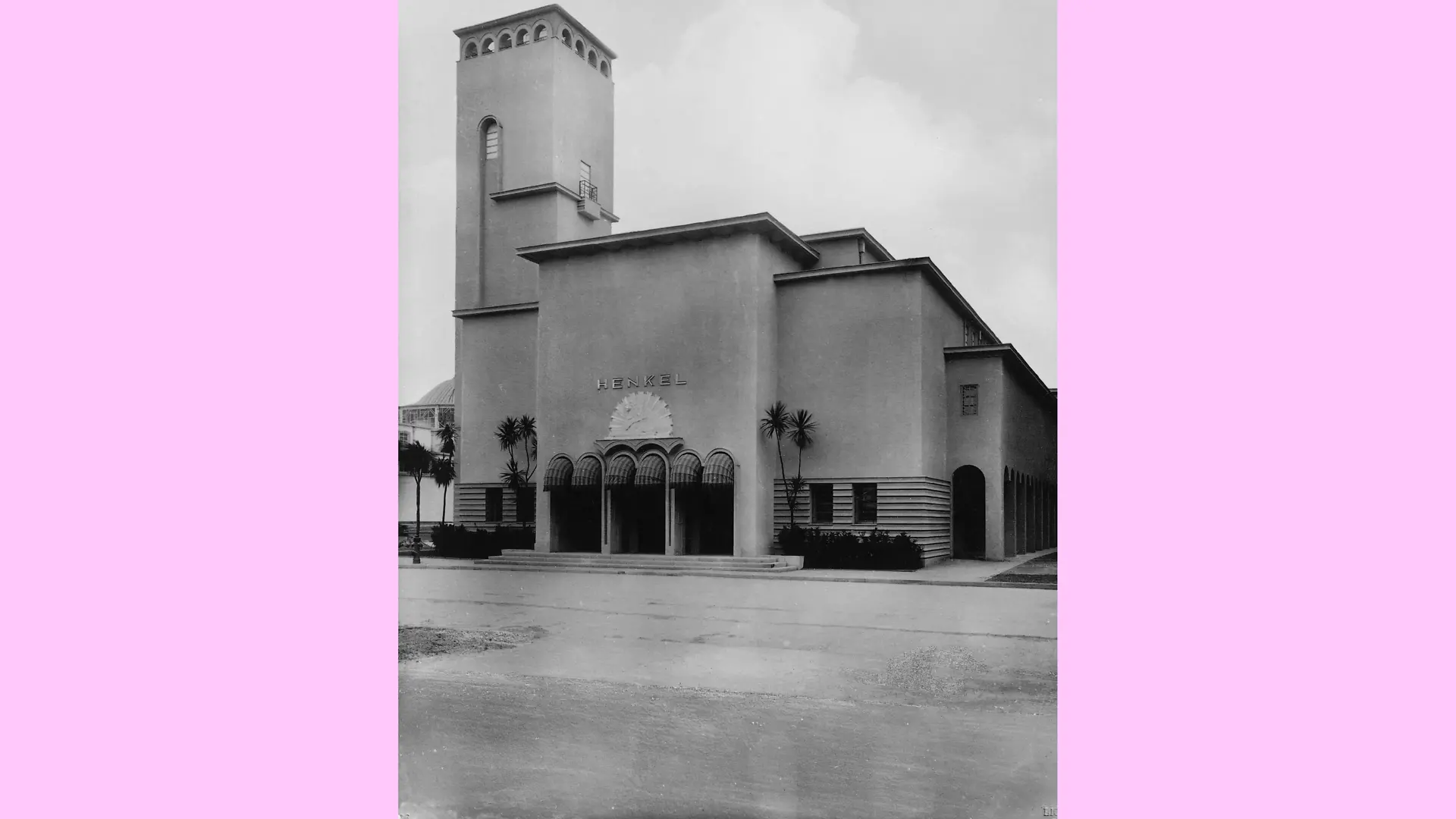
The GeSoLei pavilion (1926). After the end of the exhibition, the building is extended and becomes part of the Henkel administration building
GeSoLei in Düsseldorf: the trade fair on GEsundheitspflege, SOziale Fürsorge und LEIbesübungen (Healthcare, Social welfare and Physical exercise) takes place on a 400,000 m2 exhibition space. Attracting 7.5 million visitors, it is the biggest fair of the Weimar Republic. Henkel participates with its own exhibition building. A strong focus of the Henkel pavilion is the application scope of Persil. The trade fair team also presents the social welfare offering of the company.
The exhibition turns out to be a great success for Henkel and an impactful promotion for Persil.
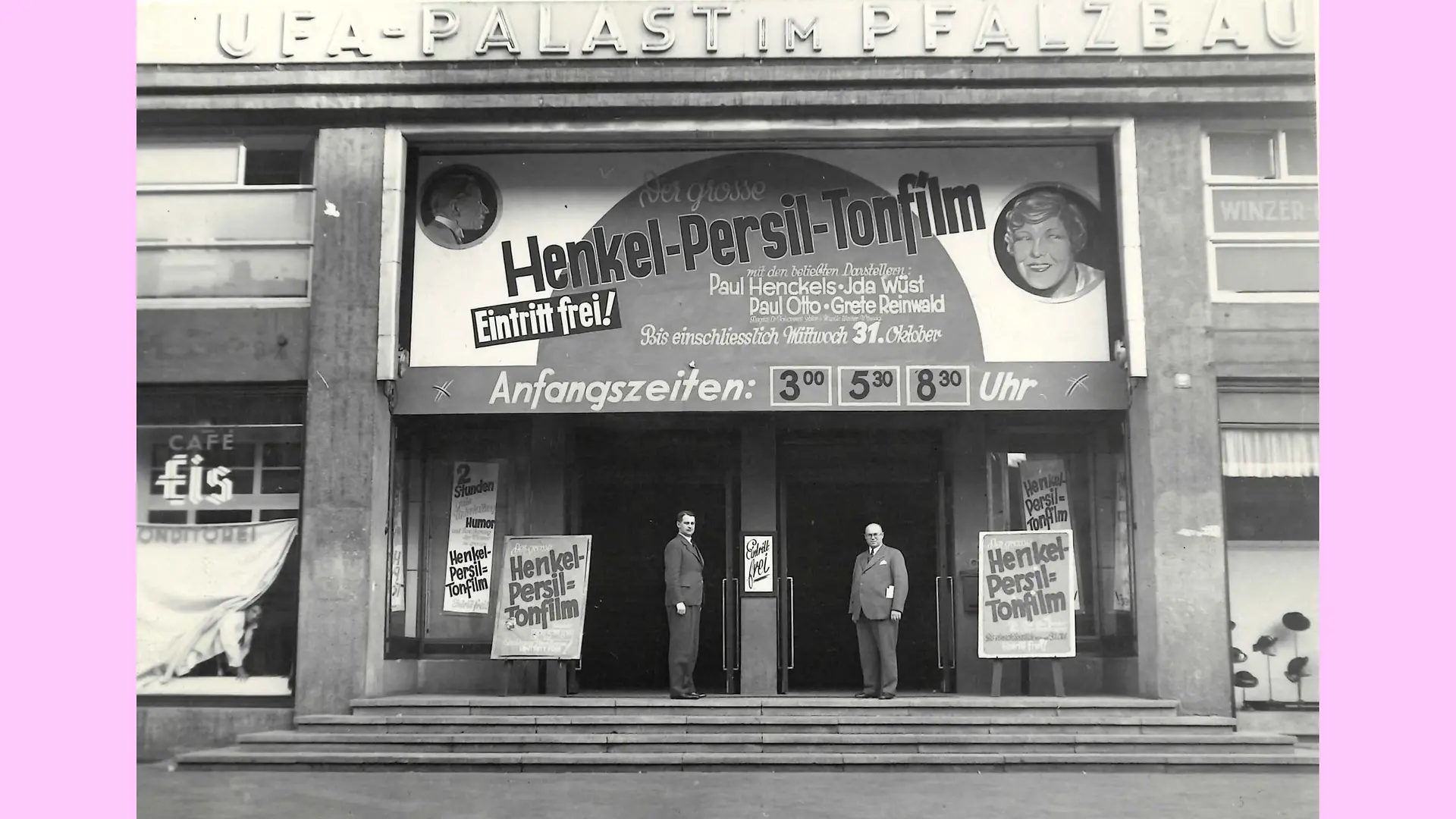
The film “Wäsche – Waschen – Wohlergehen” ("Laundry – Washing – Well-being") was released on the big screen in 1932 (here: UFA-Palast cinema Pfalzbau-Ludwigshafen)
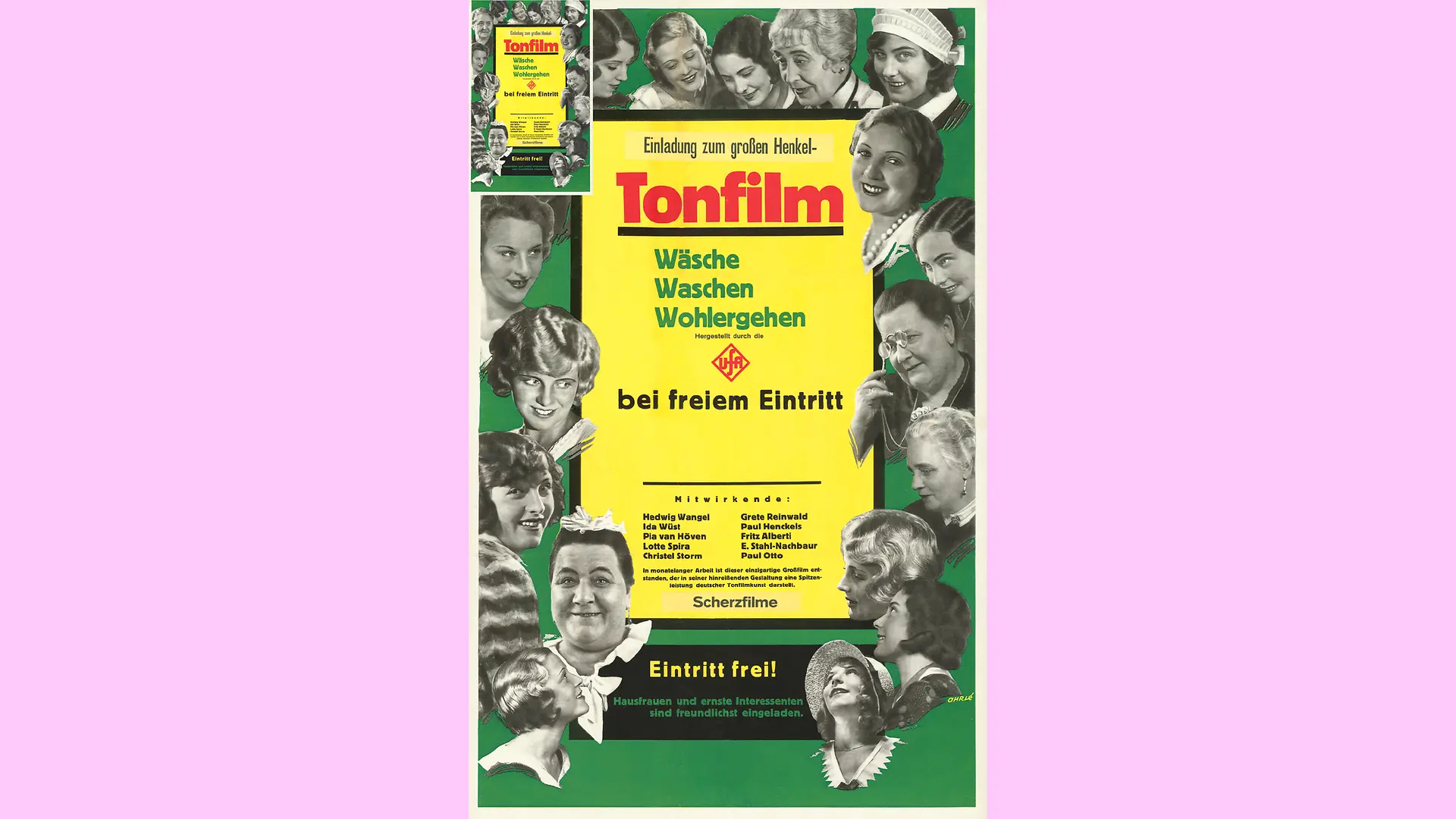
The promotional poster for the film “Wäsche – Waschen – Wohlergehen” (“Laundry – Washing – Well-being”) is a real eye-catcher at the time
1 of 2
As of 1927, Henkel commissions a whole series of documentaries and feature films for the main programs of the big movie theaters. In 1927, for example, the silent movie “Vom Waschen und von der Wäsche” (“Of washing and laundry”) is shown in the cinemas. The Ufa comedy “Wäsche – Waschen – Wohlergehen” (“Laundry – Washing – Well-being”), part of which is set at the Henkel site, turns out to be a great success. It attracts an audience of more than 30 million in 1932. Admission is free.
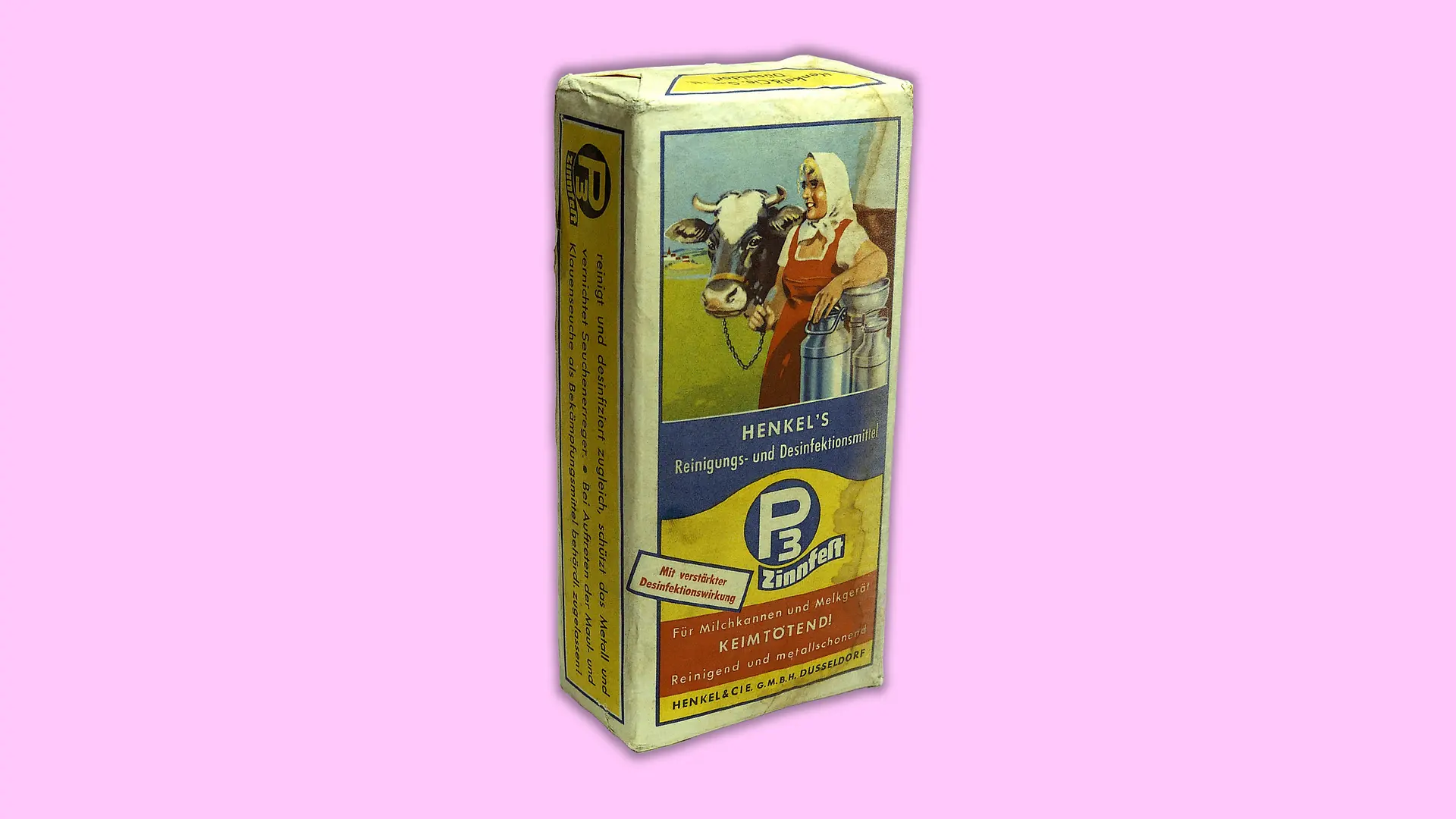
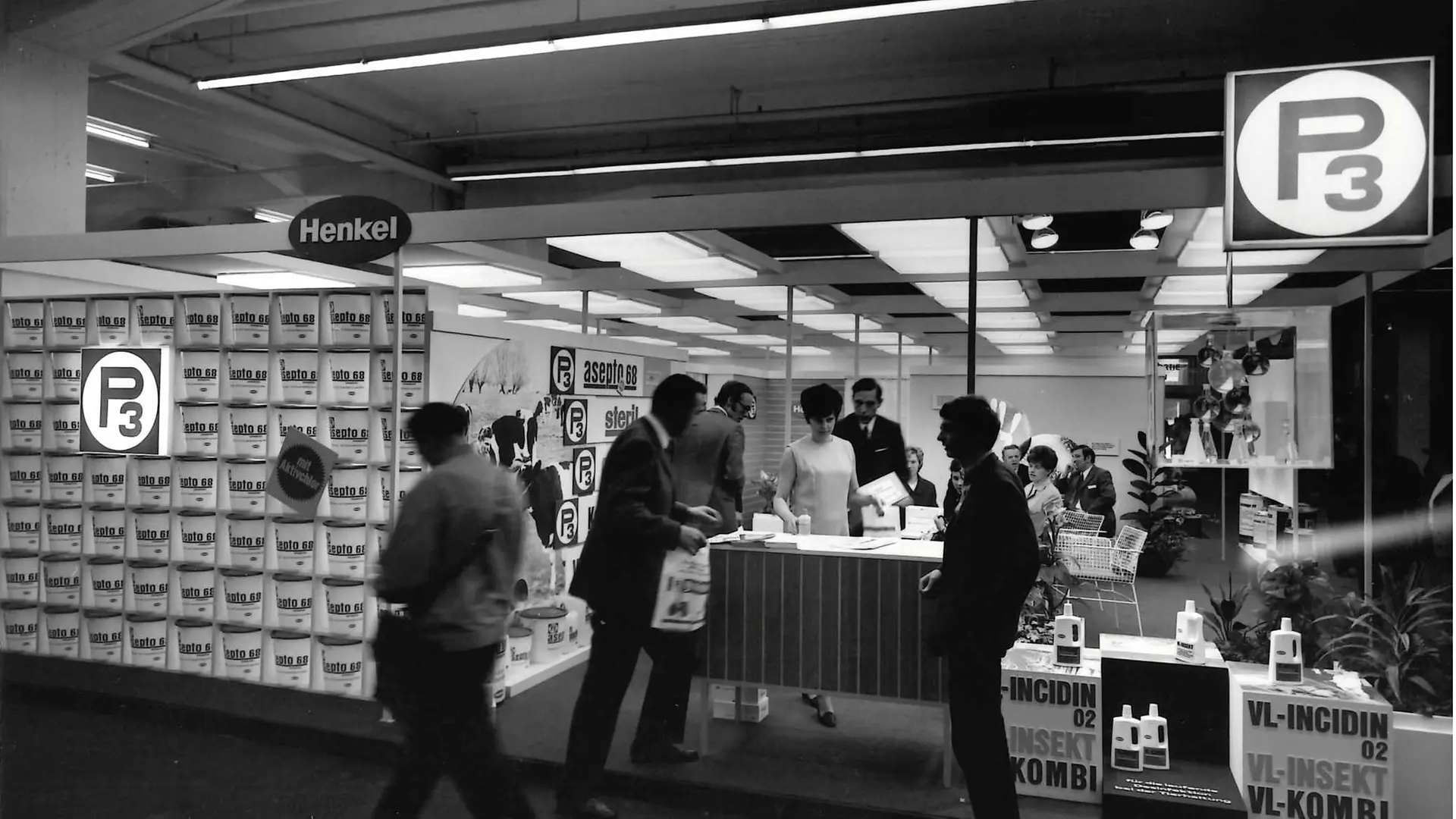
The P3 range opens up a new market segment in industrial cleaning. The name P3 derives from the chemical compound tri-sodium-phosphate. P3 is used for cleaning purposes in the industrial, agricultural and food sectors.
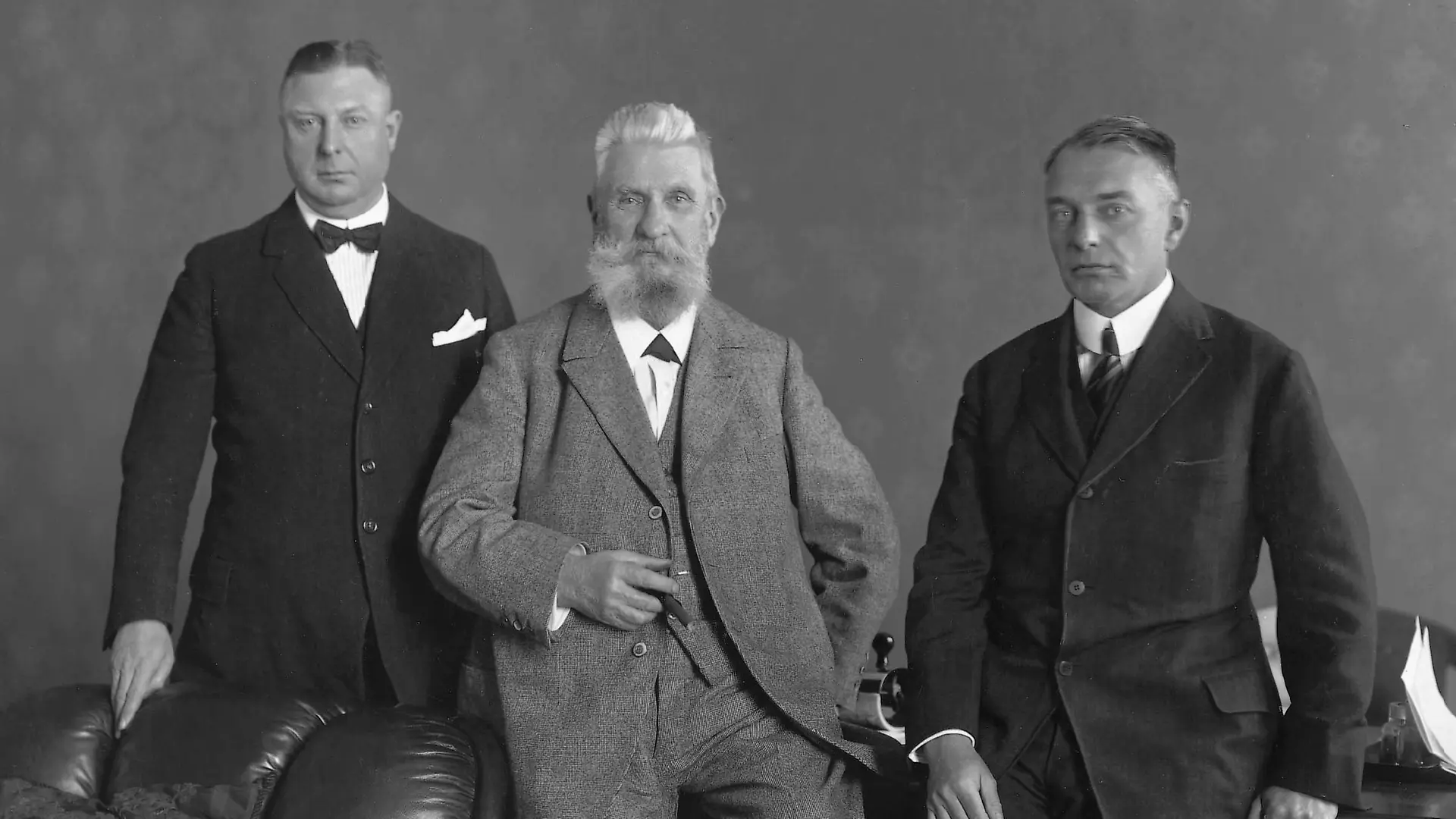
In January, Dr. h.c. Fritz Henkel Jr. dies unexpectedly at the age of 55. Two months later Fritz Henkel Sr. dies at the age of 81. PhD chemist Dr. Hugo Henkel takes over sole management of the company.
1933 – 1945
Henkel during National Socialism
1933 – 1945
The company’s stance and that of its leading family members toward National Socialism were marked by initial restraint, pragmatic adaptation, and cooperation.
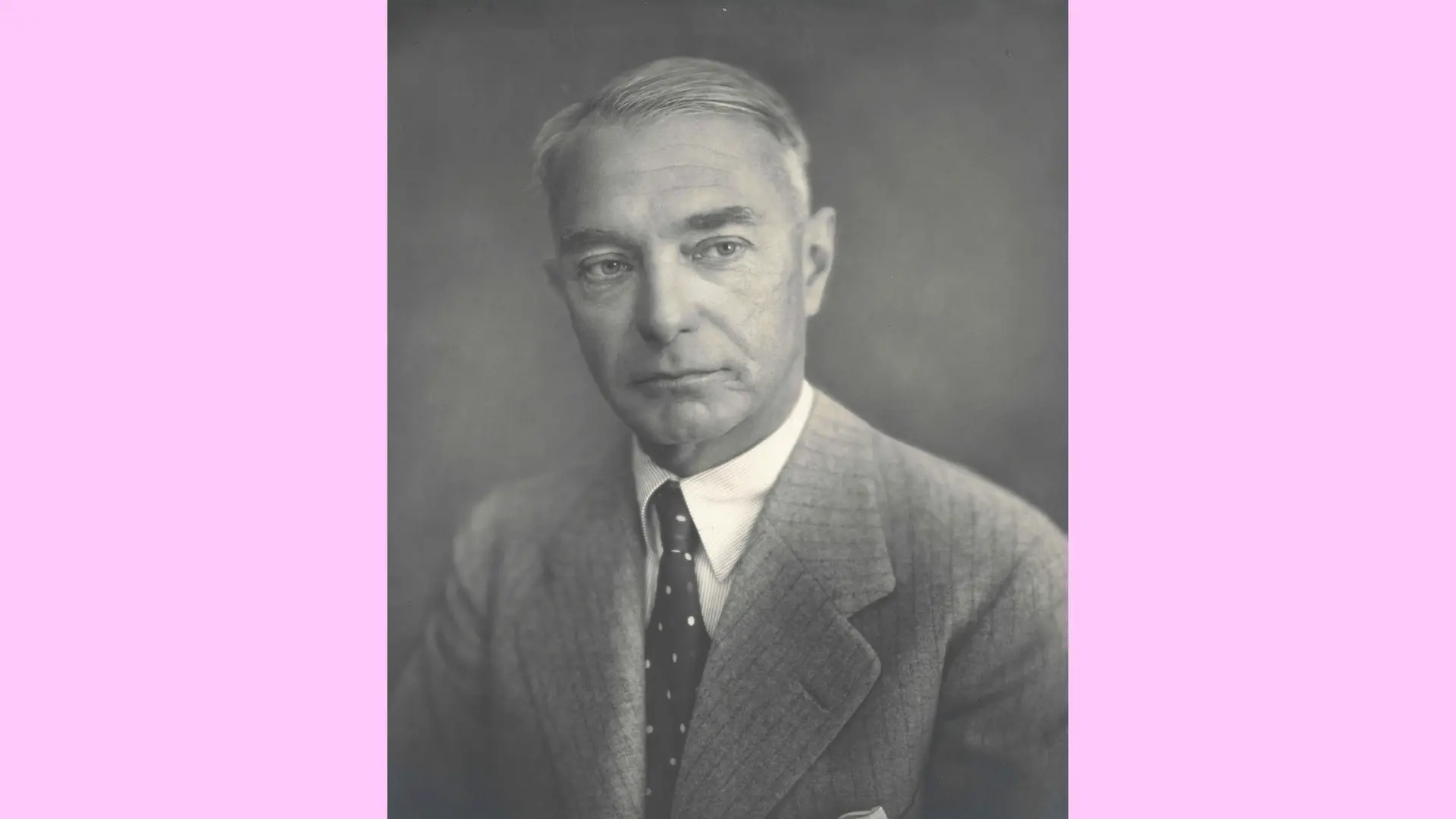
Hugo Henkel, originally liberal and politically active in the German Democratic Party (DDP), took over sole company leadership in 1930. His entrepreneurial focus was strongly oriented towards technology, efficiency, and building international markets. Although he viewed the Nazi seizure of power in 1933 with skepticism, he joined the NSDAP that same year – according to later statements, to protect the company. Eyewitnesses confirmed his efforts to avoid political interference.
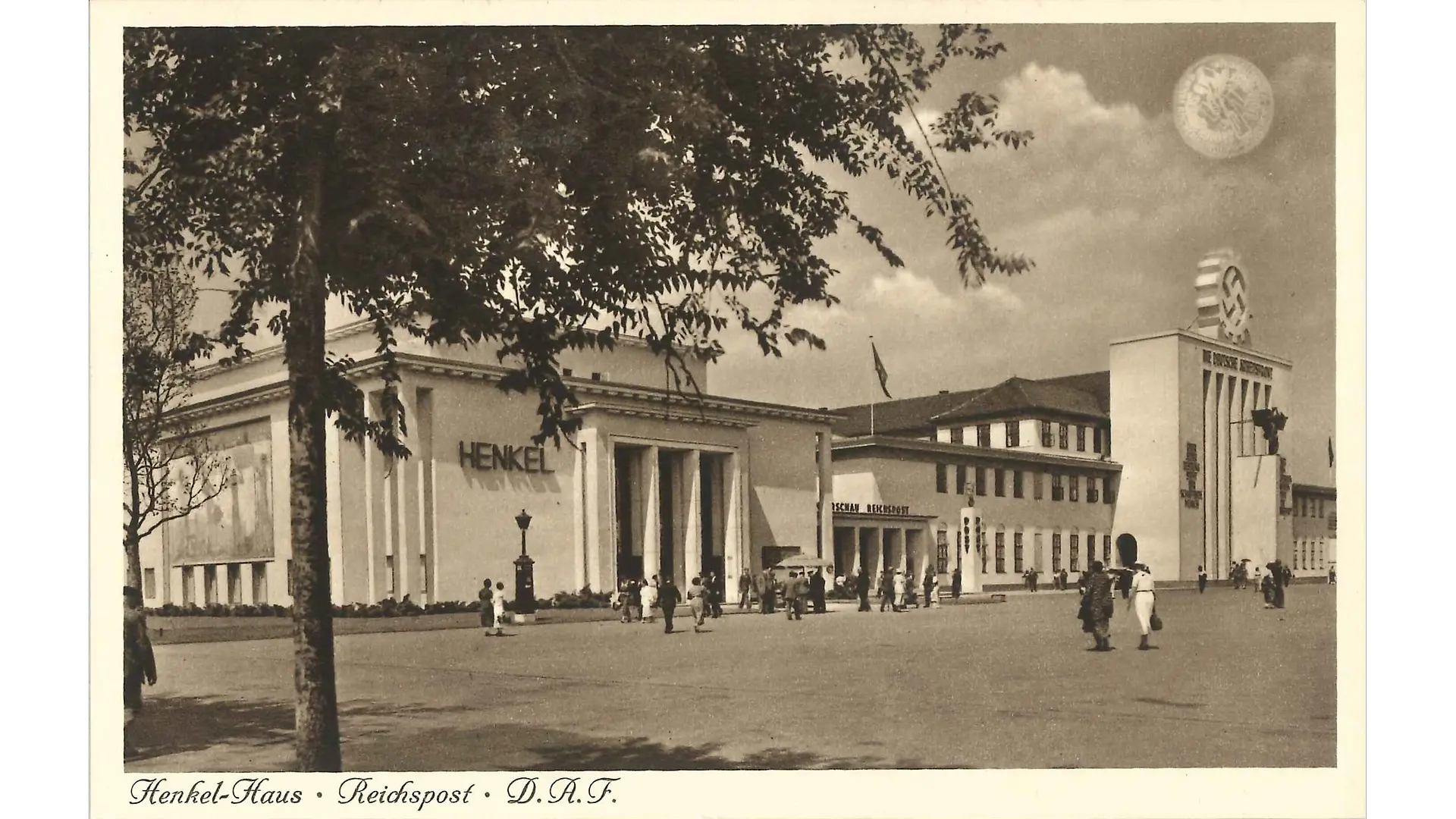
The Henkel Pavilion at the Reich Exhibition “Schaffendes Volk” (“Working Nation”) on a postcard (1937)
Nevertheless, Hugo Henkel quickly adapted to the regime, was active in Nazi-affiliated committees until 1942, and publicly praised Hitler. The company participated in propaganda campaigns. In 1938, Hugo Henkel was ousted from company leadership by his nephew Werner Lüps (1906–1942) following a tax affair.
Overall, however, political statements from company management and family members remained the exception during these years. There is no clear ideological line within the family; rather, pragmatic opportunism prevailed, something that was widespread in business circles at the time.
The Political Attitudes of the Henkel Workforce
The political views of Henkel’s workforce during the Nazi era were far from uniform and reflected the societal tensions and upheavals of the time.
While the working class voted predominantly Social Democratic in the 1933 works council elections (66.5 percent), the white-collar employees showed a much stronger affinity for the NSDAP, which won four out of five seats in that group. According to Viktor Kirberg, then chairman of the works council, the proportion of NSDAP supporters among white-collar staff later rose to around 90 percent.
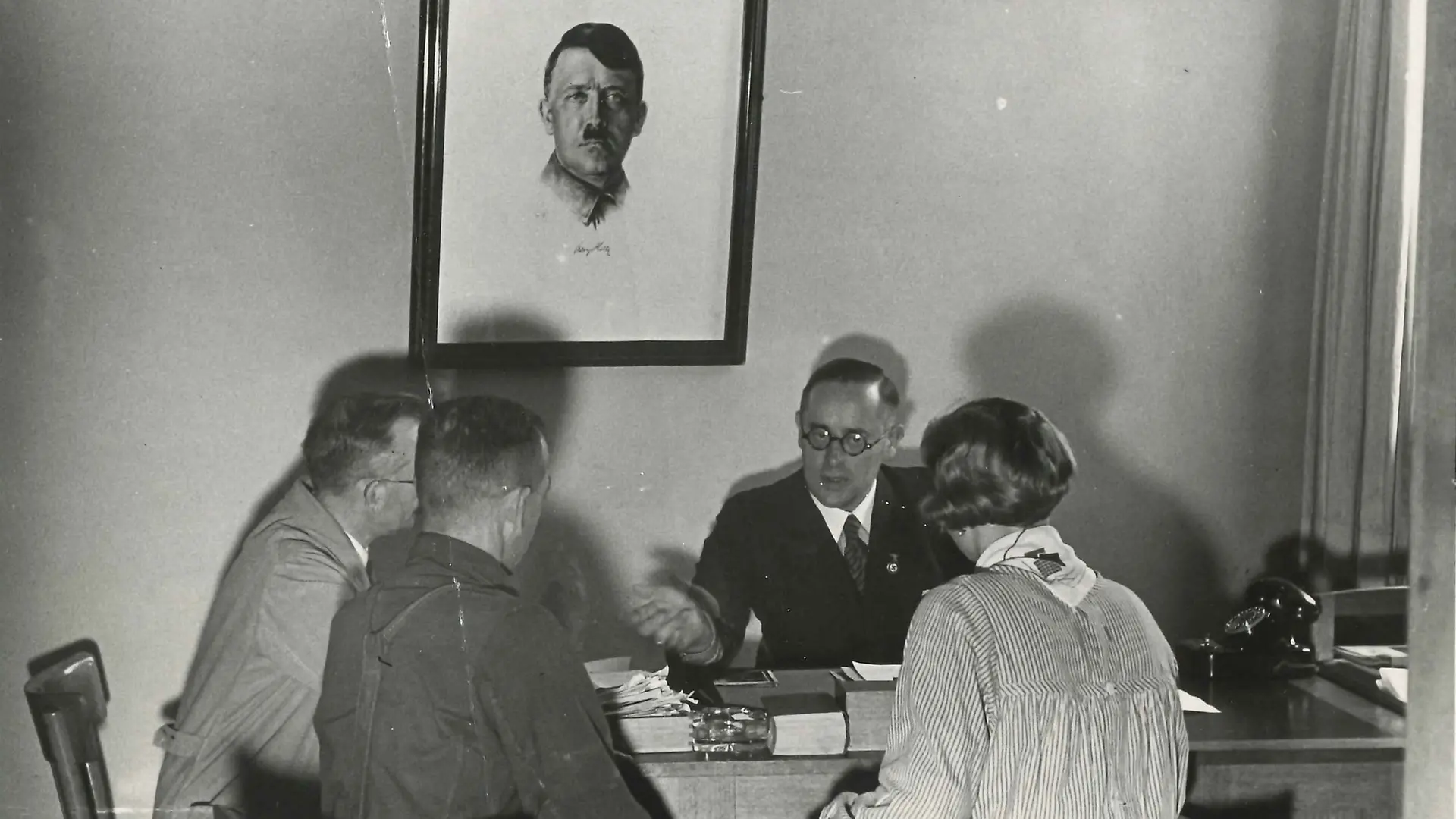
Membership of the NSDAP was particularly strong among executives such as managing directors, engineers, and department heads. Party membership increasingly became a prerequisite for career advancement.
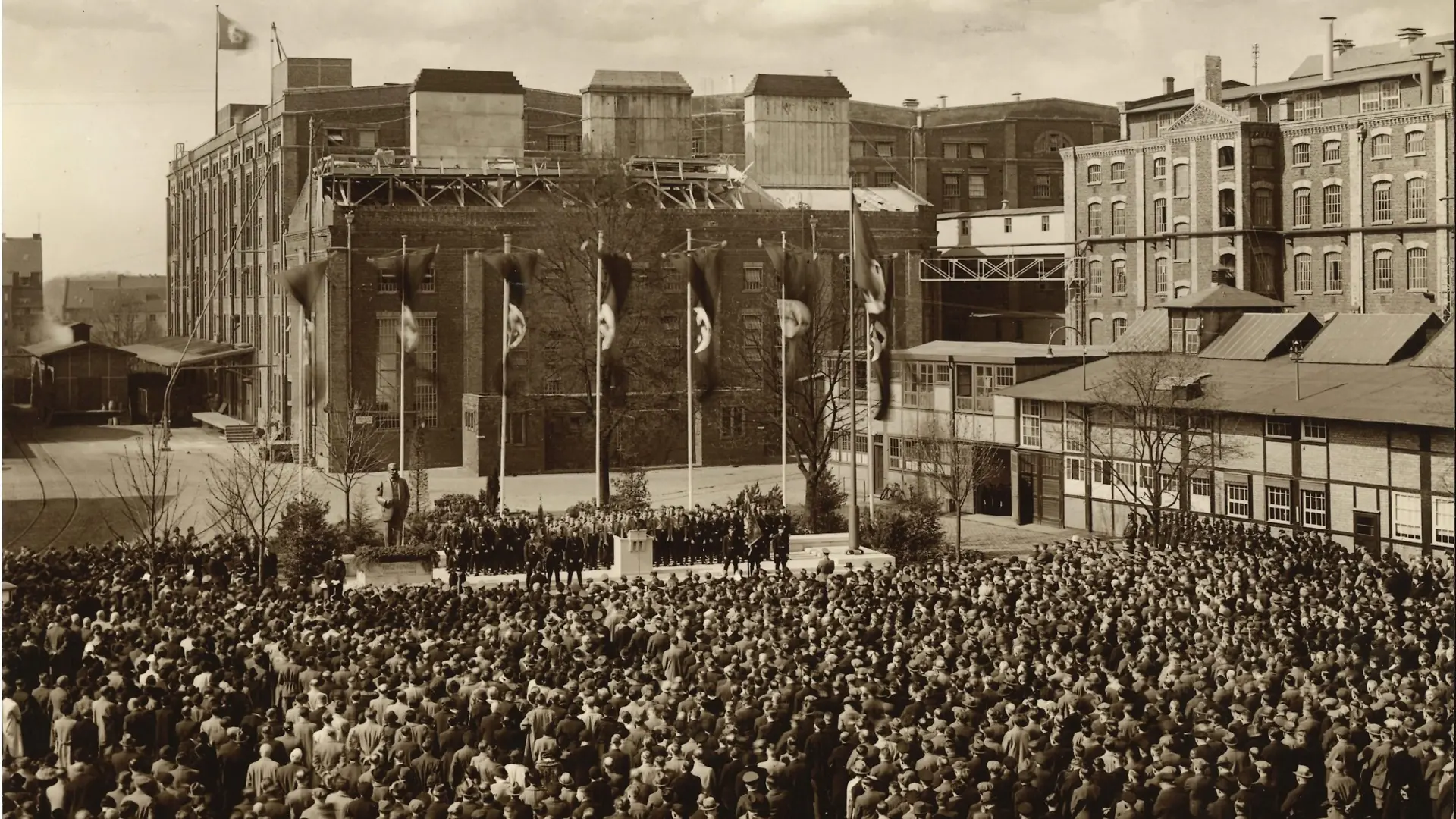
Despite a clear electoral success for the Social Democrats, the works council was forced into line with the regime as early as May 1933. Kirberg lost his position but continued to be employed by the company as a foreman. The new “Council of Trust” was no longer freely elected but appointed by management and the Nazi Factory Cell Organization (NSBO). The sham elections of 1934 and 1935 met with little approval and were abolished entirely in 1936.
The attitude of the workforce remained ambivalent: many took part in Nazi events because attendance was expected, while others were more convinced supporters of the ideology – especially in the company’s upper ranks.
Henkel Under the Leadership of Werner Lüps
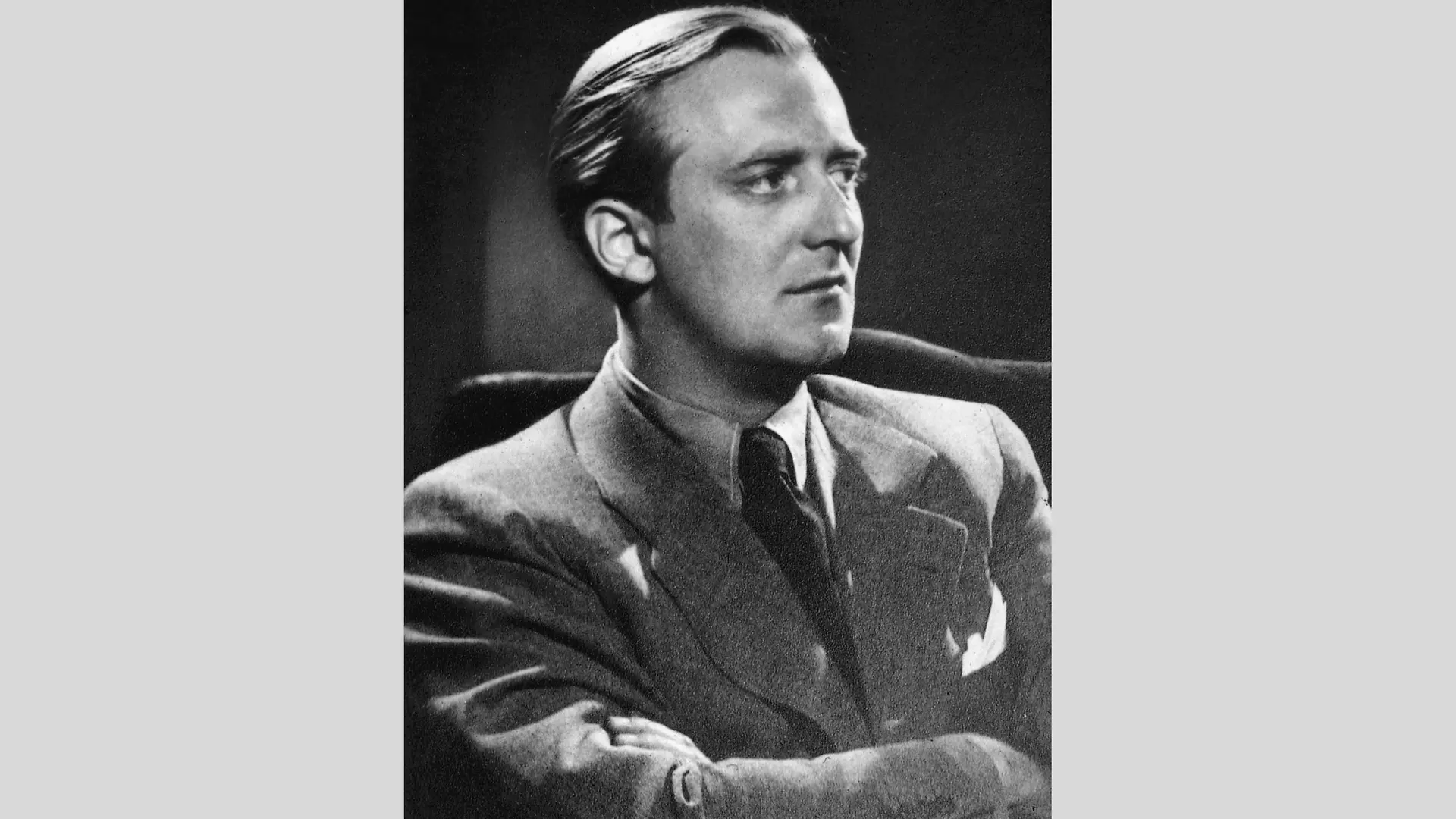
In 1938, Werner Lüps became the central figure in the company. The grandson of the company founder joined the NSDAP early and cultivated close ties with leading party members, which he strategically used to establish himself within the company.
His rise culminated in a plot against his uncle Hugo Henkel, who had been weakened by a tax affair after 1936. Lüps gathered incriminating material against Hugo Henkel. With the support of the National Socialists, Hugo Henkel was forced to resign as head of the company in the summer of 1938; he had to move to the supervisory board and no longer had any active influence on the development of the company.
Lüps took over company leadership and steered Henkel onto a Nazi course. In 1940, the company was recognized as a “National Socialist Model Enterprise.” Lüps presented himself as a model economic leader and organized large-scale propaganda events at the company. He pursued ambitious entrepreneurial goals, including the takeover of Degussa, in order to expand Henkel into a second major chemical company alongside IG Farben. However, his aggressive strategy and management style met with increasing resistance – both within the company and within the Henkel family.
In 1942, the internal conflict escalated: Lüps once again made accusations against Hugo Henkel, but was himself removed from power by the majority of shareholders. Shortly afterwards, he died in a car accident. After his death, Dr. Jost Henkel (1909–1961), Hugo Henkel’s eldest son, became “plant manager.” Dr. Hermann Richter (1903–1982) took over as chairman of the management board. After 1945, the company distanced itself from Lüps and portrayed him as the sole “black sheep” – a simplistic view that ignored broader responsibility.
“Aryanizations” at Henkel During National Socialism
During the Nazi era, Henkel participated in several “Aryanizations” in order to gain economic advantages. The goals were to gain access to raw materials, expand production capacities, and secure market shares. Henkel usually acted indirectly through subsidiaries such as Dreiring or Dehydag. Among others, companies in Frankfurt an der Oder, Vienna, Prague, and Danzig were affected.
After 1945, Henkel attempted to relativize its role in the “Aryanizations,” but had to pay compensation in several cases. Individual acts of assistance for Jewish citizens, such as the rescue of the mother of a school friend of Konrad Henkel, do not alter the company’s complicity.
Forced Labor at Henkel During National Socialism
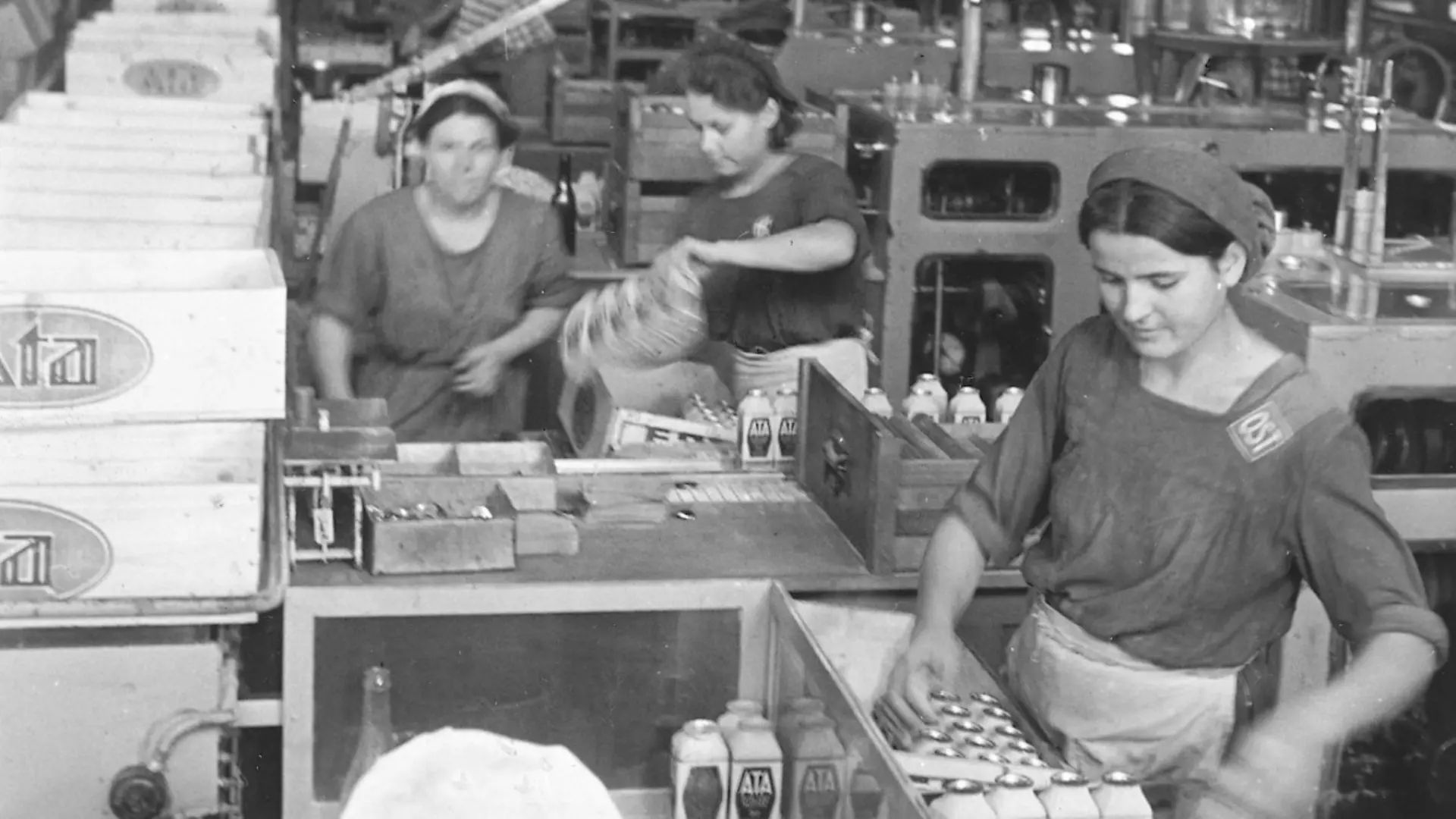
During World War II, Henkel, like most German companies, employed foreign forced laborers to compensate for labor shortages caused by conscription into the Wehrmacht. These included both civilian forced laborers and prisoners of war, brought to Germany via labor offices, military agencies, or forced recruitment. Workers came from countries including France, Belgium, Italy, Poland, and the Soviet Union.
Russian forced laborers in the Ata packaging plant (1943)
1 of 2
At the Düsseldorf-Holthausen site, the proportion of forced laborers peaked at 15.8 percent on December 31, 1943. At other sites, it exceeded 50 percent at times. Civilian forced laborers were housed in company-owned camps, while prisoners of war were held in facilities run by the Wehrmacht.
Living and working conditions varied greatly. While international conventions were mostly followed in the case of Western prisoners of war, Soviet prisoners of war and so-called “Eastern workers” suffered under particularly poor conditions. They were usually housed in barracks camps, separated according to nationality. Working hours ranged from 47 to 60 hours per week.
Henkel employed forced laborers in almost all areas and kept them under strict control. Contact with Germans was forbidden and severely punished. Three Soviet prisoners of war died at Henkel in Düsseldorf-Holthausen – two from poisoning after allegedly accidentally ingesting chemicals, and one who was shot by Wehrmacht guards after attempting to escape. After the war, many, especially “Eastern workers,” initially remained in the camps and were considered “displaced persons.”
Together with other German companies, Henkel joined the foundation initiative “Remembrance, Responsibility and Future” in 2000. The history of forced laborers and prisoners of war at Henkel was comprehensively researched on behalf of the company at the end of the 1990s before being published in the Henkel history book “Menschen und Marken” (People and Brands) in 2001.
Henkel, the Fat Gap, and Whaling During National Socialism
During the Nazi era, Henkel came under pressure from the regime’s autarky efforts to reduce its dependence on imported fats. The so-called “fat gap” – a shortage of domestic fats – hit the company particularly hard, as its detergents relied on vegetable oils and animal fats. As a result, the fat content in the main product Persil had to be significantly reduced as early as 1934 due to government regulations, which affected its quality.
Henkel responded by intensifying research into substitutes. In collaboration with chemist Arthur Imhausen, the Deutsche Fettsäure-Werke GmbH was founded in 1936, producing synthetic fatty acids from coal by-products starting in 1937. By 1940, these became the most important source of substitute fats.
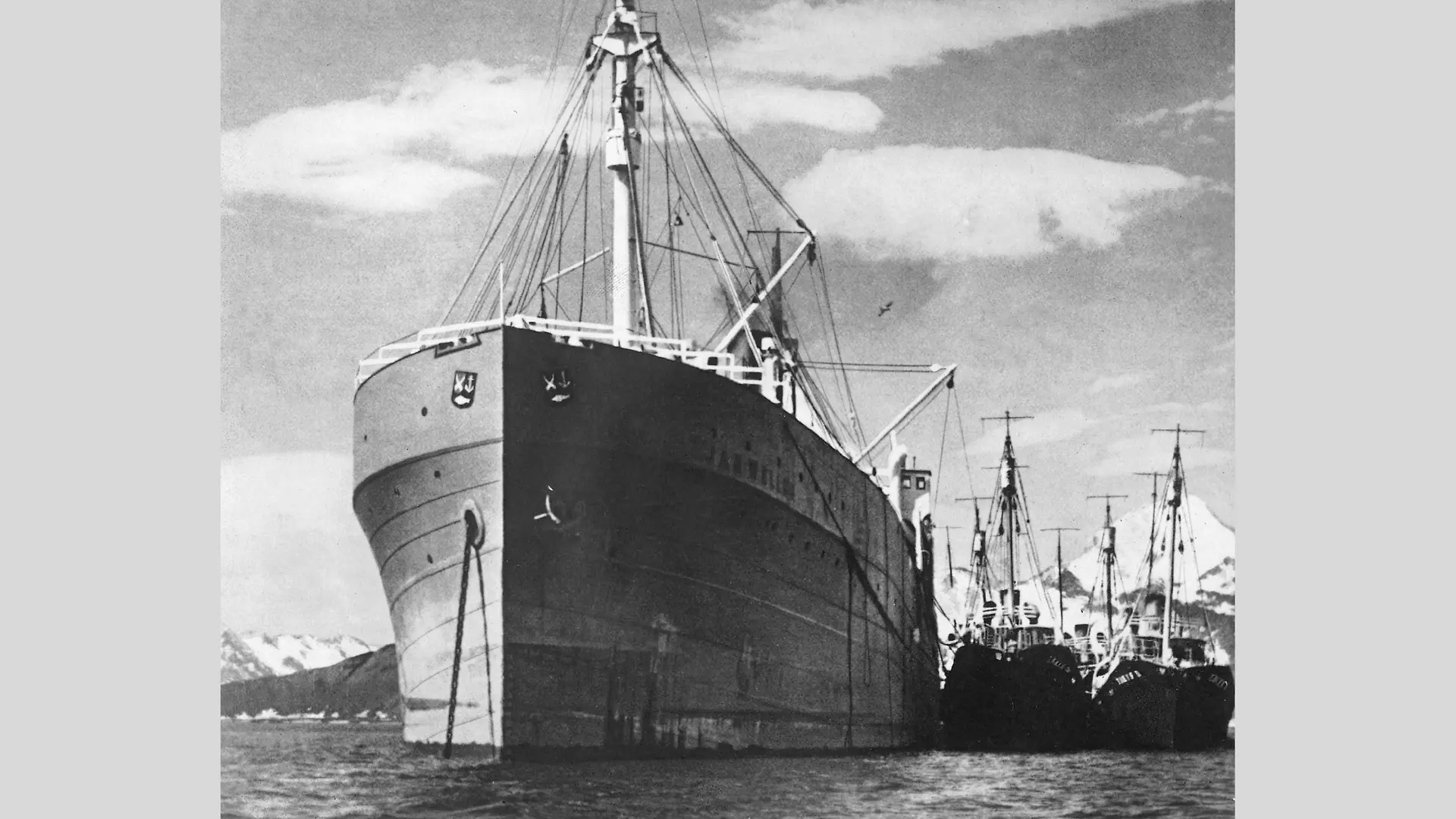
In parallel, Henkel pursued another, albeit unusual, source of raw materials: whaling. The Erste Deutsche Walfanggesellschaft (First German Whaling Company) was founded in 1935. Although the three resulting expeditions to Antarctica were technically successful, they were economically unprofitable. Despite propaganda efforts, whaling contributed little to solving the fat problem. The project was discontinued with the outbreak of the Second World War.
Conclusion
The history of Henkel during National Socialism is an example of the widespread gradual adaptation of an originally liberal family business to the dictatorship during this period. Overall, those responsible at Henkel, like many others, acted primarily out of economic calculation and largely ignored the moral responsibility. The picture is mixed when it comes to the workforce: while many workers were merely followers, support for the NSDAP was high among employees and managers. The political development at Henkel is typical of many large German companies at that time: initial distance gave way to pragmatic adaptation and involvement in the Nazi regime.
Henkel during National Socialism, extended version
Compiled by the author of the book „Henkel – From Detergent Manufacturer to Global Enterprise“, Prof. Dr. Joachim Scholtyseck.
The post-WWII era is focused on reconstruction. After rehabilitation by the Allies, the Henkel family is able to return to their company. In the years that follow, their efforts are geared towards relaunching the key brands of the pre-war era.
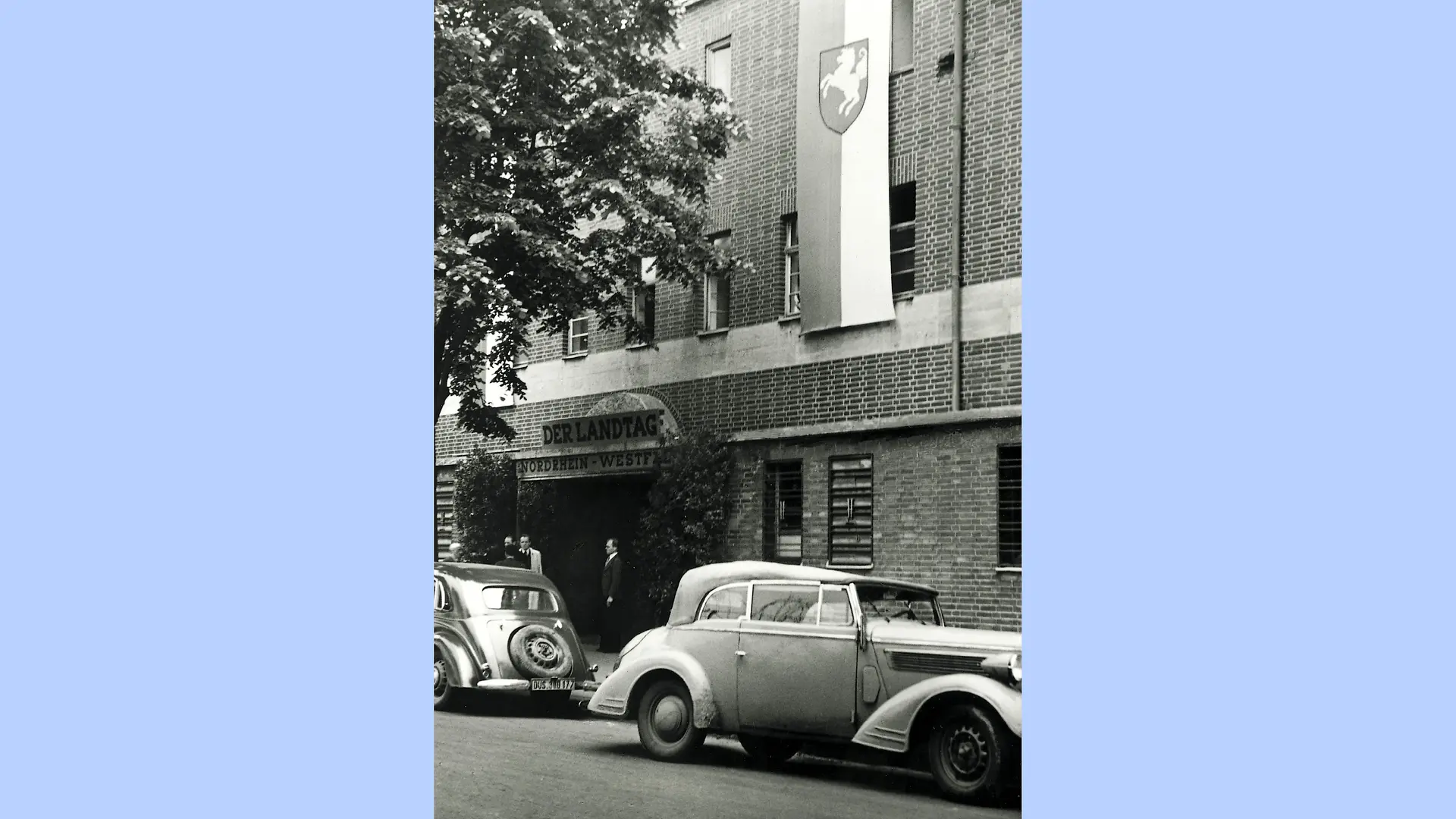
From November 1946, the North Rhine-Westphalian state parliament met in a large, undamaged hall at Henkel in Düsseldorf-Holthausen (picture from the same year)
On October 2, 1946, the newly elected North Rhine-Westphalian state parliament convenes in Düsseldorf’s opera house for its opening session in the largely destroyed city. From November 1946 until...
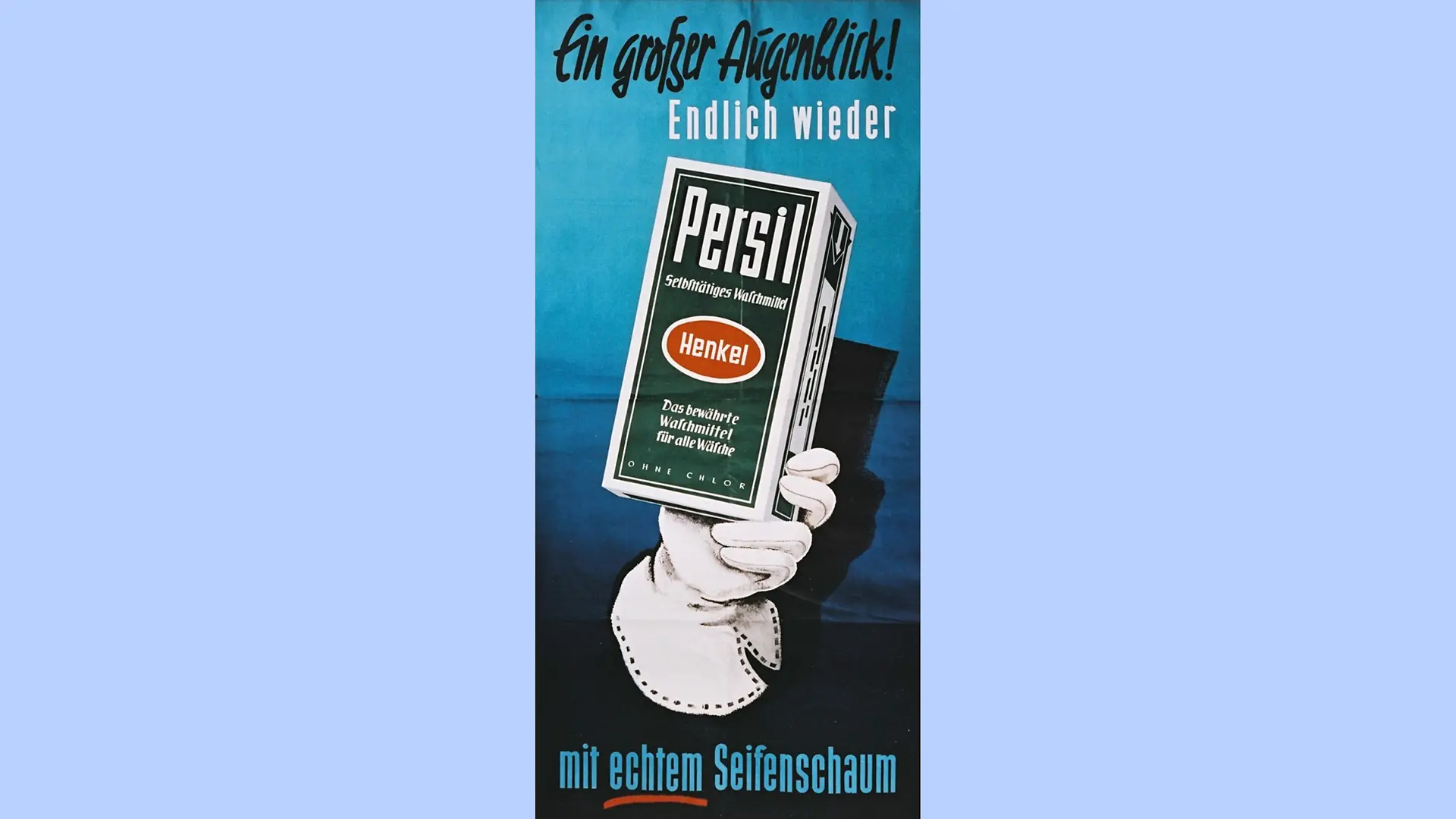
Persil production in Düsseldorf starts on July 24, 1950. The first packages are back in West Germany’s stores on September 1, 1950 – after eleven years without Persil. At Henkel, ...
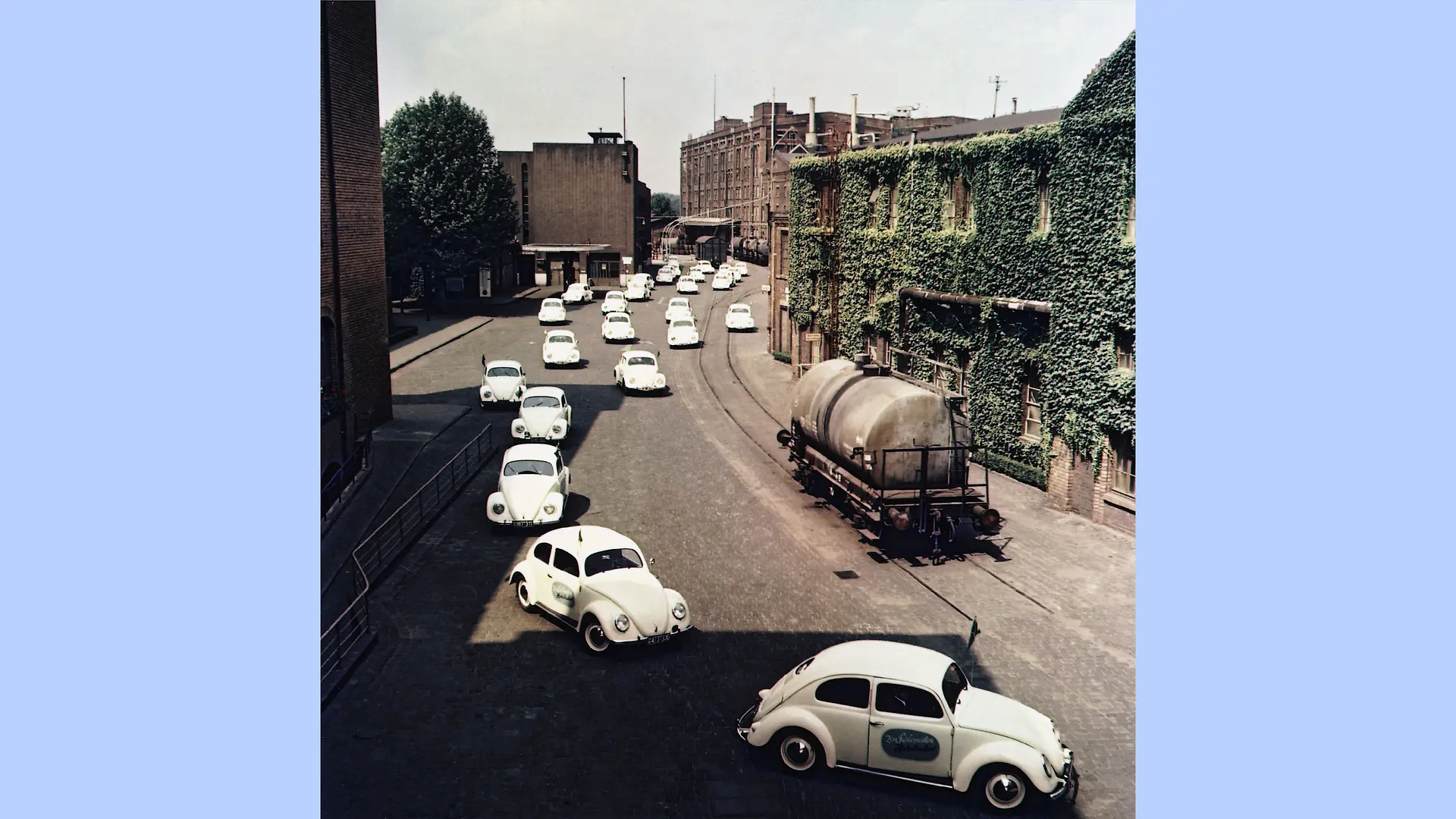
The company car fleet for the sales force carries the slogan “Zum Saubermachen – Henkelsachen” (“For cleaning stints use Henkel things”), thus contributing to the company’s image building efforts.
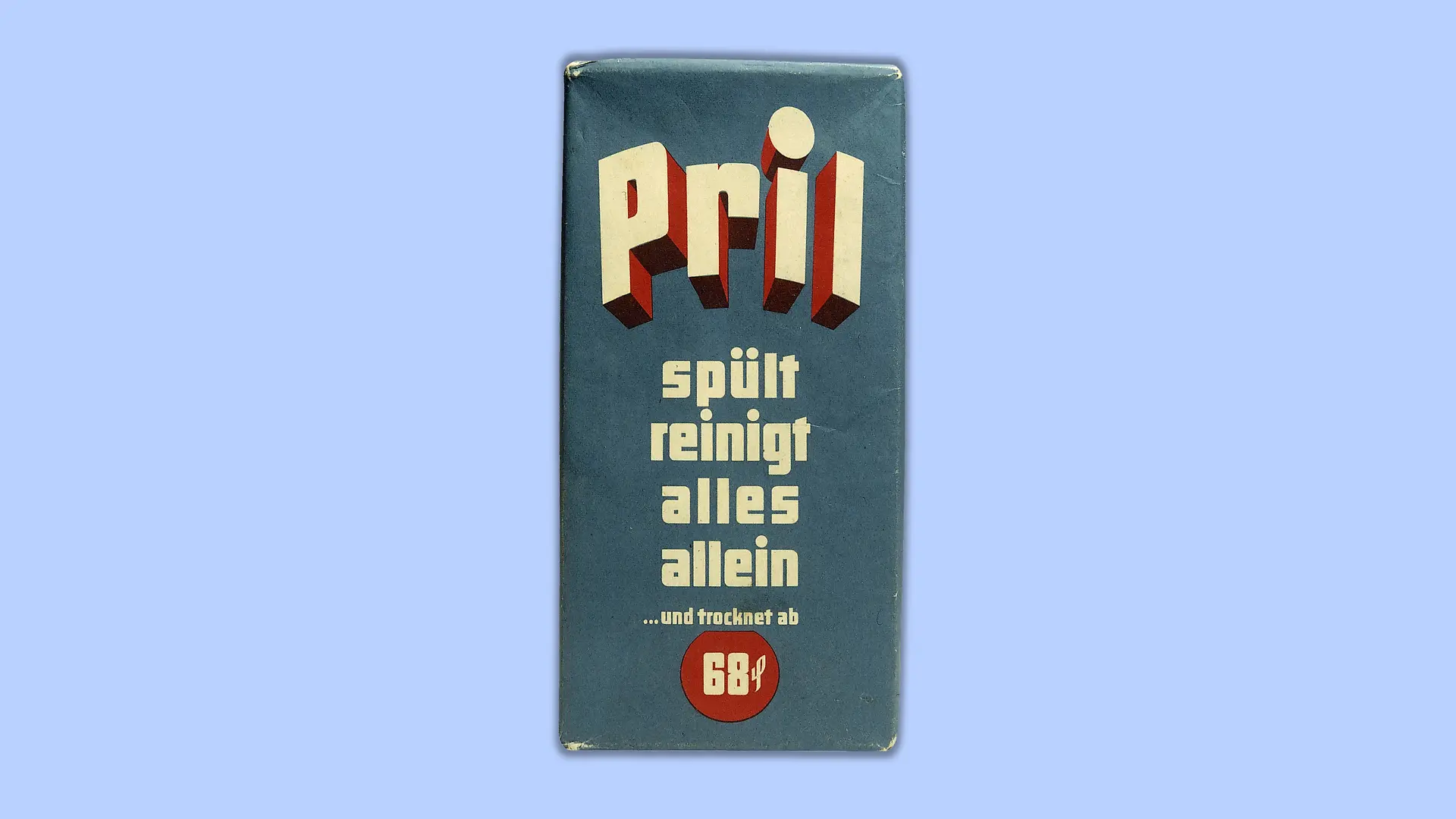
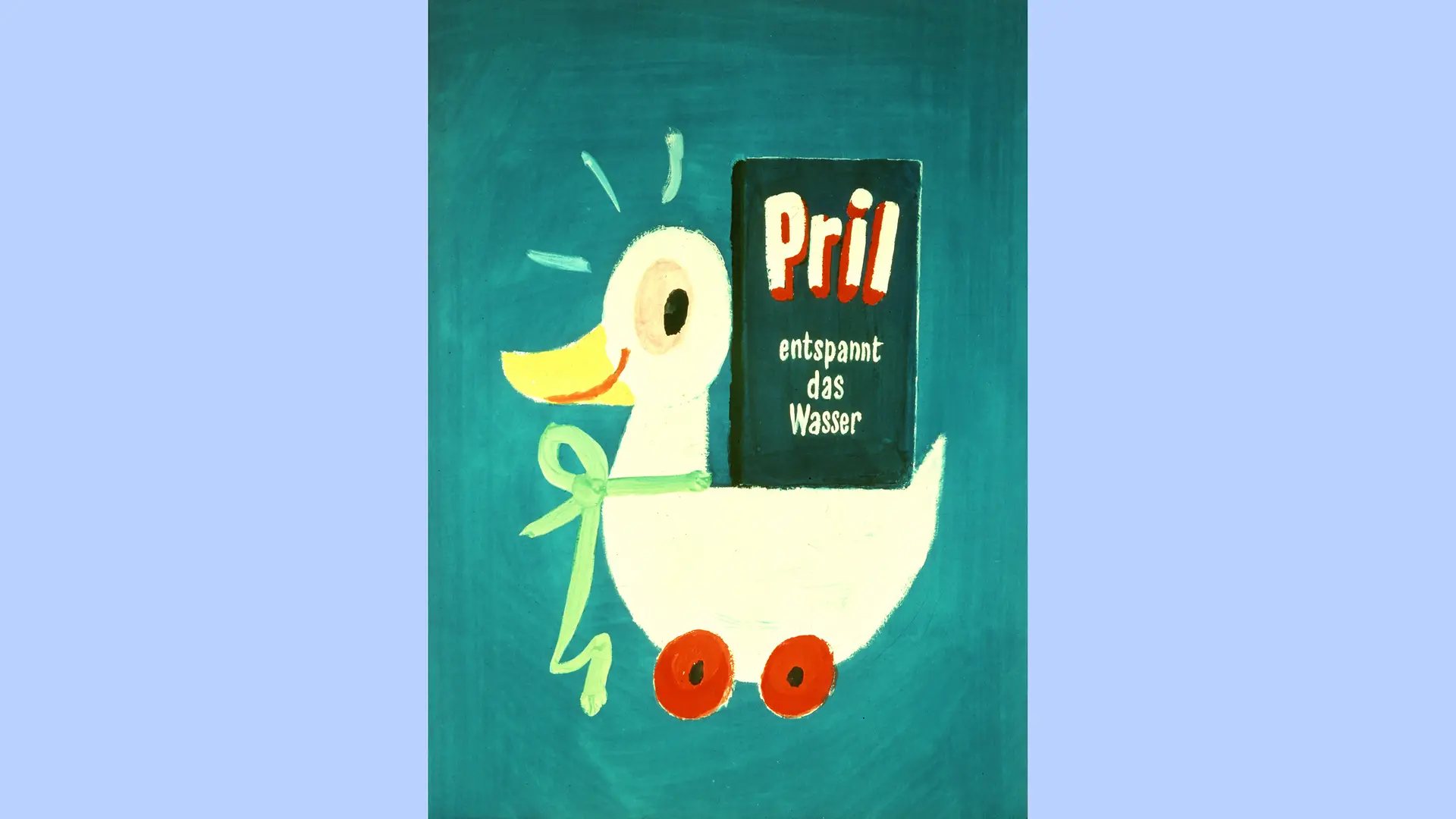
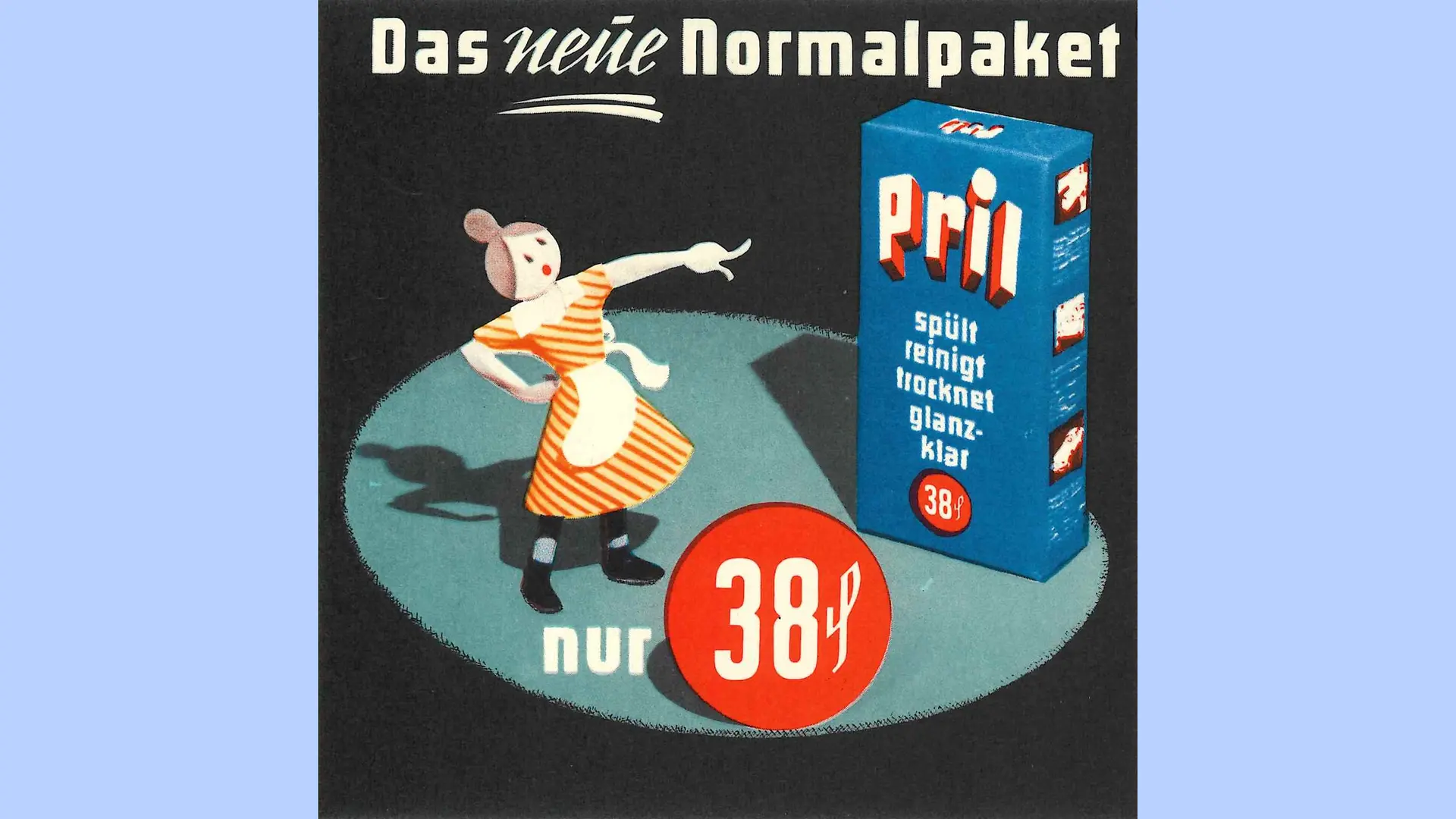
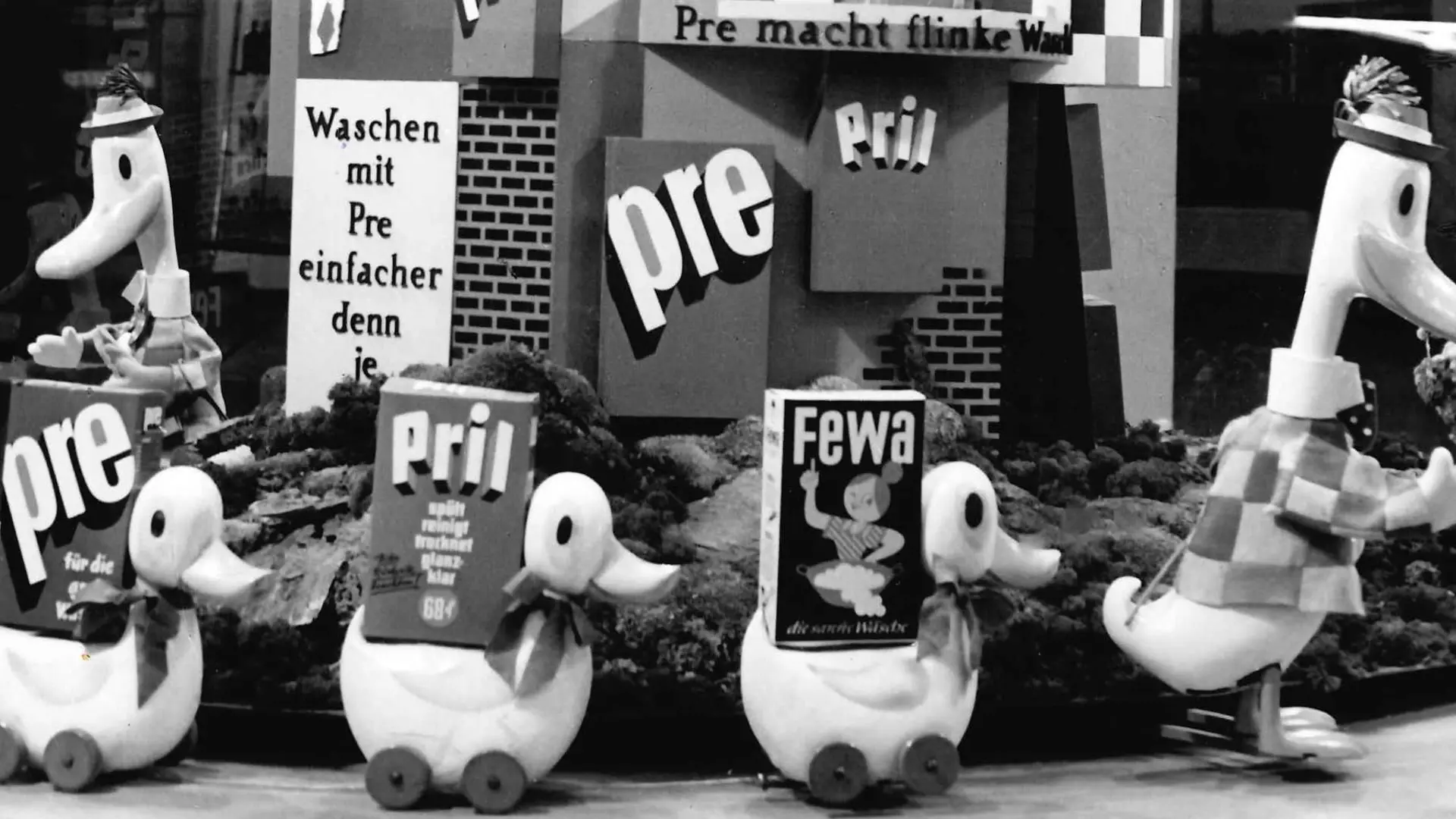
Pril powder, a domestic dishwashing product, is launched. It becomes a popular kitchen aid and soon turns into a top seller. In 1952, poster artist Herbert Leupin creates and draws the Pril duck...
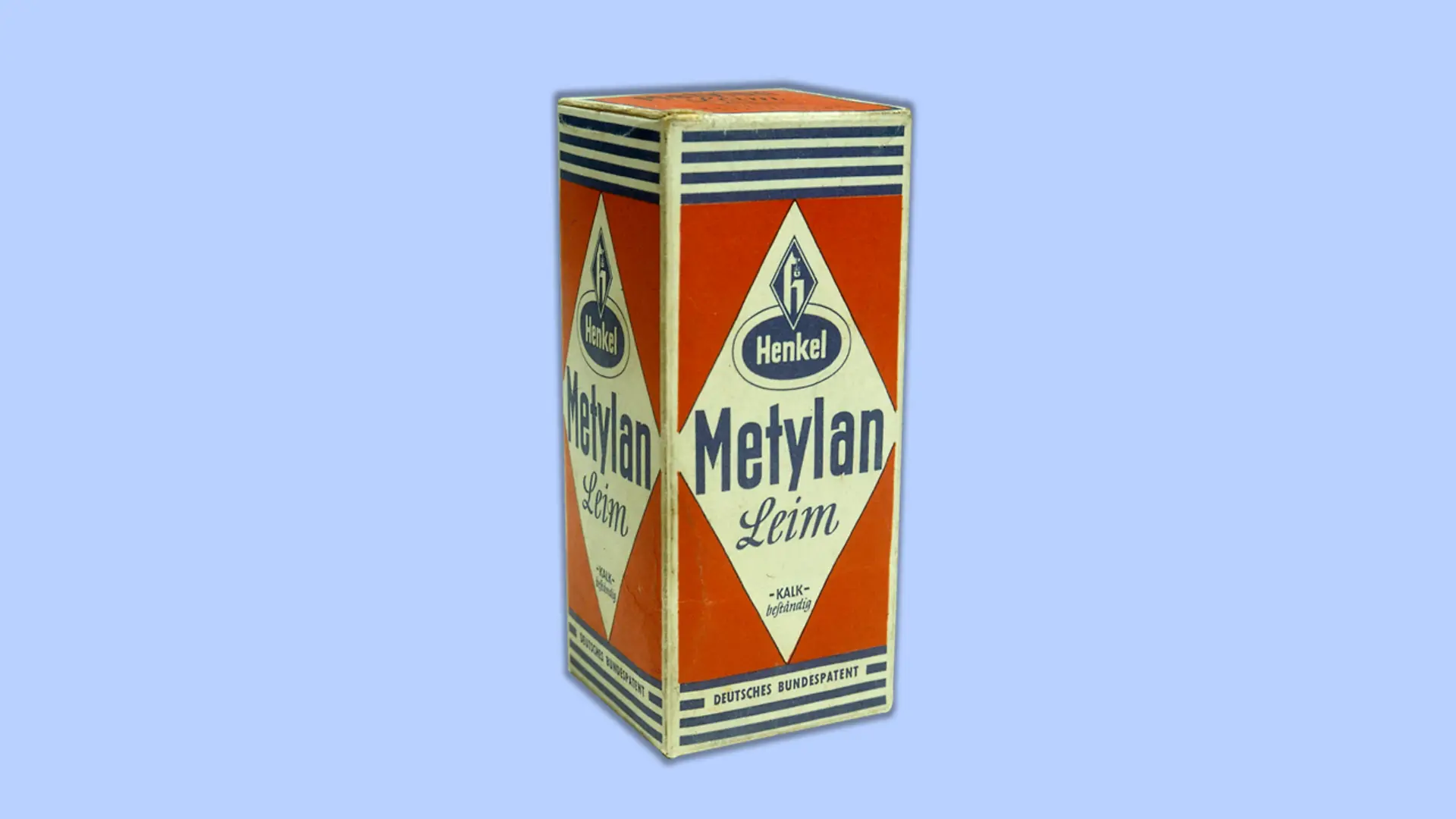
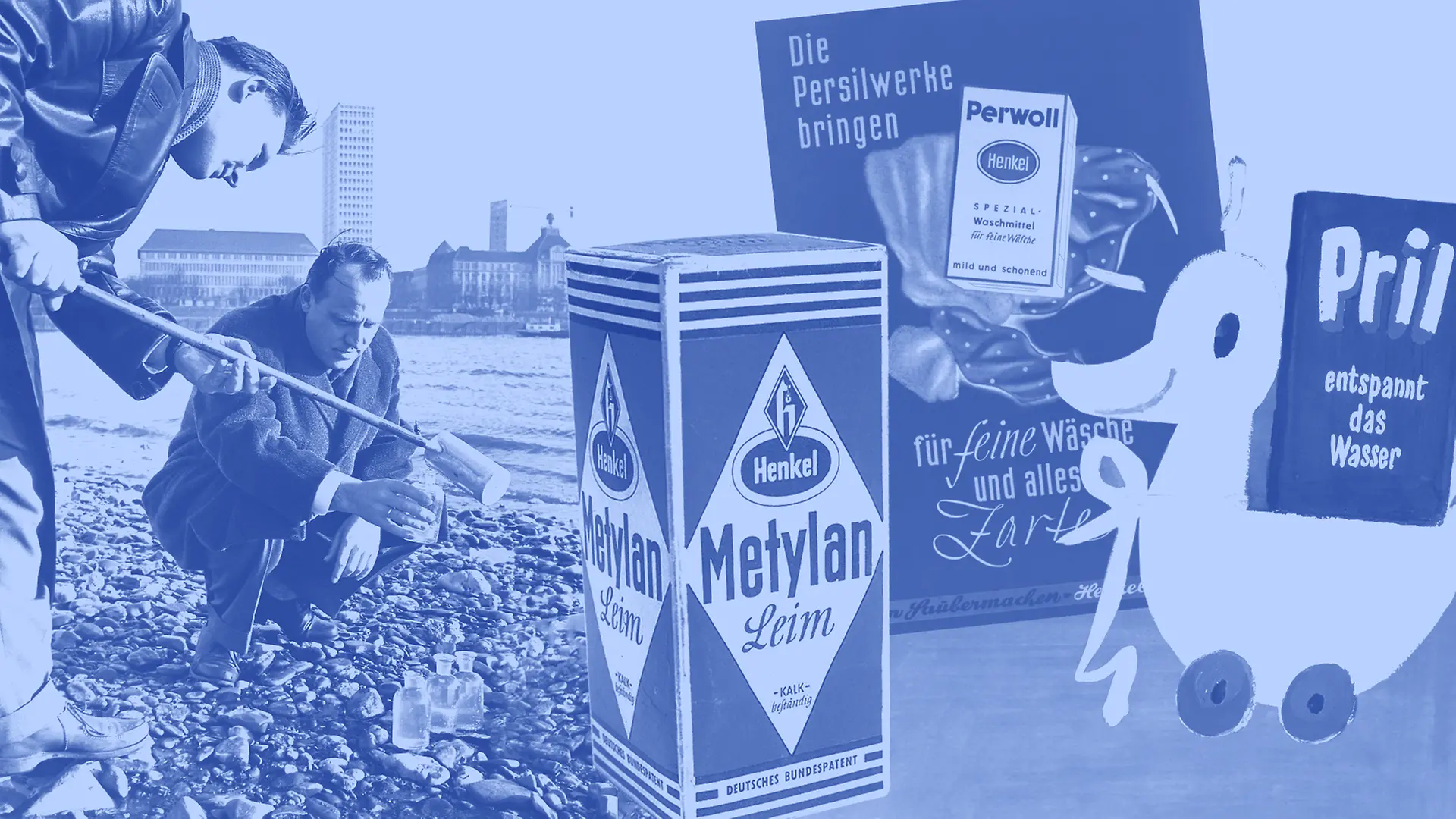
After the currency reform, the construction boom in the devastated towns generates strong demand for craftsman supplies. In 1953, Henkel launches Metylan for craftsmen and wallpaper installers. To this day, the...
Still from the commercial with Liesl Karlstadt and Beppo Brem (1956)
More and more households in Germany own TV sets, so that traditional street advertising is more and more replaced by TV commercials. Henkel also leverages the new medium. In November 1956, Bavarian television...
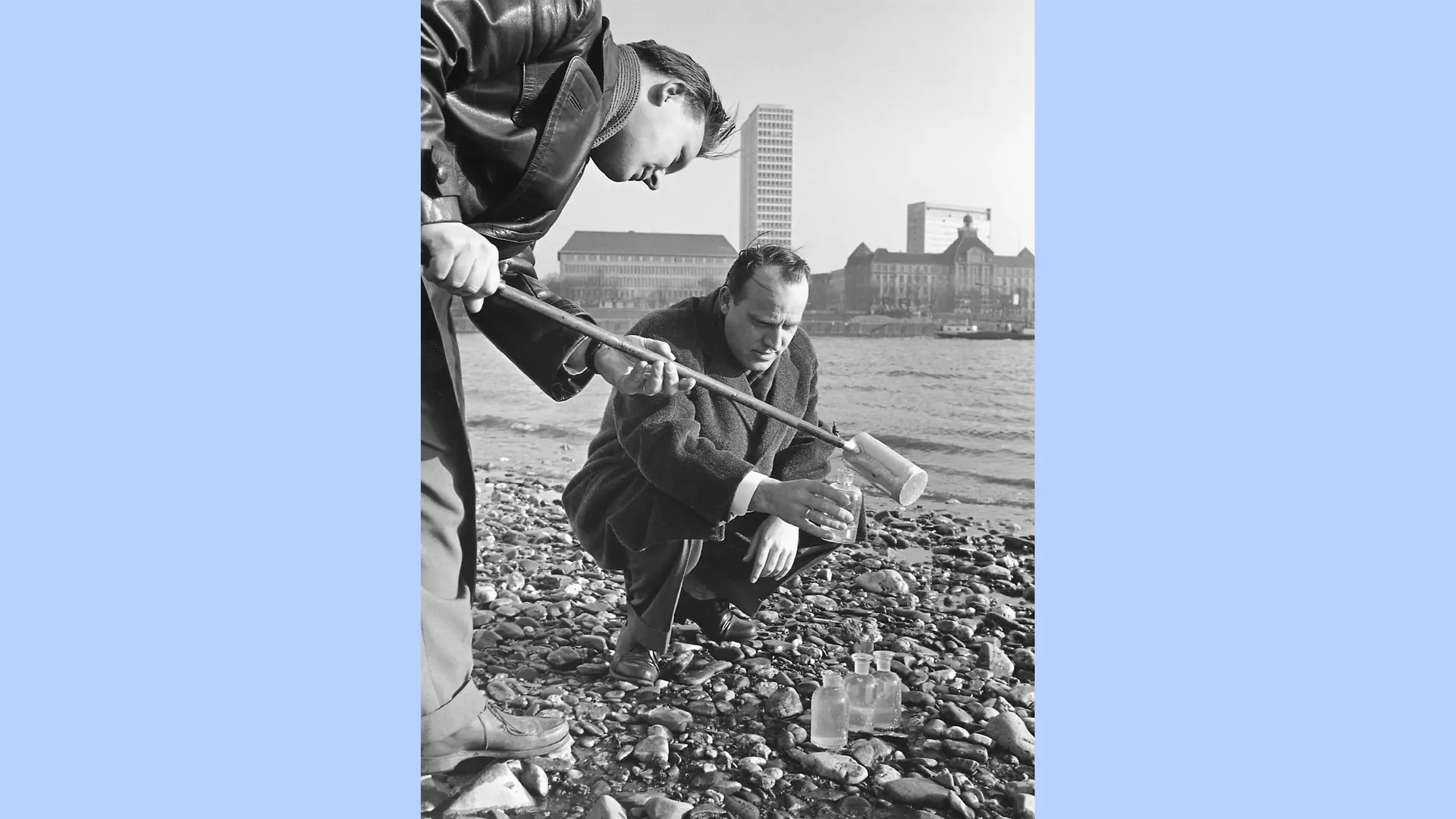
Taking a water sample from the river Rhine (1960)
Henkel starts the systematic monitoring of the Rhine and its tributaries for detergent substances (surfactants). It was a reaction to concerns about water pollution from detergent residues.
From November 1946, the North Rhine-Westphalian state parliament met in a large, undamaged hall at Henkel in Düsseldorf-Holthausen (picture from the same year)
On October 2, 1946, the newly elected North Rhine-Westphalian state parliament convenes in Düsseldorf’s opera house for its opening session in the largely destroyed city. From November 1946 until 1949, a total of 81 Landtag sessions take place in the Gesolei Hall at Henkel’s Düsseldorf-Holthausen site.
Persil production in Düsseldorf starts on July 24, 1950. The first packages are back in West Germany’s stores on September 1, 1950 – after eleven years without Persil. At Henkel, the comeback of Persil is seen as a sign that the years of hardship are coming to an end.
The company car fleet for the sales force carries the slogan “Zum Saubermachen – Henkelsachen” (“For cleaning stints use Henkel things”), thus contributing to the company’s image building efforts.
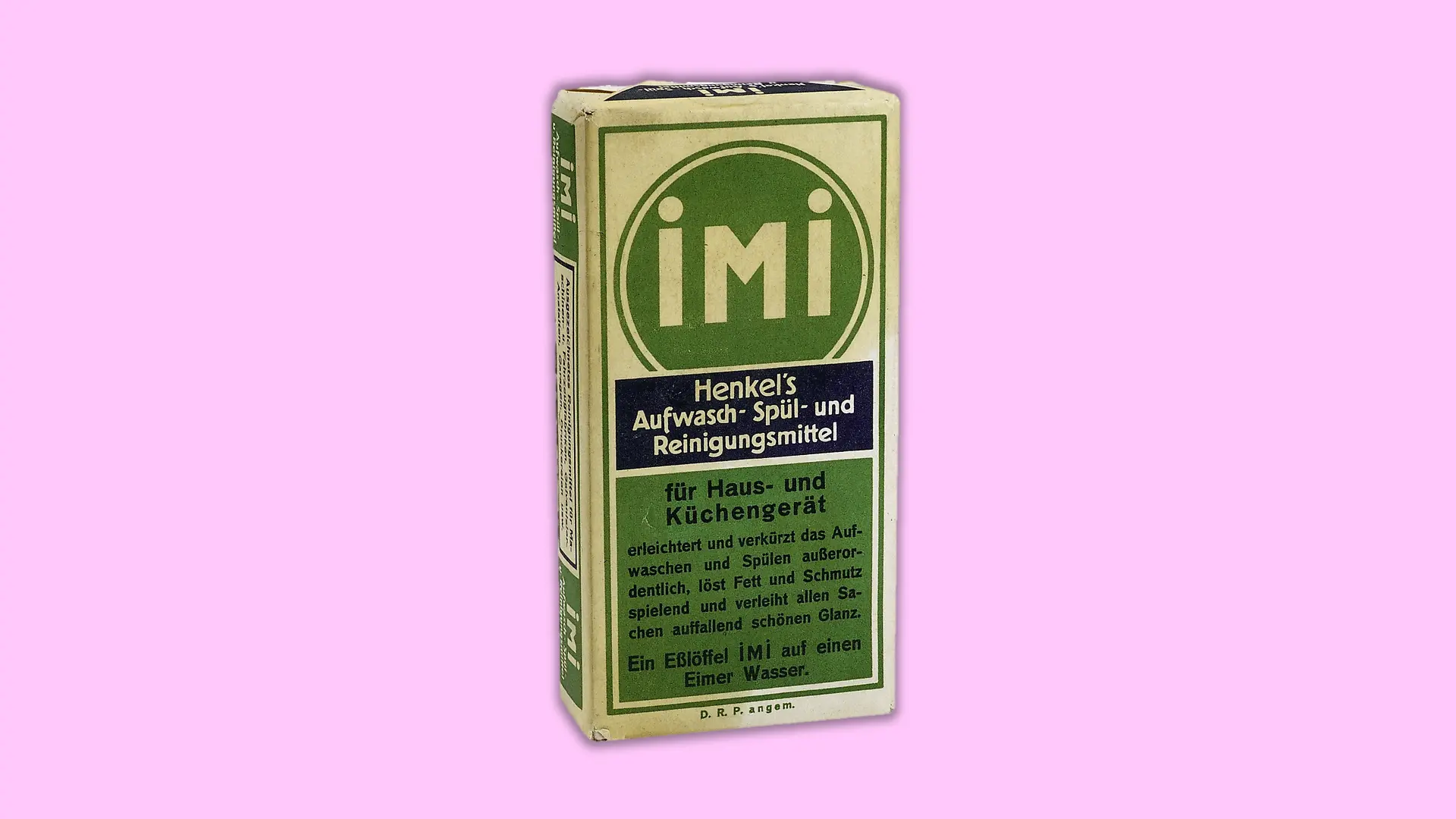
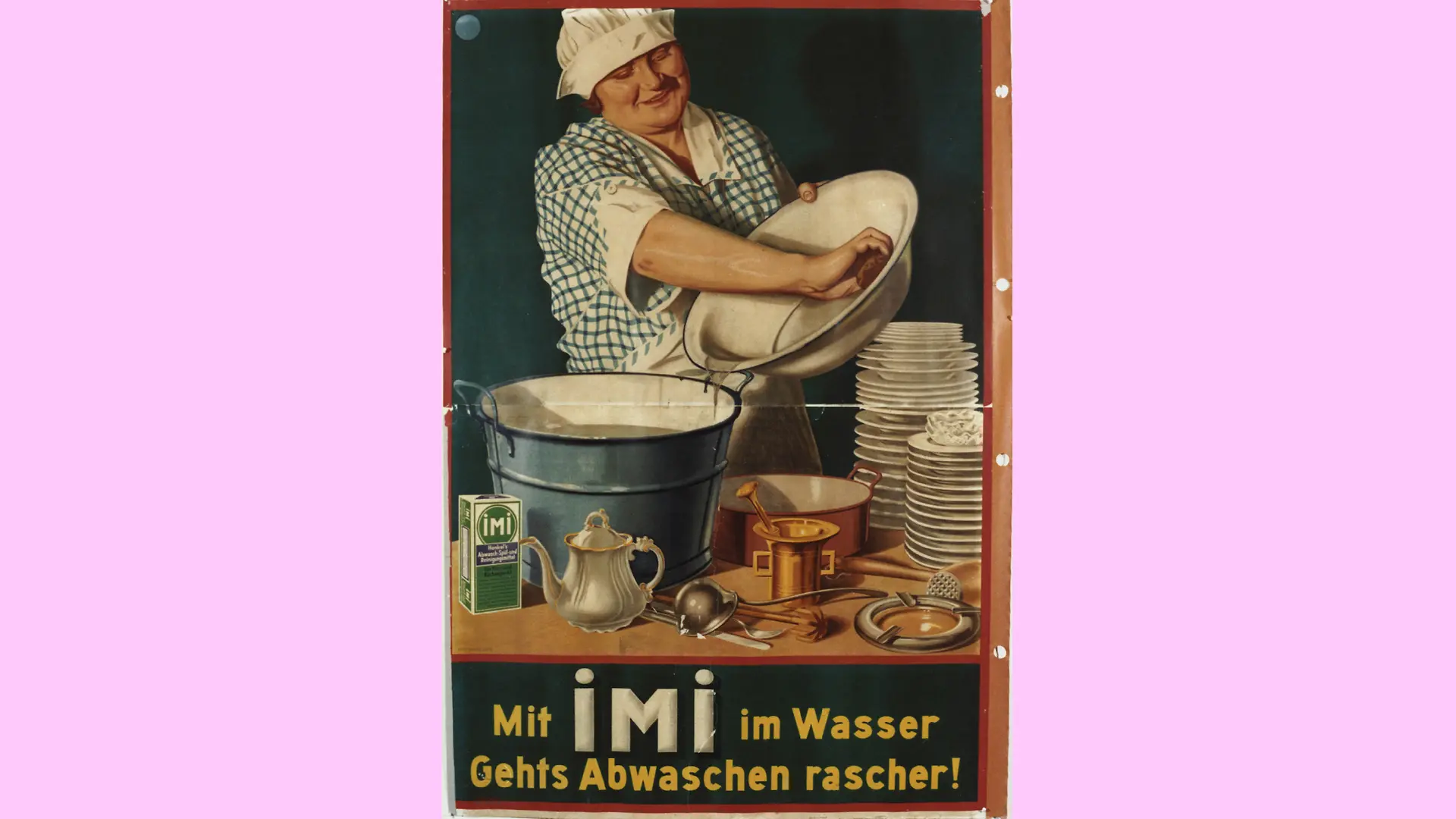
Pril powder, a domestic dishwashing product, is launched. It becomes a popular kitchen aid and soon turns into a top seller. In 1952, poster artist Herbert Leupin creates and draws the Pril duck, an advertising character that gains popularity fast.
After the currency reform, the construction boom in the devastated towns generates strong demand for craftsman supplies. In 1953, Henkel launches Metylan for craftsmen and wallpaper installers. To this day, the product continues to be an important brand for Henkel.
The chemical base of the wallpaper glue is methyl cellulose – thus the name Metylan. Over the years, Metylan has been developed into an umbrella brand offering a wide range of products for the craft and DIY sectors.
Still from the commercial with Liesl Karlstadt and Beppo Brem (1956)
More and more households in Germany own TV sets, so that traditional street advertising is more and more replaced by TV commercials. Henkel also leverages the new medium. In November 1956, Bavarian Broadcasting screens the first German TV commercial, featuring well-known contemporary comedy actors Liesl Karlstadt and Beppo Brem. In the leading role: Persil.
Taking a water sample from the river Rhine (1960)
Henkel starts the systematic monitoring of the Rhine and its tributaries for detergent substances (surfactants). It was a reaction to concerns about water pollution from detergent residues.
1961 – 1980
Modernization and internationalization
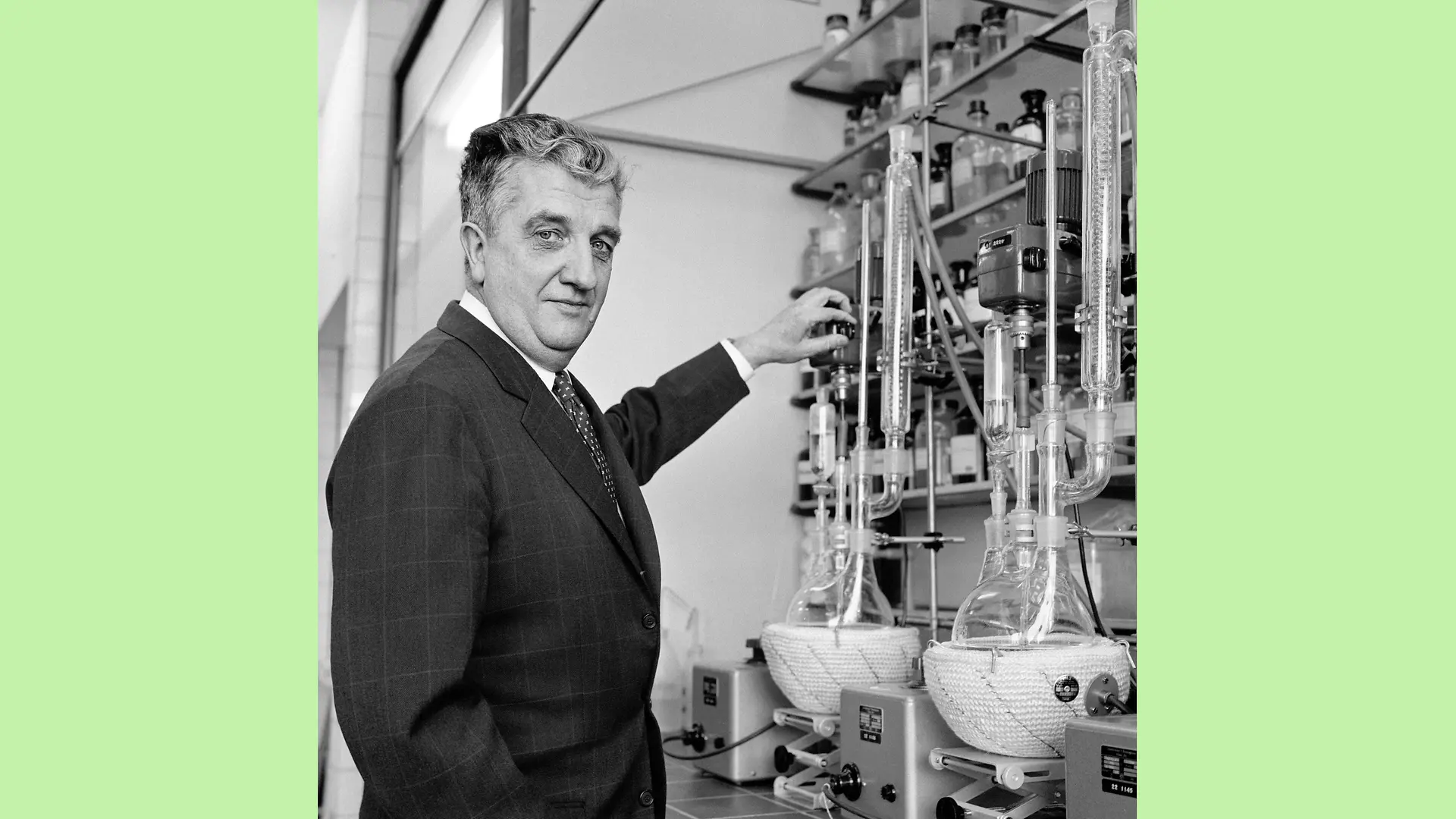
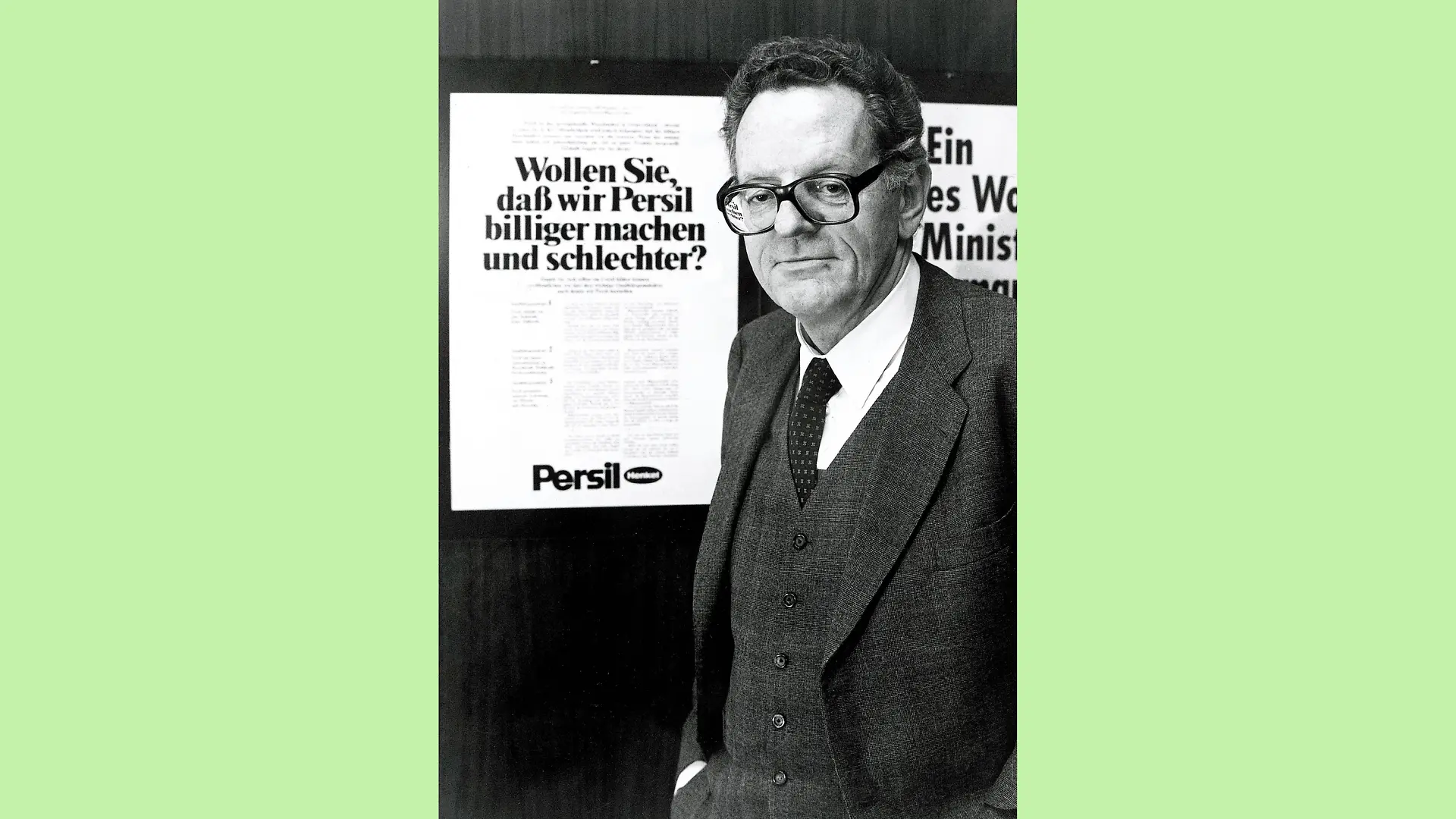
Under the leadership of Konrad Henkel (1961–1980), the focus is on modernization and internationalization. Developing products and production processes that are environmentally sound, this era laid the foundation for Henkel’s ecological responsibility that continues to this day.
After Dr. Jost Henkel dies at the age of 51, his younger brother, chemist Dr. Konrad Henkel, takes over as chairman of the executive board on July 31. Under his leadership (1961–1980), the company…
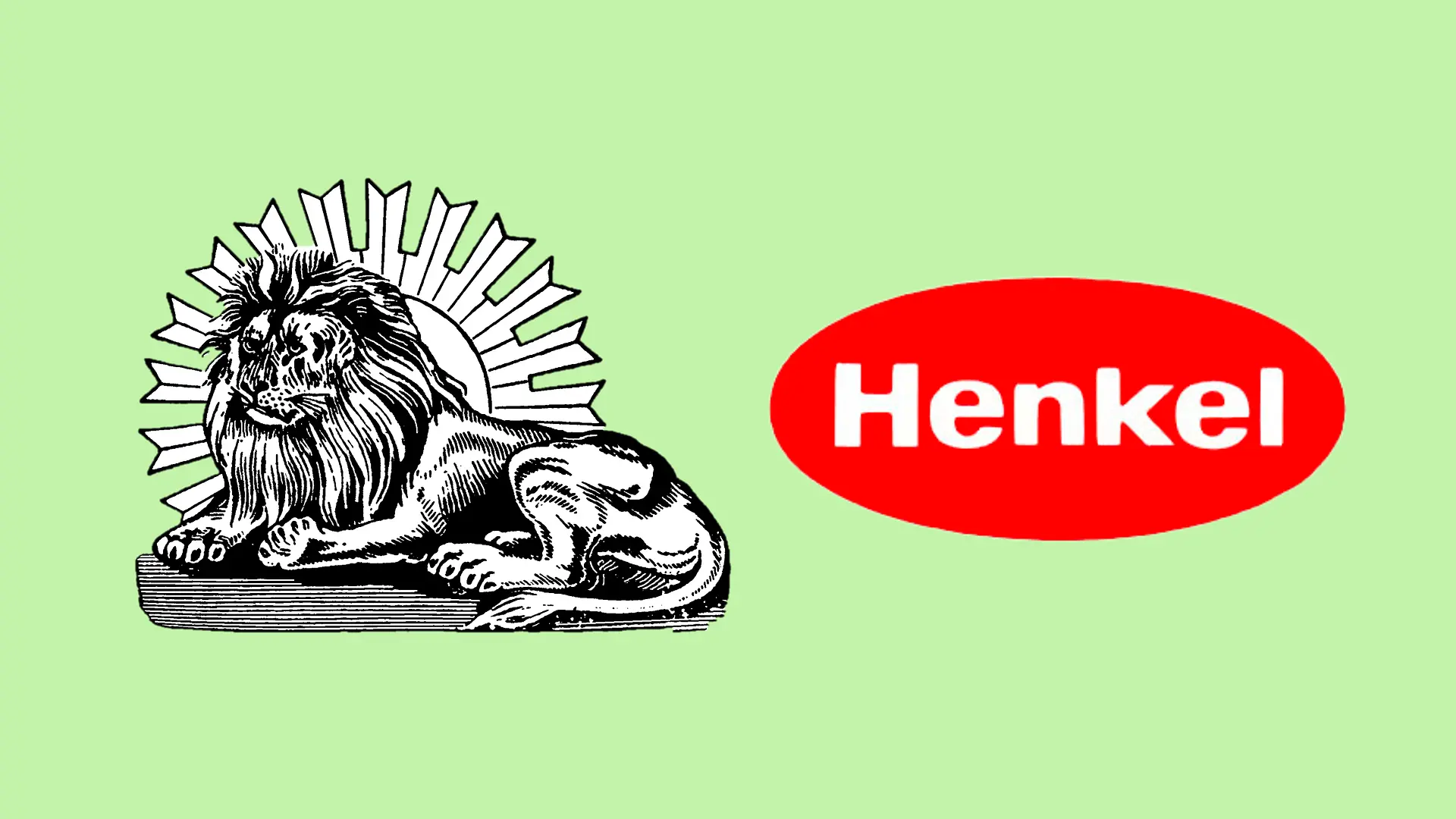
Iconic: the Henkel lion and the Henkel oval in the design of the 1960s
The Henkel lion is replaced by the Henkel oval. The lion icon with its distinctive aureole is one of the oldest German brand labels. Henkel uses it until 1961. The Henkel oval, which was created…
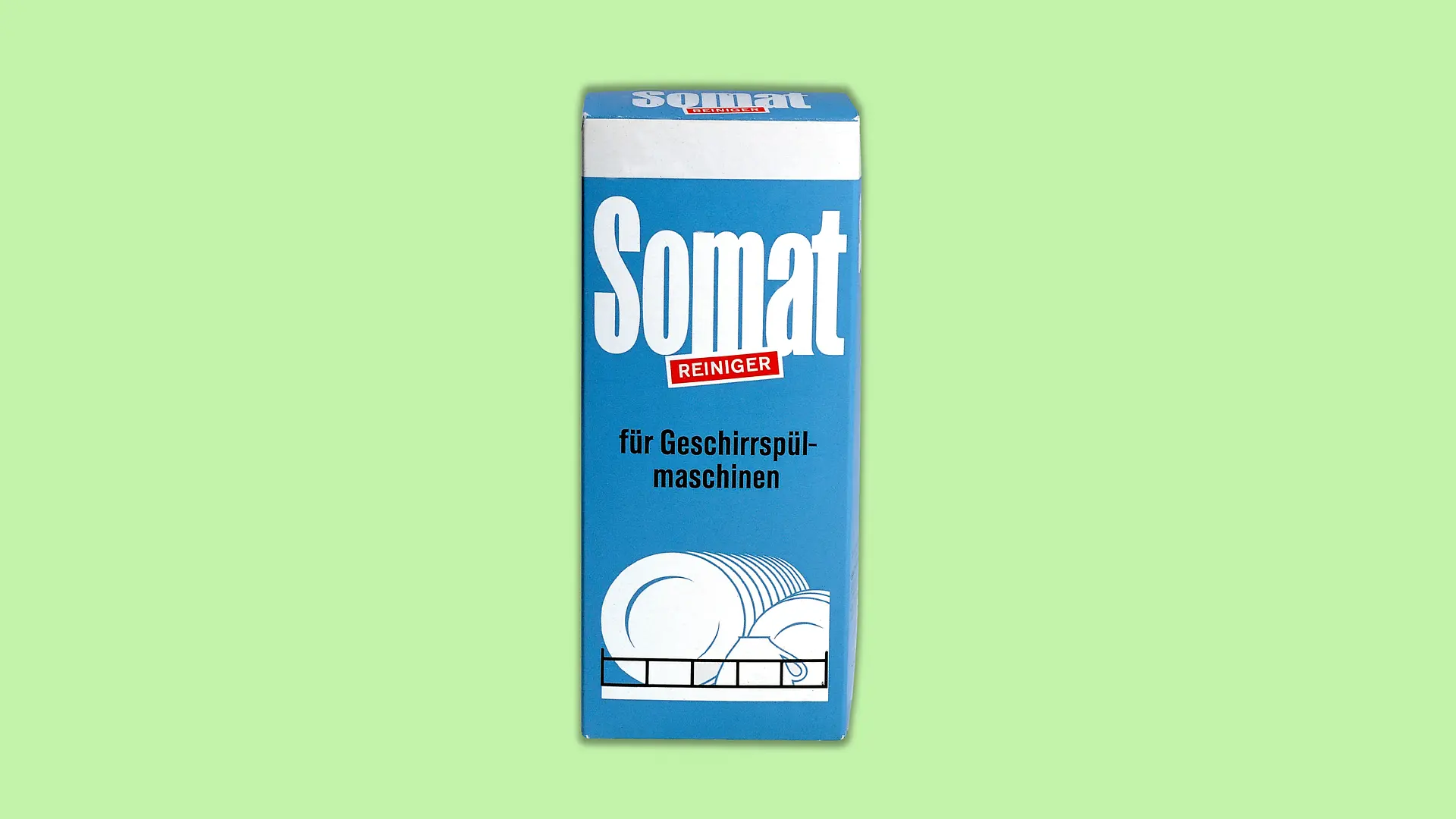
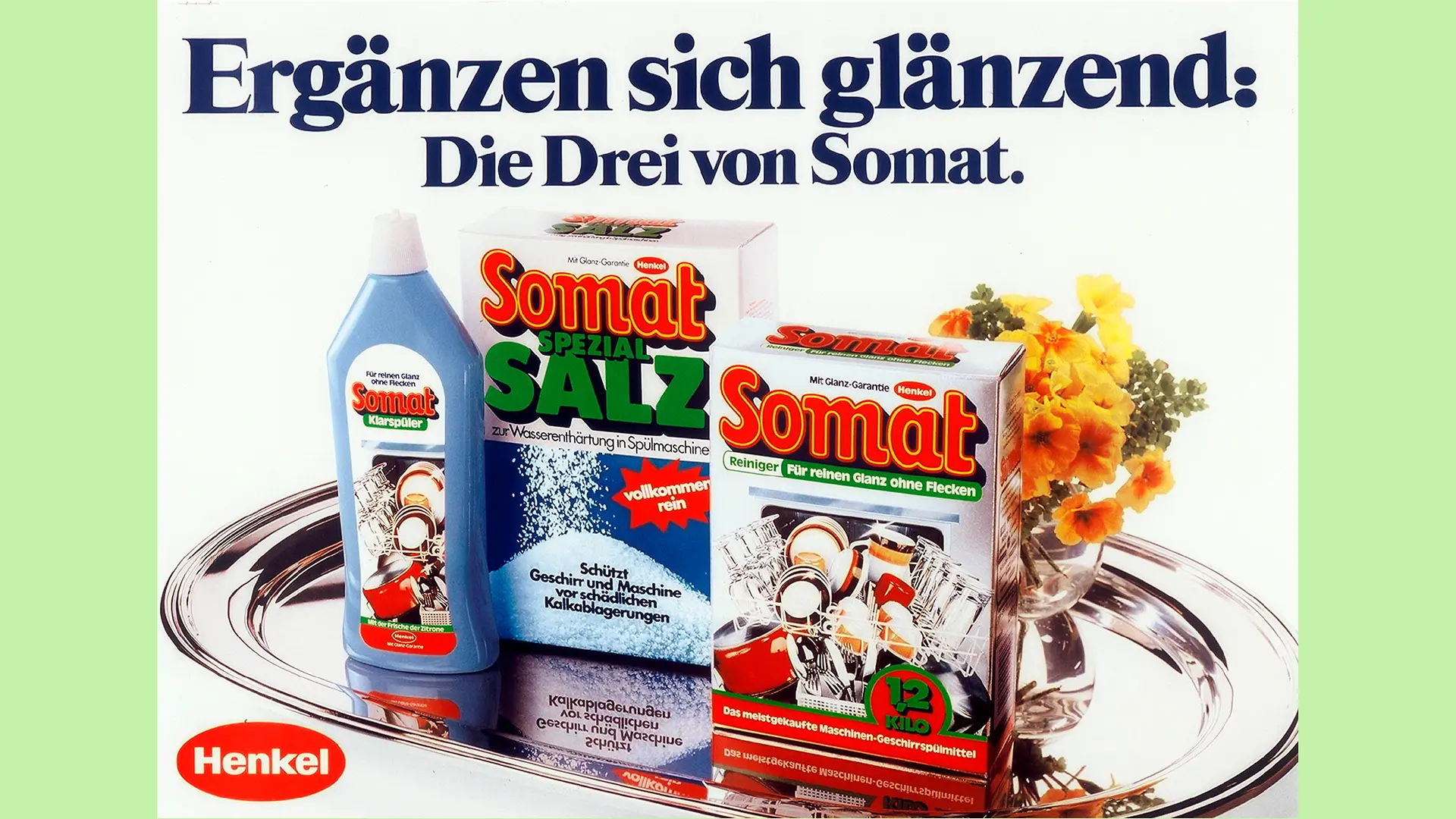
Somat rinse aid, special salt and detergent (1970s)
1 of 3
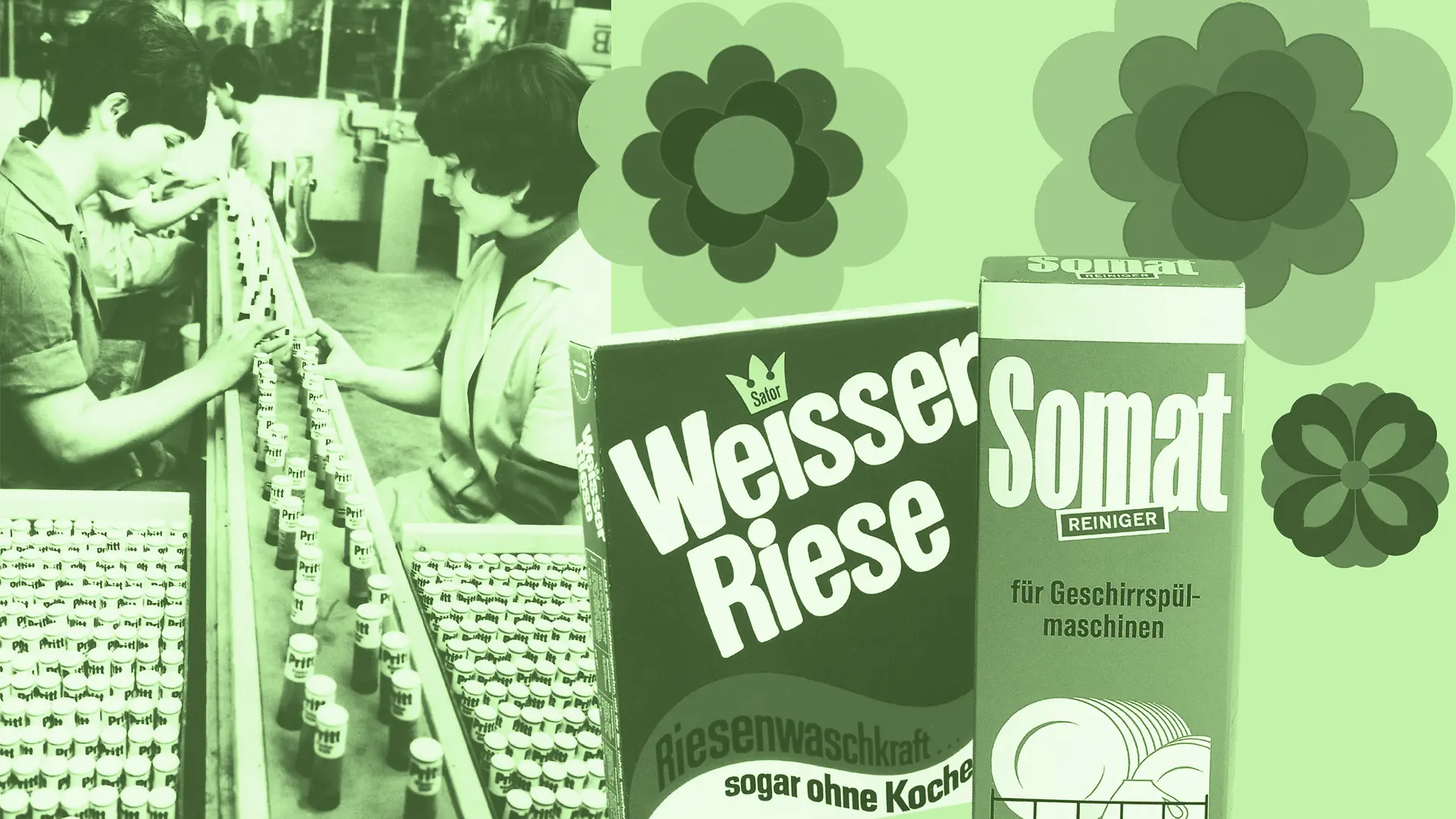
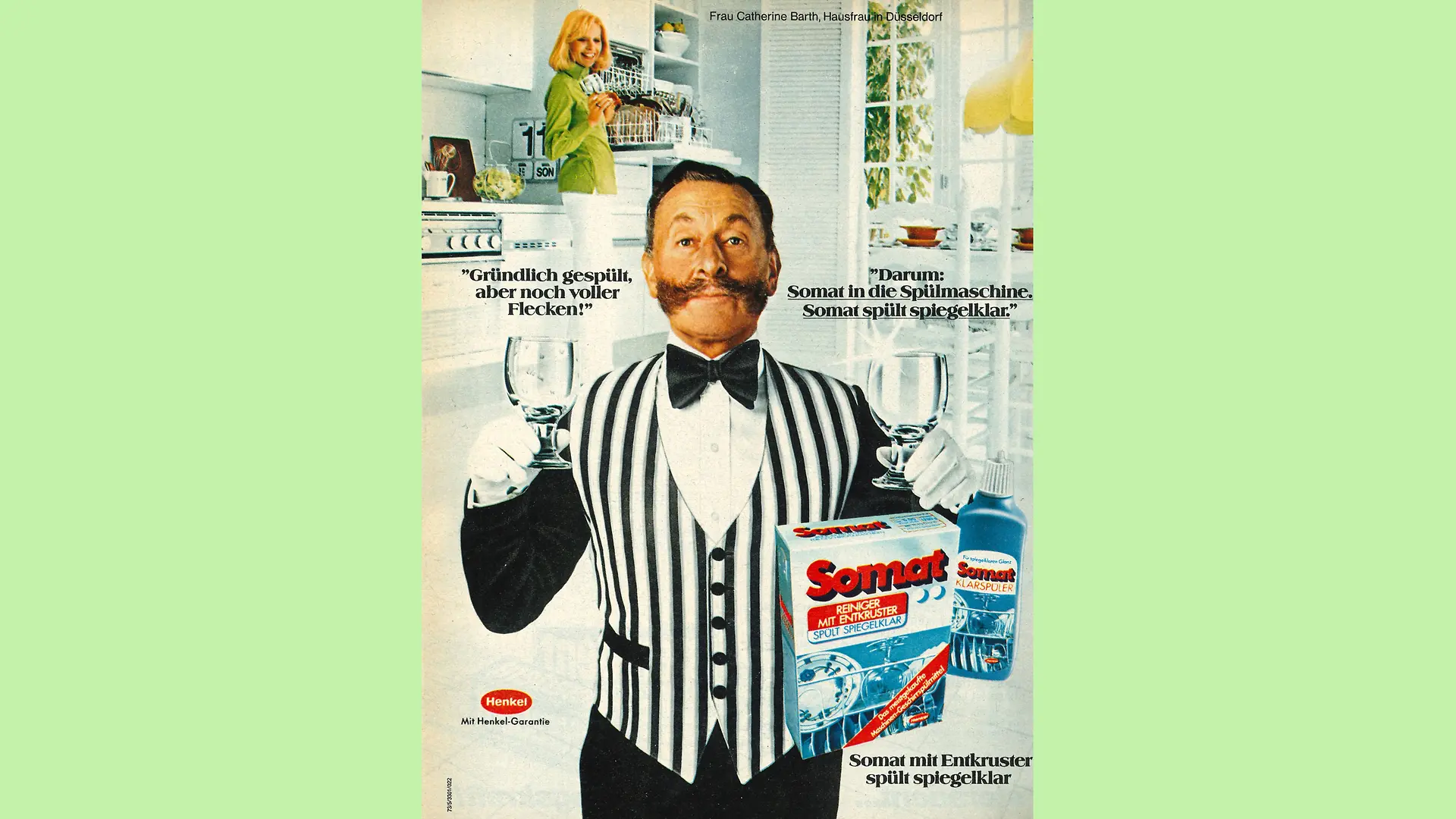
In 1962, Henkel launches Somat, Germany’s first cleaning agent that was specifically developed for dish washers. The product makes housework a lot easier.
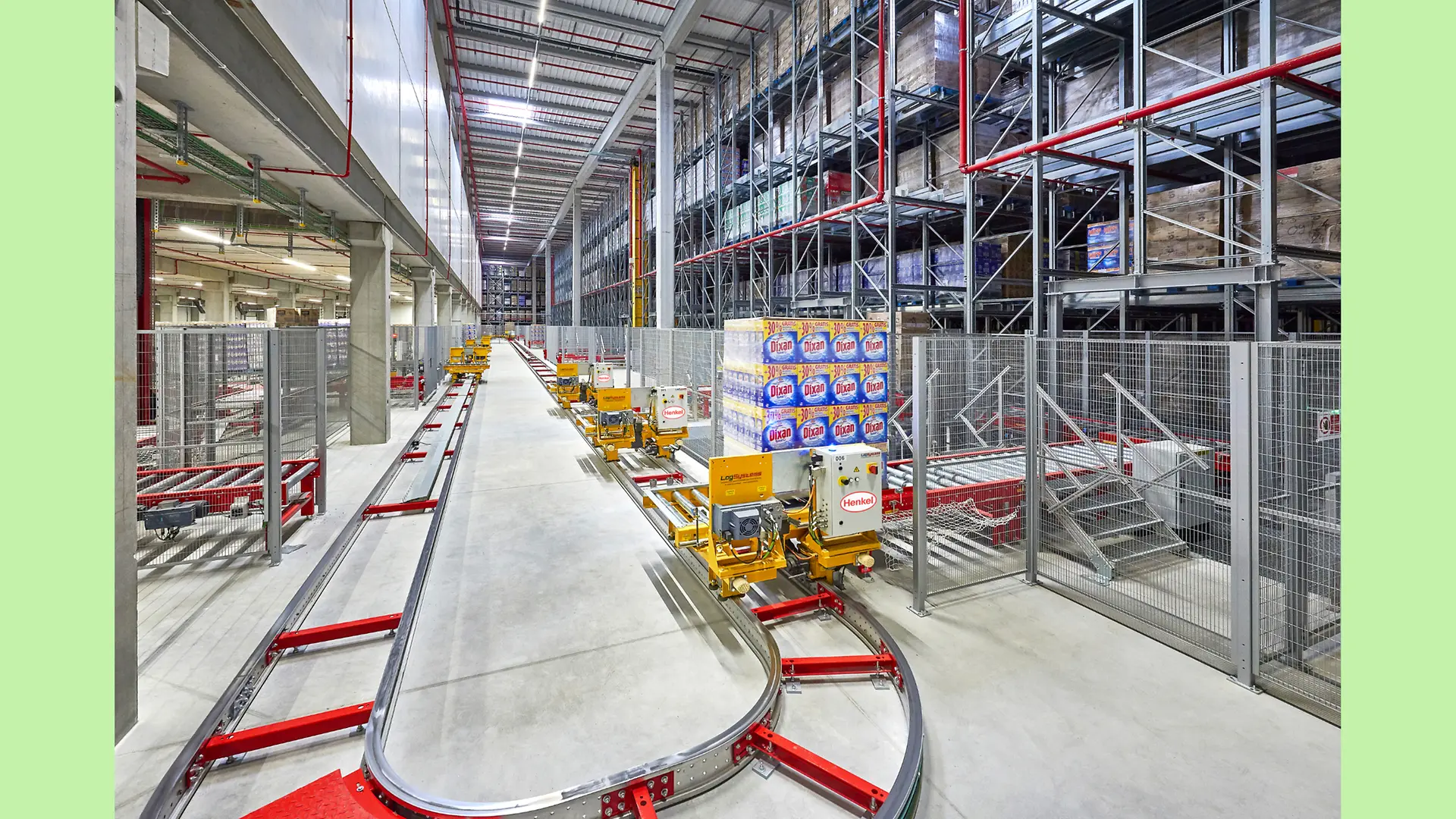
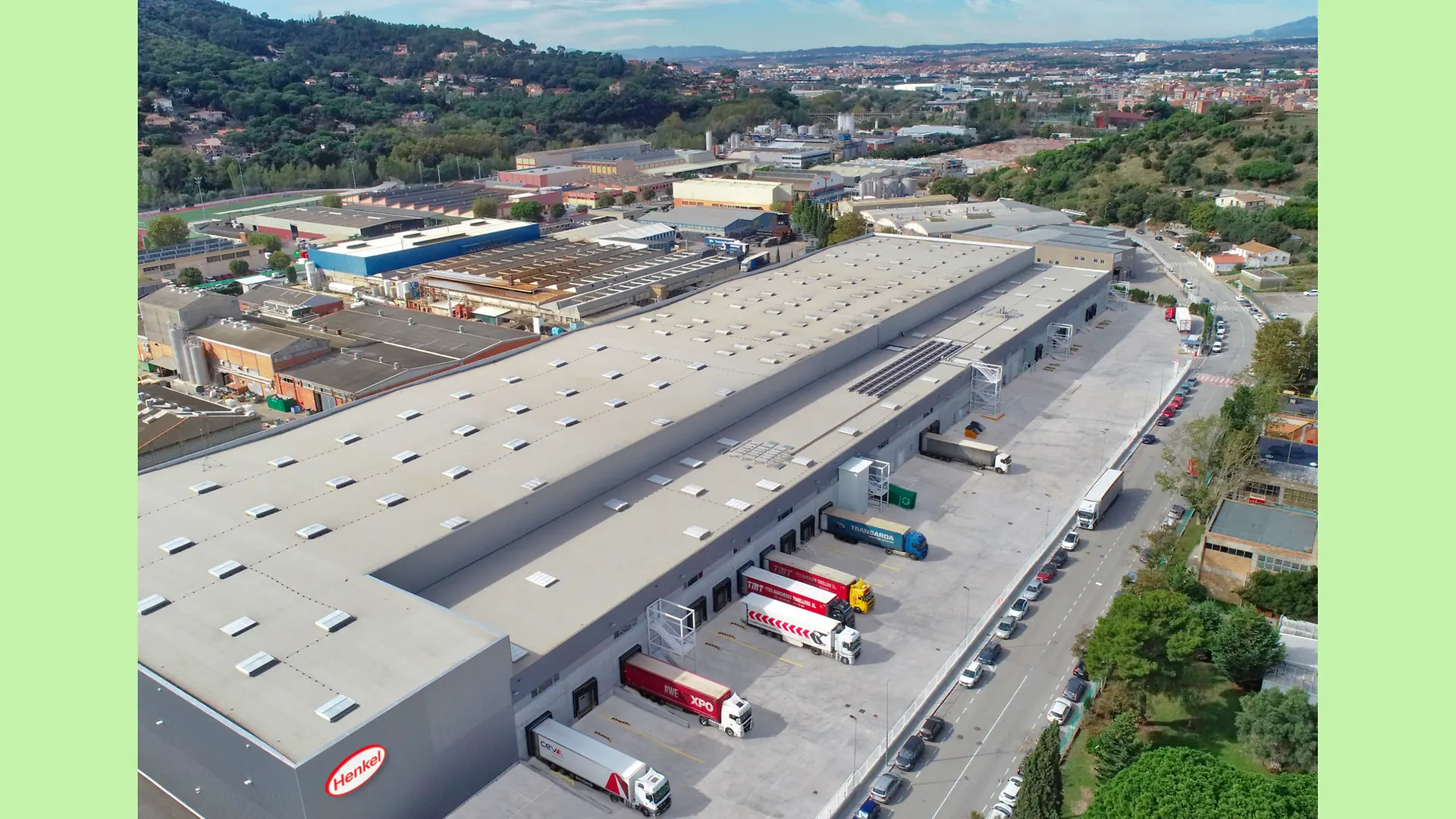
Aerial view of the 24,000 square meter logistics center in Montornès (2020)
1 of 3
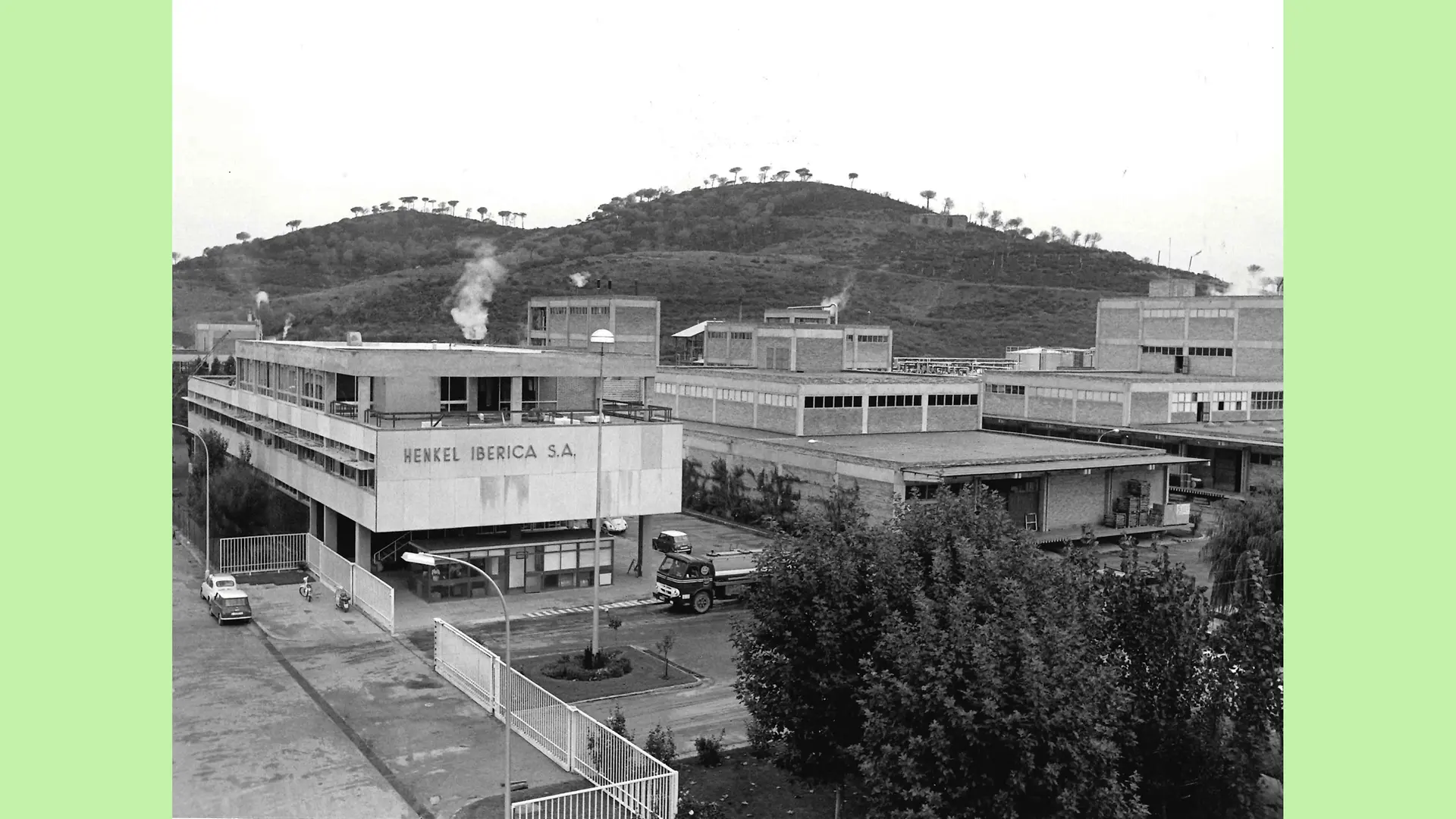
Henkel officially starts production at its production facility in Montornès del Vallès (Barcelona, Spain). Today, the manufacturing plant produces over 200,000 tons of powder detergents…
Technomelt hot melt adhesive is applied to a cardboard box (1982)
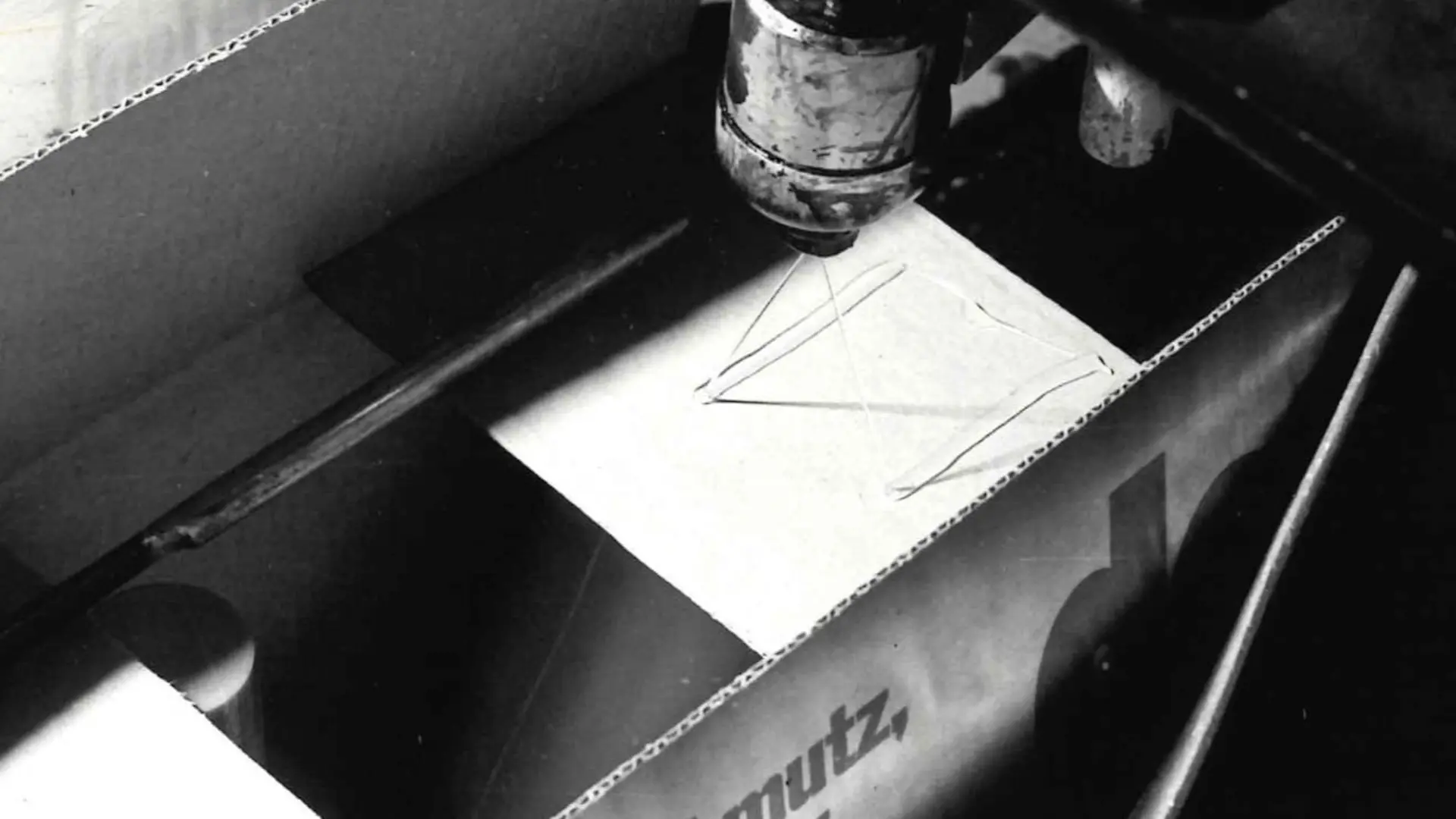
Henkel introduces Technomelt adhesives for packaging and bookbinding. Today, Technomelt adhesive solutions are used to manufacture products in a wide range of sectors, such as electronics,…
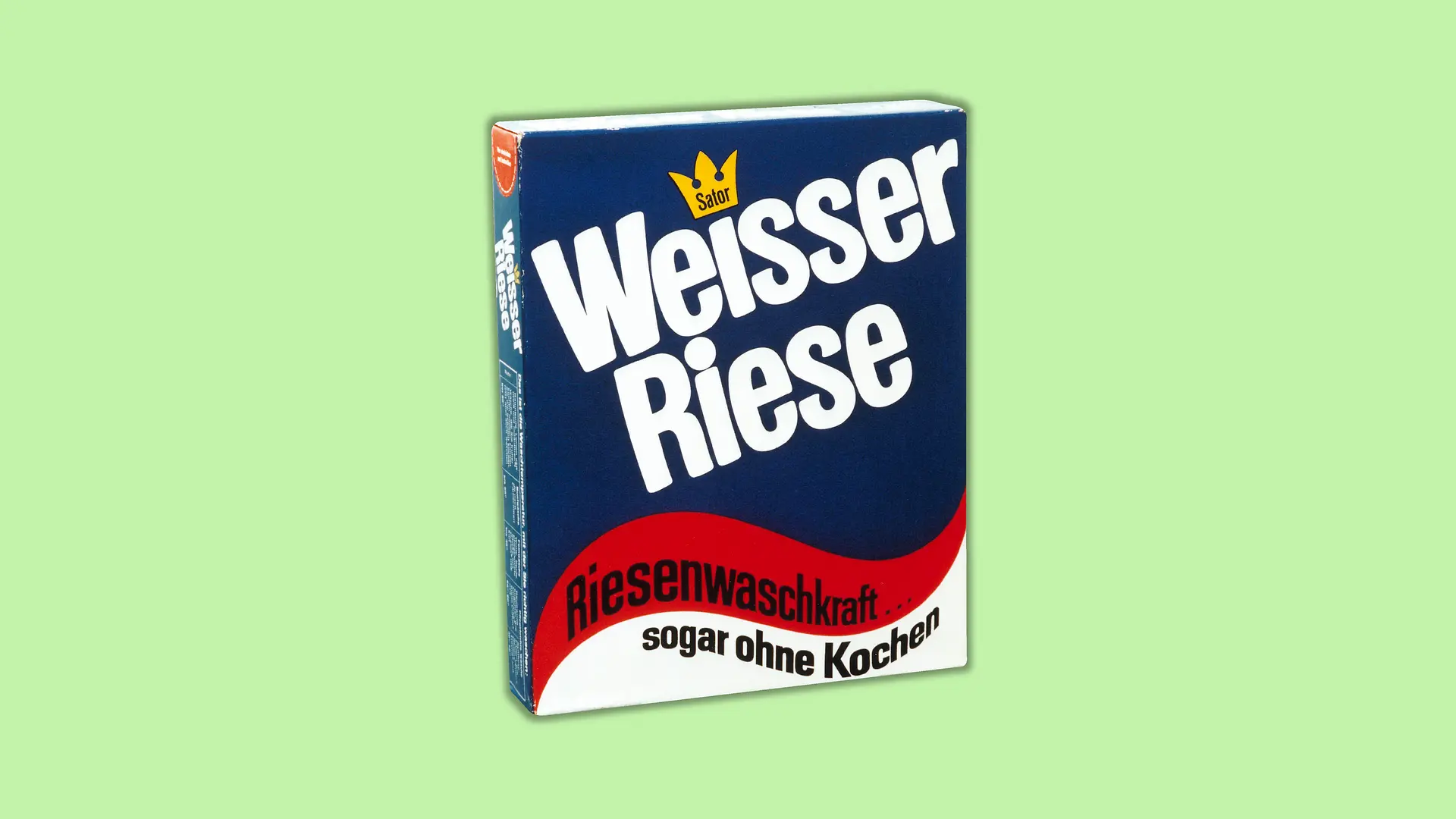
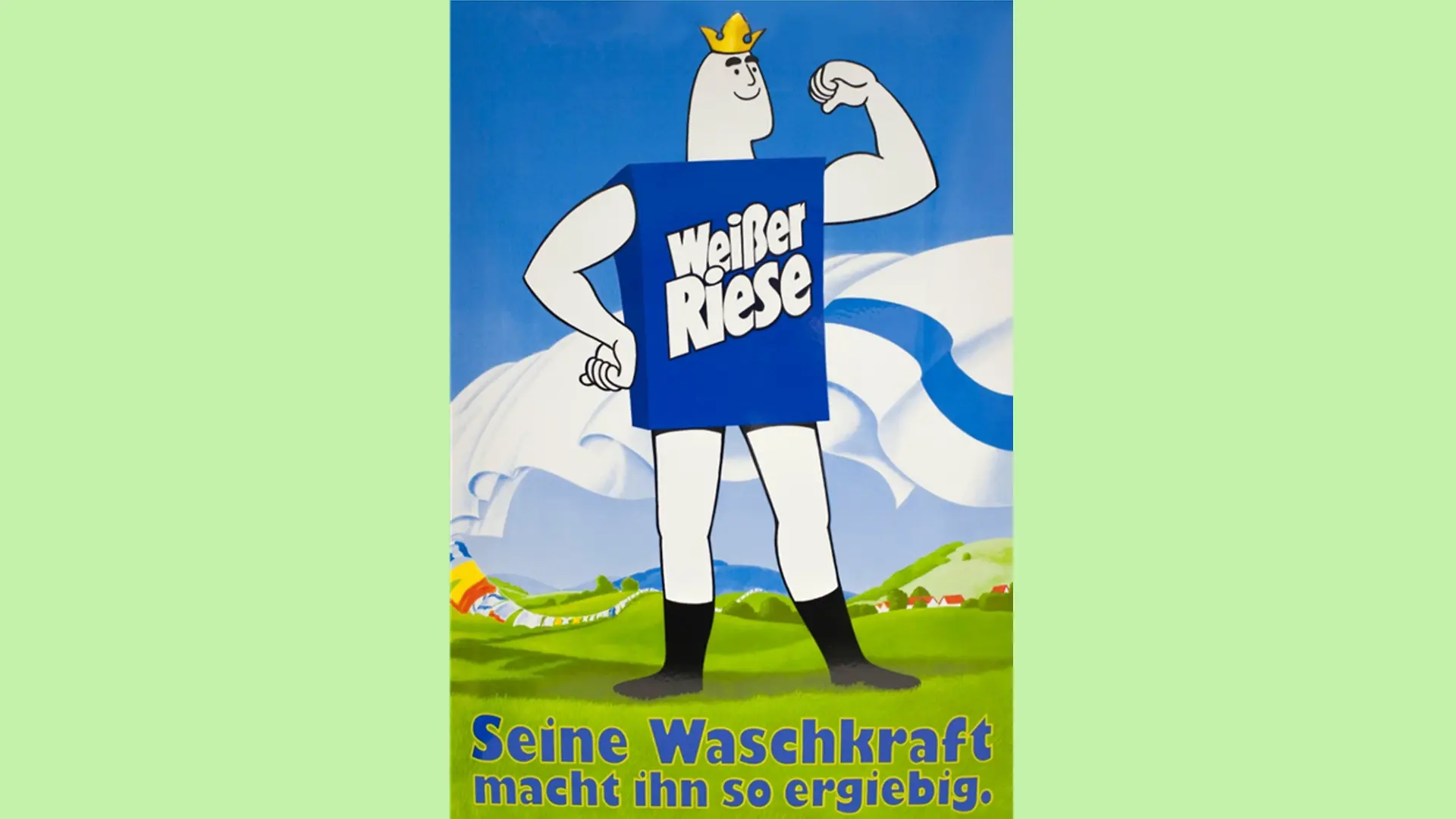
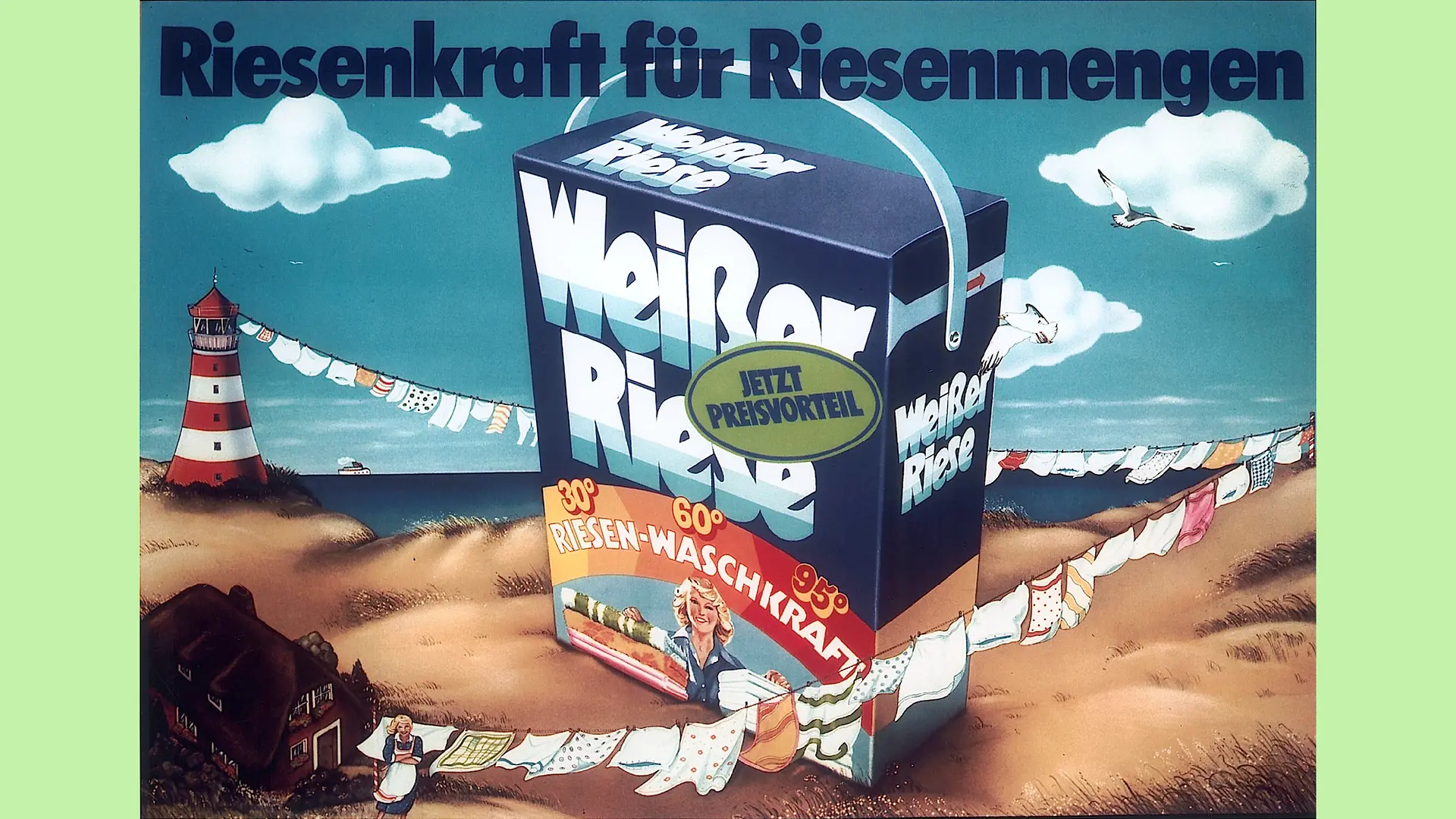
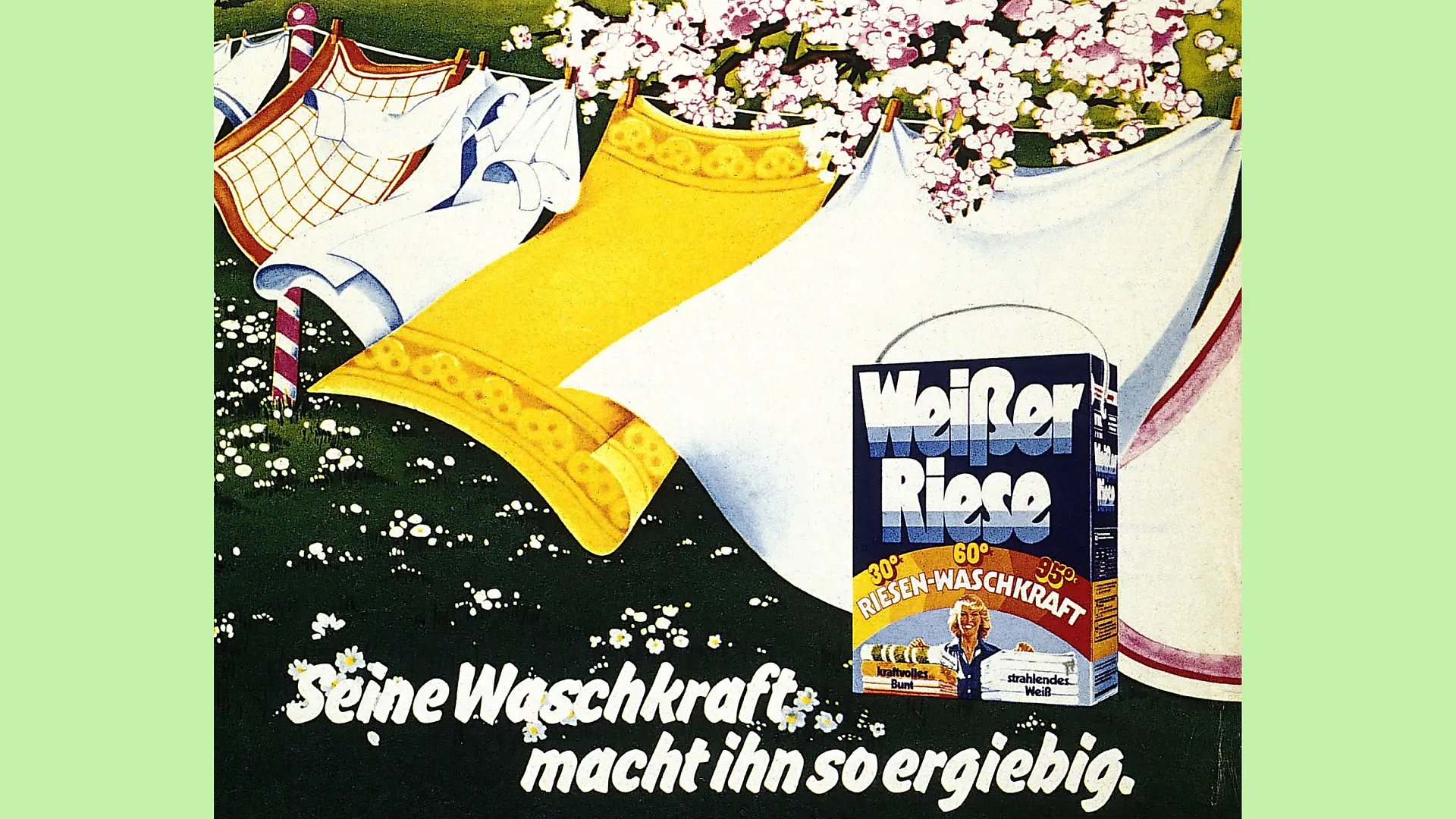
Weißer Riese (White giant), a heavy-duty detergent, is launched. The promo character of Weißer Riese has since become a well-known figure in TV spots for the detergent.
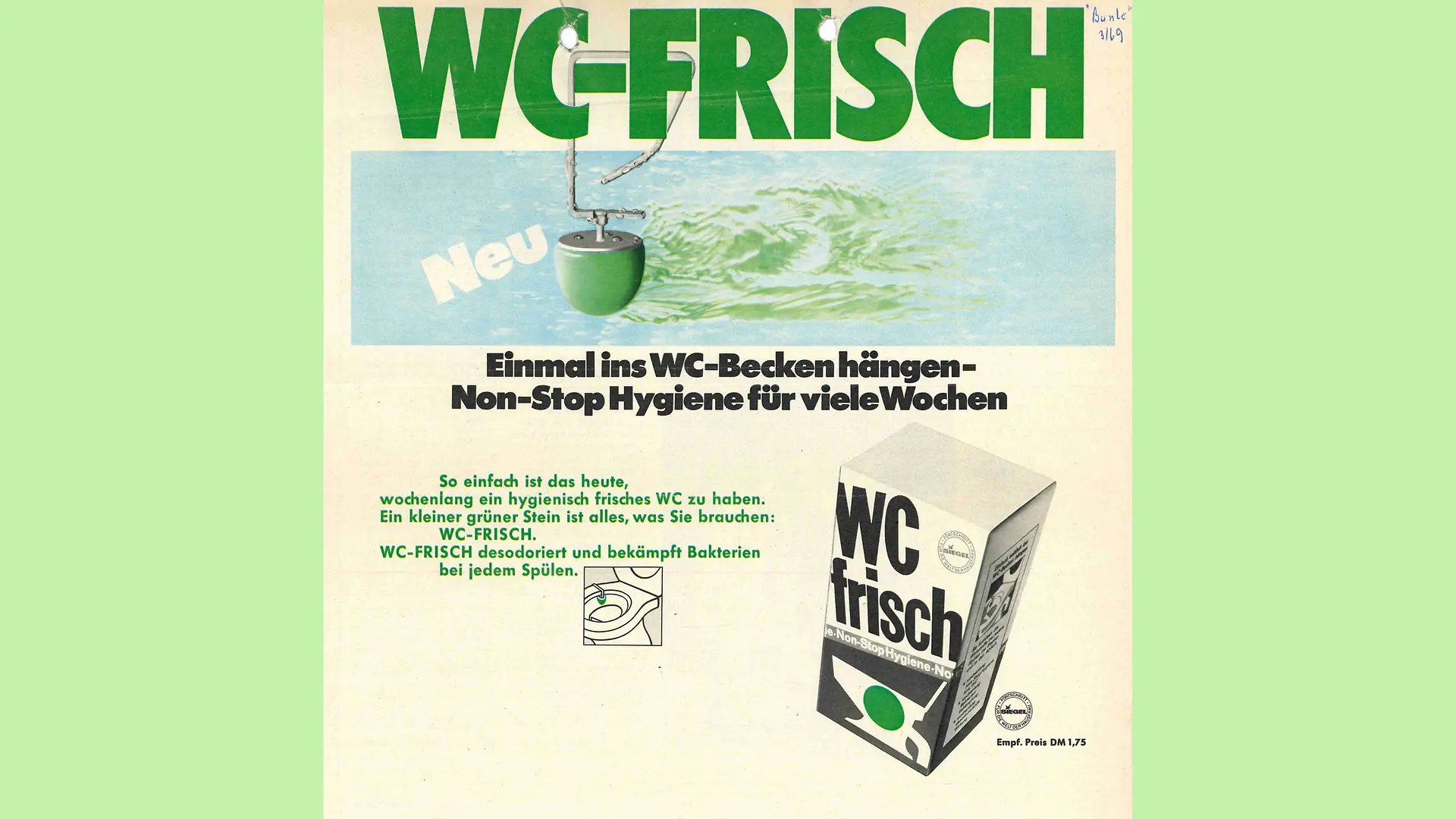
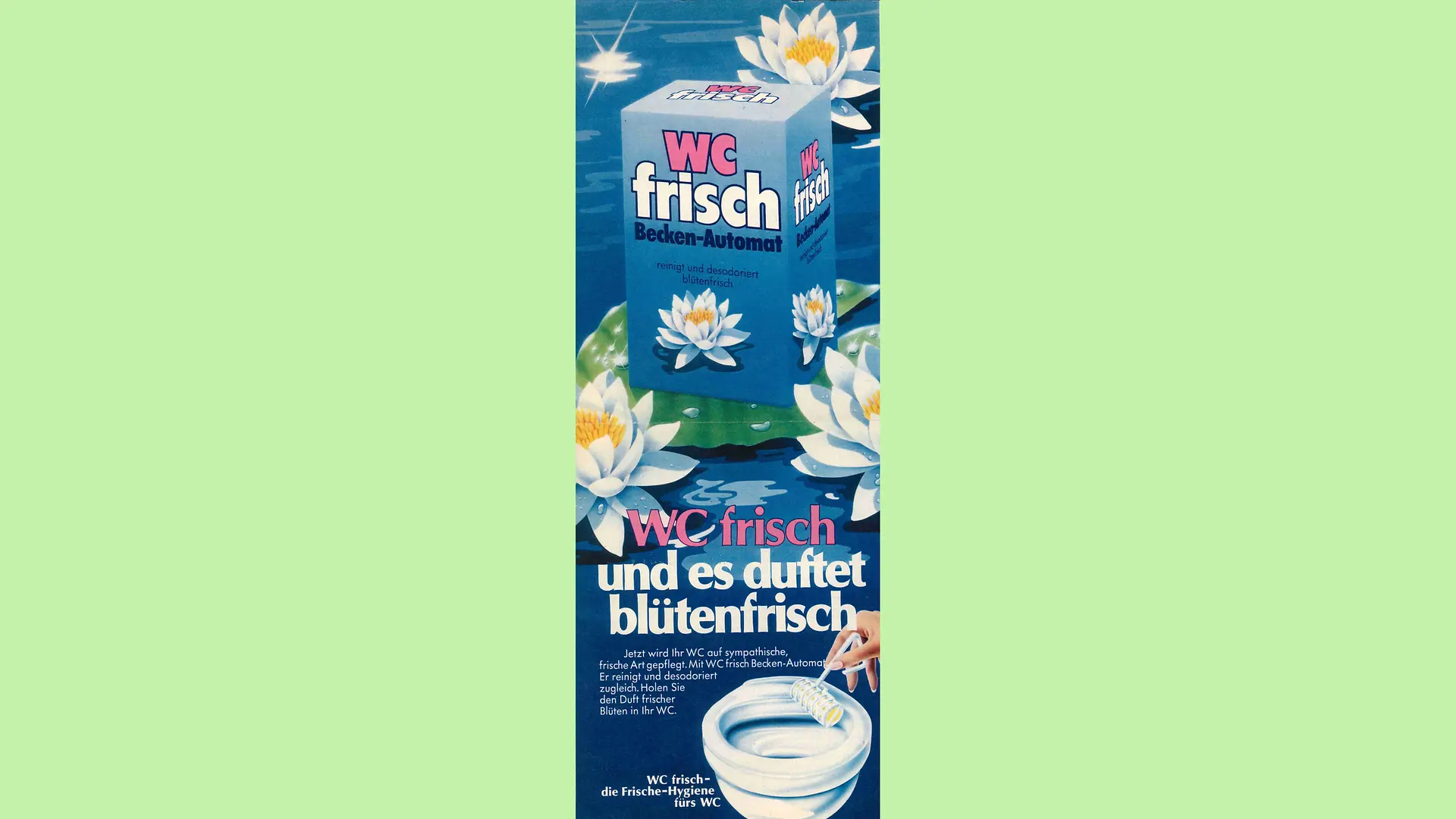
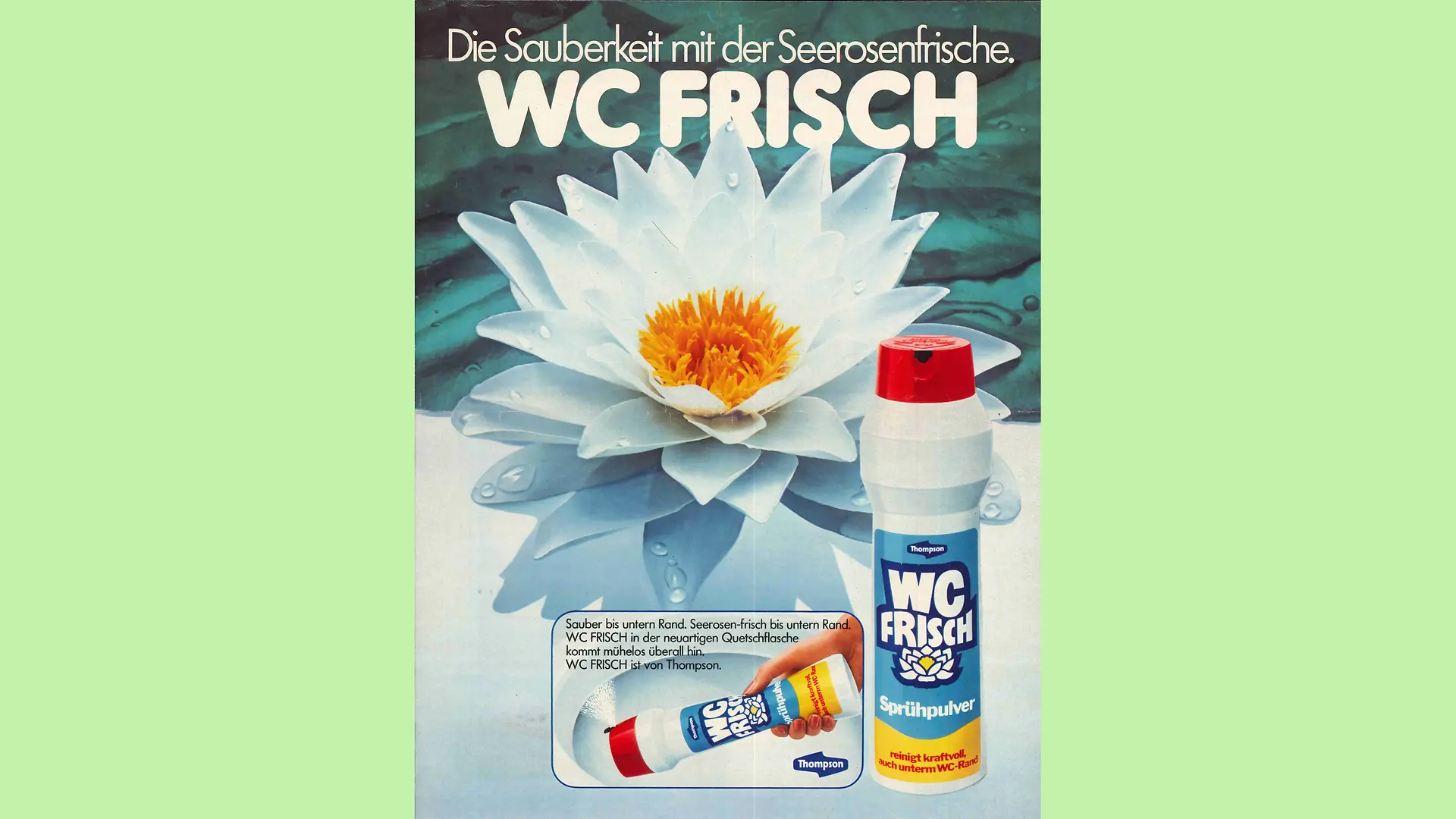
WC Frisch (WC fresh) is introduced in Germany. The toilet block is a real innovation: featuring a novel toilet rim hanger, it makes sure that bathrooms stay clean and fresh.
When Persil 70 with its new packaging design is launched, the brand is already available not only in Germany, but in almost all of Europe. In the year that followed, the advertisement campaign…
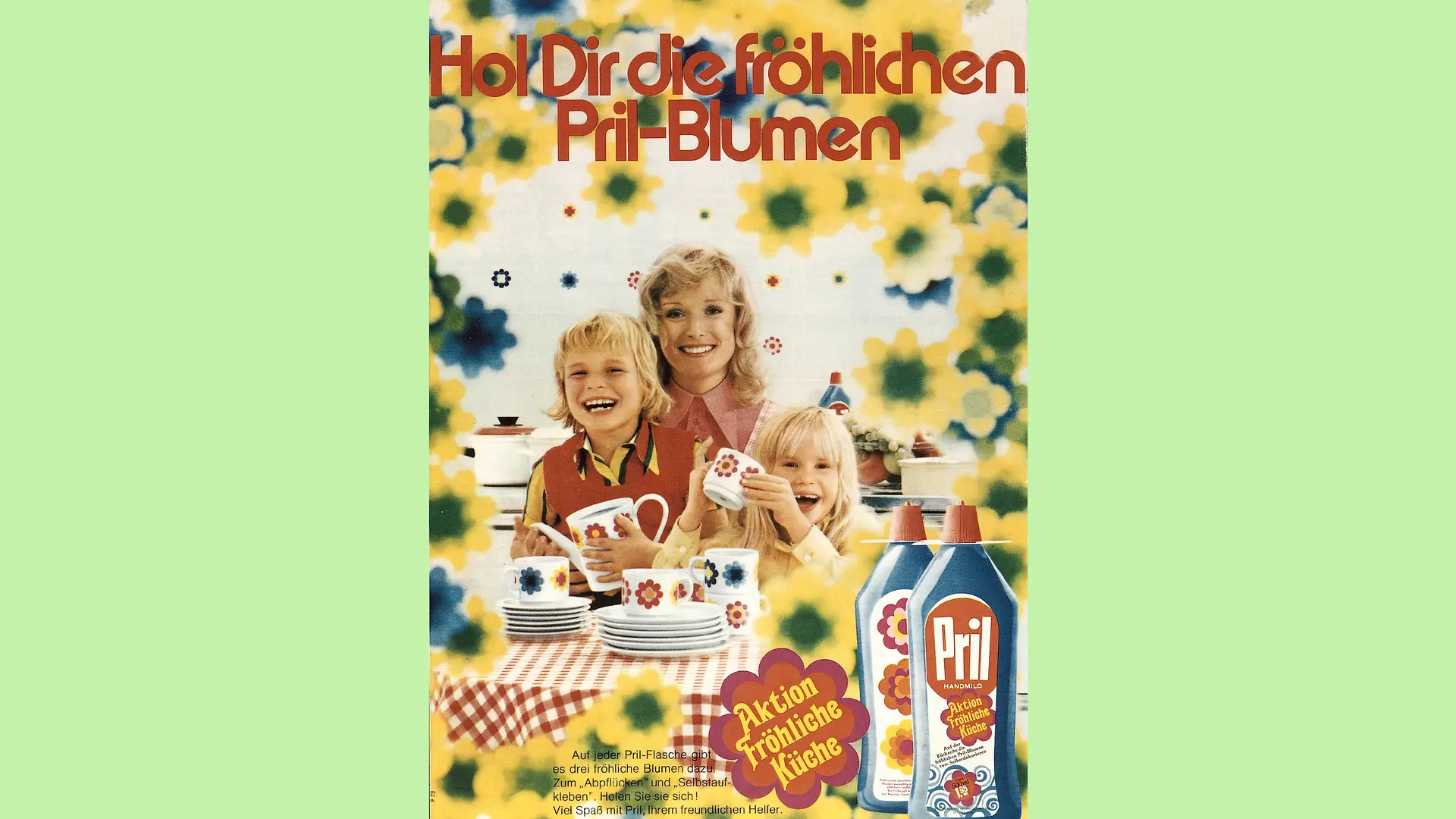
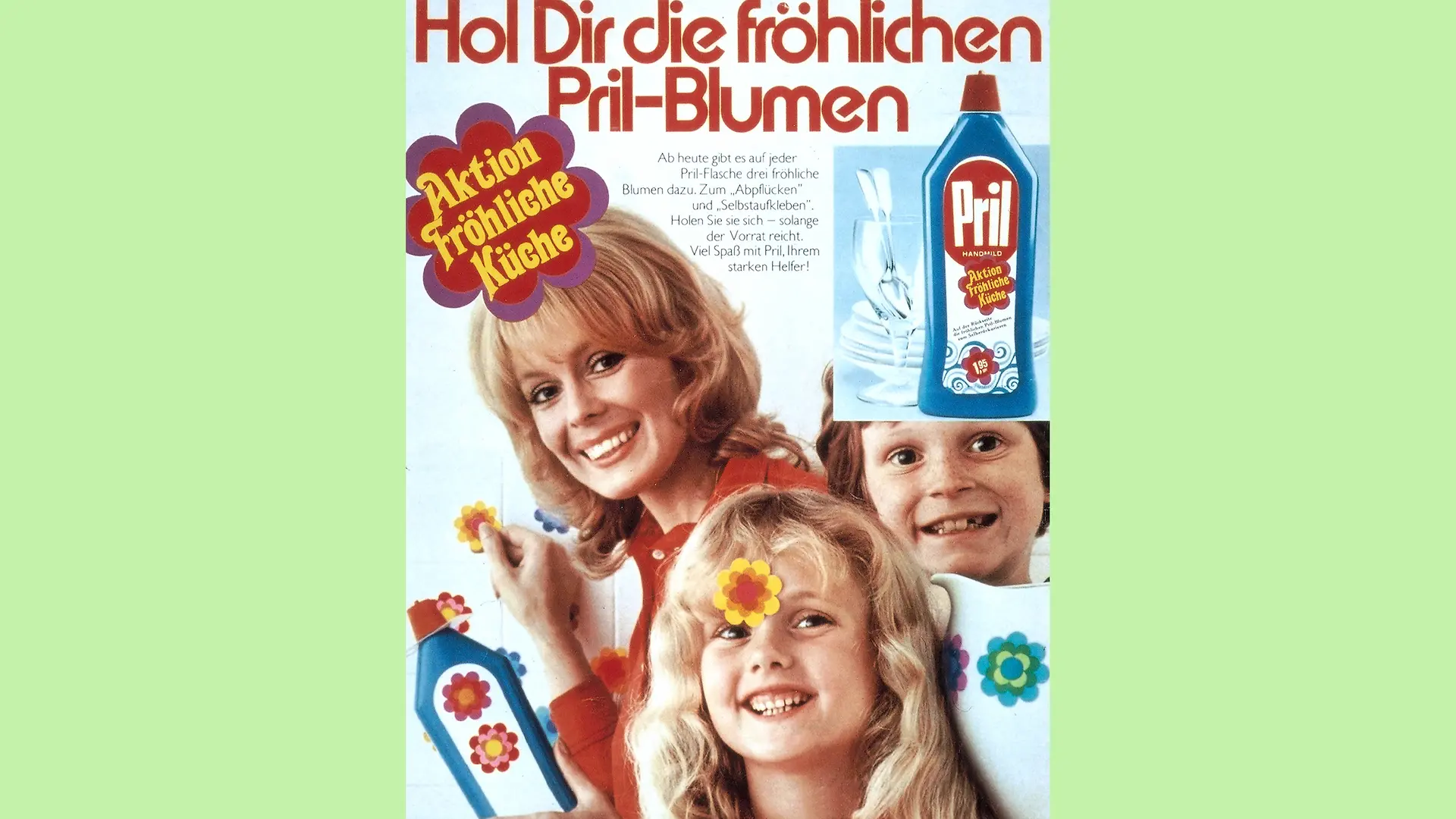
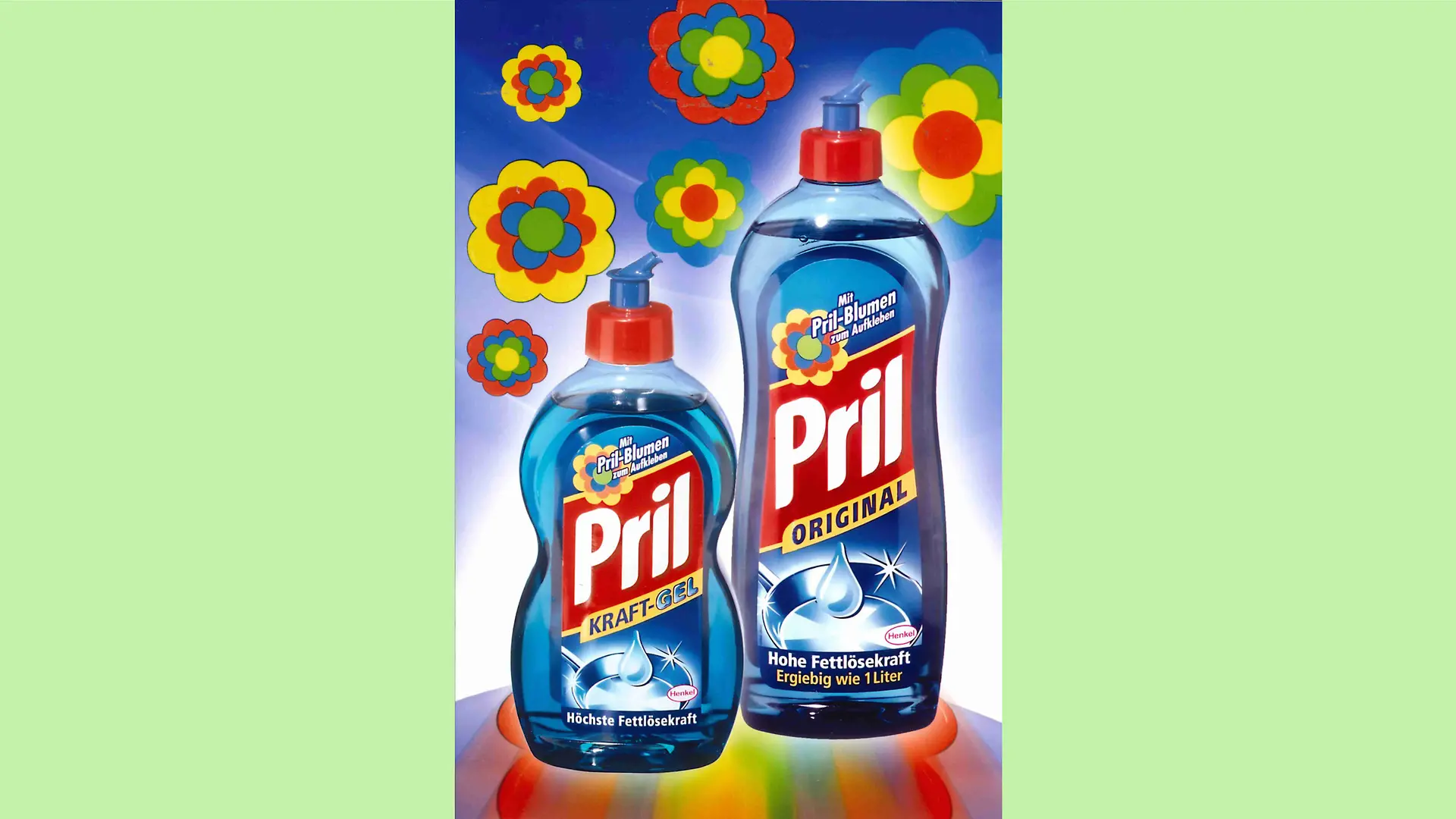
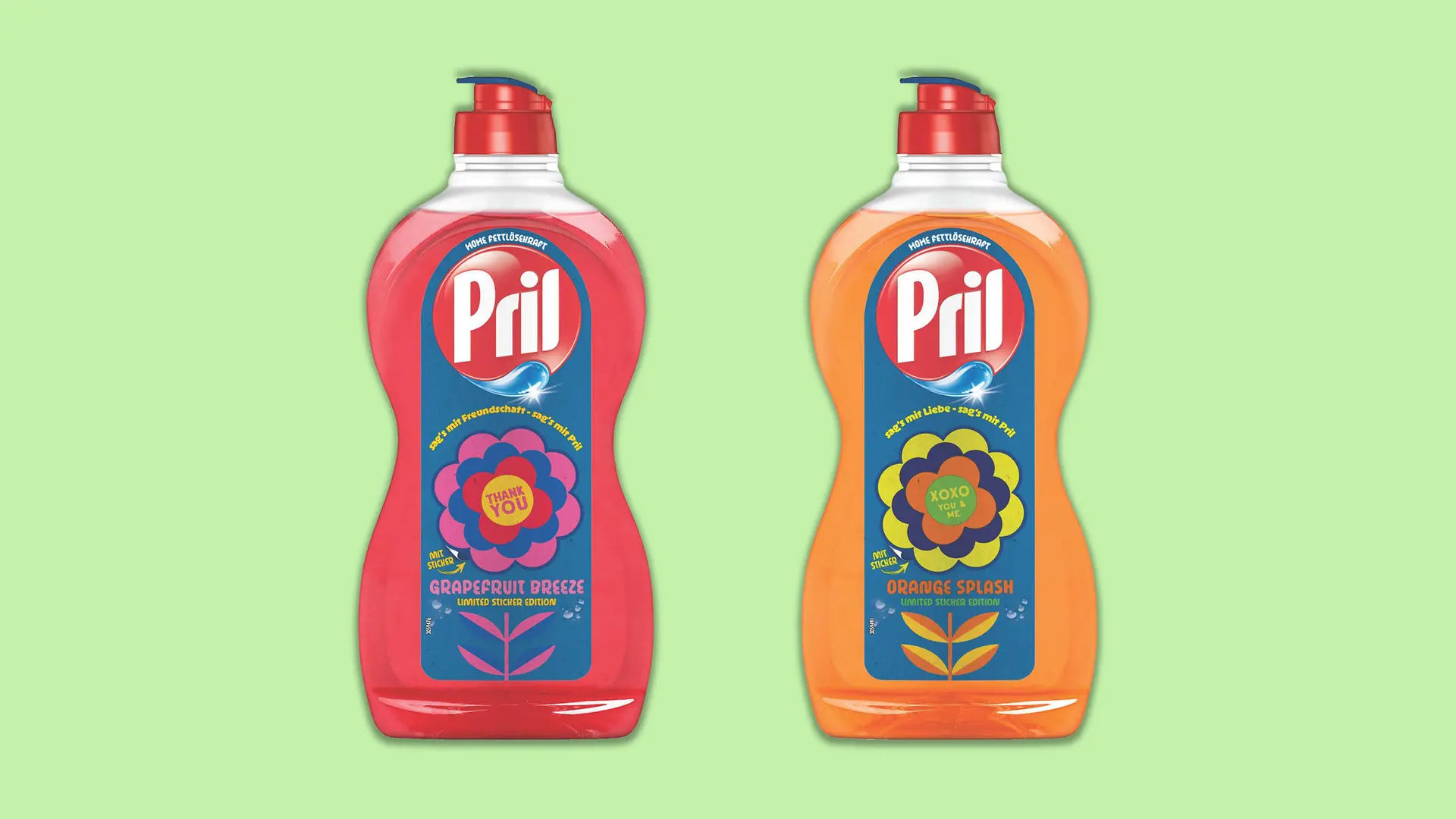
The promotion campaign „Fröhliche Küche“ (Merry Kitchen) for Henkel’s dishwashing brand, featuring the so-called “Pril flowers,” turns into a great success. Soon the flower-shaped stickers are…
Effective January 1, Henkel GmbH is converted into Henkel Kommanditgesellschaft auf Aktien (KGaA, Partnership limited by shares). A shareholders’ committee is formed as the decision-making body…
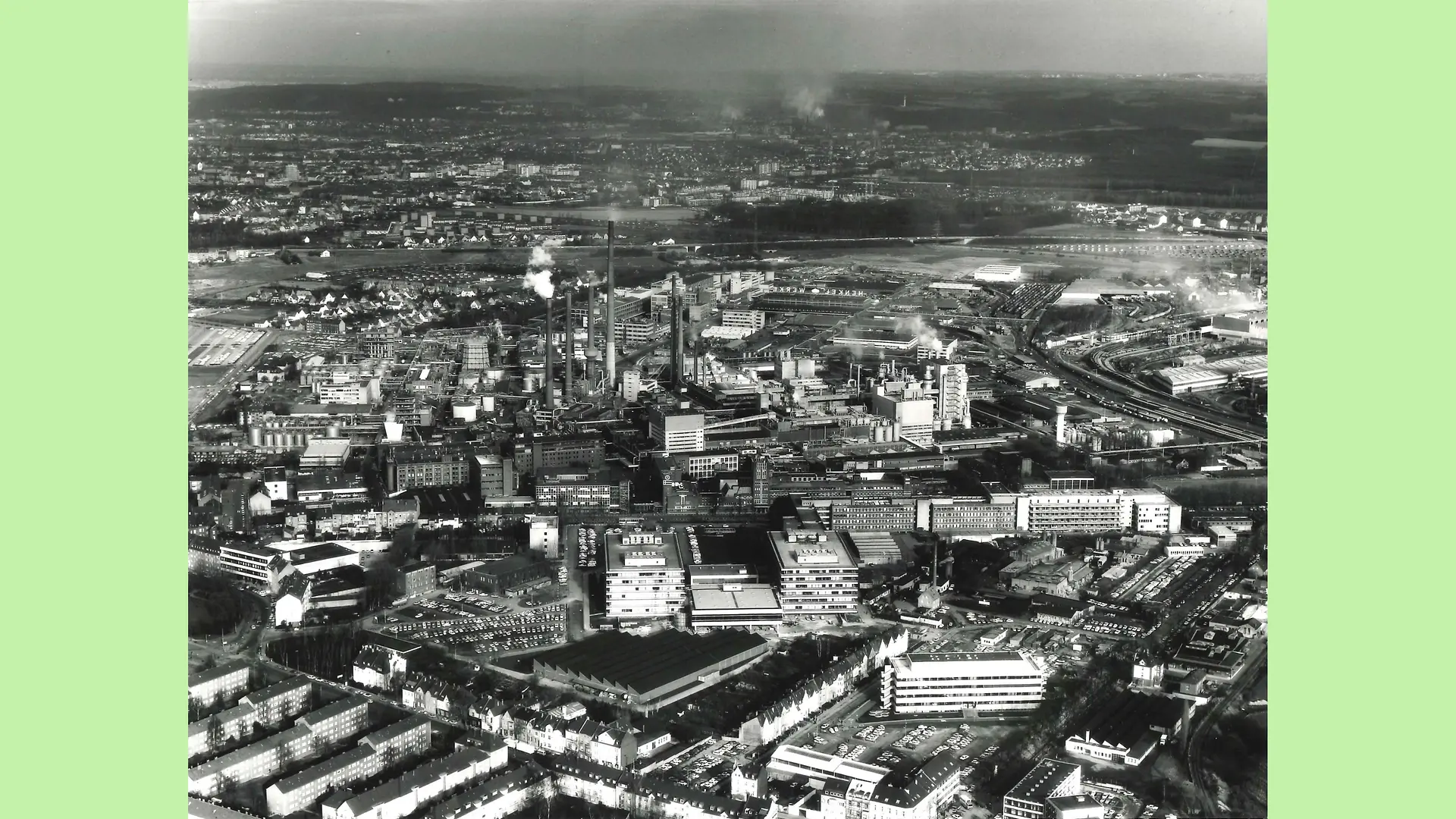
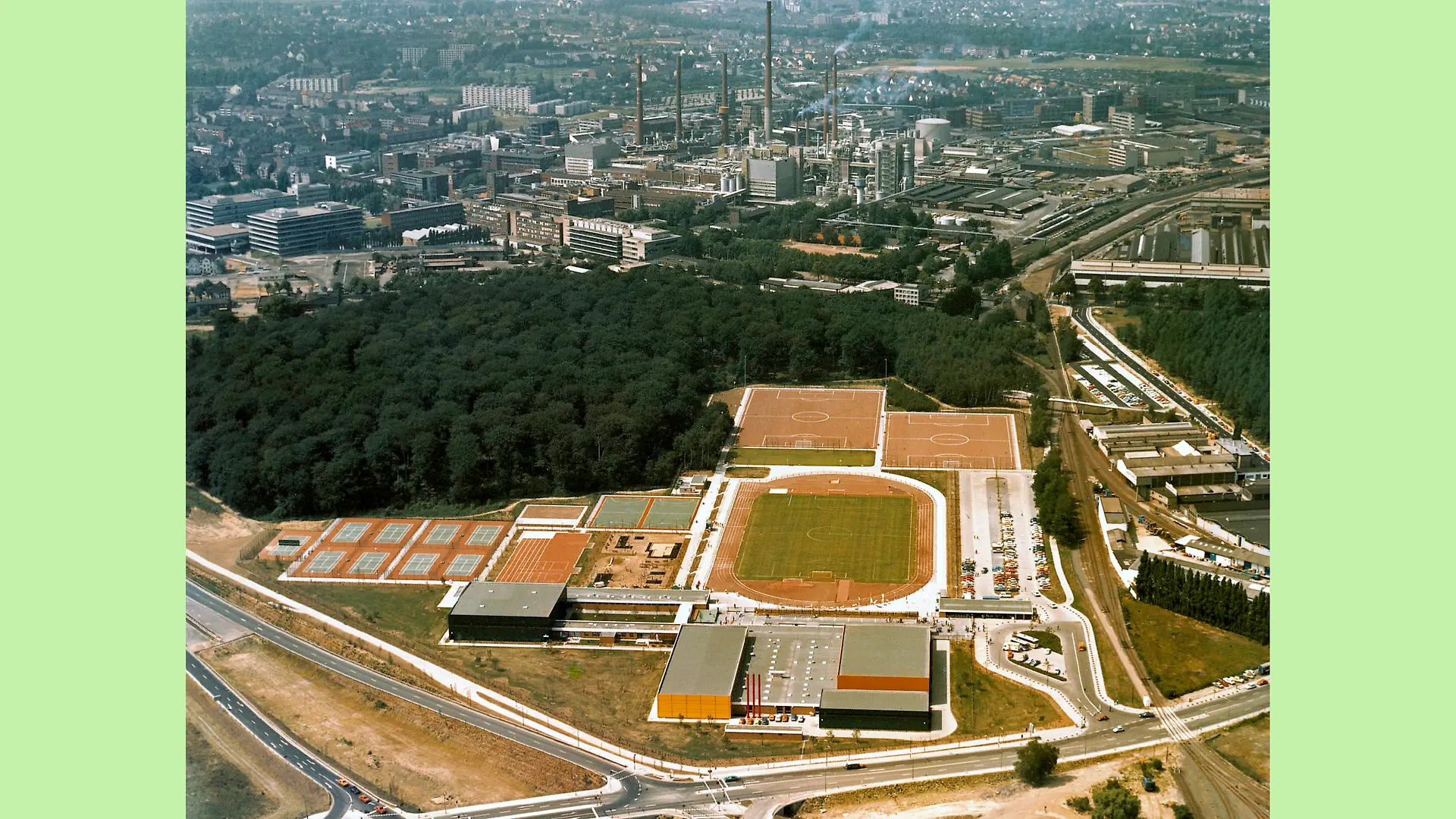
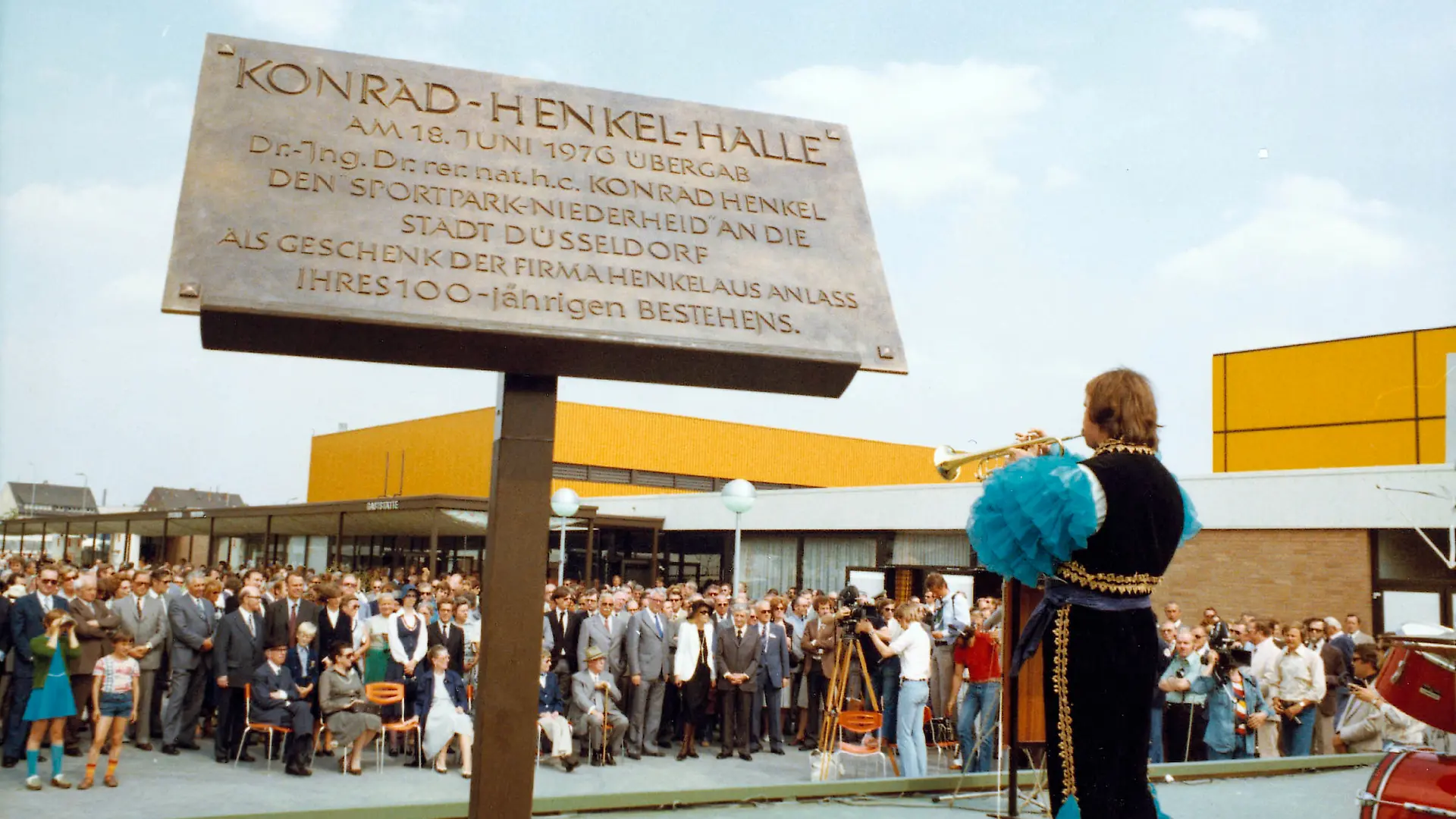
Henkel celebrates its 100th anniversary. To mark this occasion, the company donates a sports park to Düsseldorf-Holthausen in 1976. Called “Sportpark Niederheid”, it is still one of the town’s…
Dr. Konrad Henkel becomes chairman of the supervisory board and the shareholders’ committee of Henkel KGaA. He was the last member of the Henkel family to hold the chair of the central…
Somat rinse aid, special salt and detergent (1970s)
1 of 3
In 1962, Henkel launches Somat, Germany’s first cleaning agent that was specifically developed for dish washers. The product makes housework a lot easier.
Aerial view of the 24,000 square meter logistics center in Montornès (2020)
1 of 3
Henkel officially starts production in Montornès del Vallès (Barcelona, Spain). Today, the manufacturing plant produces over 200,000 tons of powder detergents, liquid detergents, and adhesives annually, exporting to more than 60 countries worldwide.
Over the past six decades the Montornès site has continuously grown and evolved, becoming one of Henkel’s key production hubs in Europe. It has also established itself as one of the most cutting-edge factories by leveraging Industry 4.0 and smart factory concepts – becoming part of the “Global Lighthouse Network” of the World Economic Forum.
In 2019, Henkel inaugurates its aerospace production facility on the site, which has been qualified as Standard and Raw Materials Supplier by Leonardo S.p.A. and Airbus. By 2023, the Montornès plant achieves carbon neutrality by combining on-site renewable energy and green energy procurement.
Technomelt hot melt adhesive is applied to a cardboard box (1982)
Henkel introduces Technomelt adhesives for packaging and bookbinding. Today, Technomelt adhesive solutions are used to manufacture products in a wide range of sectors, such as electronics, medicine, automobiles, personal care, furniture and packaging.
Weißer Riese (White giant), a heavy-duty detergent, is launched. The promo character of Weißer Riese has since become a well-known figure in TV spots for the detergent.
WC Frisch (WC fresh) is introduced in Germany. The toilet block is a real innovation: featuring a novel toilet rim hanger, it makes sure that bathrooms stay clean and fresh.
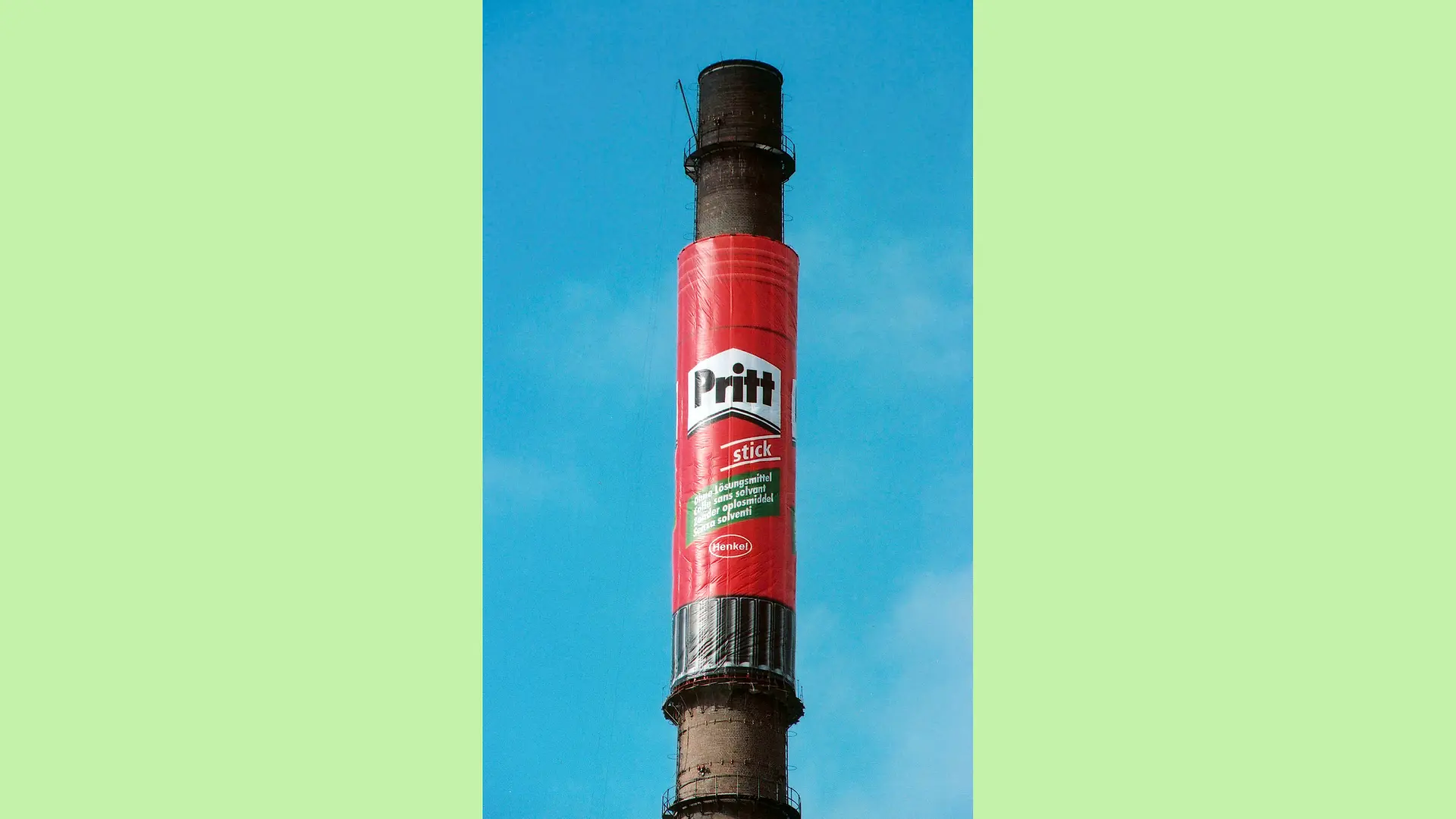
Pritt chimney on the Düsseldorf-Holthausen site (1999)
1 of 4
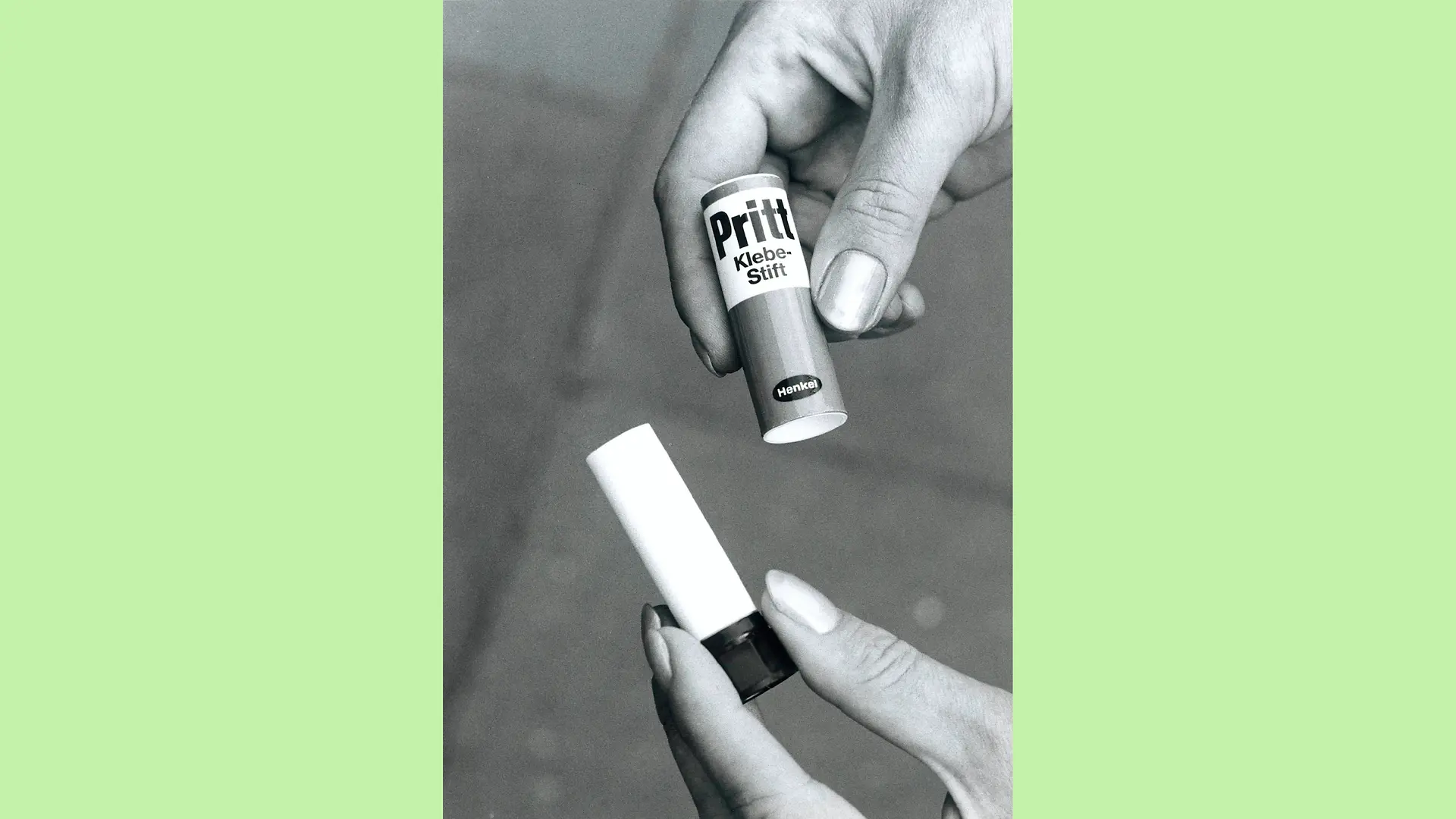
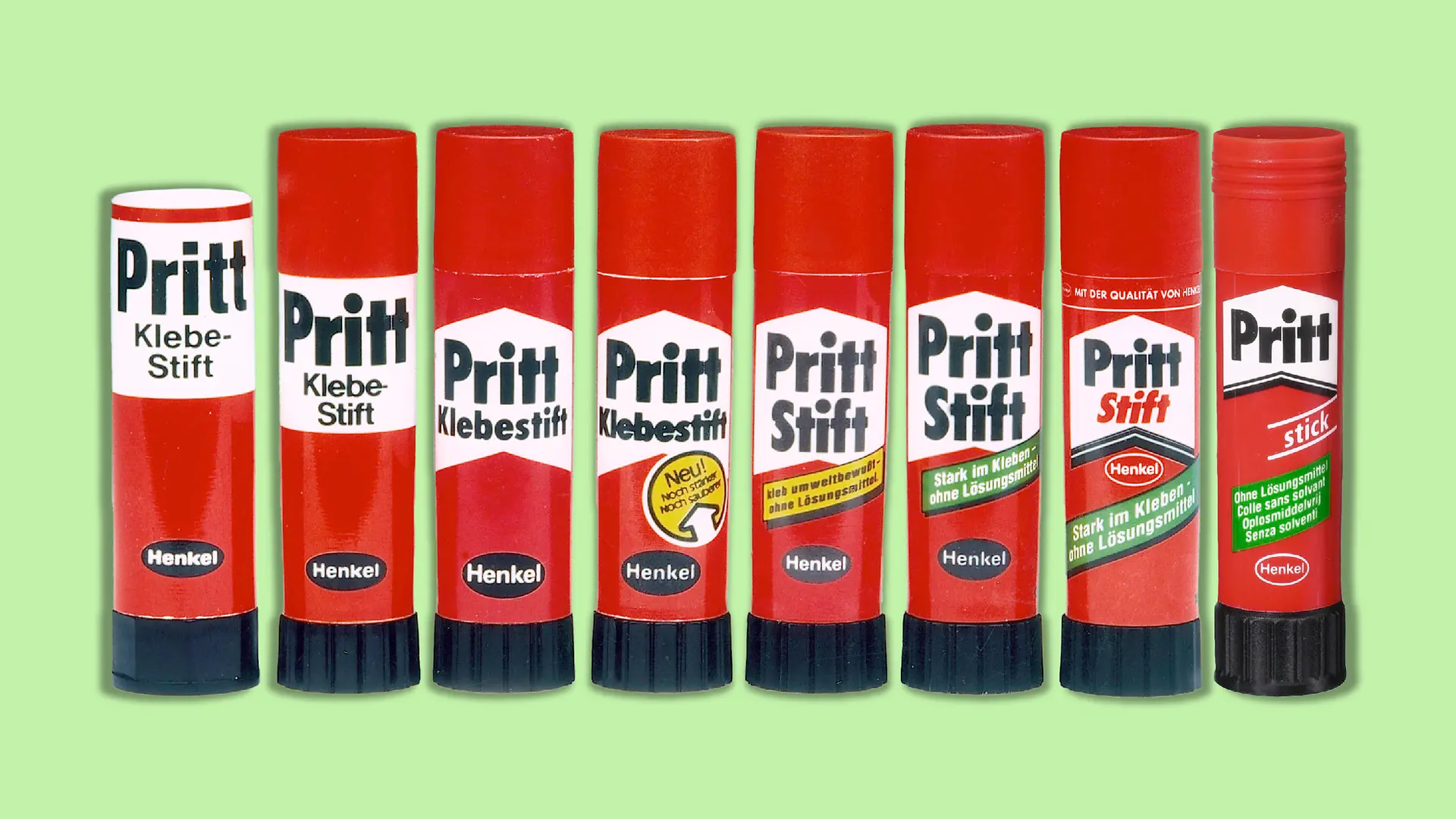
1961 sees the premiere of Pritt, the first glue stick in the world.
To develop Pritt, Henkel studies the rotary mechanism and application of lipsticks. From this moment on, consumers have a clean and convenient option for their gluing jobs.
Today, more than 50 years after the launch of the brand, Henkel produces 100 million glue sticks annually at its Düsseldorf site alone.
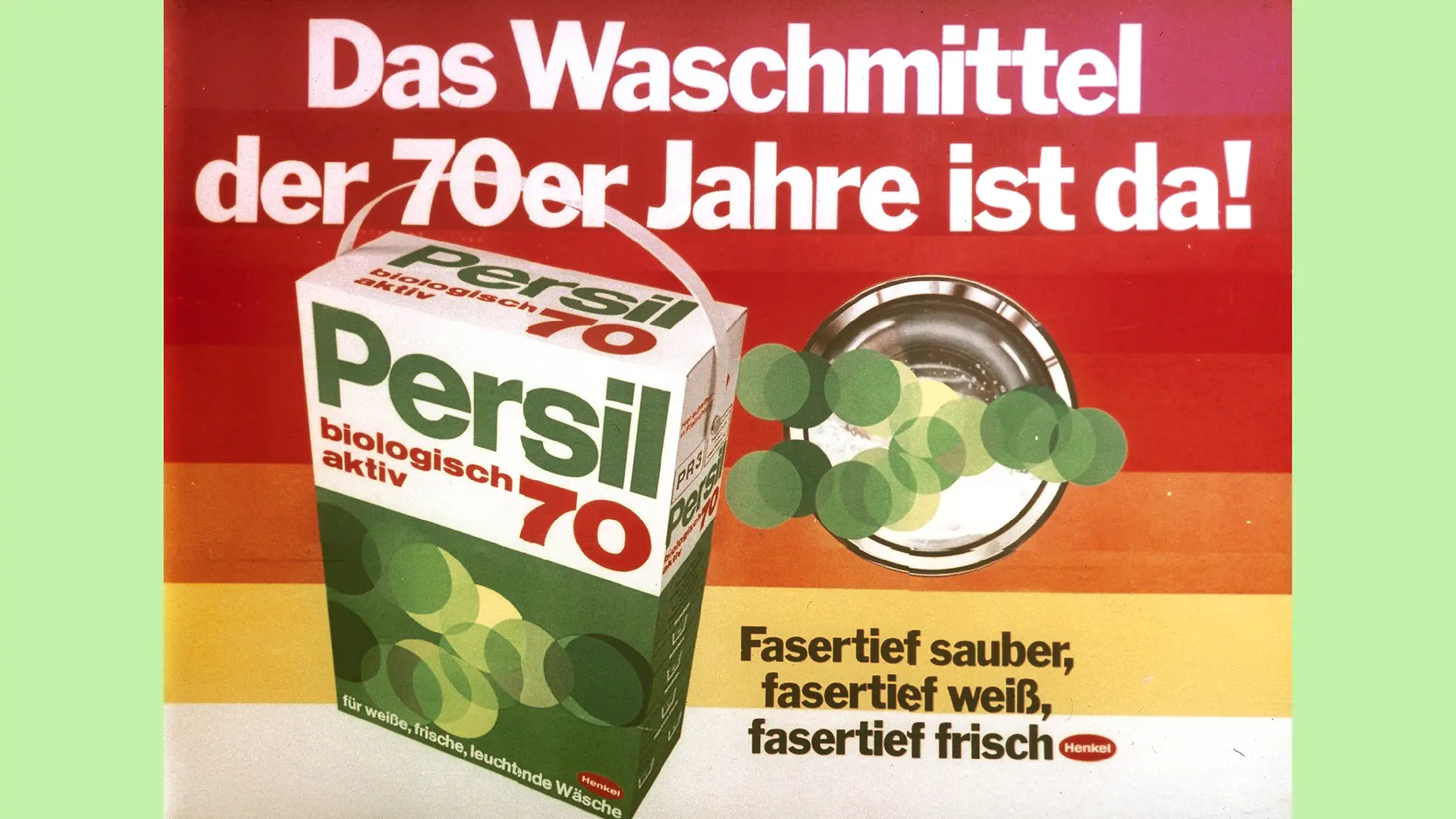
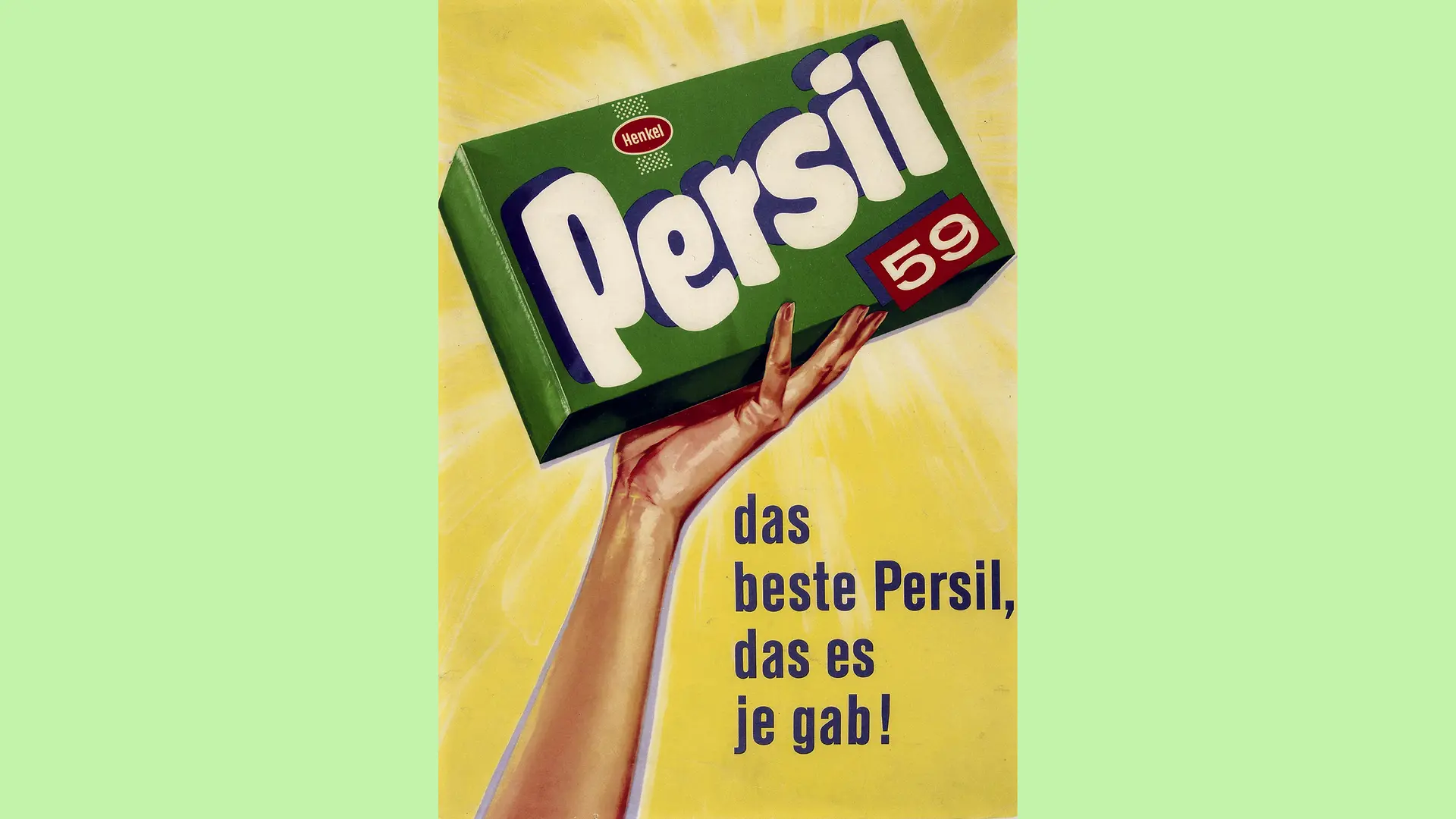
When Persil 70 with its new packaging design is launched, the brand is already available not only in Germany, but in almost all of Europe.
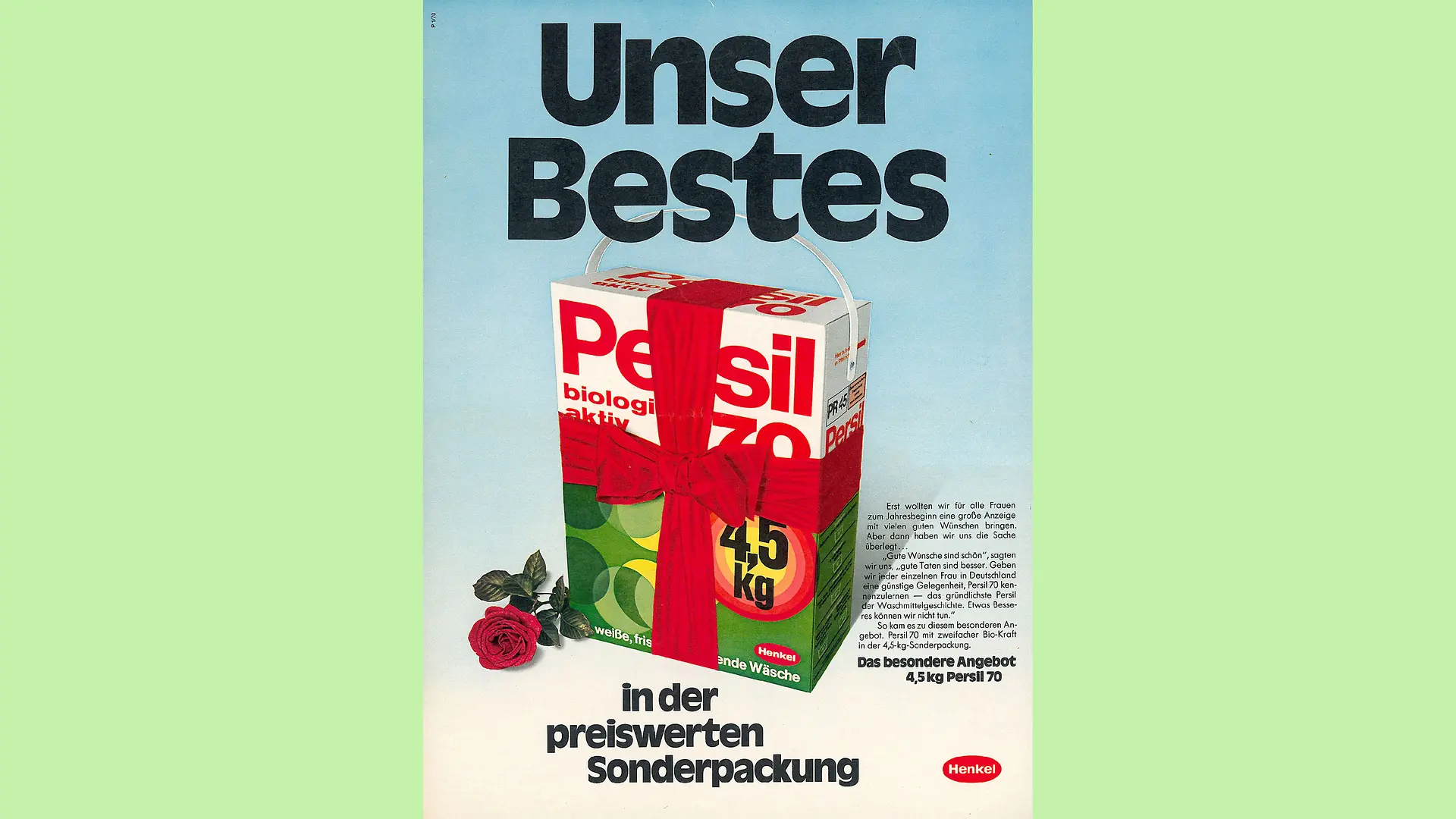
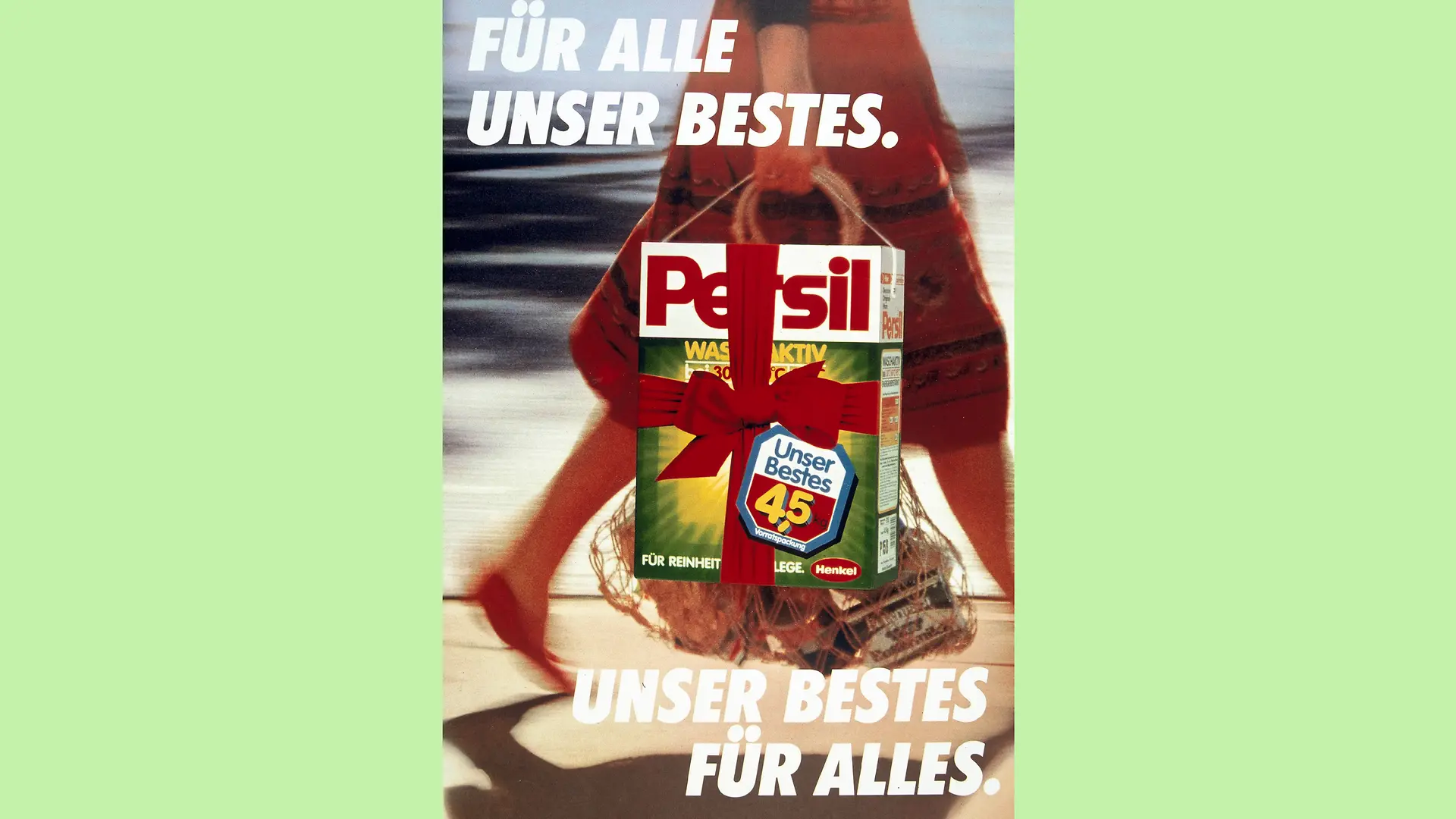
In the year that followed, the advertisement campaign “Unser Bestes” (Our Best) is rolled out for the first time and turns into an overwhelming success. The red ribbon has since reappeared in many ad campaigns and is used regularly for the “best Persil of its time.”
The promotion campaign „Fröhliche Küche“ (Merry Kitchen) for Henkel’s dishwashing brand, featuring the so-called “Pril flowers,” turns into a great success. Soon the flower-shaped stickers are found in many households and become part of the childhood memories of a whole generation.
Henkel celebrates its 100th anniversary. To mark this occasion, the company donates a sports park to Düsseldorf-Holthausen in 1976. Called “Sportpark Niederheid”, it is still one of the town’s biggest leisure facilities. The sports park features several playing pitches, a running track, miscellaneous sports programs and the Niederheid swimming pool.
Dr. Konrad Henkel becomes chairman of the supervisory board and the shareholders’ committee of Henkel KGaA. He was the last member of the Henkel family to hold the chair of the central management. His successor is Dr. Dr. Helmut Sihler (b. 1930).
1981 – 2001
Expanding to
new markets
In the 1980s and 1990s, the company focuses on the thorough preparation of its initial public offering. Important acquisitions also pave the way for Henkel’s current position as global market leader in the adhesives, sealants and coatings segments.
1981 – 2001
1982
Pattex
takes off
Activate external content
When clicking the button below external content will be loaded which involves transfer of personal data (e.g. IP address) to external servers. This may involve that cookies are set by the external content provider. Please see Data Protection Statement for further information.
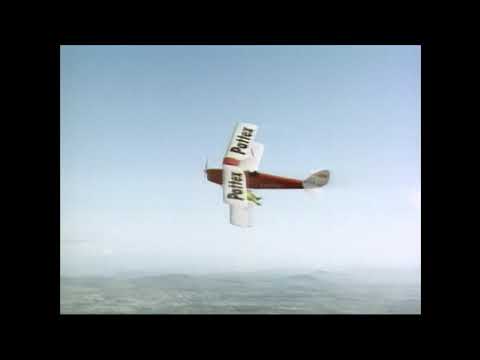
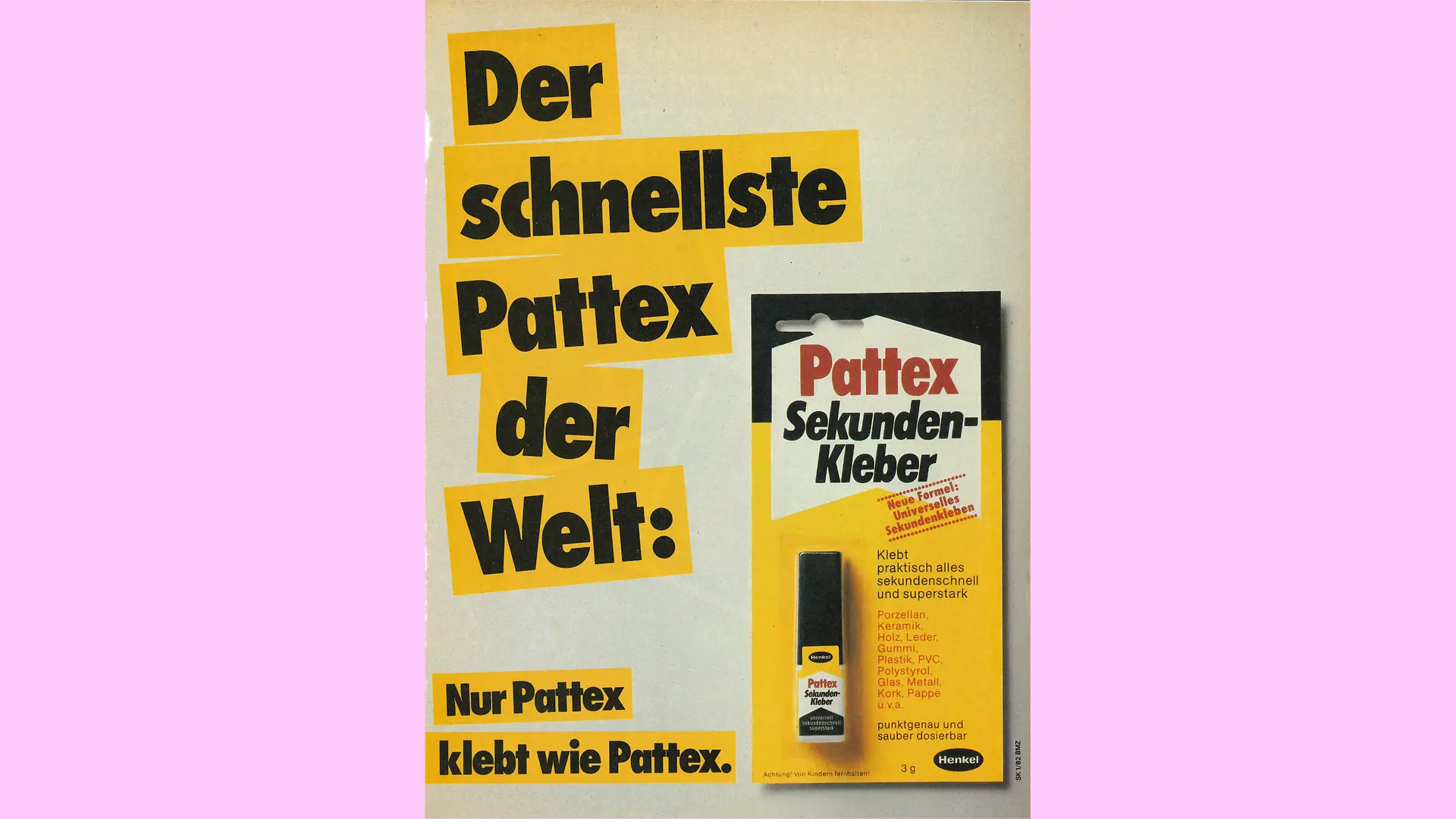
When Henkel’s Pattex brand launches its first instant glue, a courageous product manager from South Africa glues himself to a biplane, relying exclusively on the adhesive power of Pattex…
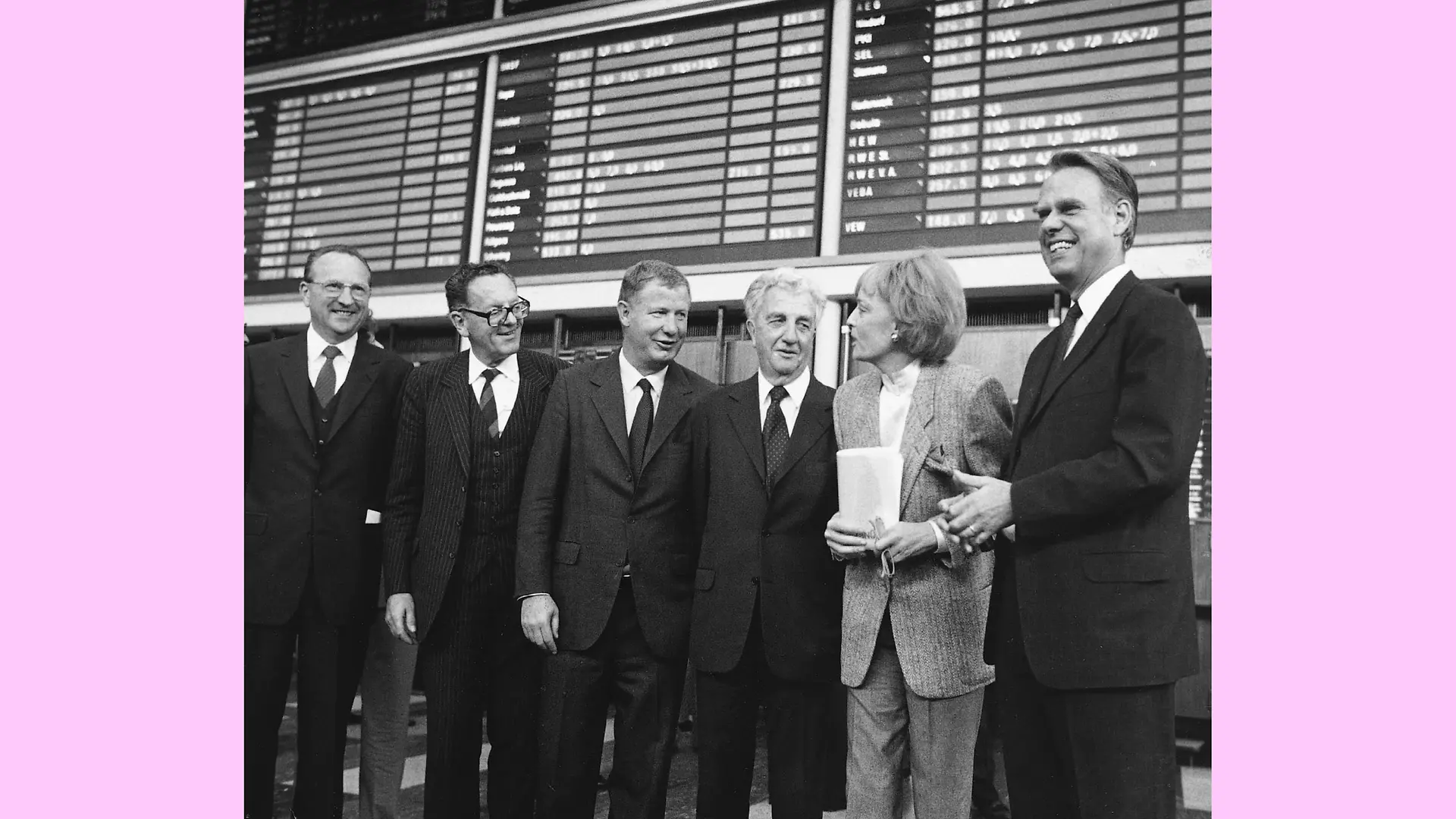
IPO 1985 (from left): Dr. Hans-Otto Wieschermann, Dr. Dr. Helmut Sihler, Dr. Jürgen Manchot, Dr. Konrad Henkel, Prof. Gabriele Henkel and Dipl.-Ing. Albrecht Woeste in the Düsseldorf stock exchange
Internal preparation of Henkel’s IPO starts well in advance. It was widely known that the company took a conservative view on external financing. However, in the years preceding the IPO…
A message of thanks to honor Henkel’s support with the restoration (1989)
In 1987, Henkel supports the restoration of a segment of the Chinese Wall in the Mu Tian Yu section (near Beijing). A donation of DM 500,000 and the use of numerous construction adhesives of the…
The Henkel plant in Genthin after the buyback in 1990. The plant was sold in 2009
After Germany’s reunification, Henkel is able to buy back its former Genthin plant from the Treuhandanstalt (the public agency established to reprivatize/privatize East German enterprises) on…
Dr. Konrad Henkel (left) and Dipl.-Ing. Albrecht Woeste (1990)
Dr. Konrad Henkel hands over the chairmanship of the Henkel KGaA Supervisory Board and Shareholders’ committee to Dipl.-Ing. Albrecht Woeste (b. 1935), a great-grandson of the company founder. …
As of the 1960s, all-purpose detergents dominate the market. However, the increasing share of colored laundry and low washing temperatures lead to fading and color transfer. Henkel looks for a…
Three generations of the well-known advertising figure of the Spee fox: the current fox from 2024 (left), the Spee fox from 1998 (lying down) and a version of the advertising figure from 2003 (right)
1 of 2
The Spee story starts in former East Germany. In 1968, the VEB Waschmittelwerk Genthin (VEB detergent plant Genthin) launches its first “Spezial-Entwicklung” (special development). Soon Spee…
The cover of the Henkel Sustainability Report 2024
1 of 2
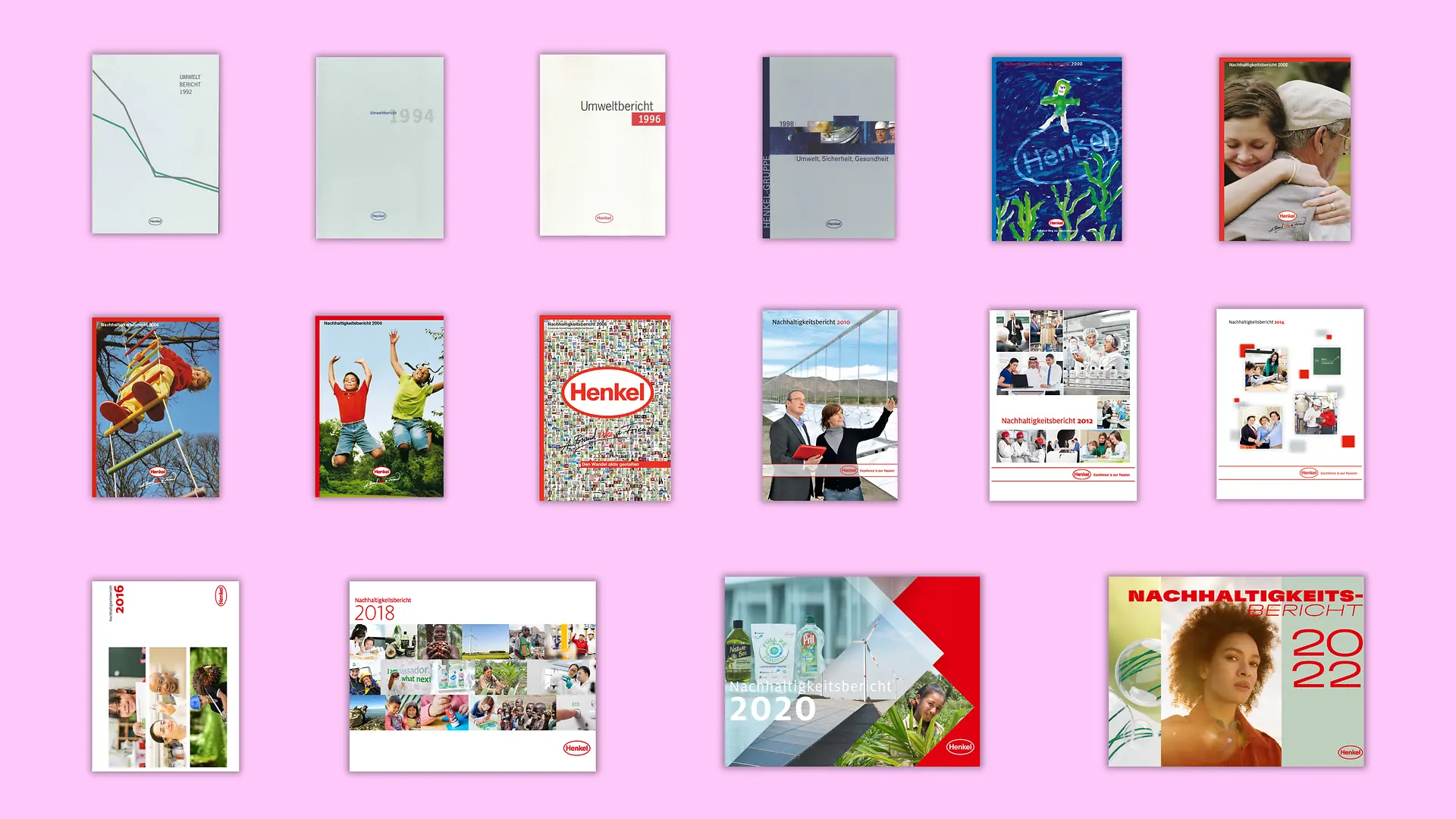
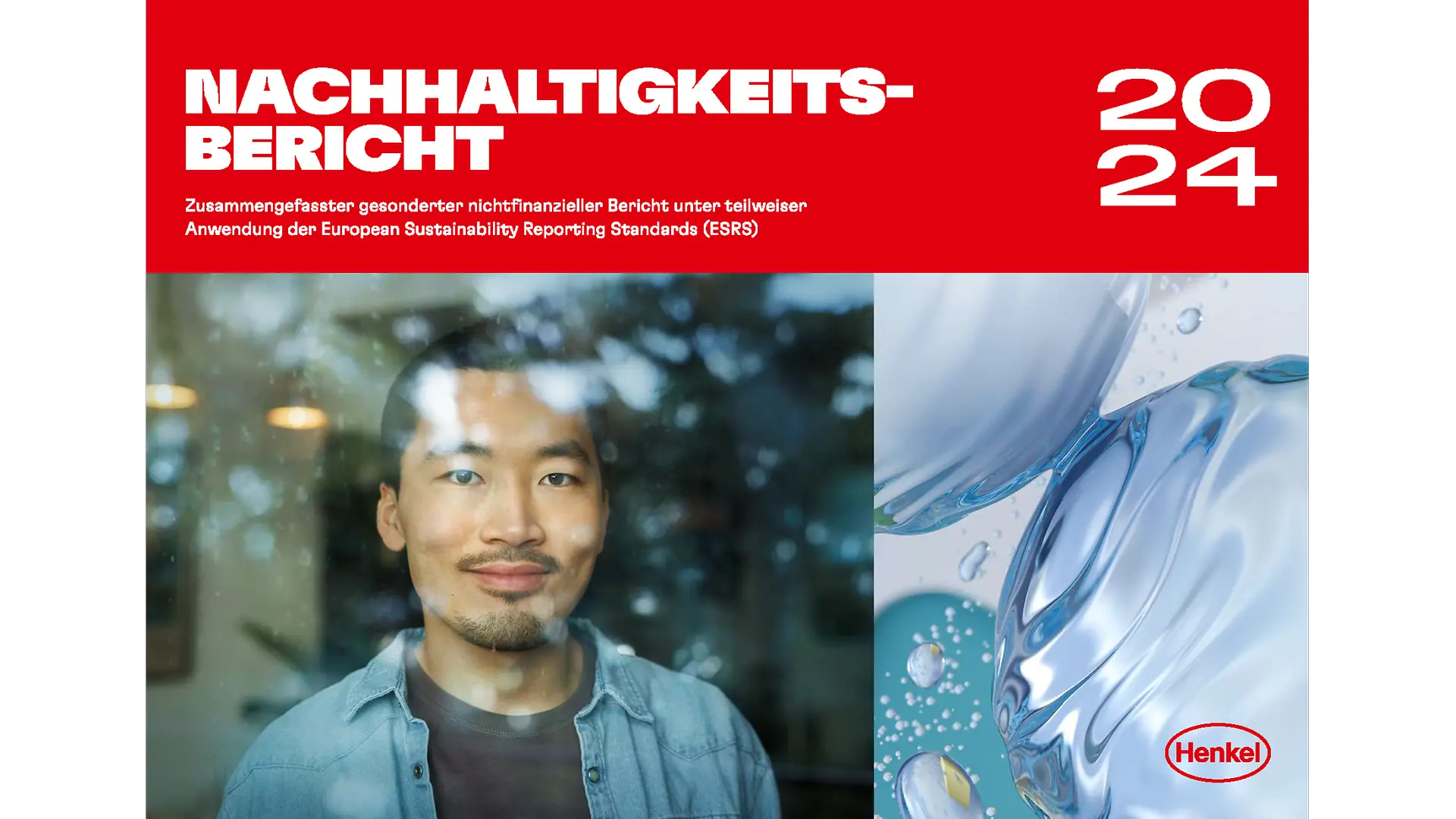
In 1992, Henkel publishes its first environment report. As early as 1987, the corporate guidelines had stated that environment protection was as relevant a corporate purpose as making profits. In…
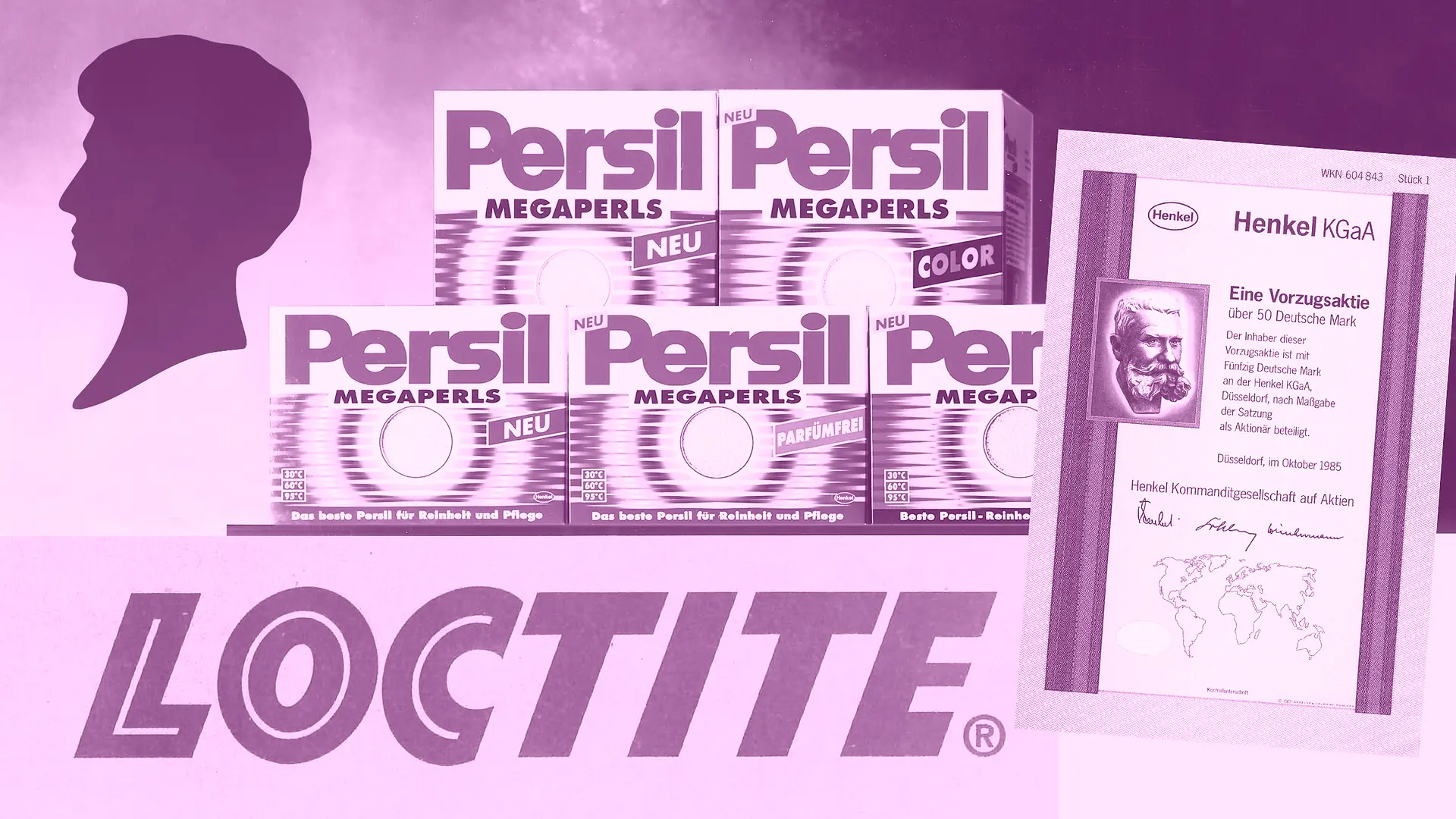
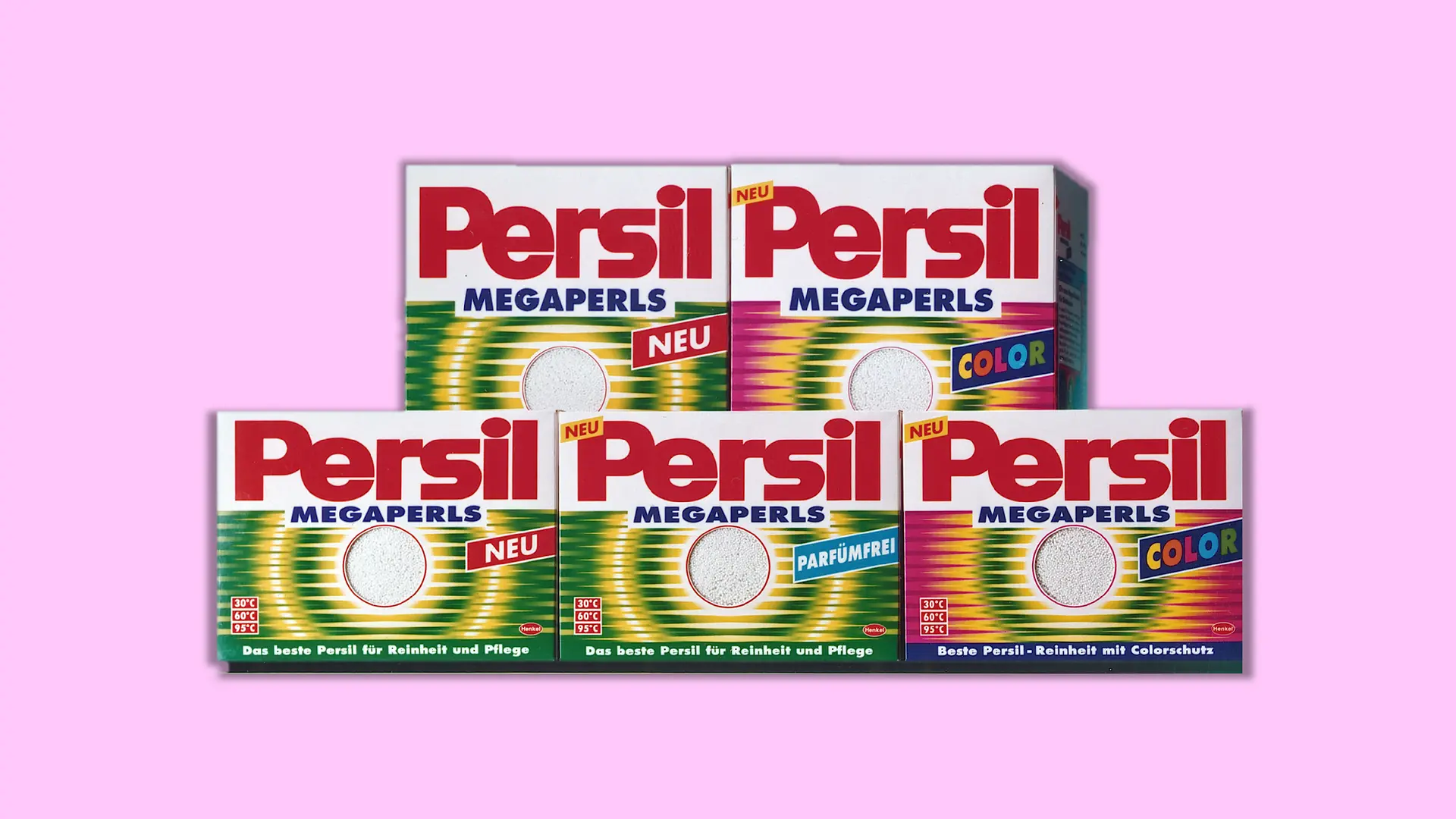
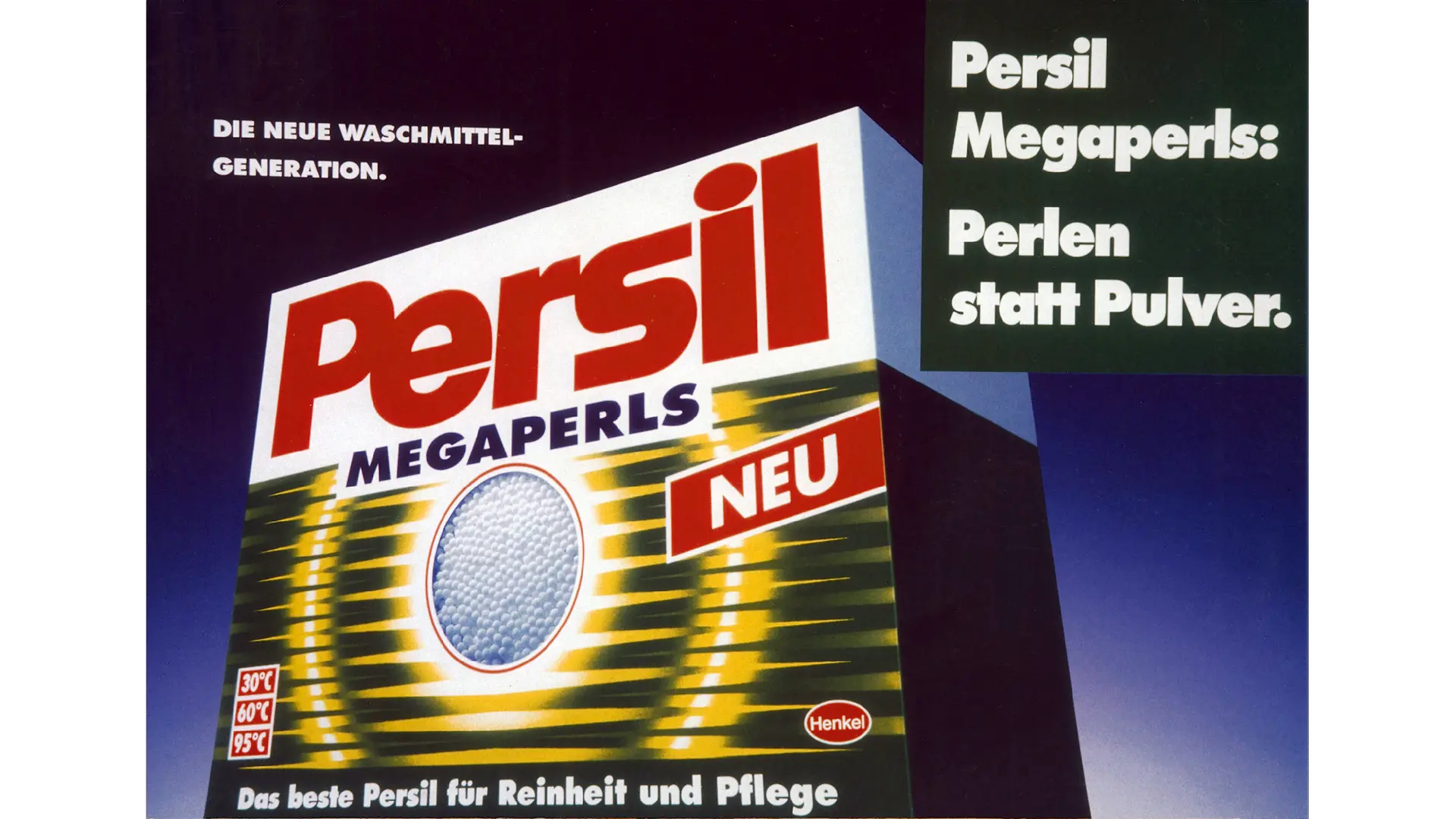
After five years of research, Persil Megaperls are launched in Germany in July 1994. It is a new, highly concentrated type of detergent that is produced via extrusion technology: a concentrated kneadable mass…
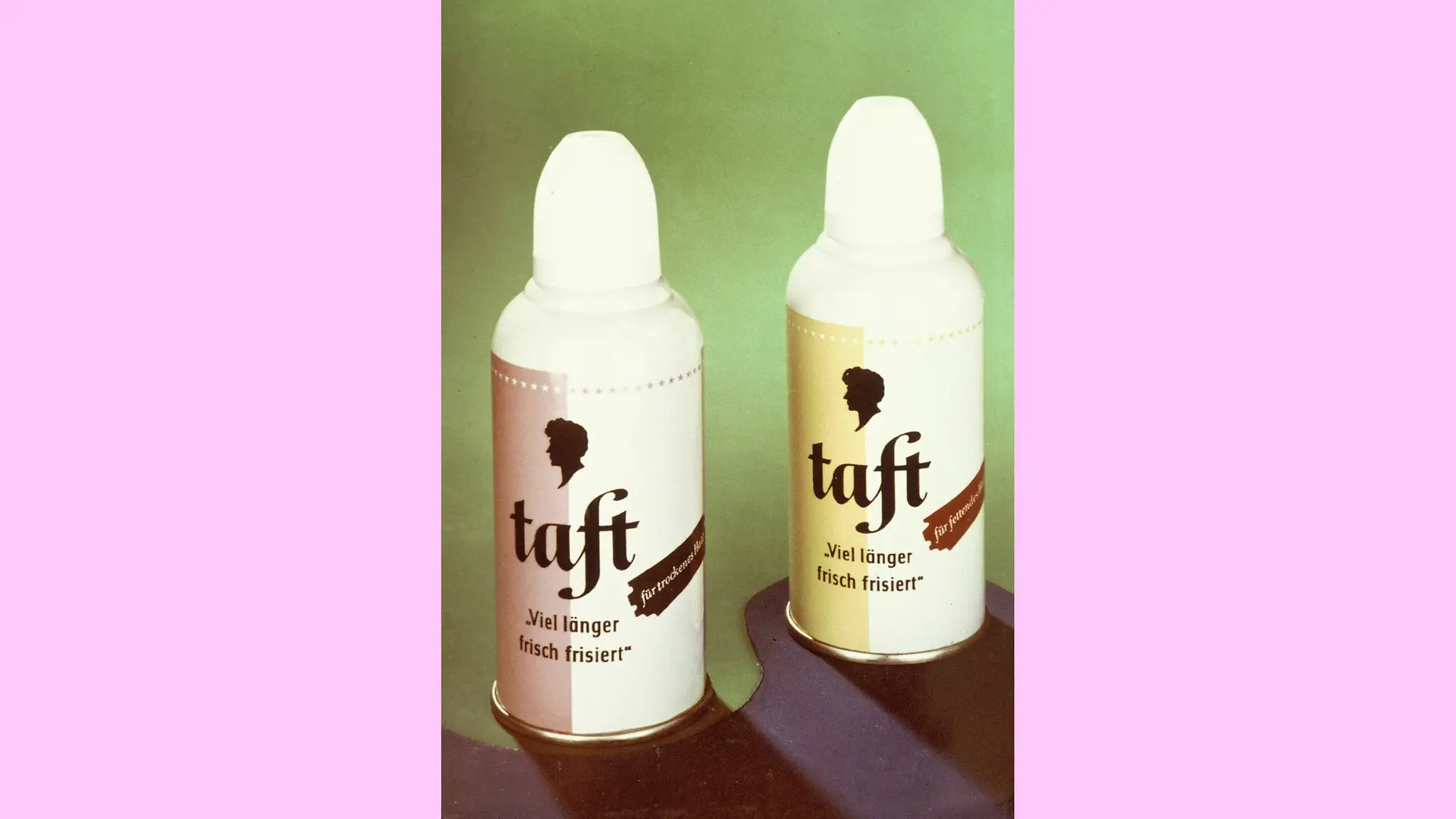
Schwarzkopf markets Taft, the first branded hairspray in Germany. Women “taft” (taften) their hair, as they called it at the time, to make it more resistant to wind and weather
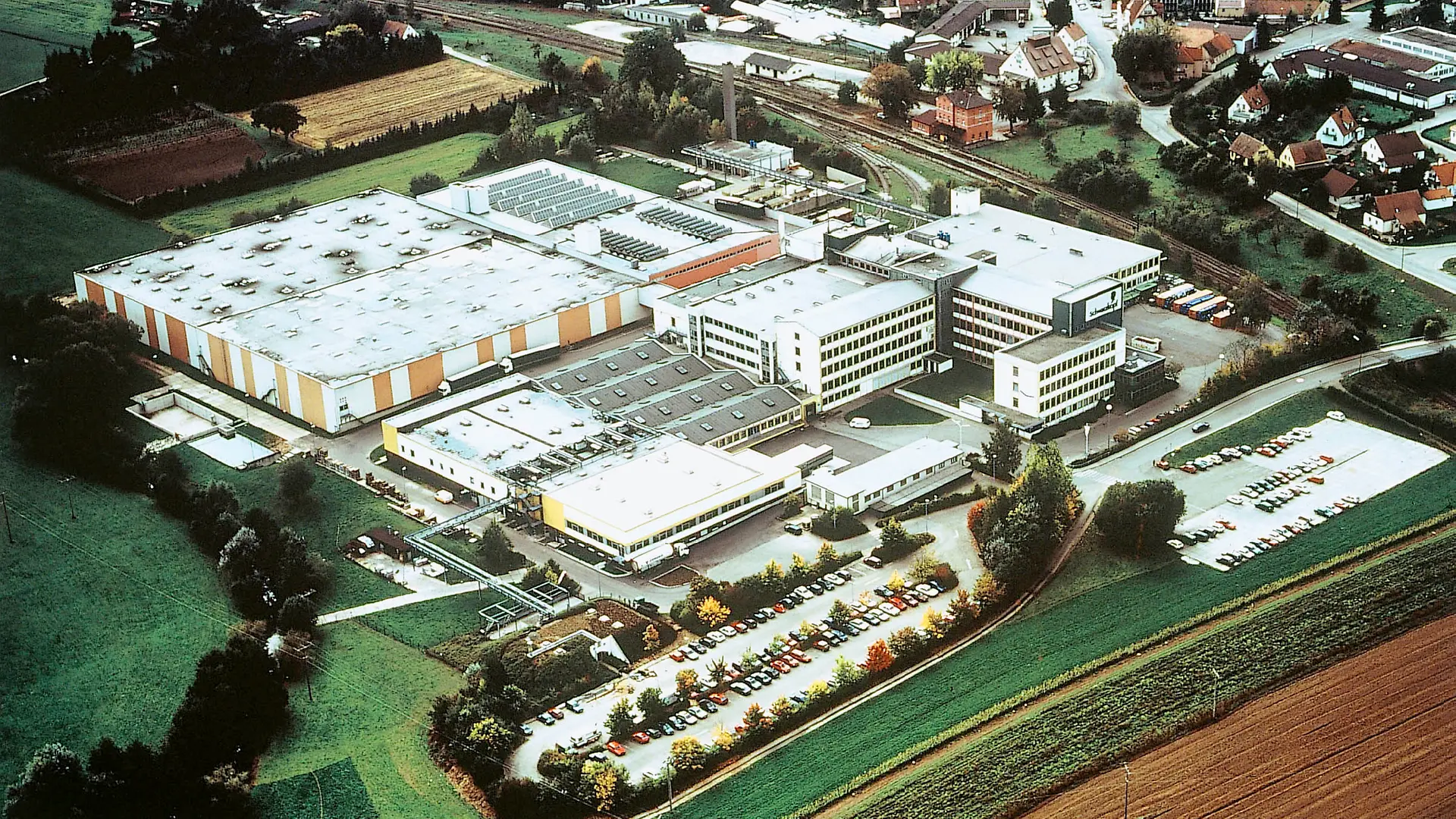
The Schwarzkopf plant in Wassertrüdingen was taken over by Henkel after the purchase. To this day, mainly hair products are manufactured here (1995)
1 of 3
On November 1, 1995, Henkel acquires Hans Schwarzkopf GmbH in Hamburg. At the time of the acquisition, Schwarzkopf (founded in 1898) can also look back on a long and successful company tradition. In addition to...
On January 6, 1997, Henkel takes over the remaining shares of Loctite Corporation, based in Hartford, Connecticut, USA. In 1985, Henkel acquired a 25 percent share of the global leader in specialist…
Logo of the new founded subsidiary Cognis Deutschland GmbH (1999)
On August 1, 1999, Henkel’s chemical products business is spun off as an independent subsidiary under the name of Cognis Deutschland GmbH (with retroactive effect from January 1). Preceding the step was the…
Pritt products tested for their suitability for use in space (2001)
In 2001, the European Space Agency awards the Pritt stick with the “Space-Proof Quality” seal. The crew of the International Space Station (ISS) had tested several Pritt products for their space...
Incorporating street style, diversity and energy into its products, göt2b arrives in America in 2001 and is rolled out to the European market in 2004…
1982
Pattex
takes off
Activate external content
When clicking the button below external content will be loaded which involves transfer of personal data (e.g. IP address) to external servers. This may involve that cookies are set by the external content provider. Please see Data Protection Statement for further information.
When Henkel’s Pattex brand launches its first instant glue, a courageous product manager from South Africa glues himself to the wing of a biplane, relying exclusively on the adhesive power of Pattex. This spectacular action was another demonstration of the adhesive power of the Pattex family. In 1977, a complete house had been lifted and transported while glued to a helicopter.
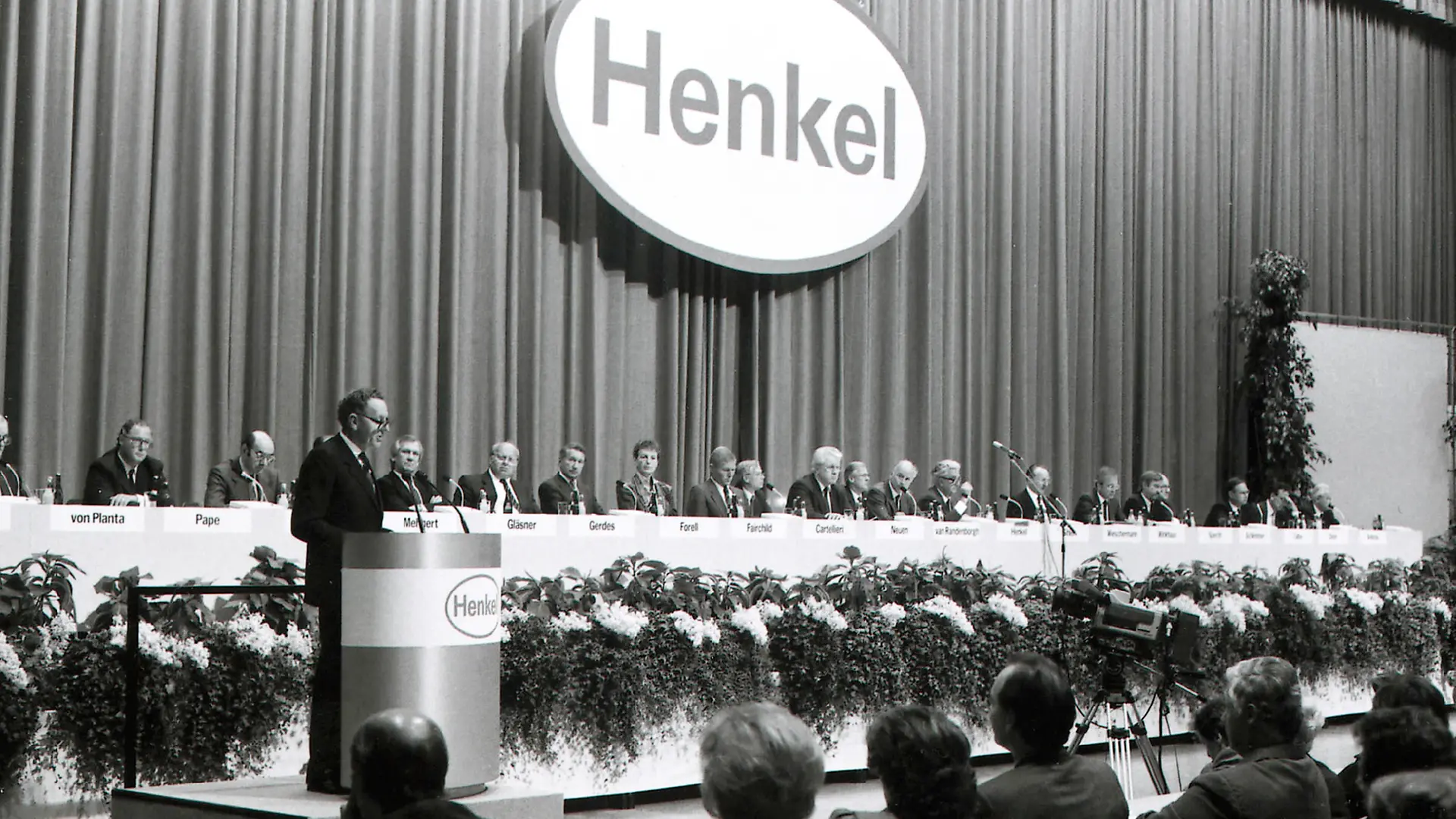
IPO 1985 (from left): Dr. Hans-Otto Wieschermann, Dr. Dr. Helmut Sihler, Dr. Jürgen Manchot, Dr. Konrad Henkel, Prof. Gabriele Henkel and Dipl.-Ing. Albrecht Woeste in the Düsseldorf stock exchange
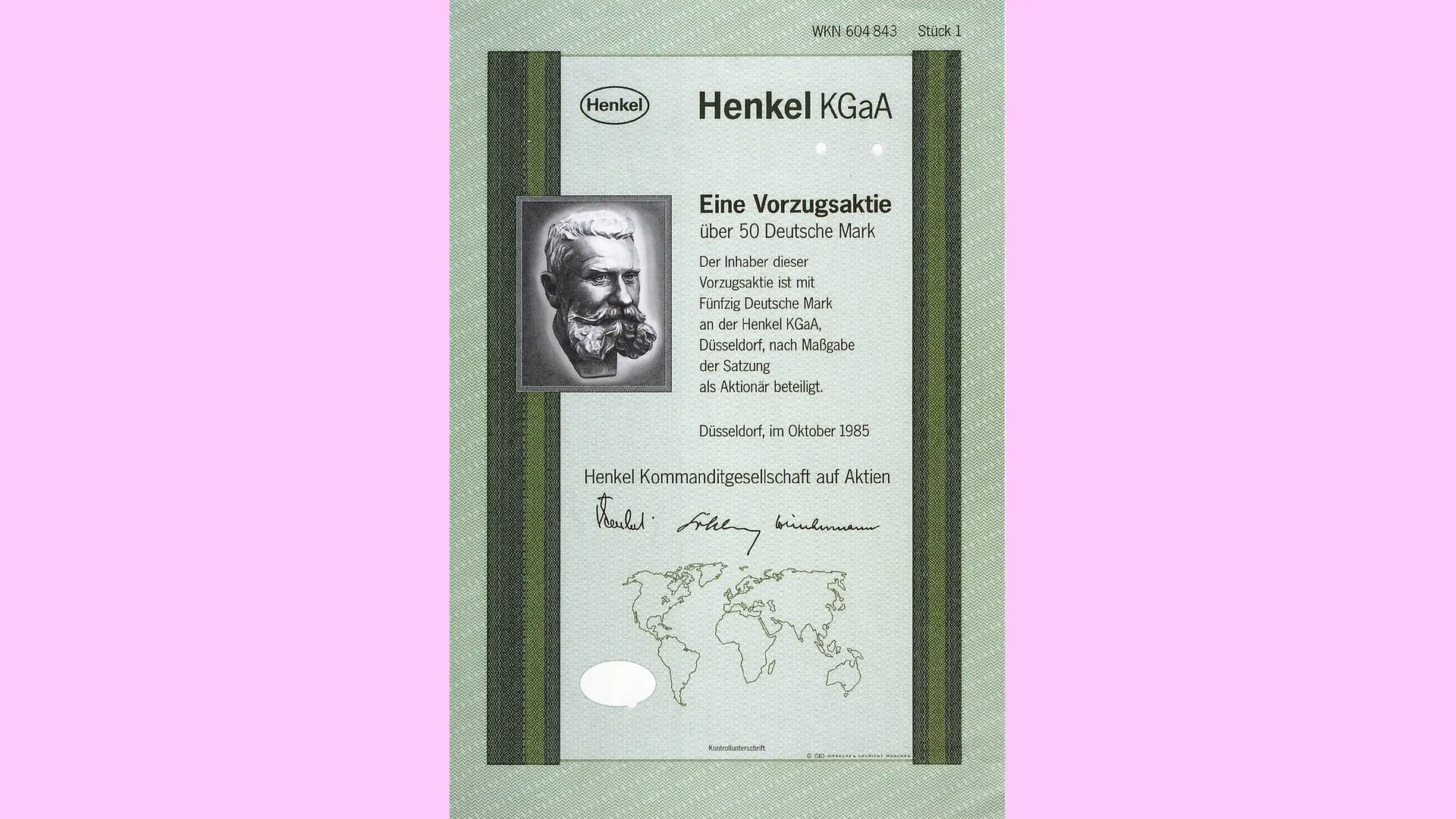
Internal preparation of Henkel’s IPO starts well in advance. It was widely known that the company took a conservative view on external financing. However, in the years preceding the IPO, Henkel became one of the world’s biggest adhesives producers. To realize the company’s international expansions plans, more capital is needed.
On October 11, 1985, the IPO takes place on eight German stock exchanges simultaneously. The nominal value of the 1.5 million preferred shares is DM 50 each and is oversubscribed several times with an initial quotation of DM 390. At the time, Henkel’s IPO is the biggest ever new issue of its kind in Germany.
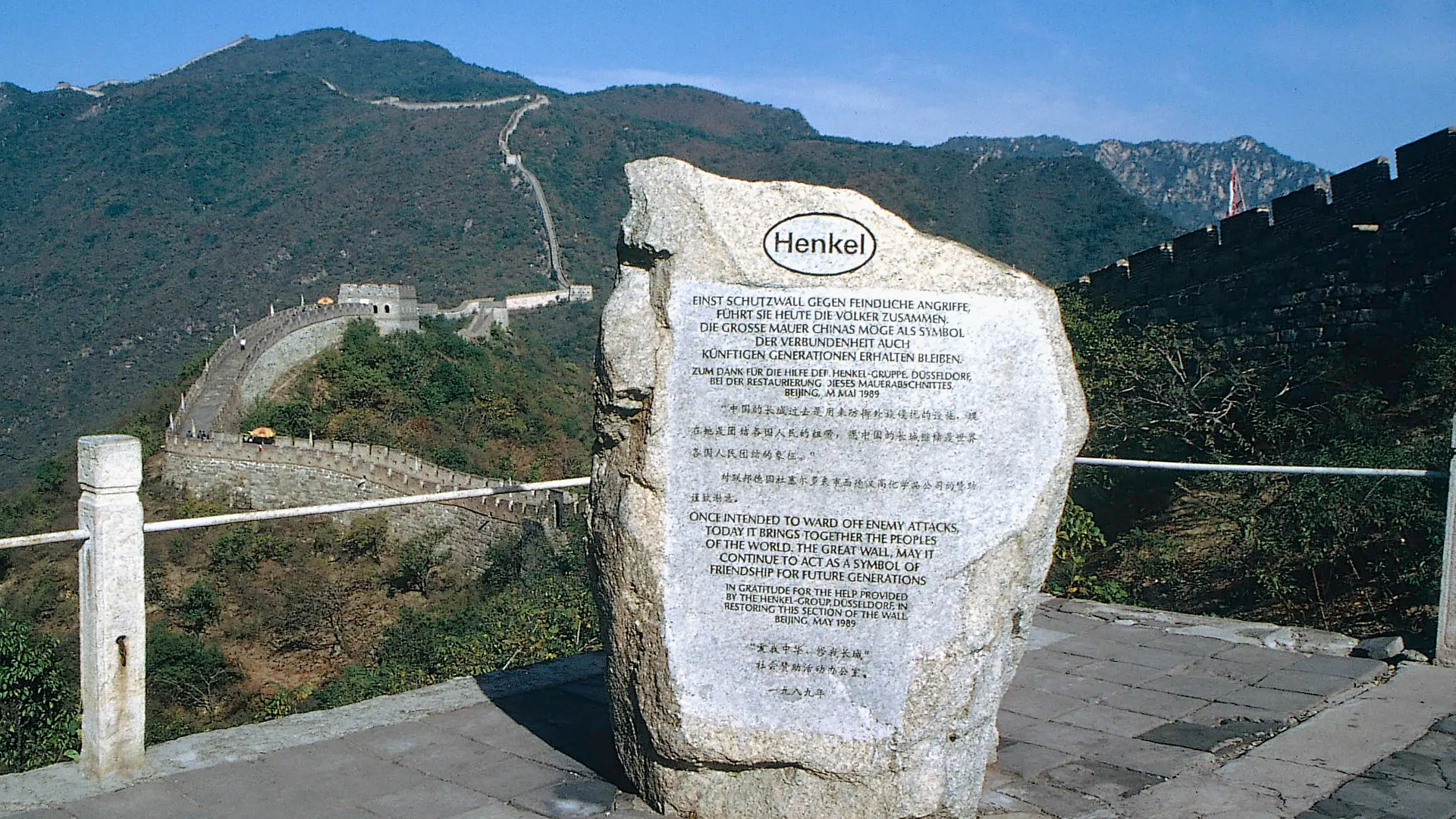
A message of thanks to honor Henkel’s support with the restoration (1989)
In 1987, Henkel supports the restoration of a segment of the Chinese Wall in the Mu Tian Yu section (near Beijing). A donation of DM 500,000 and the use of numerous construction adhesives of the Ceresit brand make it possible to repair the UNESCO cultural heritage successfully. Today, a stone carrying a message of thanks from the Chinese government commemorates the successful cooperation.
The Henkel plant in Genthin after the buyback in 1990. The plant was sold in 2009
After Germany’s reunification, Henkel is able to buy back its former Genthin plant from the Treuhandanstalt (the public agency established to reprivatize East German enterprises) on November 26, 1990. Henkel had built the plant in the 1920s. It was one of the company’s important production sites until it was nationalized after World War II. As of 1968, the plant produced Spee, an all-purpose laundry detergent that Henkel took over after the purchase.
Dr. Konrad Henkel (left) and Dipl.-Ing. Albrecht Woeste (1990)
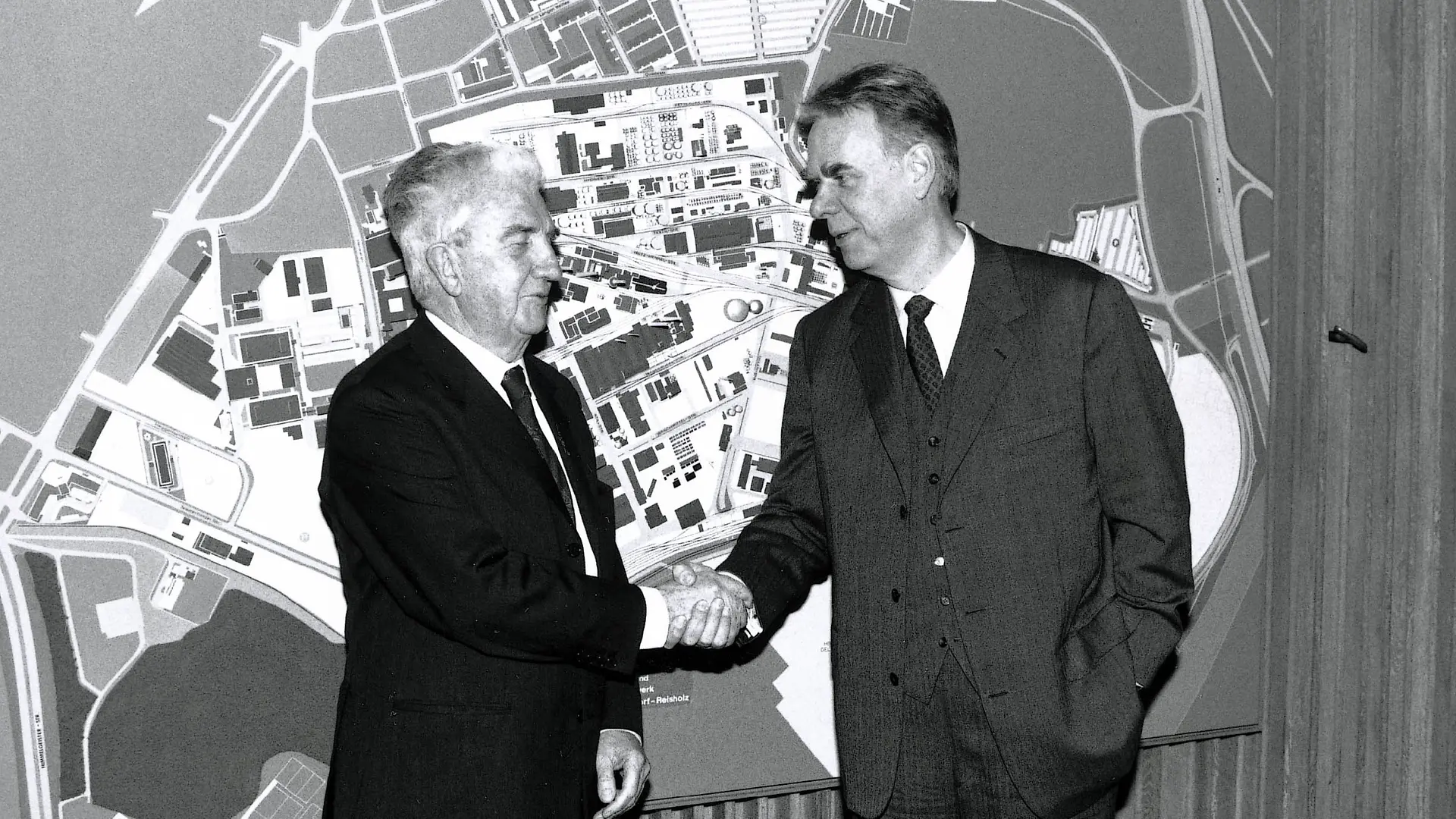
Dr. Konrad Henkel hands over the chairmanship of the Henkel KGaA Supervisory Board and Shareholders’ Committee to Dipl.-Ing. Albrecht Woeste (b. 1935), a great-grandson of the company founder. Dr. Konrad Henkel becomes honorary chairman of the Henkel group.
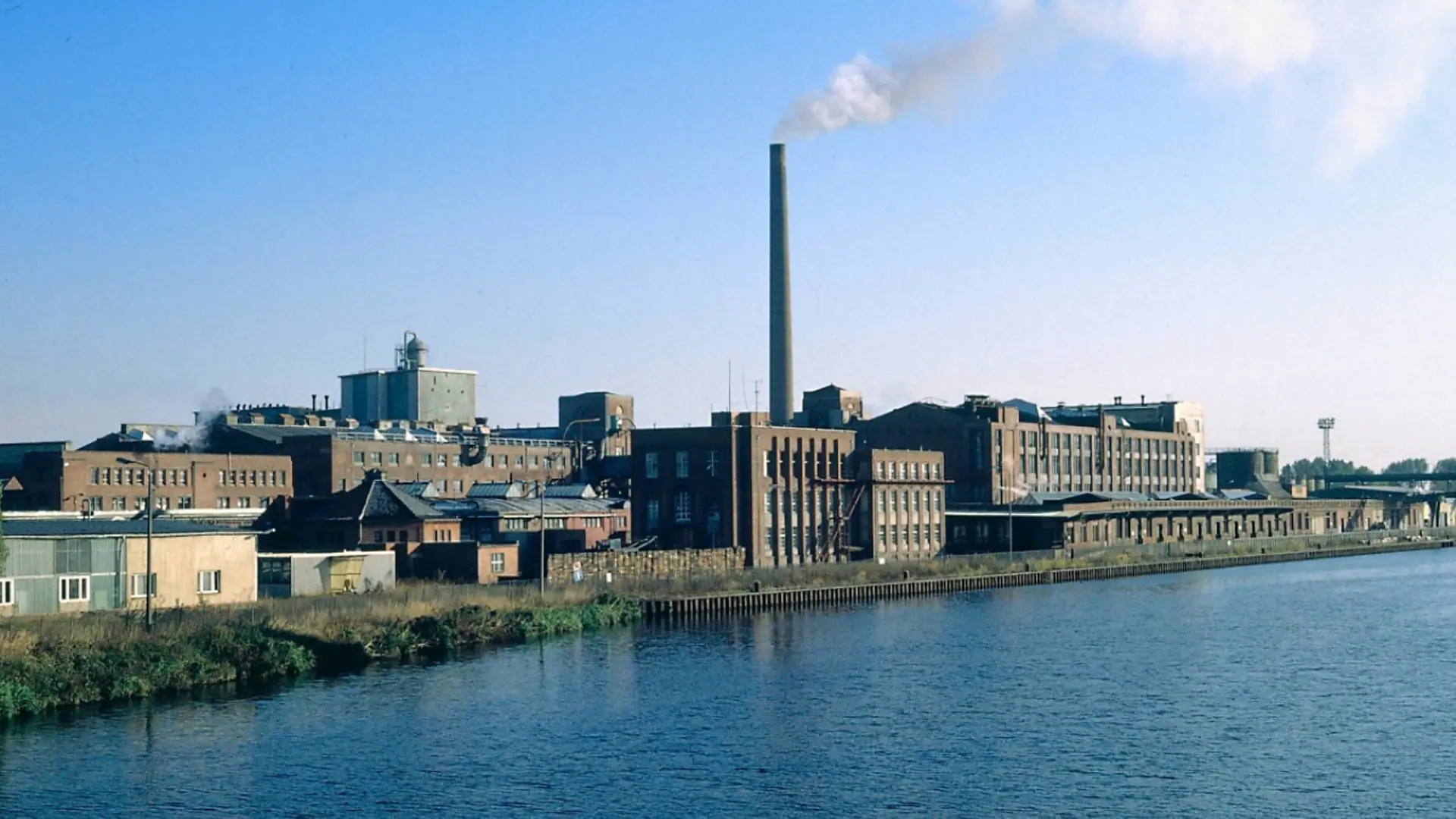
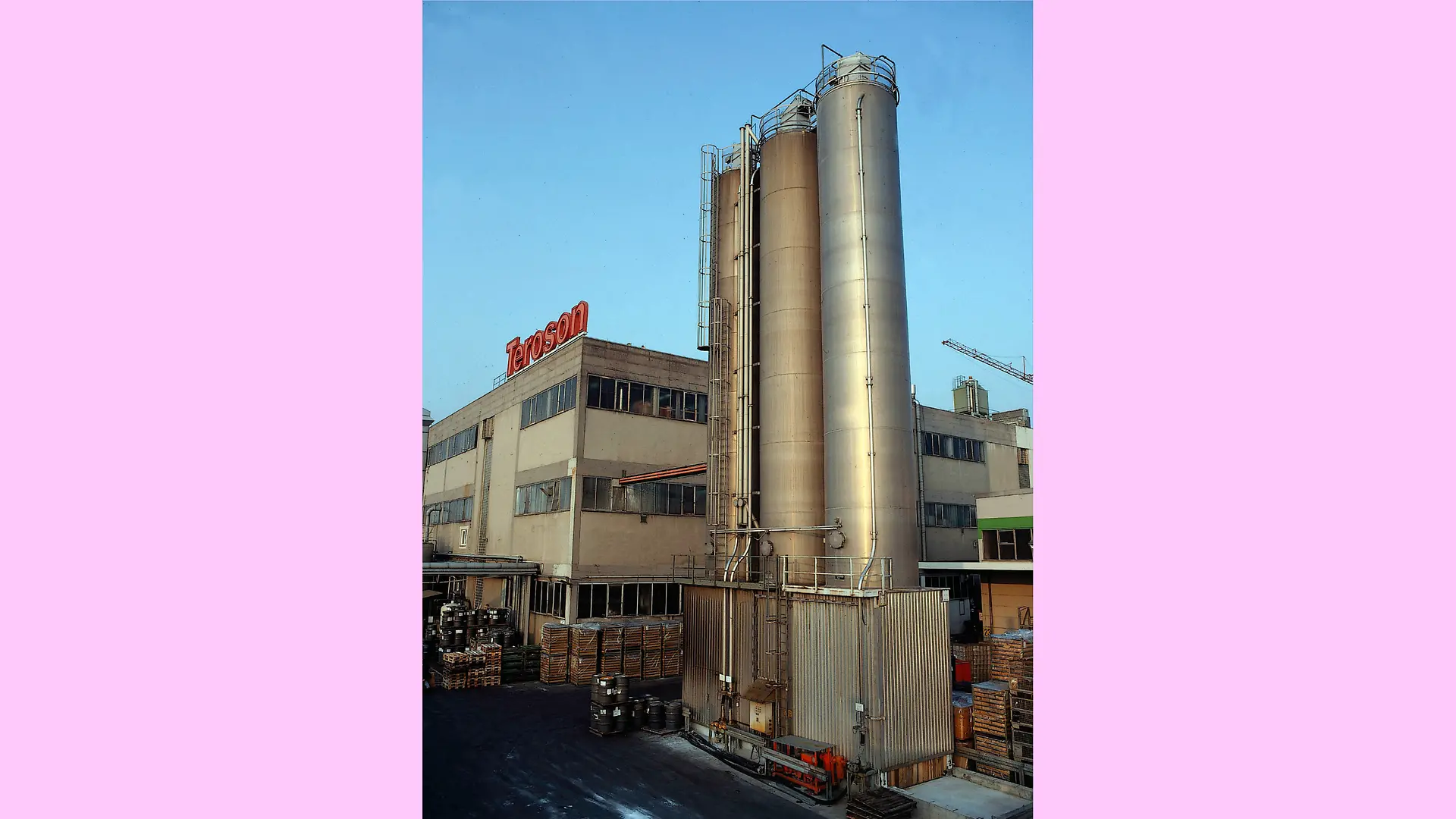
In 1991, Henkel acquires Teroson GmbH, founded in 1898 and based in Heidelberg. Following the takeover, Henkel integrates the adhesives and sealants specialist’s activities into its own adhesives and surface technology business.
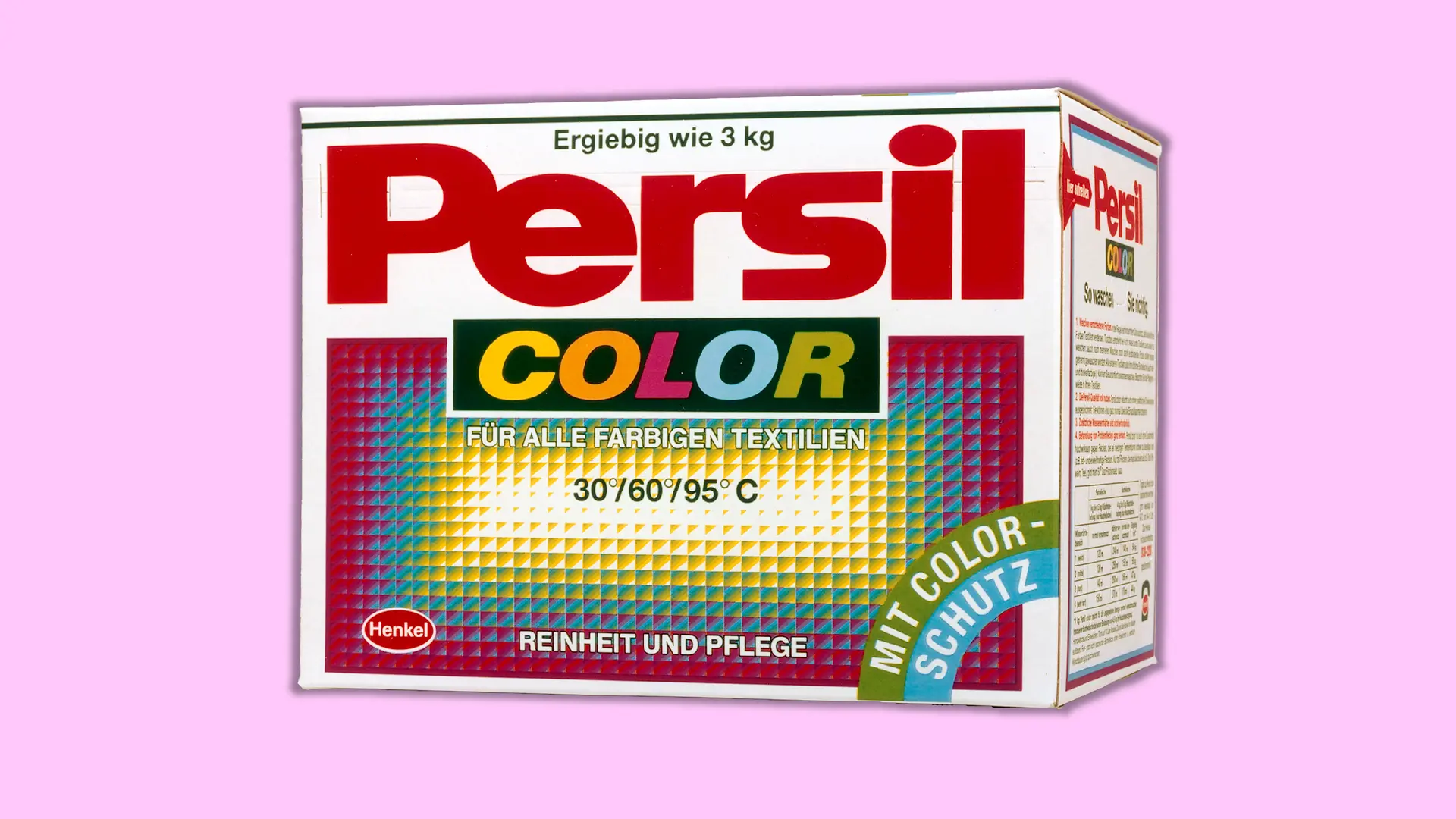
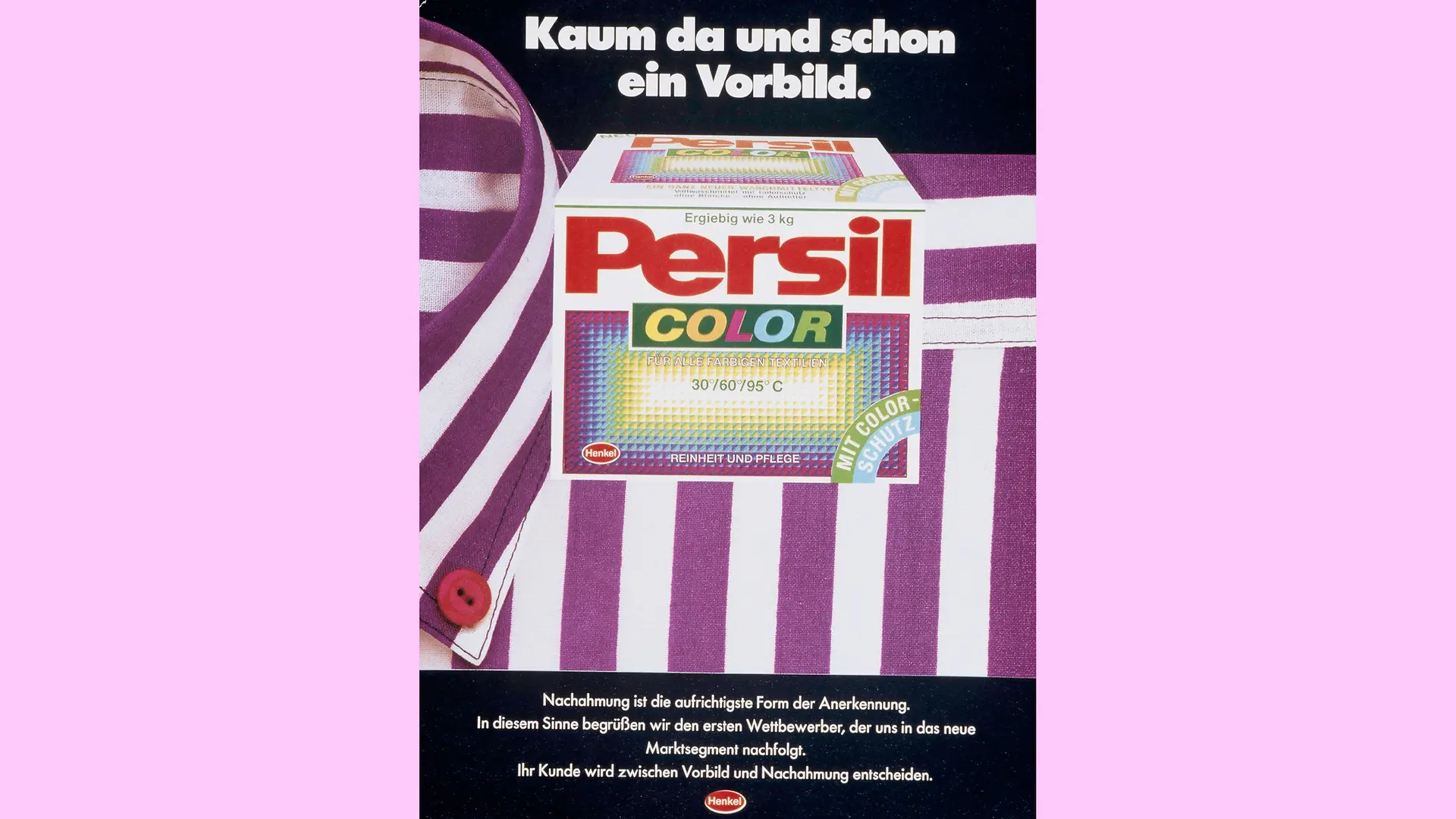
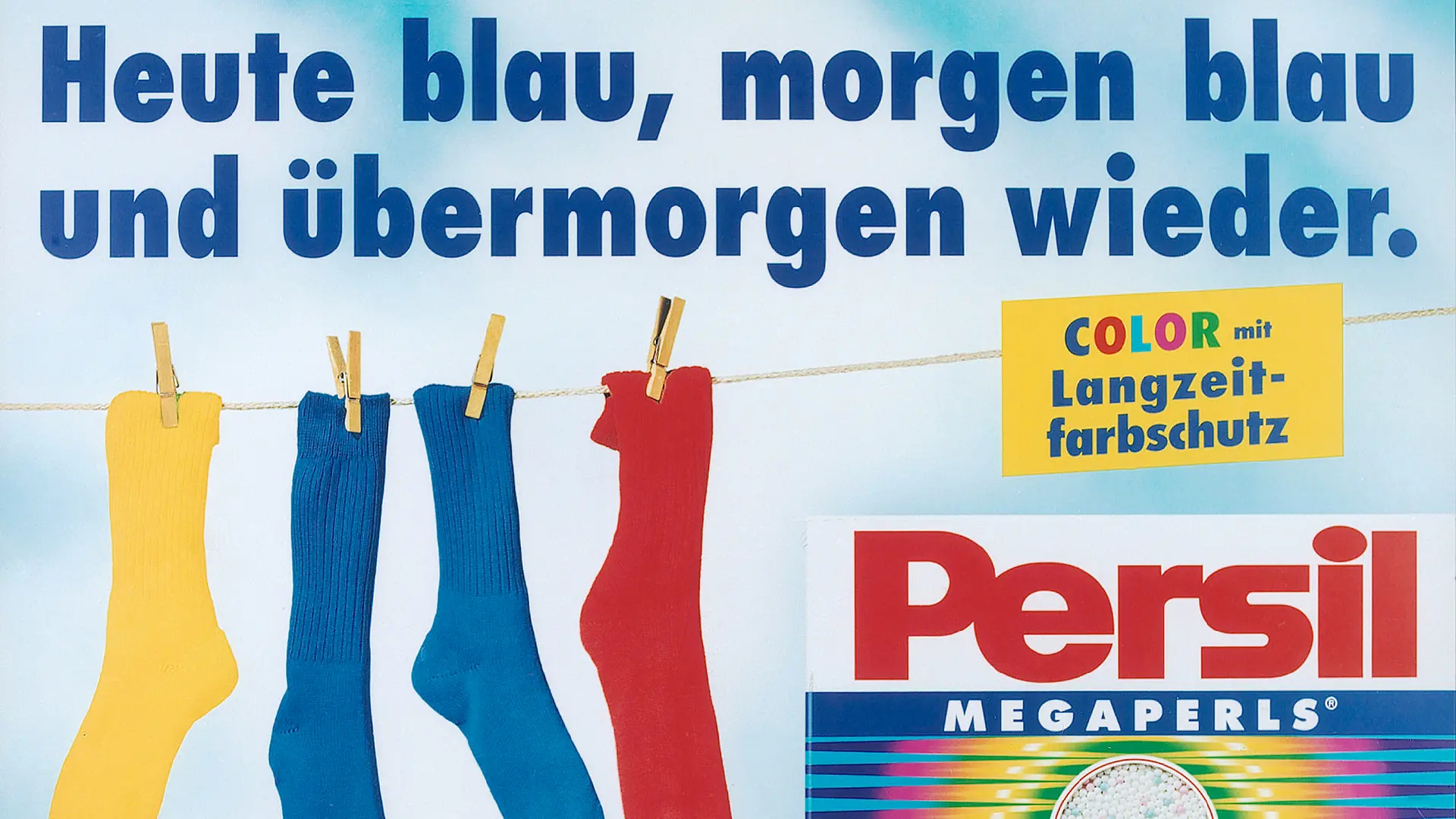
As of the 1960s, all-purpose detergents dominate the market. However, the increasing share of colored laundry and low washing temperatures lead to fading and color transfer. Henkel looks for a Persil solution and develops a color-saving version of the popular detergent. In 1991, Henkel launches Persil Color, an all-purpose detergent without bleach, but containing the polymer polyvinylpyrrolidone, which prevents color transfers. This new Persil sets a new standard for color-preserving washing processes.
Three generations of the well-known advertising figure of the Spee fox: the current fox from 2024 (left), the Spee fox from 1998 (lying down) and a version of the advertising figure from 2003 (right)
1 of 2
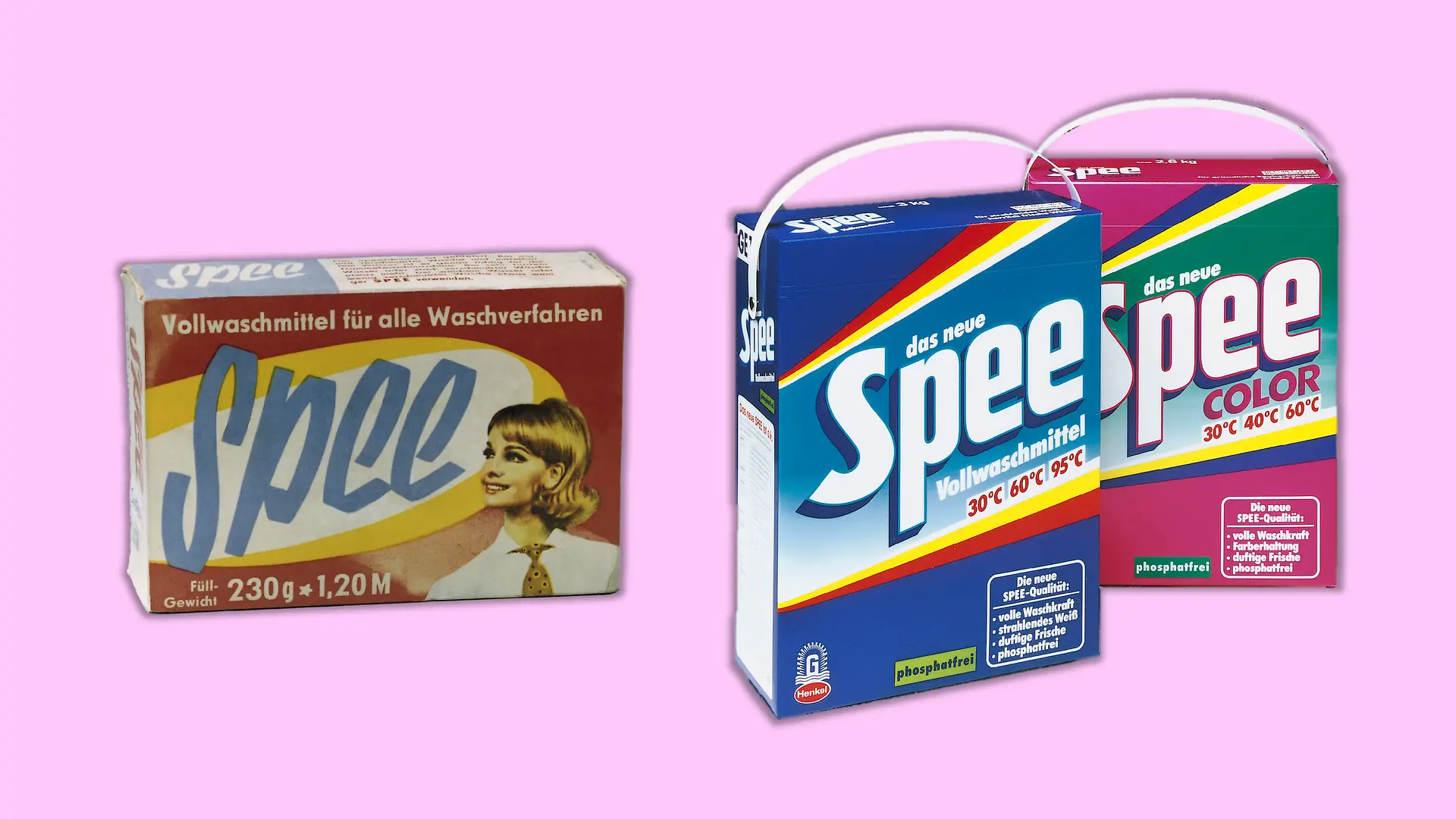
The Spee story starts in former East Germany. In 1968, the VEB Waschmittelwerk Genthin (VEB detergent plant Genthin) launches its first “Spezial-Entwicklung” (special development). Soon Spee becomes the most popular detergent in East Germany.
After Germany’s reunification, Henkel buys back the Genthin plant, thus securing the trademark rights to the product. As of 1991, a revised formula of the detergent is also available in West Germany. In 1996, the “Spee fox” is introduced and becomes a well-known advertising character for smart washing.
The cover of the Henkel Sustainability Report 2024
1 of 2
In 1992, Henkel publishes its first environment report. As early as 1987, the corporate guidelines had stated that environment protection was as relevant a corporate purpose as making profits. In addition, in late 1988 Henkel stopped the production of all detergents containing phosphates.
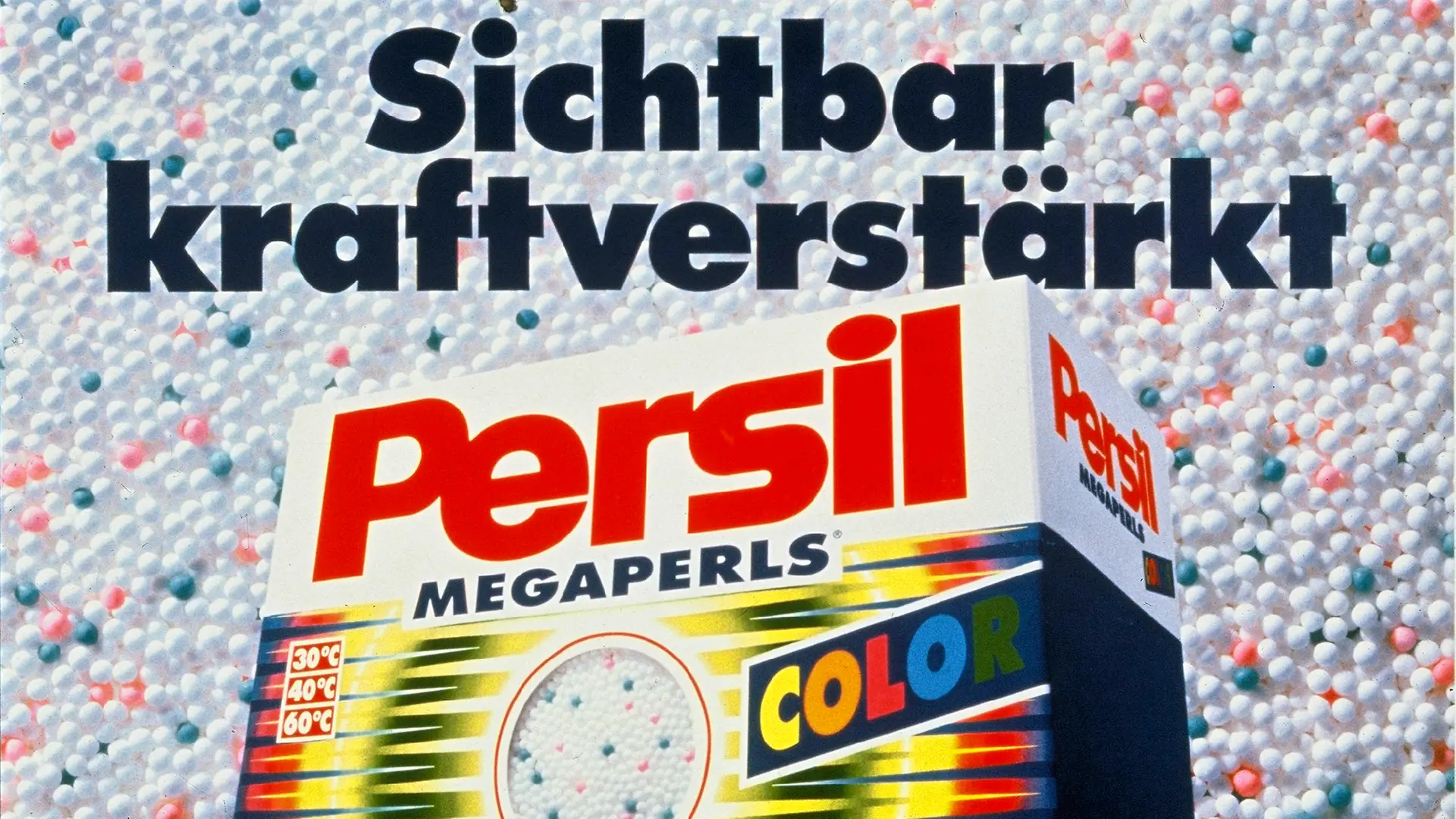
After five years of research, Persil Megaperls are launched in Germany in July 1994. It is a new, highly concentrated type of detergent that is produced via extrusion technology: a concentrated kneadable mass is pressed through a perforated sheet to be pearl-shaped afterwards. The new, highly concentrated formula promises better cleaning results and can be applied without dusting or lumping. The high density of the product also reduces transport and storage costs.
Schwarzkopf markets Taft, the first branded hairspray in Germany. Women “taft” (taften) their hair, as they called it at the time, to make it more resistant to wind and weather
The Schwarzkopf plant in Wassertrüdingen was taken over by Henkel after the purchase. To this day, mainly hair products are manufactured here (1995)
1 of 3
On November 1, 1995, Henkel acquires Hans Schwarzkopf GmbH in Hamburg. At the time of the acquisition, Schwarzkopf (founded in 1898) can also look back on a long and successful company tradition. In addition to innovations such as Germany’s first shampoo in powder form or the first liquid shampoo in Europe, Schwarzkopf also managed to establish a large number of brands that grew to become the best known in Germany and Europe.
Today, Schwarzkopf is one of the world’s leading cosmetics brands. The brand name goes back to the family name of company founder Hans Schwarzkopf. The logo also reflects this heritage: it shows a silhouette modeled after the actor Rolf Bernhard in 1904. The original shape of the silhouette has been slightly adapted several times to this day.
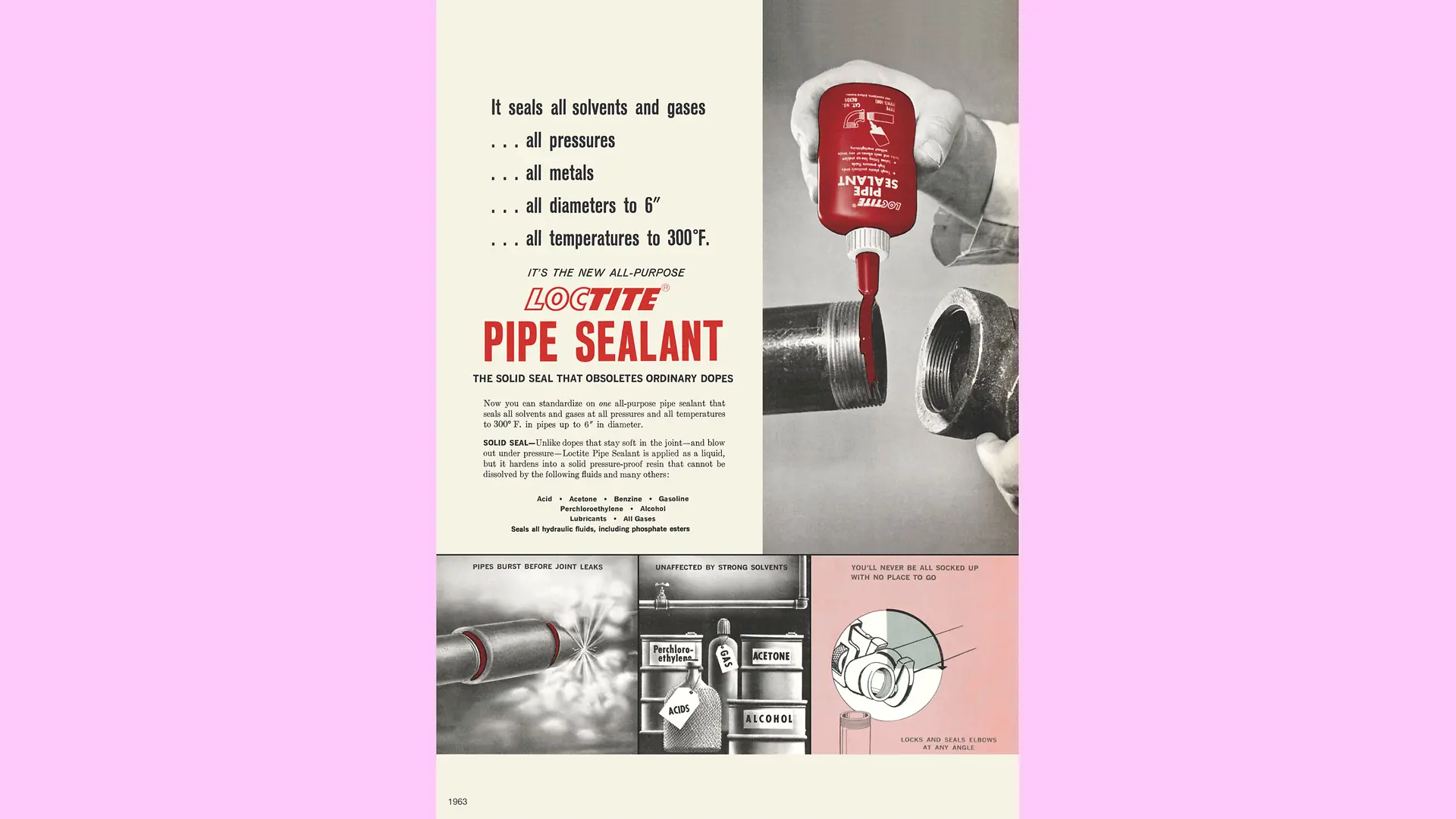
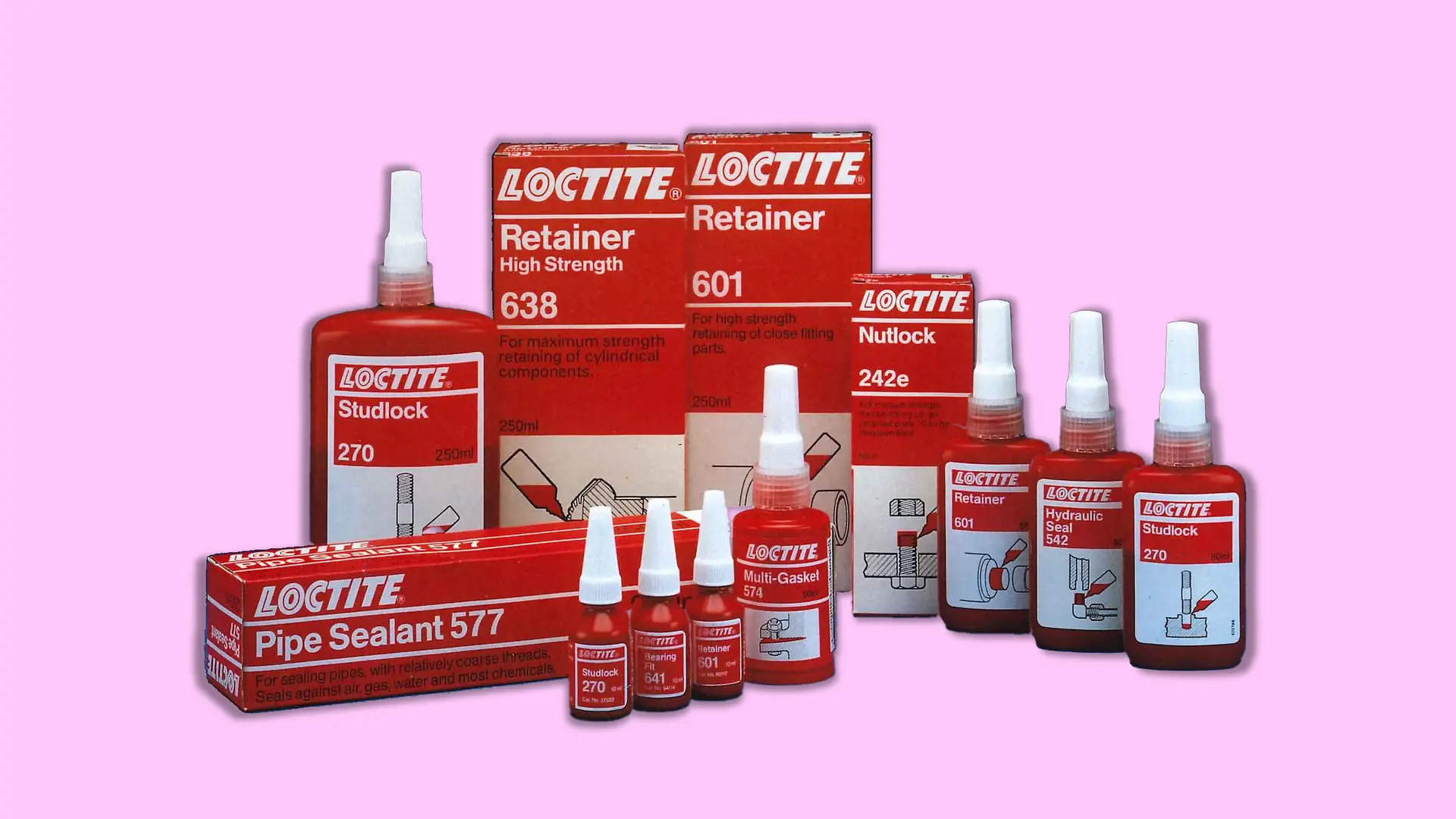
On January 6, 1997, Henkel takes over the remaining shares of Loctite Corporation, based in Hartford, Connecticut, USA. In 1985, Henkel acquired a 25 percent share of the global leader in specialist construction adhesives. Since then, Henkel gradually increased its shares.
The takeover of Loctite is the biggest Henkel acquisition so far and is an important step towards building its adhesive business through further acquisitions in the decades to come.
Logo of the new founded subsidiary Cognis Deutschland GmbH (1999)
On August 1, 1999, Henkel’s chemical products business is spun off as an independent subsidiary under the name of Cognis Deutschland GmbH (with retroactive effect from January 1). Preceding the step was the final separation from Degussa in summer 1997 and the subsequent comprehensive restructuring of the company’s chemical products business.
However, it proves impossible to find a suitable partner for the expensive business with chemical products so that adequate financing of the unit is no longer possible. As a result, Cognis is finally sold in September 2001, two years after the carve-out.
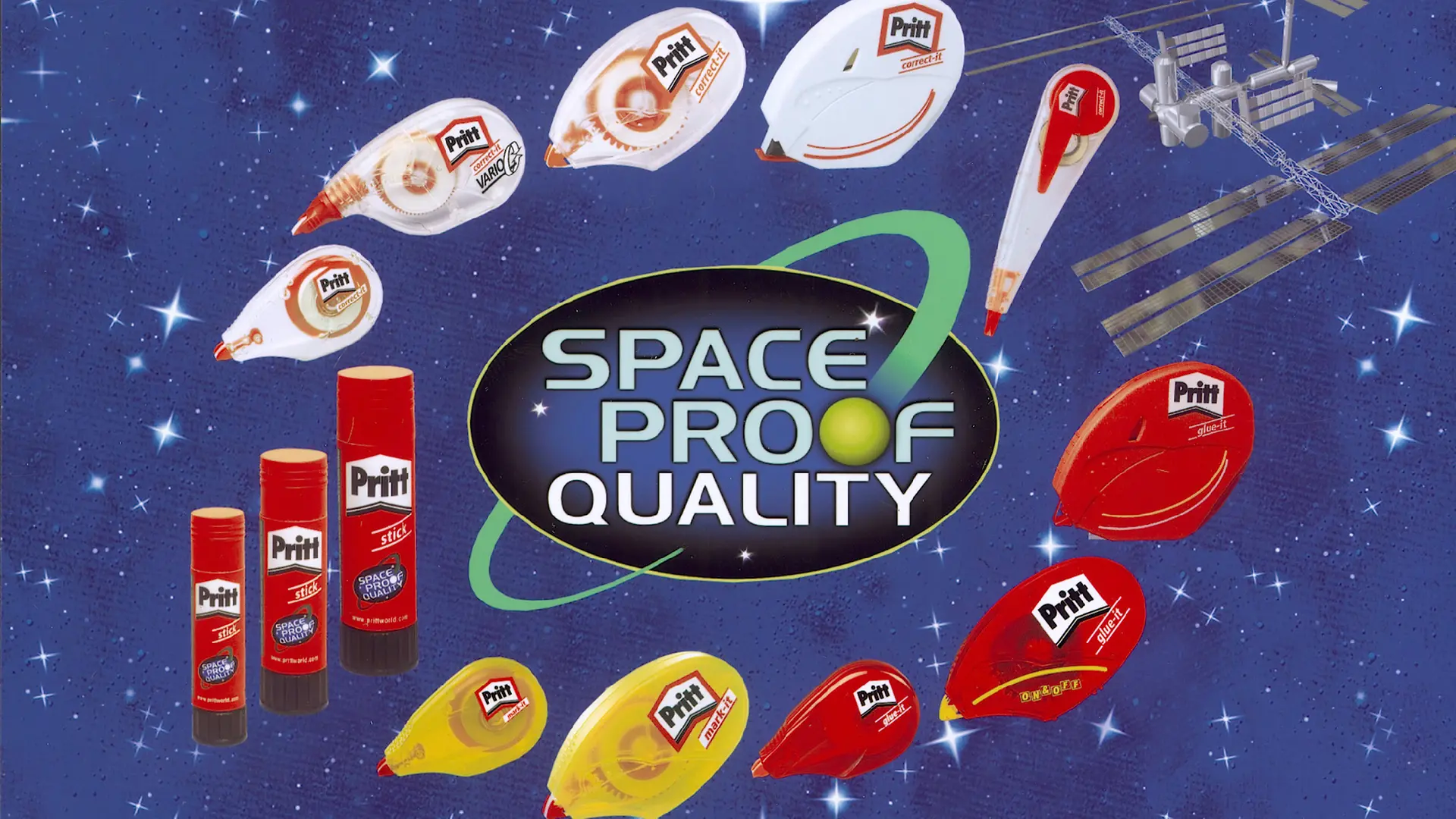
Pritt products tested for their suitability for use in space (2001)
In 2001, the European Space Agency awards the Pritt stick with the “Space-Proof Quality” seal. The crew of the International Space Station (ISS) had tested several Pritt products for their space suitability. The tests proved that Pritt adhesives remain usable even under conditions of zero gravity and extreme temperatures. To date, NASA and ESA use Pritt products for scientific experiments and to carry out minor repairs.
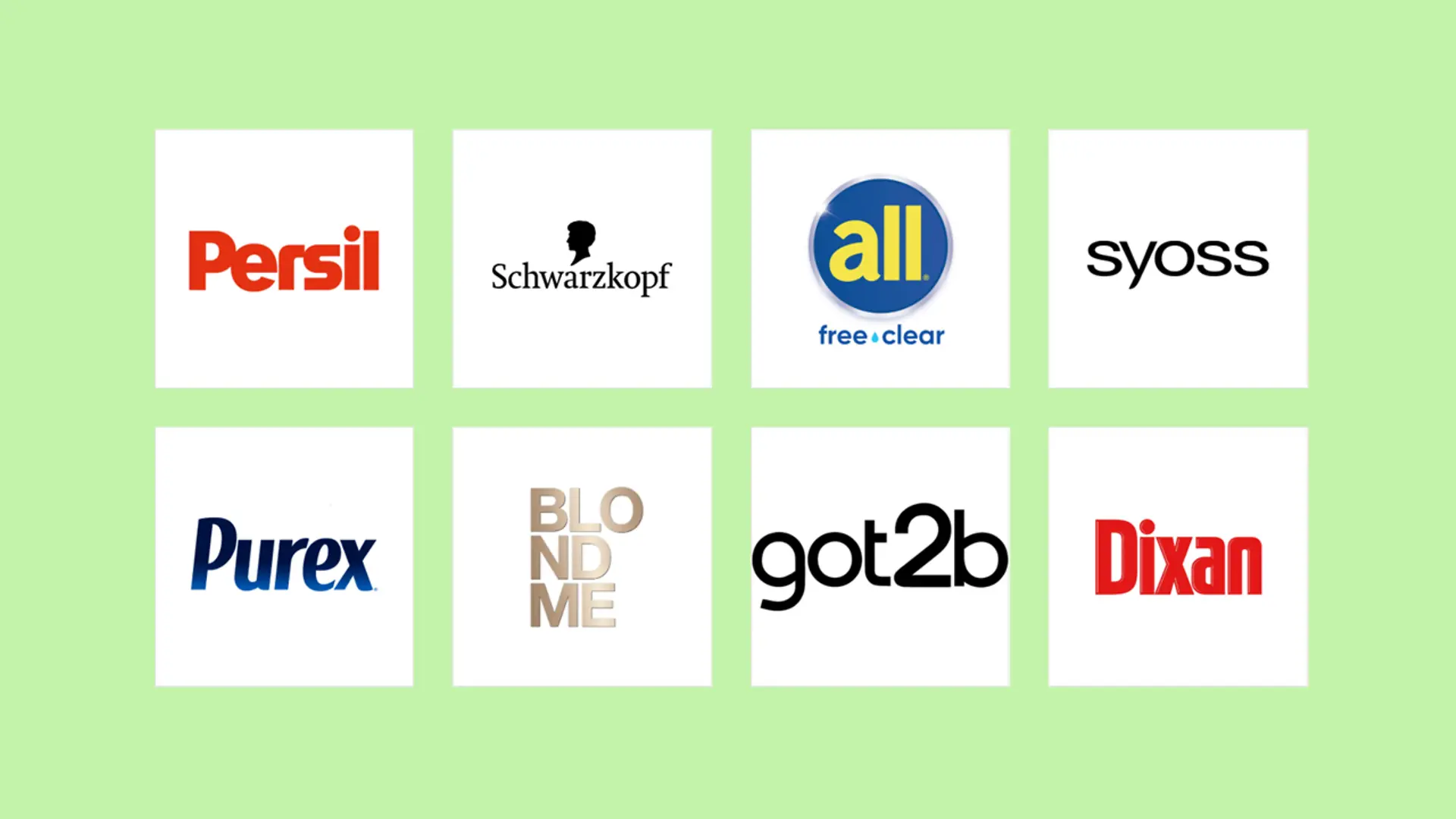
Incorporating street style, diversity and energy into its products, göt2b arrives in America in 2001. Just three years later, in 2004, the brand is rolled out to the European market under the name got2b. It is Schwarzkopf’s first styling trend brand that was developed by hairdressers for the retail sector.
In 2005, the brand is introduced in France and Spain, in 2007, marketing starts in China, the most important growth market. The Schwarzkopf pros start to fine-tune the texture, hold and sculptability of the got2b products to the respective styling trends. got2b is the leading brand for Gen Z & Gen Alpha, when it comes to hairstyling and coloring.
The years between 2002 and 2016 are marked by growth and by the expansion of the global business. Three strategic moves set the course for the future: major acquisitions to extend the adhesive and consumer goods divisions, the purchase of trendy brands to enhance the hair care and styling business, and a generational change at the top of the supervisory board.
Henkel takes over The Dial Corporation, based in Scottsdale, Arizona, USA. Dial’s body care products, air refreshers, detergents and food products (divested in 2006) are particularly successful…
A selection of brands from Henkel Adhesive Technologies
The Henkel divisions “Adhesives for consumers and professionals” and “Henkel technologies” merge to form the new business unit “Adhesive Technologies.” In this context, all brands from the surface…
The purchase of the adhesive and electronic businesses from National Starch/Akzo Nobel marks the biggest acquisition in Henkel’s corporate history to date. The move represents a significant…
2009
Simone Bagel-Trah
becomes Chairwoman of the Supervisory Board and the Shareholders’ Committee
Dr. Simone Bagel-Trah and Dipl.-Ing. Albrecht Woeste (2009)
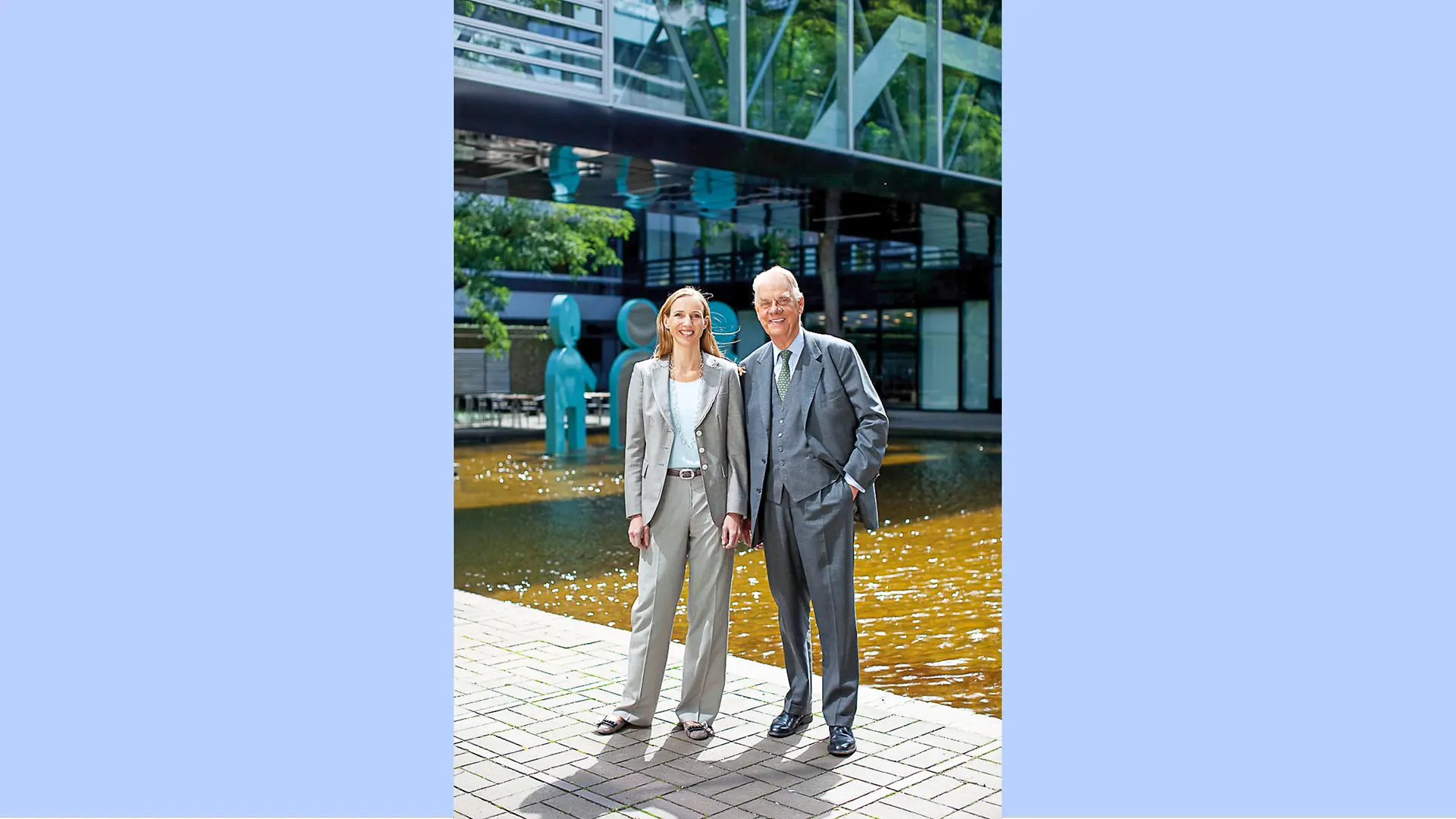
Dipl.-Ing. Albrecht Woeste, Chairman of the Supervisory Board and the Shareholders’ Committee of Henkel AG & Co. KGaA, hands over the reins to Dr. Simone Bagel-Trah (b. 1969), a fifth generation member of…
With an eye-catching marketing campaign, Syoss Hair Care was successfully launched internationally in retail outlets in March 2009. The history of Syoss began in 1977 in Osaka, Japan, when…
Henkel volunteers support the Special Olympics World Games – including Chairwoman of the Supervisory Board Simone Bagel-Trah and Chief Human Resources Officer Sylvie Nicol (2023)
Logo of the Fritz Henkel Stiftung foundation featuring the portrait of the company founder
1 of 2
The Fritz Henkel Stiftung foundation is set up in February 2011 to expand the company’s global Corporate Citizenship activities. The foundation supports initiatives worldwide that are engaged in…
A look inside Henkel's largest adhesives plant worldwide: the “Dragon Plant” in China
Henkel opens its largest adhesive production site worldwide in Shanghai. The “Dragon Plant” covers 150,000 square meters, and its annual production capacity amounts to 428,000 tons. With the…
Henkel acquires the Spotless Group SAS, based in Neuilly-sur-Seine, France. The corporate group is active in Western Europe, marketing its leading brands mainly in the segments of auxiliary…
From left: Dr. Simone Bagel-Trah, Dr. Friderike Bagel, Johann-Christoph Frey, and Benedikt-Richard Freiherr von Herman (2014)
The Henkel family confirms its pledge to the company and extends the share-pooling agreement which was concluded for an indefinite term. It can now be terminated for the first time as of December…
At the Egyptian Museum in Cairo, cleaning staff damage the 3,300-year-old death mask of Tutankhamun, causing the pharaoh’s beard to come loose and subsequently be improperly attached with…
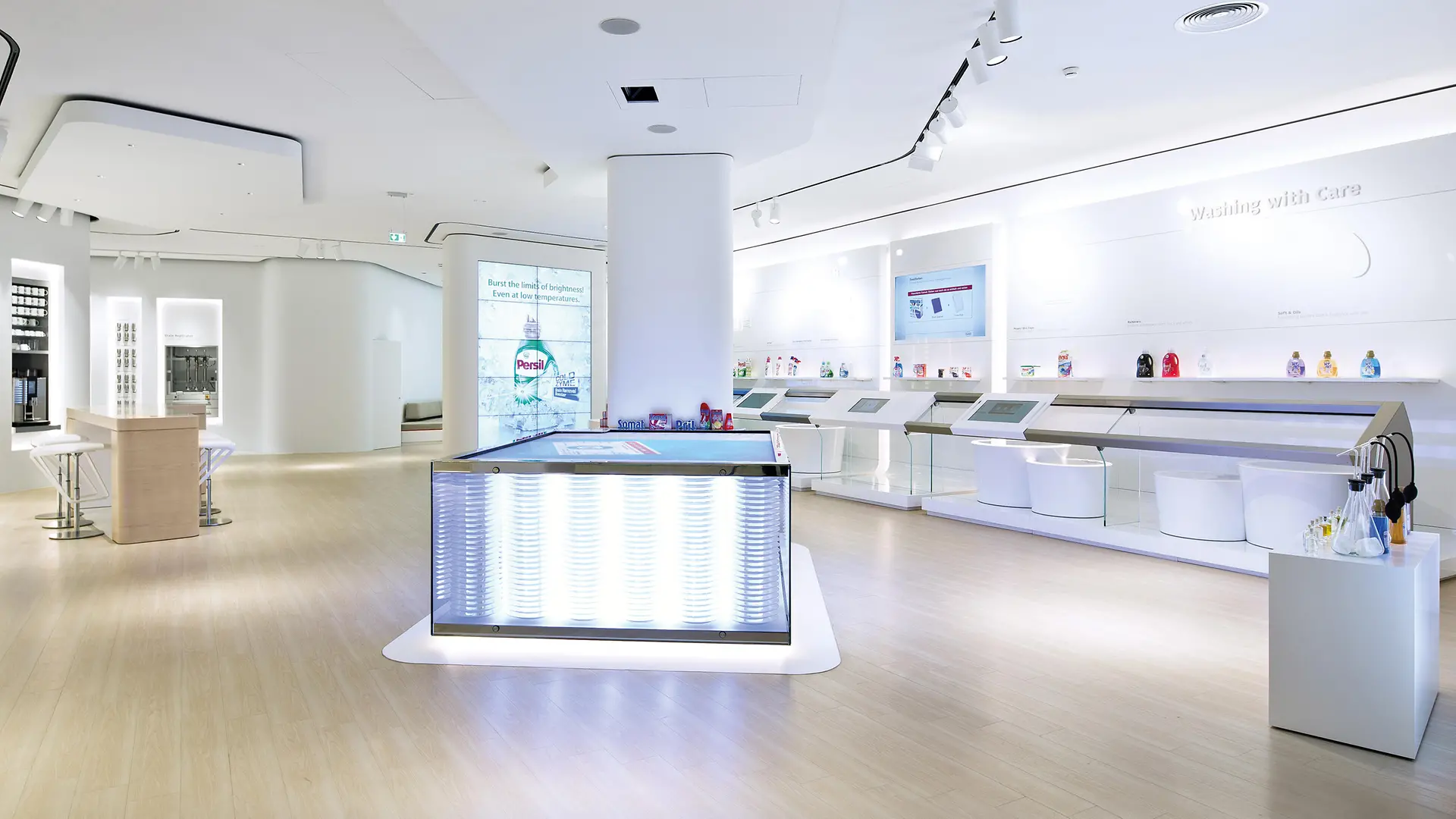
Global Experience Center at the Düsseldorf-Holthausen site (2015)
The business unit Laundry & Home Care opens its Global Experience Center at the Düsseldorf site. On a space of 700 square meters, the new center offers a new dimension of customer engagement and…
On September 1, Henkel purchases The Sun Products Corporation, a US-based manufacturer of laundry detergents and household cleaning products based in Wilton, Connecticut, USA. The acquisition is a…
Henkel takes over The Dial Corporation, based in Scottsdale, Arizona, USA. Dial’s body care products, air refreshers, detergents and food products (divested in 2006) are particularly successful on the North American market.
A selection of brands from Henkel Adhesive Technologies
The Henkel divisions “Adhesives for consumers and professionals” and “Henkel technologies” merge to form the new business unit “Adhesive Technologies.”
In this context, all brands from the surface treatment segment are also united under the umbrella brand Bonderite.
The purchase of the adhesive and electronic businesses from National Starch/Akzo Nobel marks the biggest acquisition in Henkel’s corporate history to date. The move represents a significant upgrade of Henkel’s service offering for existing and potential customers in the global adhesive market.
2009
Simone Bagel-Trah
becomes Chairwoman of the Supervisory Board and the Shareholders’ Committee
Dr. Simone Bagel-Trah and Dipl.-Ing. Albrecht Woeste (2009)
Dipl.-Ing. Albrecht Woeste, Chairman of the Supervisory Board and the Shareholders’ Committee of Henkel AG & Co. KGaA, hands over the reins to Dr. Simone Bagel-Trah (b. 1969), a fifth generation member of the Henkel family. Albrecht Woeste is nominated Honorary Chairman of the Henkel group.
With an eye-catching marketing campaign, Syoss Hair Care was successfully launched internationally in retail outlets in March 2009. The history of Syoss began in 1977 in Osaka, Japan, when hair care experts Sharp and Yamahatsu created the brand. These origins form the name Syoss (Sharp, Yamahatsu, Osaka, Seventy, Seven).
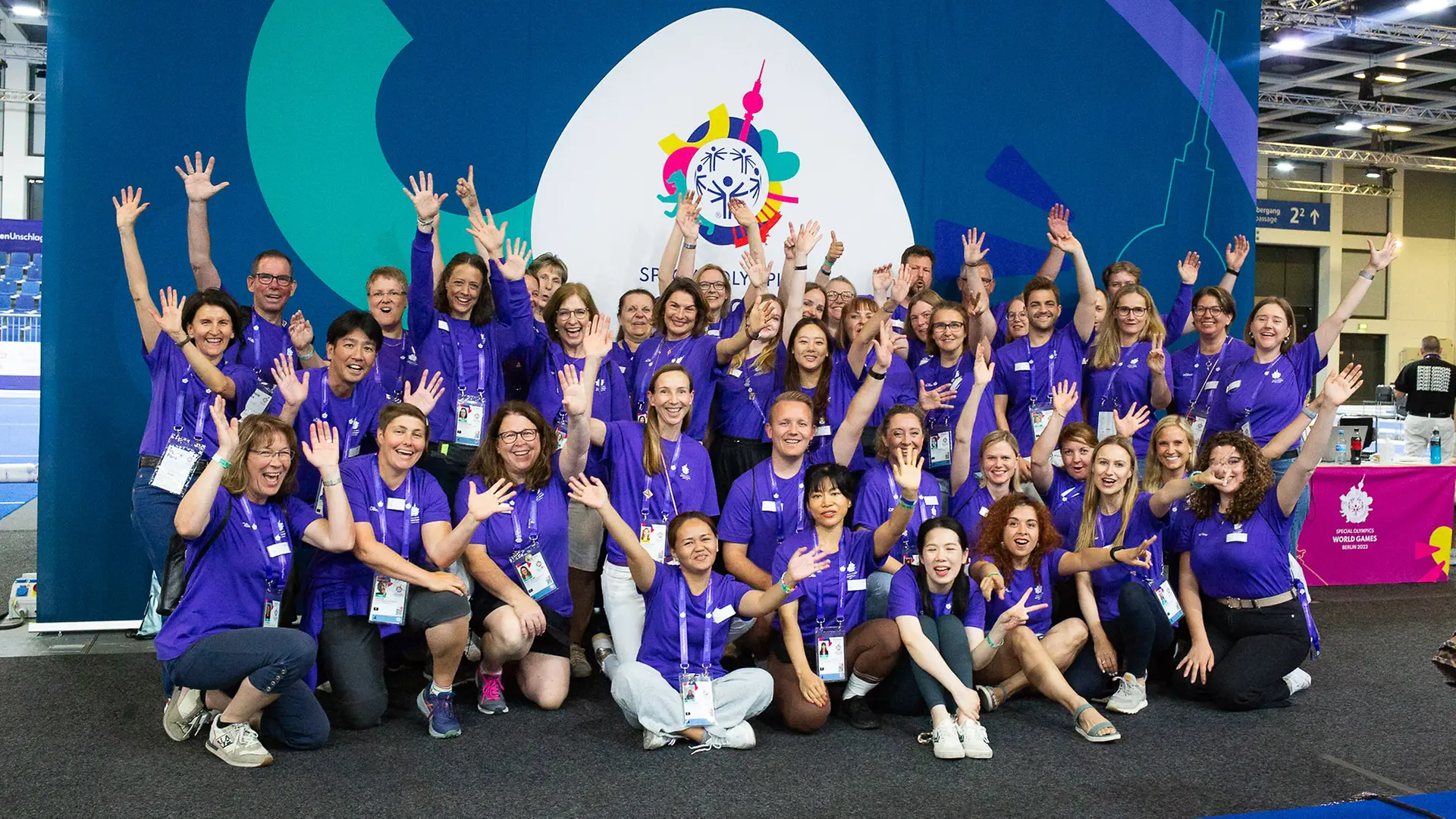
Henkel volunteers support the Special Olympics World Games – including Chairwoman of the Supervisory Board Simone Bagel-Trah and Chief Human Resources Officer Sylvie Nicol (2023)
Logo of the Fritz Henkel Stiftung foundation featuring the portrait of the company founder
1 of 2
The Fritz Henkel Stiftung foundation is set up in February 2011 to expand the company’s global Corporate Citizenship activities. The foundation supports initiatives worldwide that are engaged in promoting inclusive education. The goal is to reduce barriers and help underprivileged young people to gain fair and equitable access to schooling, career entry and social participation.
A look inside Henkel's largest adhesives plant worldwide: the “Dragon Plant” in China
Henkel opens its largest adhesive production site worldwide in Shanghai. The “Dragon Plant” covers 150,000 square meters, and its annual production capacity amounts to 428,000 tons. With the modern production facility, Henkel is expanding its production capacity in the growth region and is directly supplying customers in Asia from here.
Henkel acquires the Spotless Group SAS, based in Neuilly-sur-Seine, France. The corporate group is active in Western Europe, marketing its leading brands mainly in the segments of auxiliary washing products, insect protection and household care. Successful brands include Eau Ecarlate, Dylon and Catch.
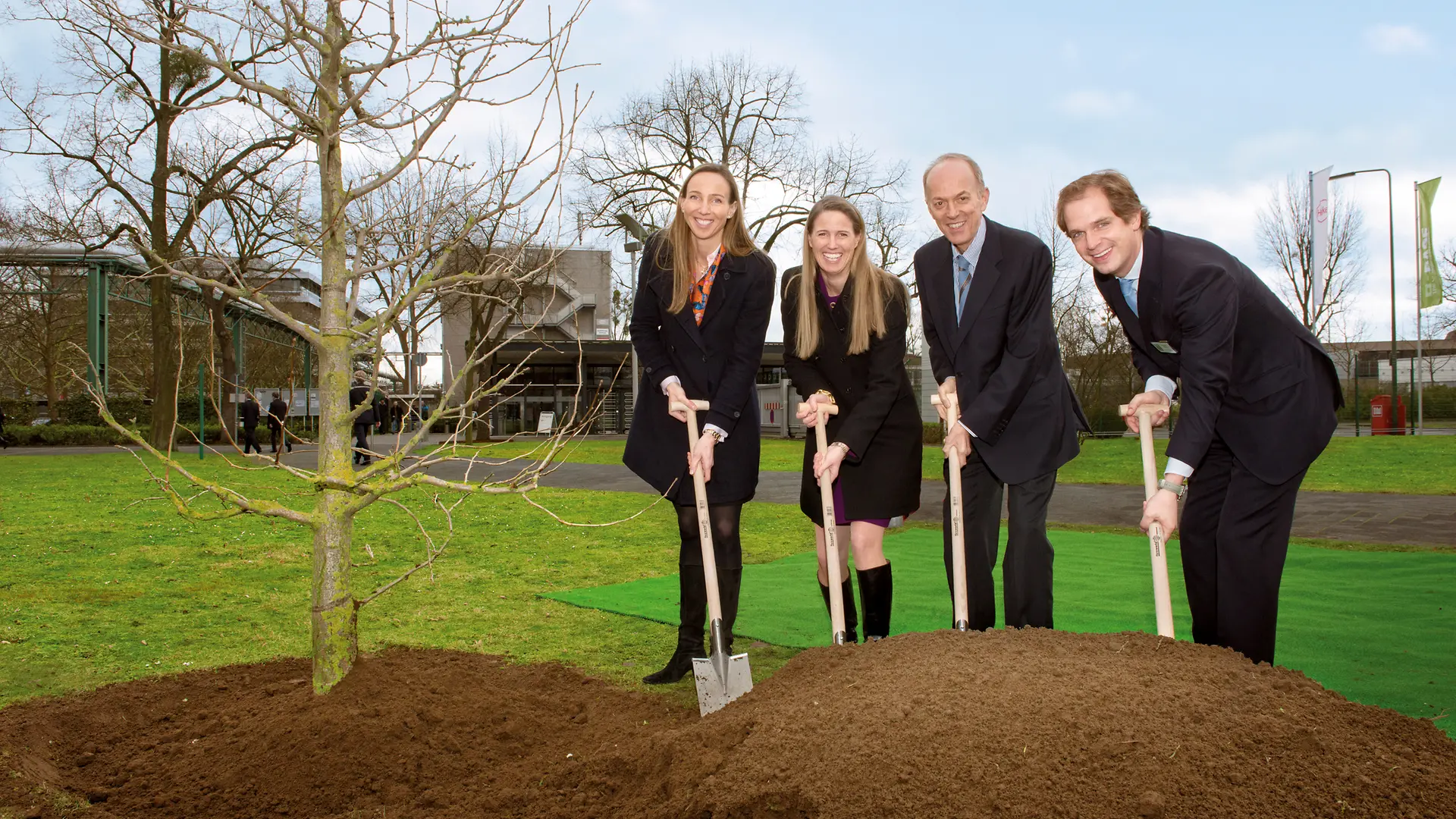
From left: Dr. Simone Bagel-Trah, Dr. Friderike Bagel, Johann-Christoph Frey, and Benedikt-Richard Freiherr von Herman (2014)
The Henkel family confirms its pledge to the company and extends the share-pooling agreement which was concluded for an indefinite term. It can now be terminated for the first time as of December 31, 2033. A symbolic tree-planting ceremony at the Düsseldorf site confirms the Henkel family’s long-term pledge to the company.
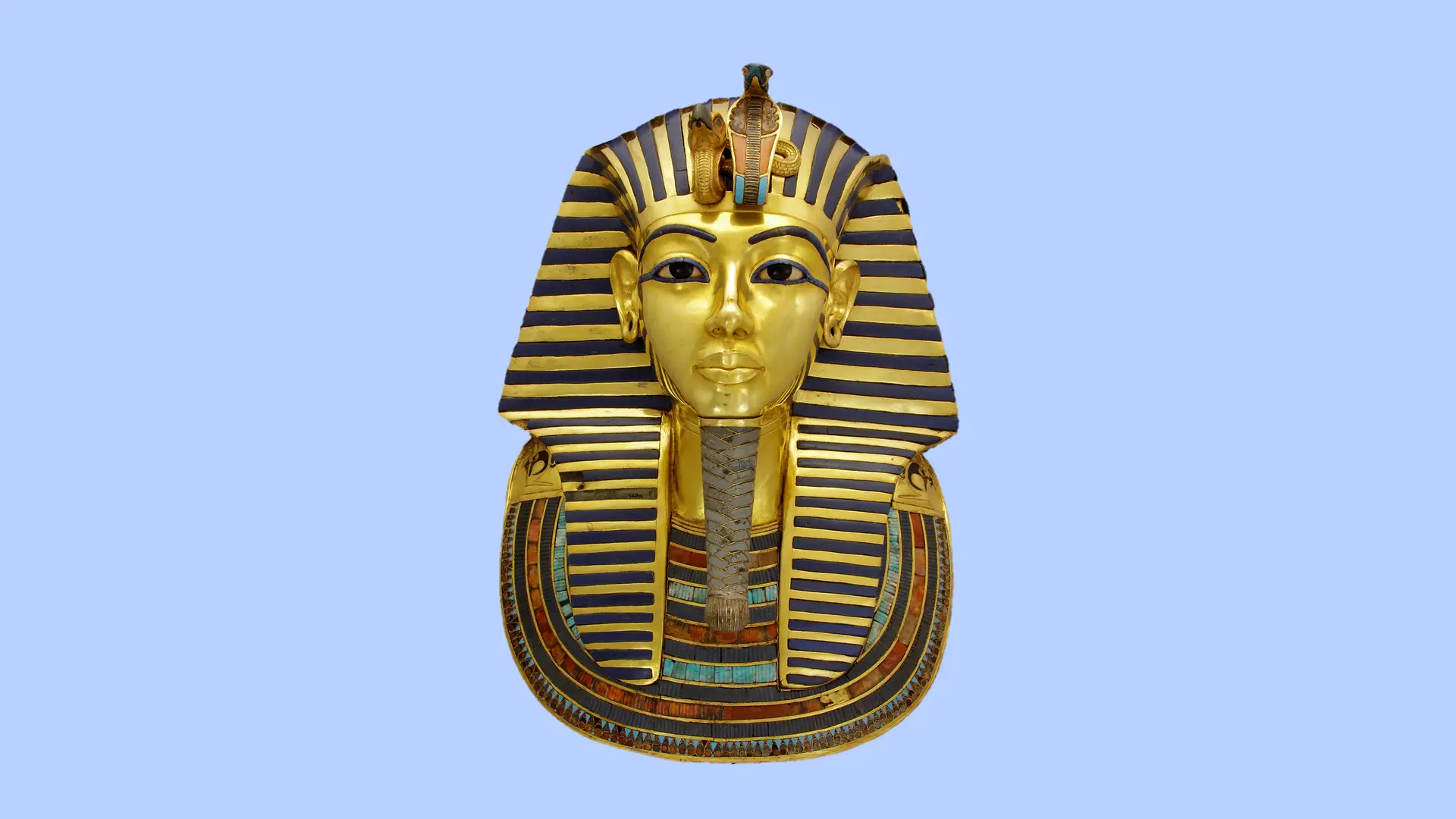
At the Egyptian Museum in Cairo, cleaning staff damage the 3,300-year-old death mask of Tutankhamun, causing the pharaoh’s beard to come loose and subsequently be improperly attached with synthetic resin. To restore the mask properly, the museum enlists the help of adhesive experts at Henkel Adhesive Technologies. The team develops a special high-tech adhesive that can withstand high temperatures and vibrations and can be removed without leaving any residue. Thanks to this solution, the beard of the world-famous mask remains securely in place to this day.
Global Experience Center at the Düsseldorf-Holthausen site (2015)
The business unit Laundry & Home Care opens its Global Experience Center at the Düsseldorf site. On a space of 700 square meters, the new center offers a new dimension of customer engagement and value creation.
The new forum boasts the latest digital technology and presents a unique platform for showcasing innovations and expertise.
On September 1, Henkel purchases The Sun Products Corporation, a US-based manufacturer of laundry detergents and household cleaning products based in Wilton, Connecticut, USA. The acquisition is a decisive step for Henkel’s business in North America, comprising leading detergent brands such as all and Sun as well as the fabric conditioner Snuggle. The well-established and successful brands enhance Henkel’s existing product portfolio of detergents and cleaning agents in North America. The takeover of Sun Products is the second largest acquisition in Henkel’s history.
2017 – present
Future? Ready!
With new strategies, innovations that contribute to sustainability, and digital solutions, we continue to drive our transformation forward – fostering growth, responsibility, and future readiness. Then as now, we draw on our pioneering spirit to develop groundbreaking products and solutions that empower the generations of tomorrow.
Ideal additions to the Adhesive Technologies business
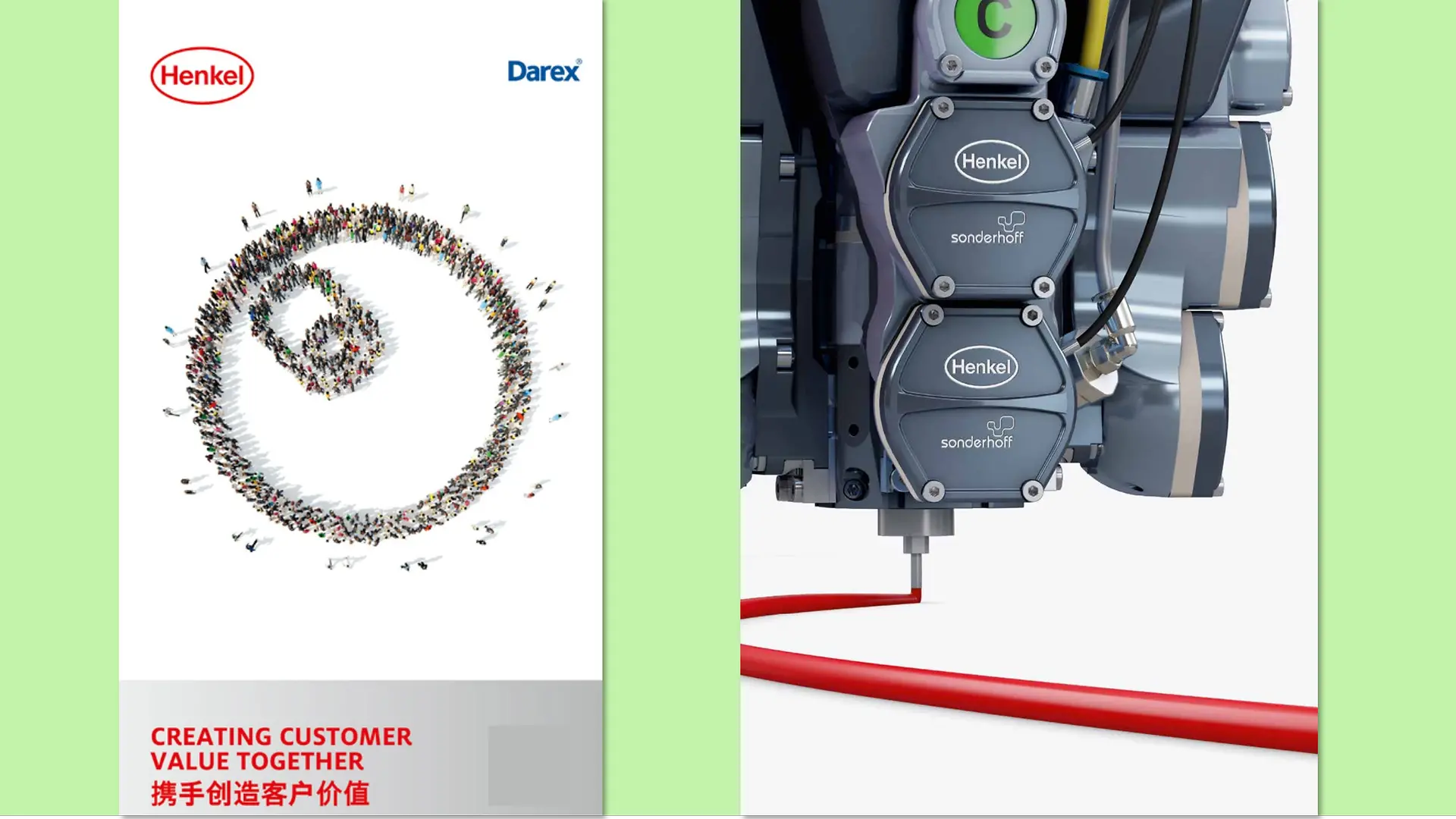
With the acquisition of Darex Packaging Technologies and the Sonderhoff Group, the Adhesive Technologies business is further strengthened. Darex provides high-performance sealants and coatings for...
In March, Henkel introduces the Purposeful Growth Agenda as a new strategic framework for holistic growth. The aim is to create outstanding value for customers and consumers through…
Henkel’s corporate purpose inspires with a clear message
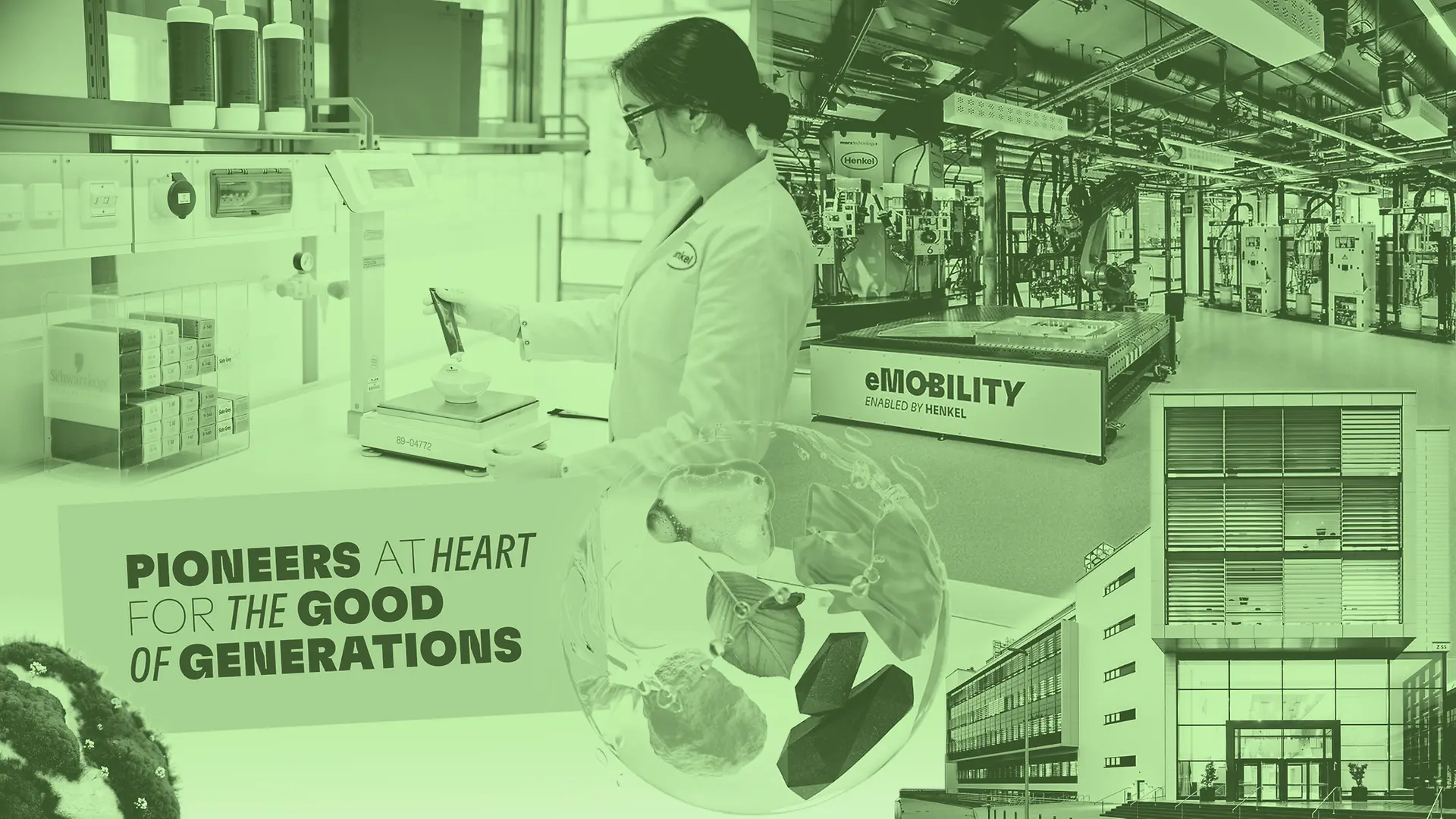
Building on the Purposeful Growth Agenda, Henkel has been sending a clear message since 2021 through its corporate purpose: “Pioneers at heart for the good of generations.” As a global company…
In February 2022, Henkel announces the merger of the Laundry & Home Care and Beauty Care business units into the new business unit, Henkel Consumer Brands. The two consumer businesses are now…
A production and logistics center in Perm, Russia (2016)
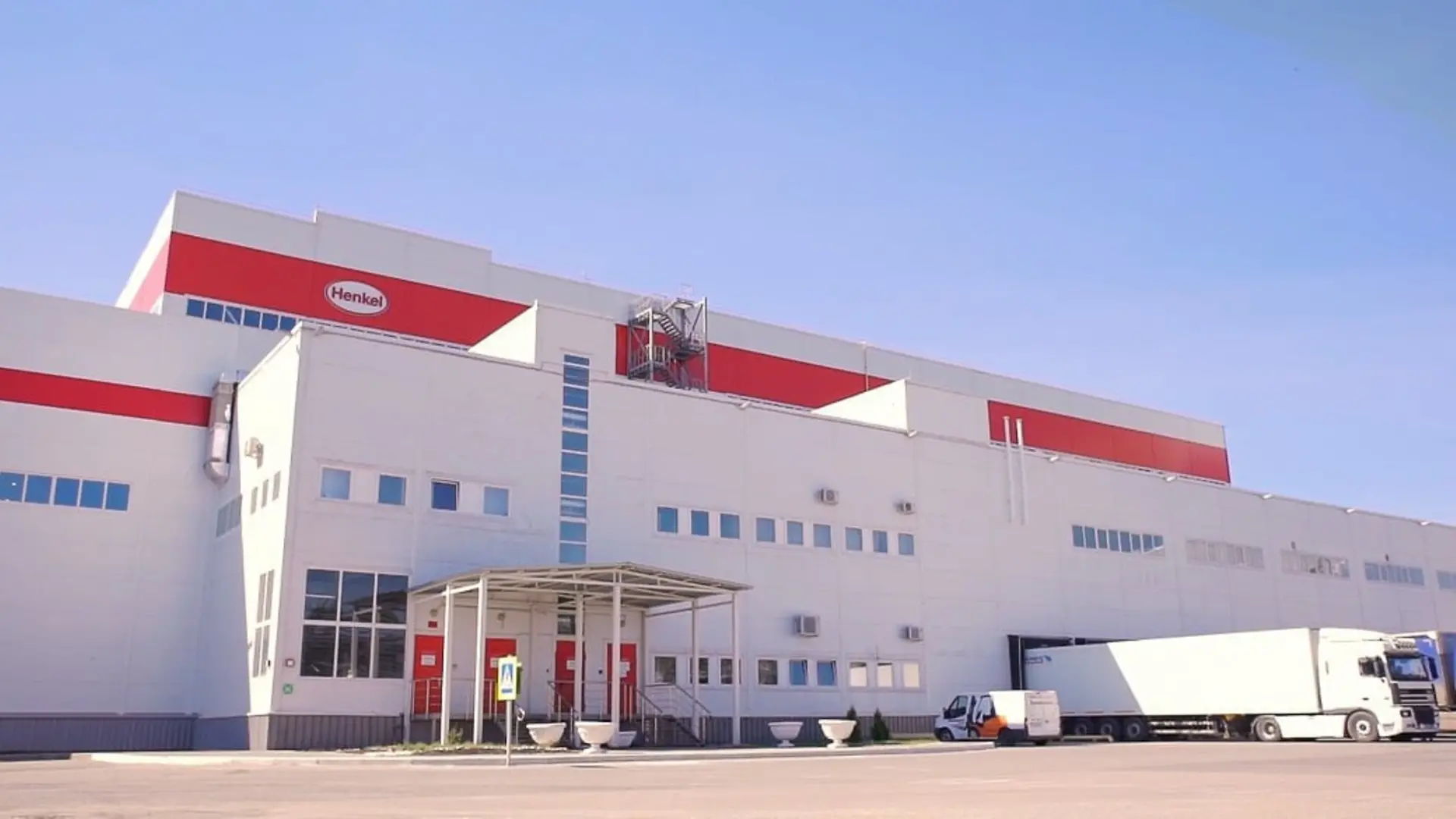
Against the backdrop of the war in Ukraine, Henkel decides to exit its business activities in Russia. Planned investments in the country, such as the expansion of sites, are halted. In addition…
In September 2022, Henkel inaugurates the Inspiration Center Düsseldorf (ICD) for Henkel Adhesive Technologies. This unique innovation and customer center serves as a driver for innovation and…
A digital symbol of Henkel’s sustainability ambitions
With the 2030+ Sustainability Ambition Framework, Henkel is advancing its strategy and ambitions for the sustainable transformation of business and society across three dimensions…
...for a wide range of industrial and municipal applications
1 of 2
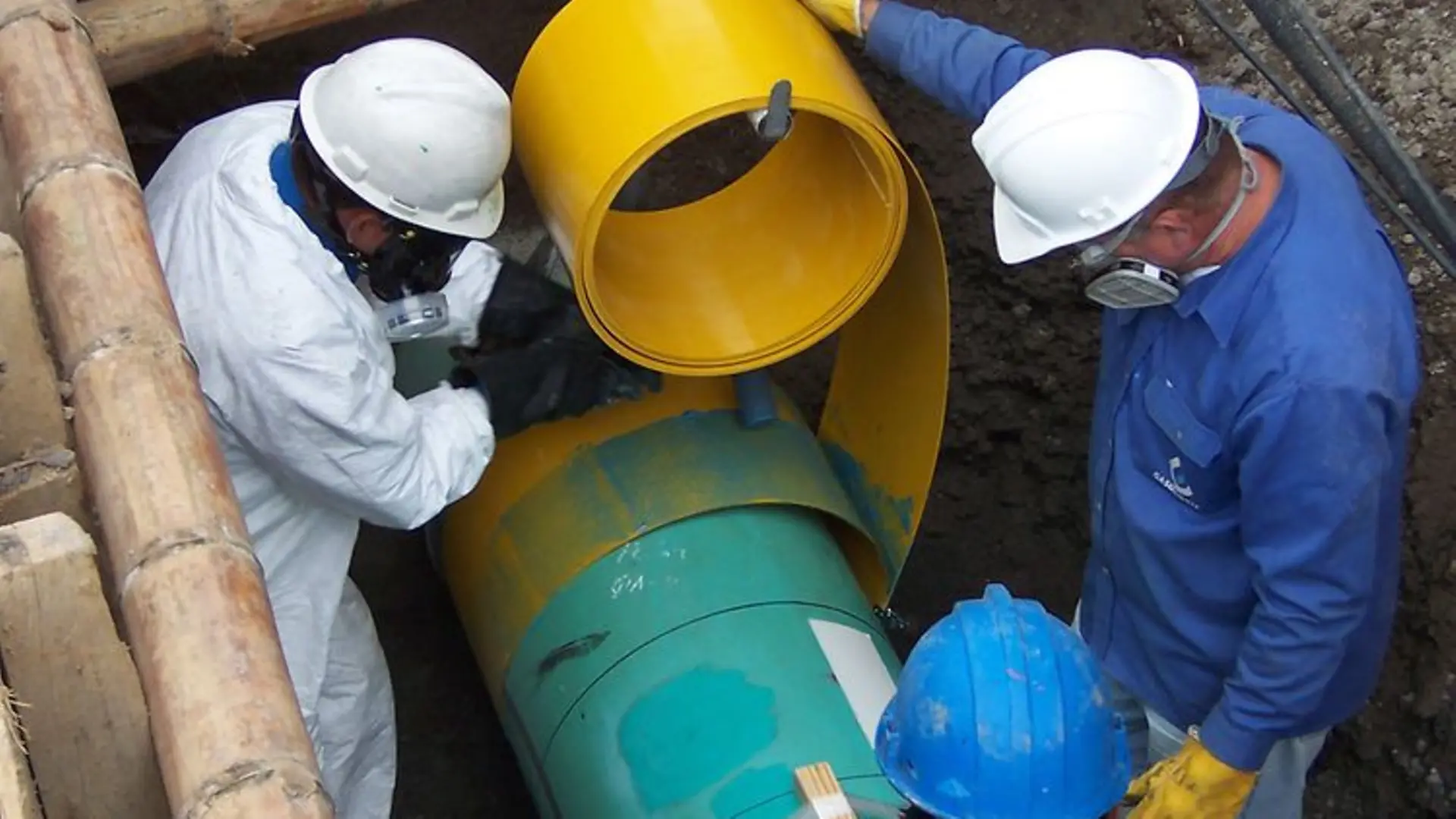
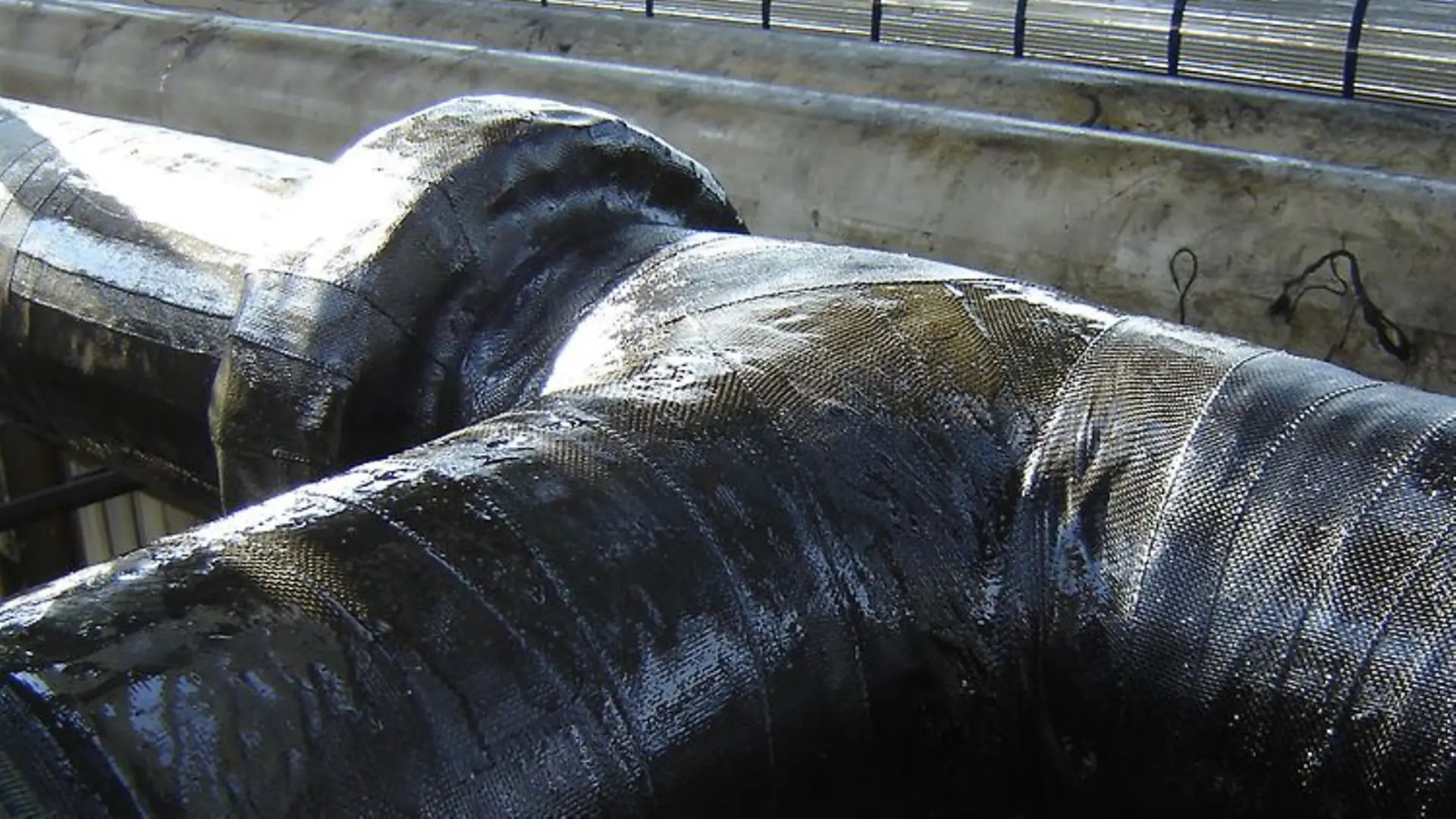
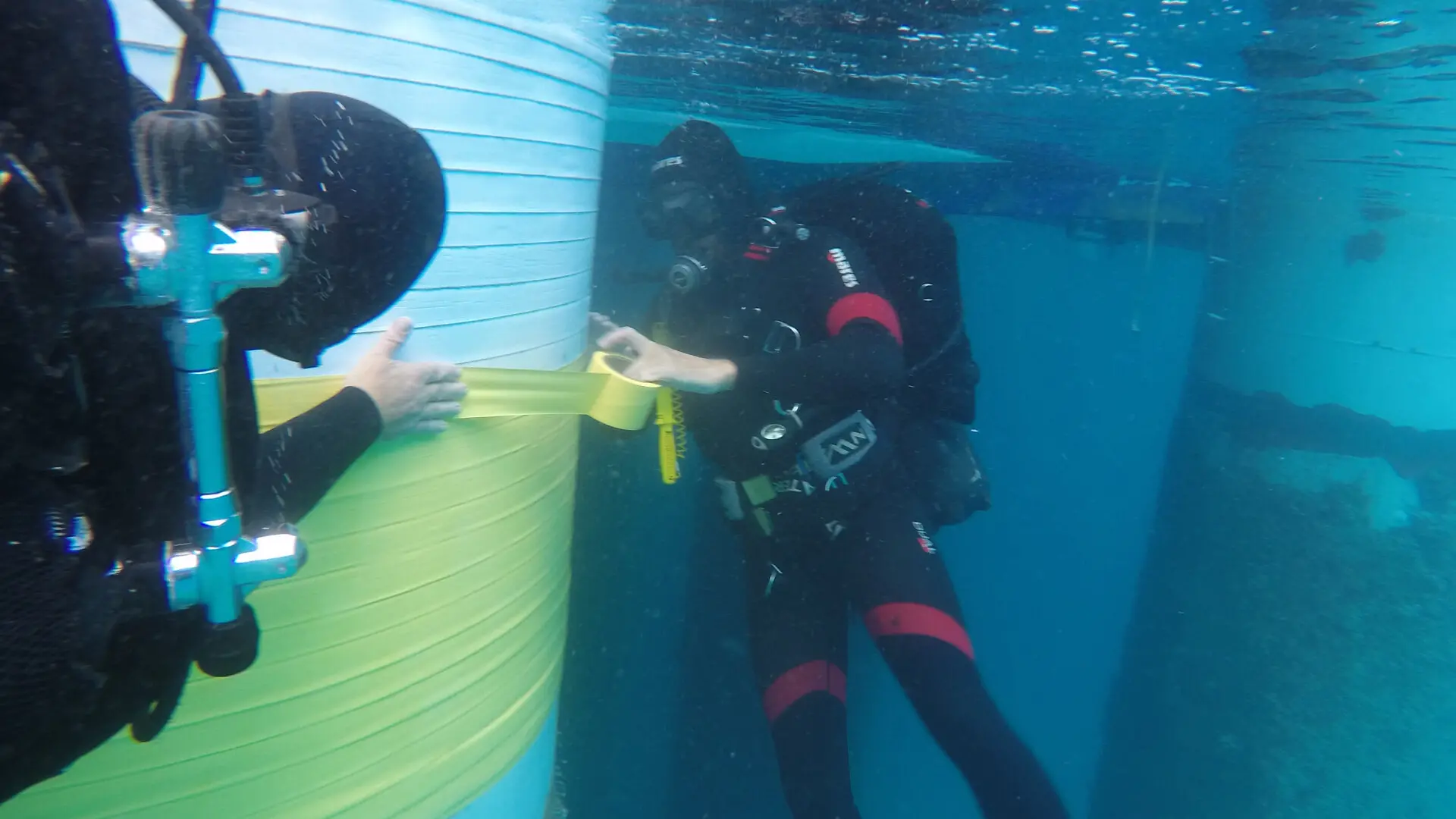
With the acquisition of Critica Infrastructure (“Critica”), headquartered in the USA, Henkel has taken over a specialized provider of innovative solutions for composite repair…
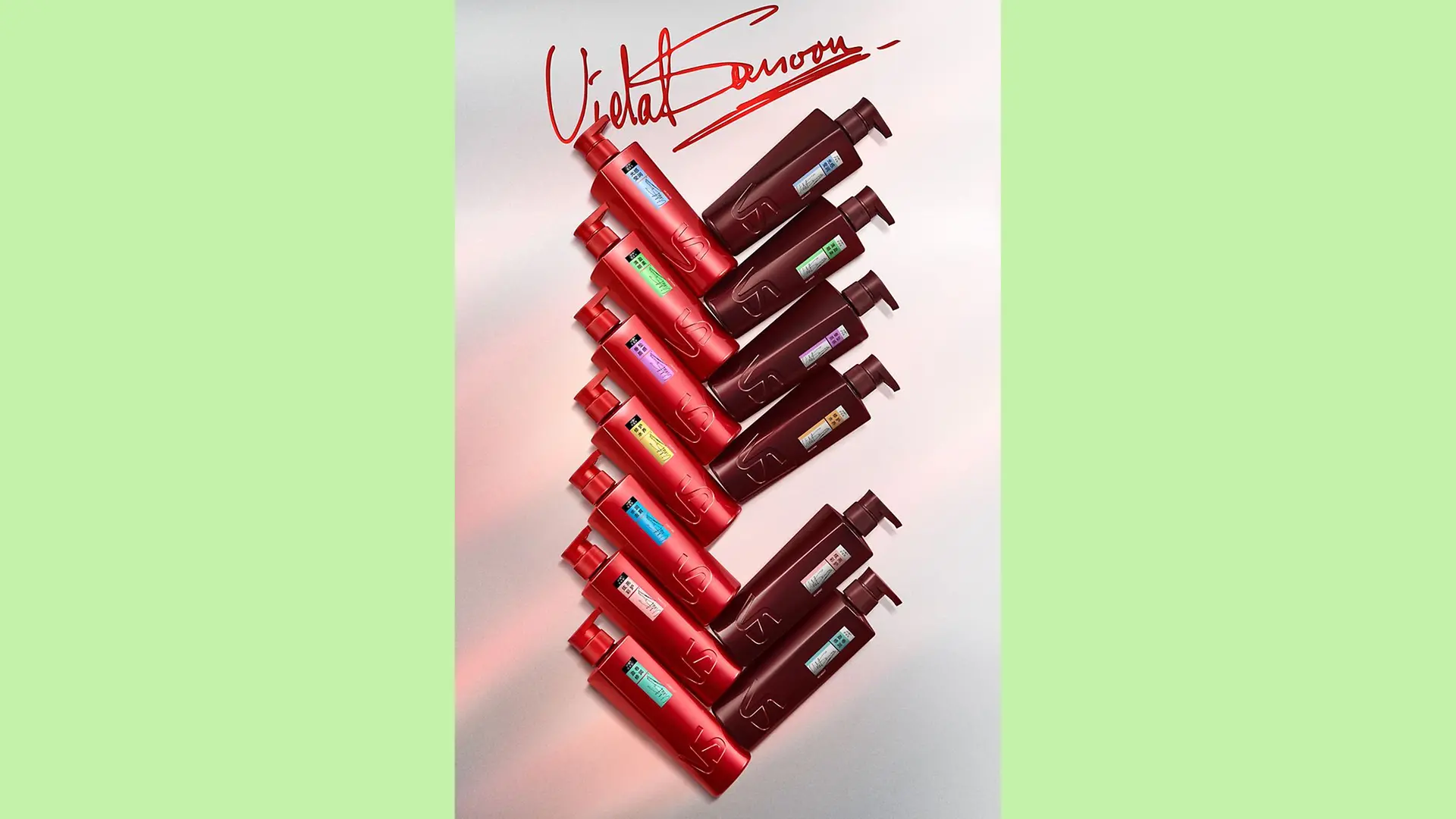
The acquisition of Vidal Sassoon complements the local portfolio of Henkel Consumer Brands in China, covering the premium segment of the retail business. Vidal Sassoon’s portfolio includes…
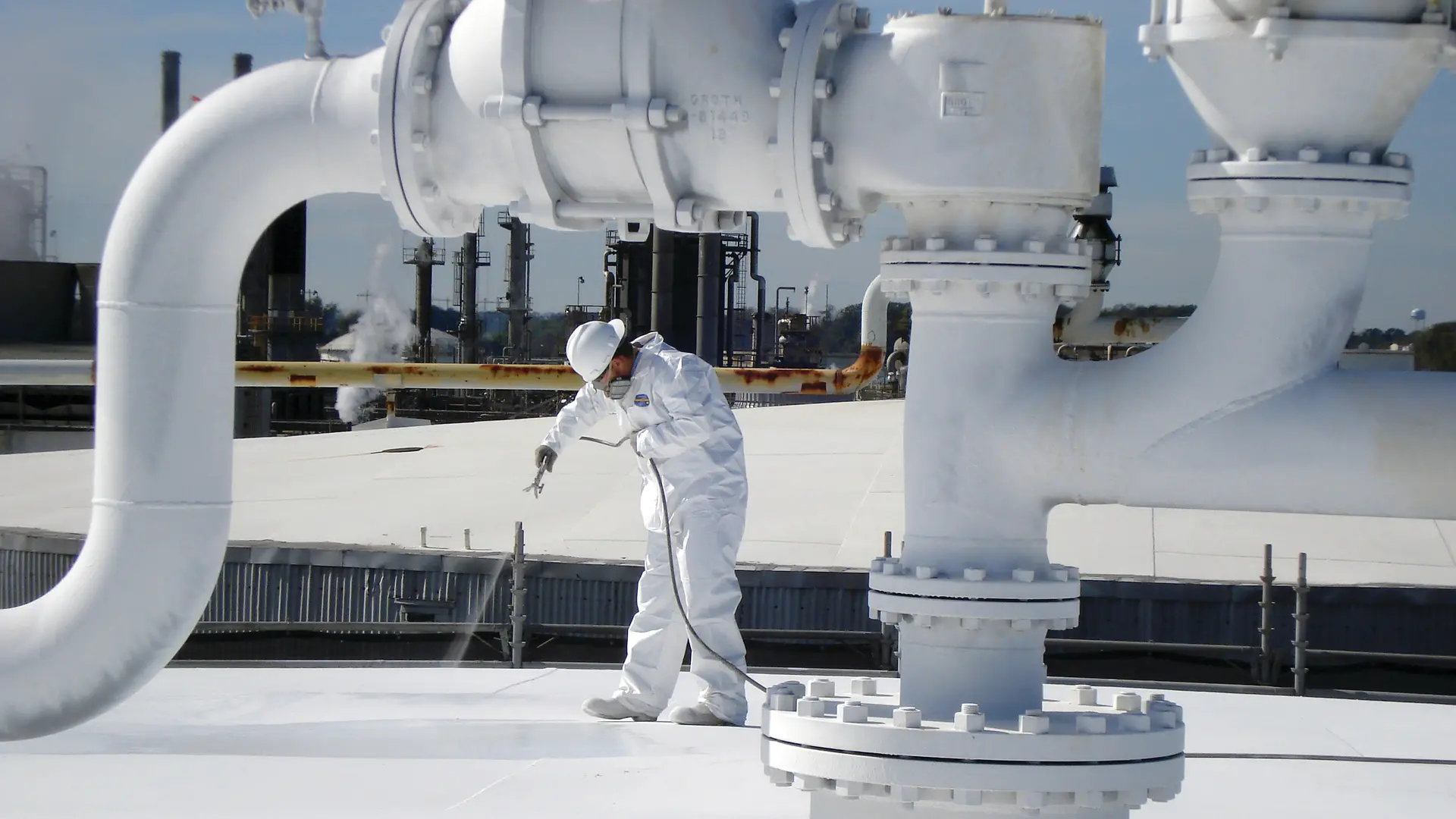
Henkel is strengthening its Adhesive Technologies business with the acquisition of Seal for Life Industries. Seal for Life specializes in protective coatings and sealing solutions for…
Around a year after opening the Battery Engineering Center in Düsseldorf, Henkel also puts its new state-of-the-art battery testing facility (Battery Test Center) into operation. At the Battery...
With the House of Hair in Hamburg, Henkel establishes a central innovation hub for the hair care business. Research, product development, hairdressing expertise, and brands such as Schwarzkopf and…
Ideal additions to the Adhesive Technologies business
With the acquisition of Darex Packaging Technologies and the Sonderhoff Group, the Adhesive Technologies business is further strengthened. Darex provides high-performance sealants and coatings for the global metal packaging industry, while Sonderhoff offers innovative foam sealing solutions and dosing technology. Both companies complement the technology portfolio and serve attractive markets with strong growth potential.
In March, Henkel introduces the Purposeful Growth Agenda as a new strategic framework for holistic growth. The aim is to create outstanding value for customers and consumers through innovation, sustainability, and digitalization.
Henkel’s corporate purpose inspires with a clear message
Building on the Purposeful Growth Agenda, Henkel has been sending a clear message since 2021 through its corporate purpose: “Pioneers at heart for the good of generations.” As a global company with around 47,000 employees, Henkel focuses on innovation, responsibility, and sustainability. This purpose is deeply embedded in the corporate culture and guides the daily actions of our employees – with the aim of enriching people’s lives worldwide and creating a sustainable future for generations to come.
In February 2022, Henkel announces the merger of the Laundry & Home Care and Beauty Care business units into the new business unit, Henkel Consumer Brands. The two consumer businesses are now combined under one umbrella across all categories. The goal of this restructuring is to leverage synergies, increase efficiency, and further drive company growth.
A production and logistics center in Perm, Russia (2016)
Against the backdrop of the war in Ukraine, Henkel decides to exit its business activities in Russia. Planned investments in the country, such as the expansion of sites, are halted. In addition, advertising in state media is discontinued, as are sponsorship activities. In April 2023, Henkel signs an agreement to sell its business operations in Russia to a consortium of local financial investors. With this step, Henkel fully exits the Russian market.
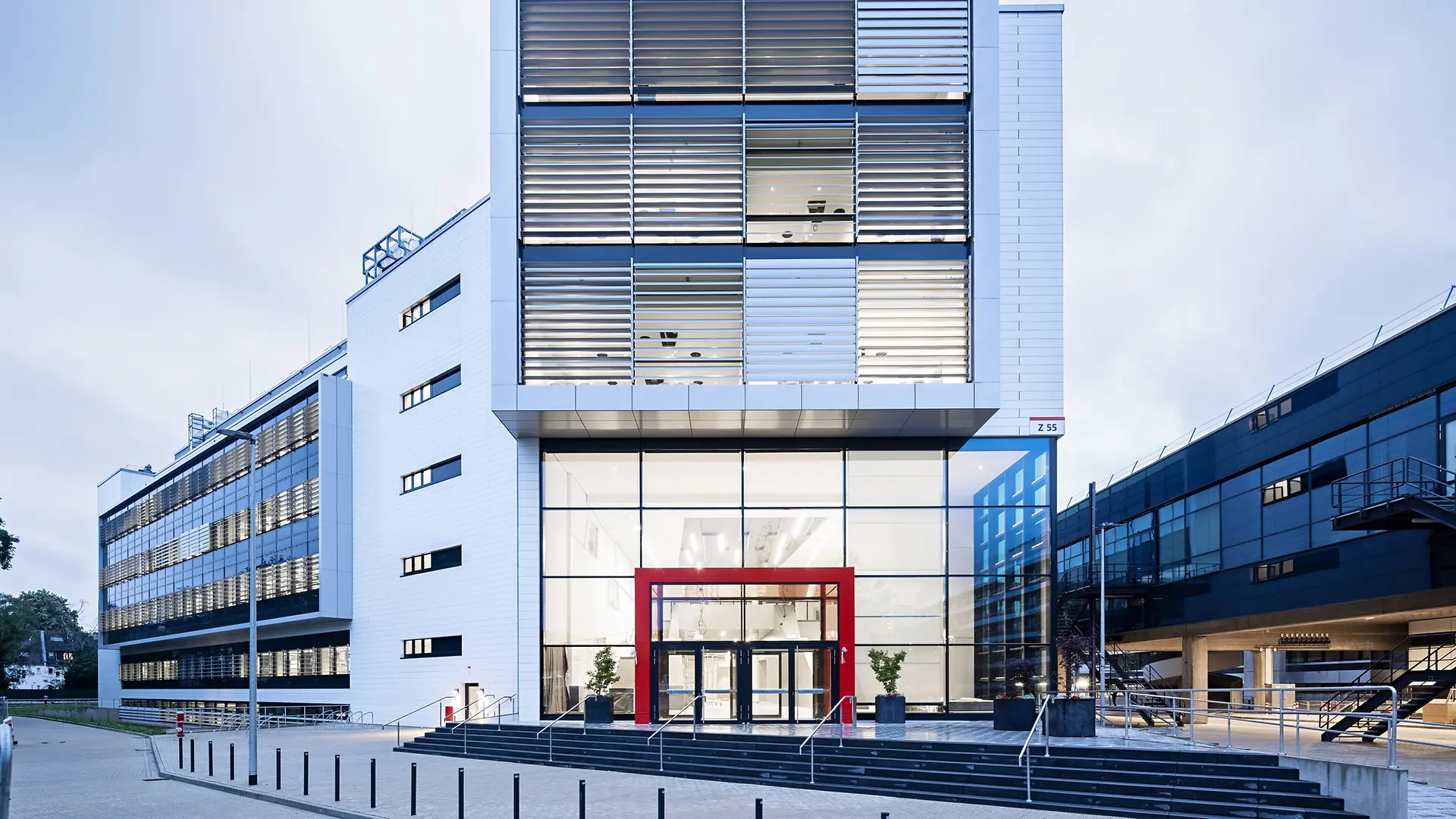
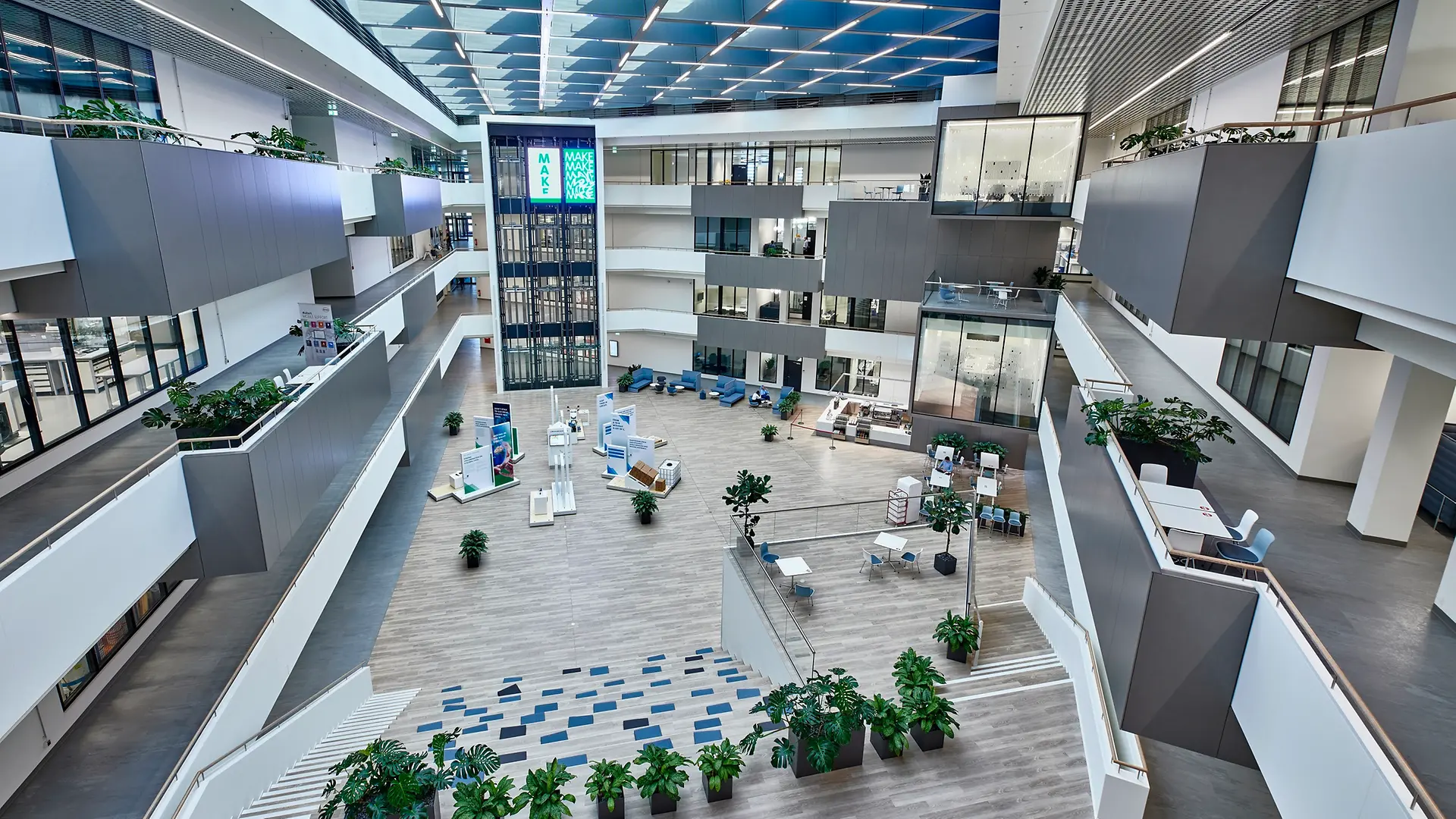
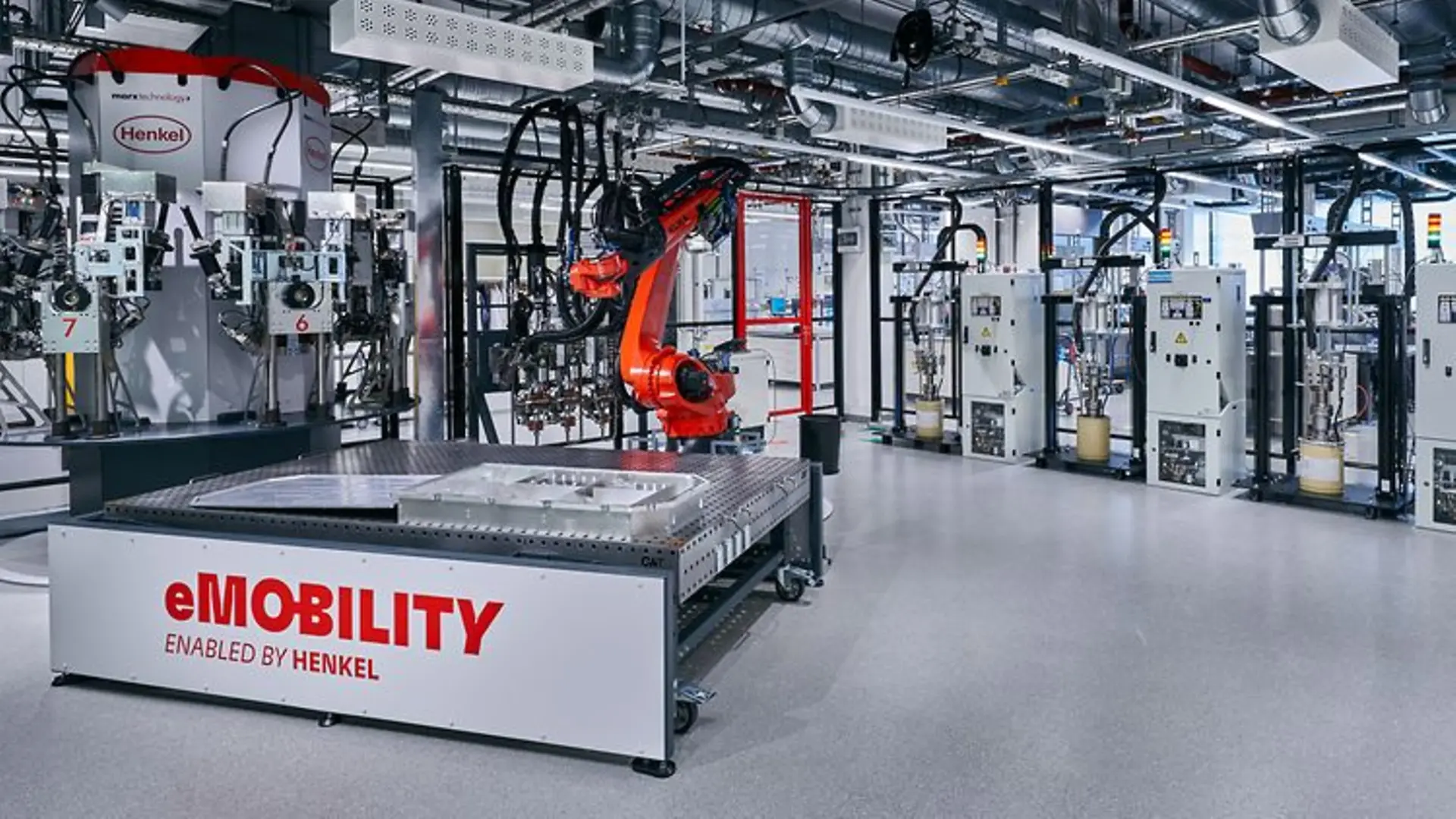
In September 2022, Henkel inaugurates the Inspiration Center Düsseldorf (ICD) for Henkel Adhesive Technologies. This unique innovation and customer center serves as a driver for innovation and collaboration with global customers.
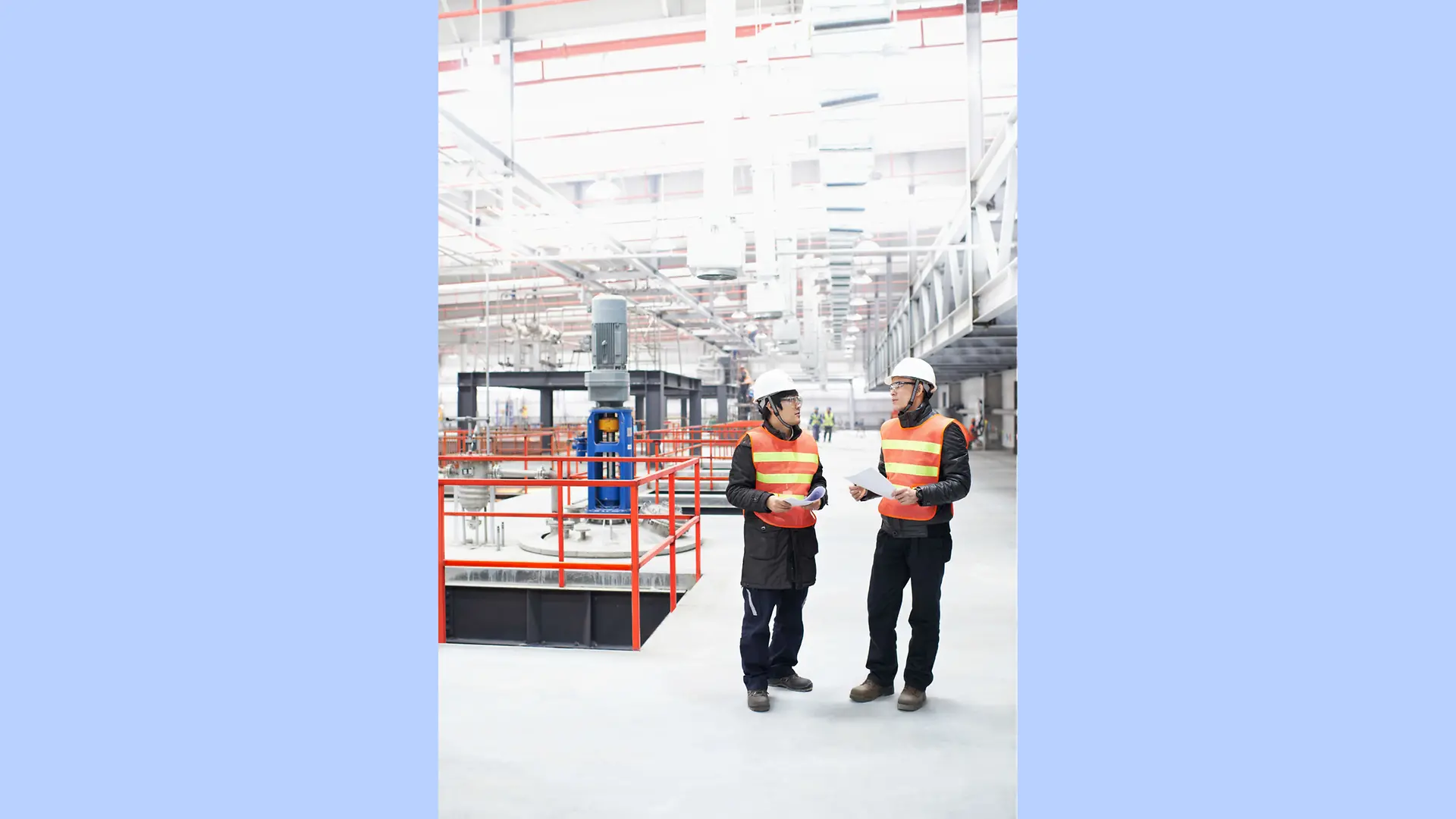
Covering 47,000 square meters, the ICD offers space for 30 laboratories, 4 technology centers, and more than 650 Henkel experts. At the same time, the new facility functions as a global customer center, where Adhesive Technologies showcases its entire portfolio of adhesives, sealants, and functional coatings, and collaborates with customers from over 800 industry segments to develop new solutions.
With the opening of the Inspiration Center Shanghai (ICS) in 2025 and the ongoing construction of the Jundiaí (Sao Paulo) site in Brazil, Henkel is expanding its global network of innovation and customer centers. Together, the Inspiration Centers serve as central platforms for developing forward-looking technologies and fostering close collaboration.
A digital symbol of Henkel’s sustainability ambitions
With the 2030+ Sustainability Ambition Framework, Henkel is advancing its strategy and ambitions for the sustainable transformation of business and society across three dimensions: Nature, Community, and Partners. One of the framework’s key objectives is achieving climate-positive production by 2030.
...for a wide range of industrial and municipal applications
1 of 2
With the acquisition of Critica Infrastructure (“Critica”), headquartered in the USA, Henkel has taken over a specialized provider of innovative solutions for composite repair and reinforcement technology. As infrastructure ages and sustainability is becoming increasingly important, the demand for repair solutions that extend the lifespan of existing facilities is growing. Consequently, maintenance and repair solutions for industrial and municipal applications are becoming ever more critical.
The acquisition of Vidal Sassoon complements the local portfolio of Henkel Consumer Brands in China, covering the premium segment of the retail business. Vidal Sassoon’s portfolio includes shampoos, conditioners, and products for styling and hair care treatments. The business holds a strong position in the Chinese market.
Henkel is strengthening its Adhesive Technologies business with the acquisition of Seal for Life Industries. Seal for Life specializes in protective coatings and sealing solutions for a variety of infrastructure markets, including renewable energy, oil & gas, and water.
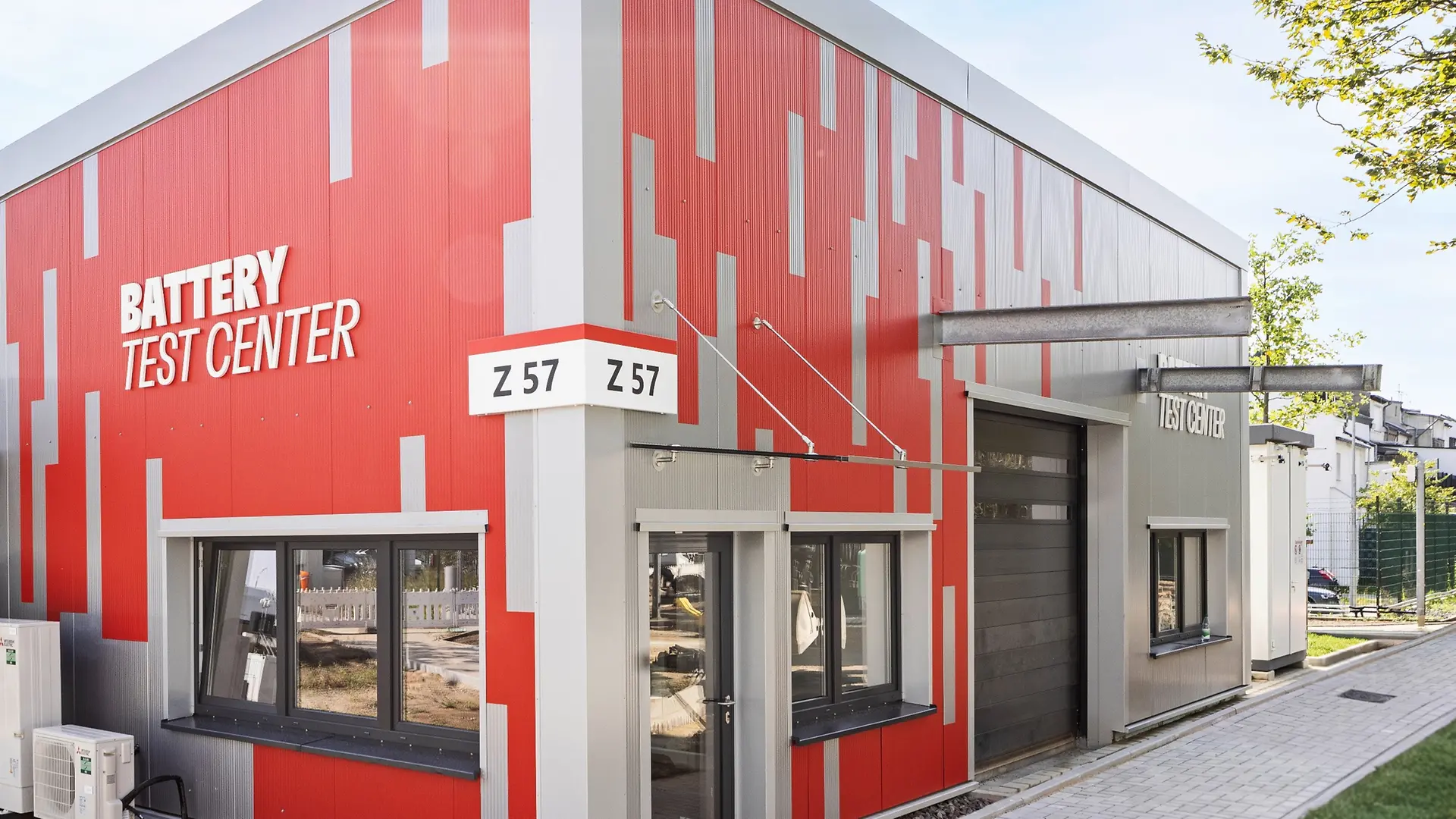
Around a year after opening the Battery Engineering Center in Düsseldorf, Henkel also puts its new state-of-the-art battery testing facility (Battery Test Center) into operation.
At the Battery Engineering Center, which is part of the Inspiration Center Düsseldorf, Henkel develops innovative battery solutions for electric vehicles in collaboration with automotive and battery manufacturers. In customized high-tech laboratories, materials are applied, battery systems are tested, and digital simulations are conducted. The aim is to enhance safety, sustainability, and efficiency while significantly reducing development times.
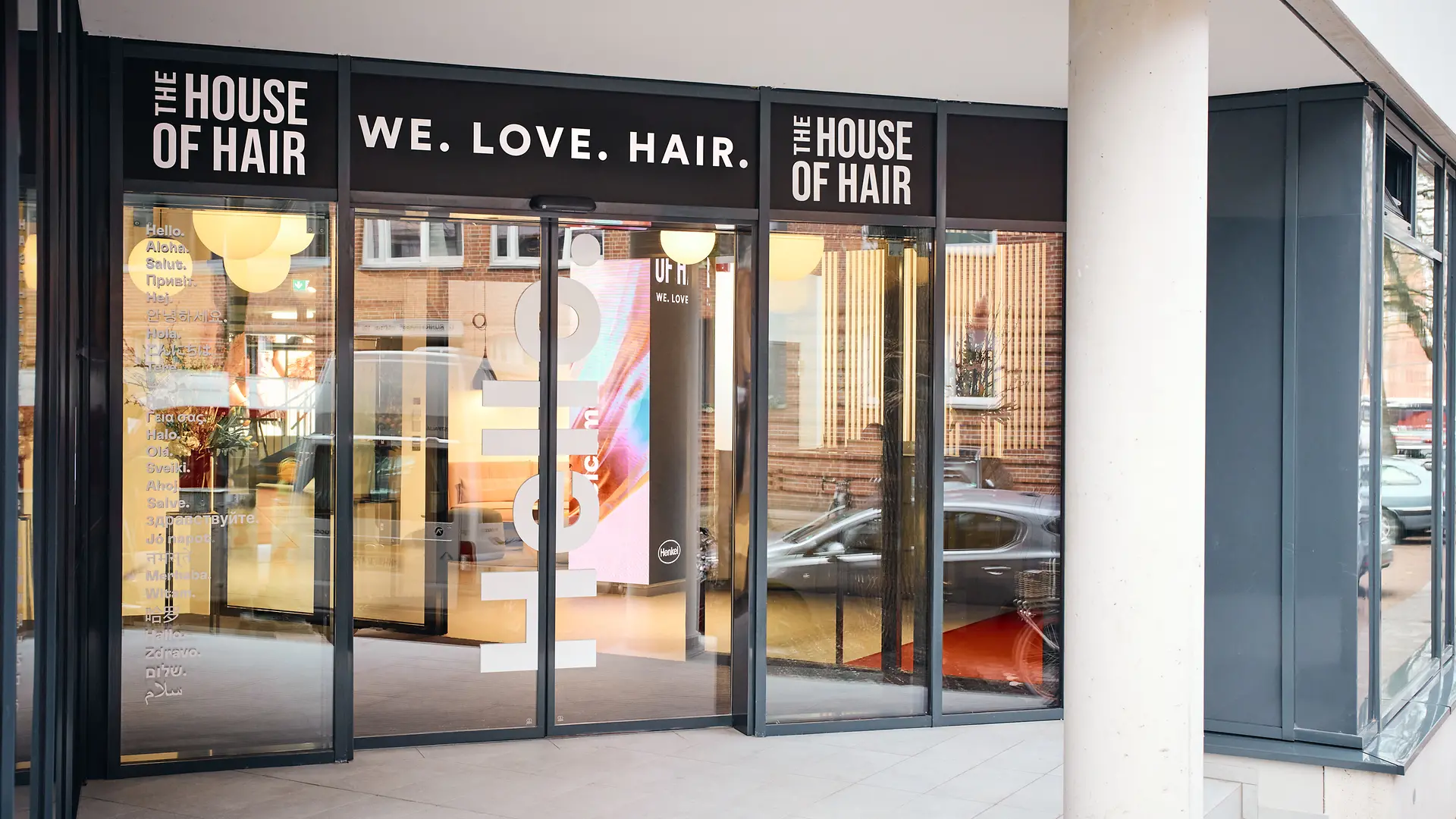
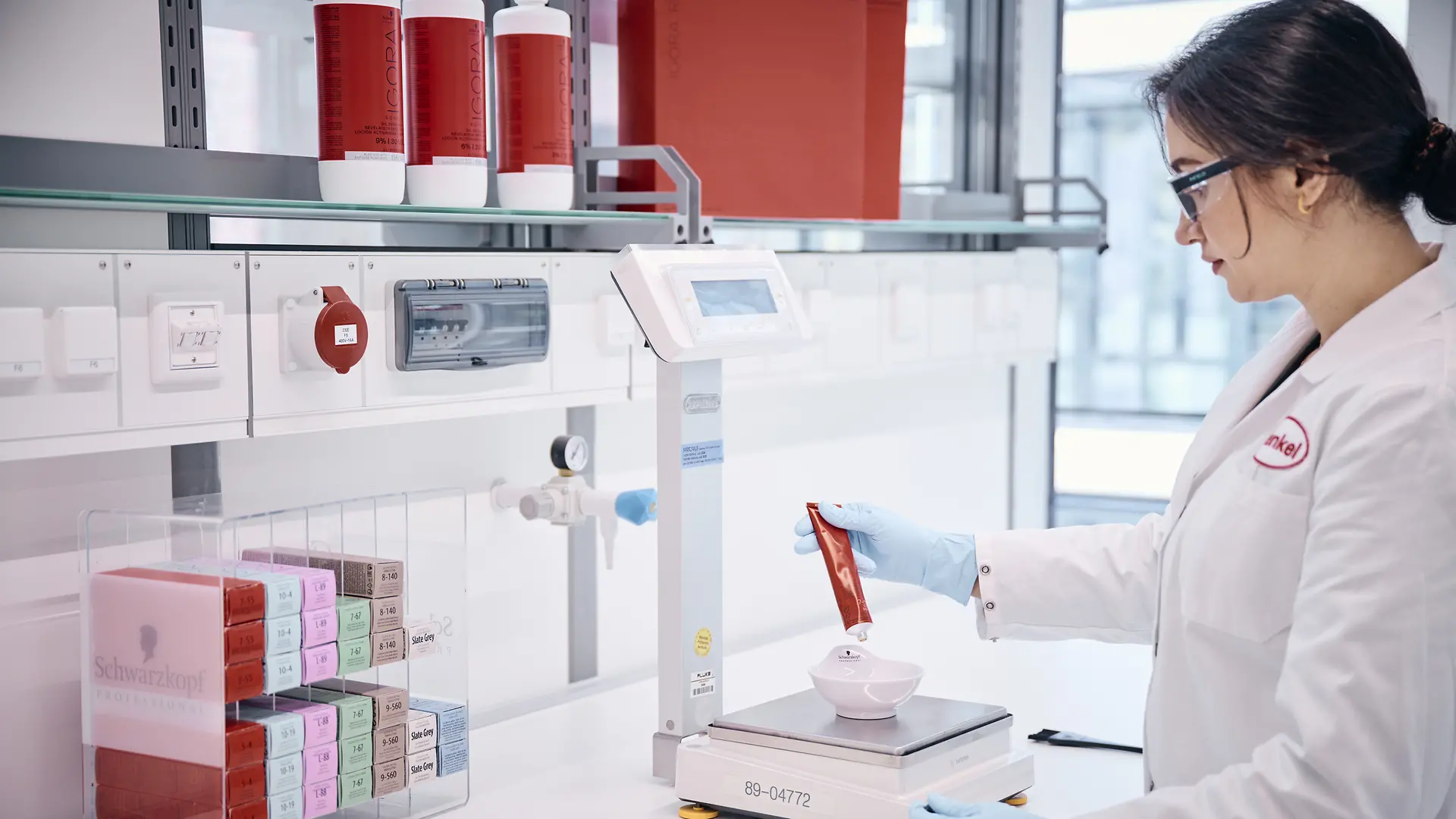
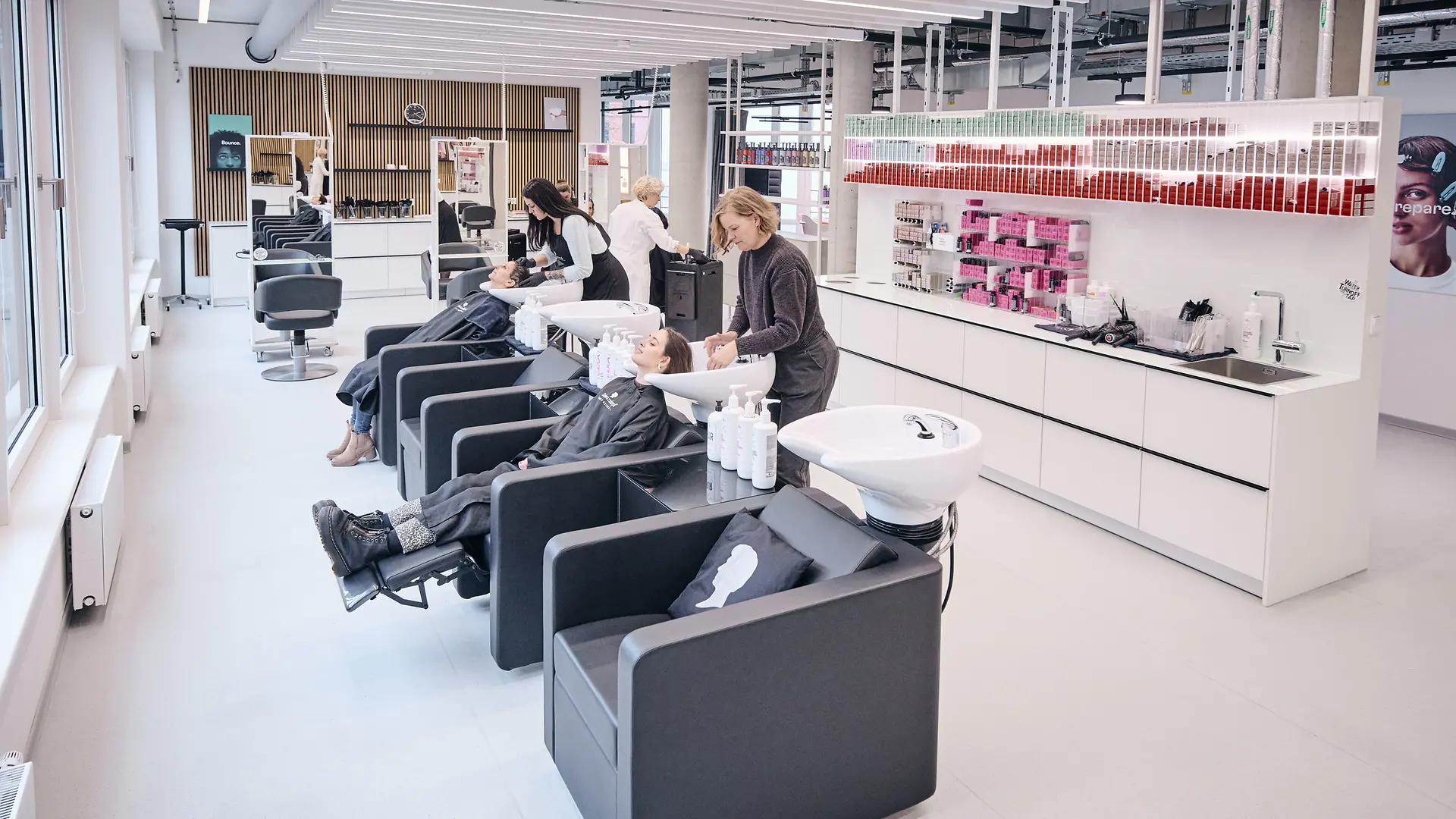
With the House of Hair in Hamburg, Henkel establishes a central innovation hub for the hair care business. Research, product development, hairdressing expertise, and brands such as Schwarzkopf and Authentic Beauty Concept are brought together under one roof. In the company’s largest test salon and the Academy of Hair, close collaboration with hairdressers and trendsetters generates new ideas and sustainable solutions.
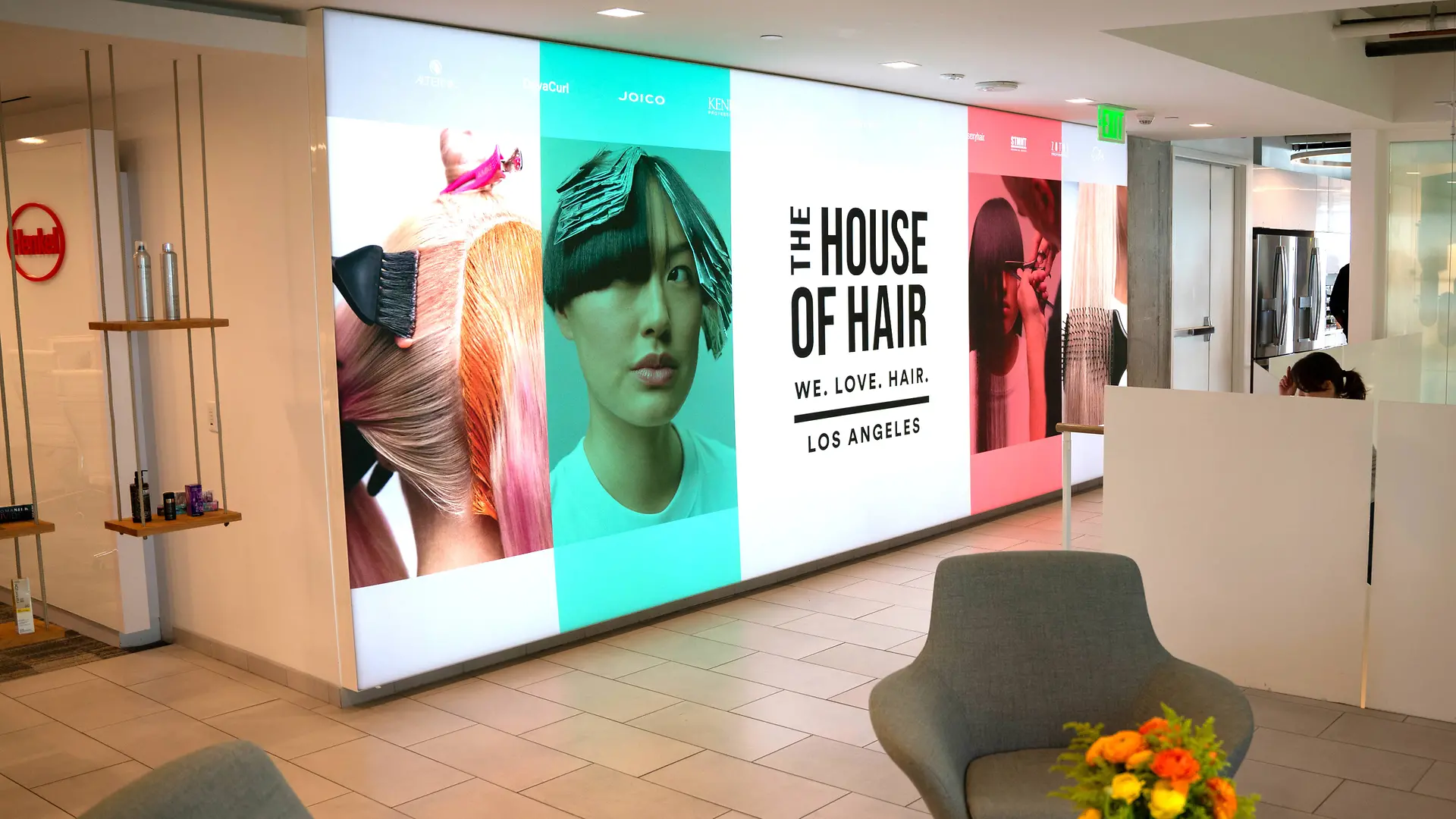
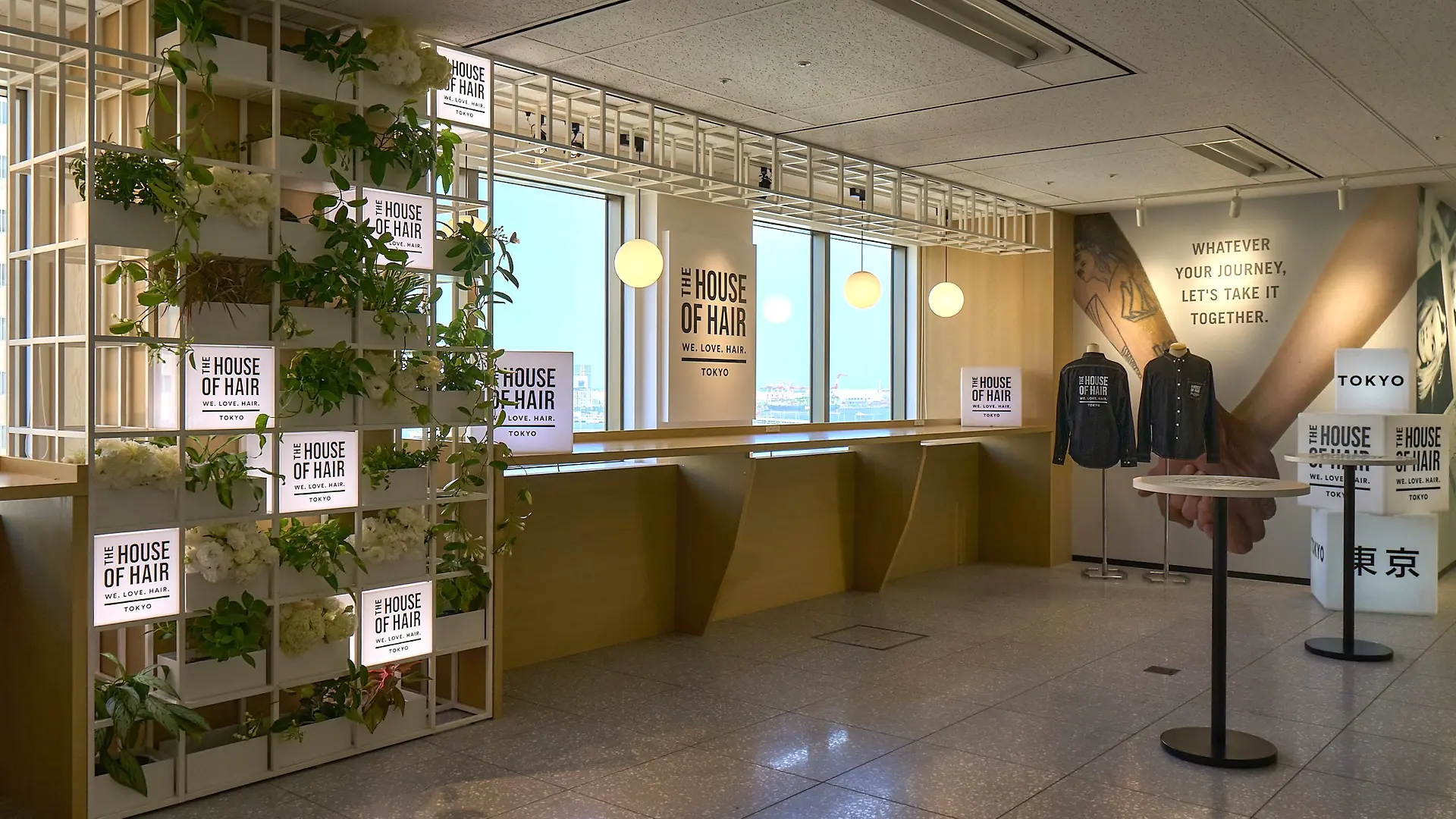
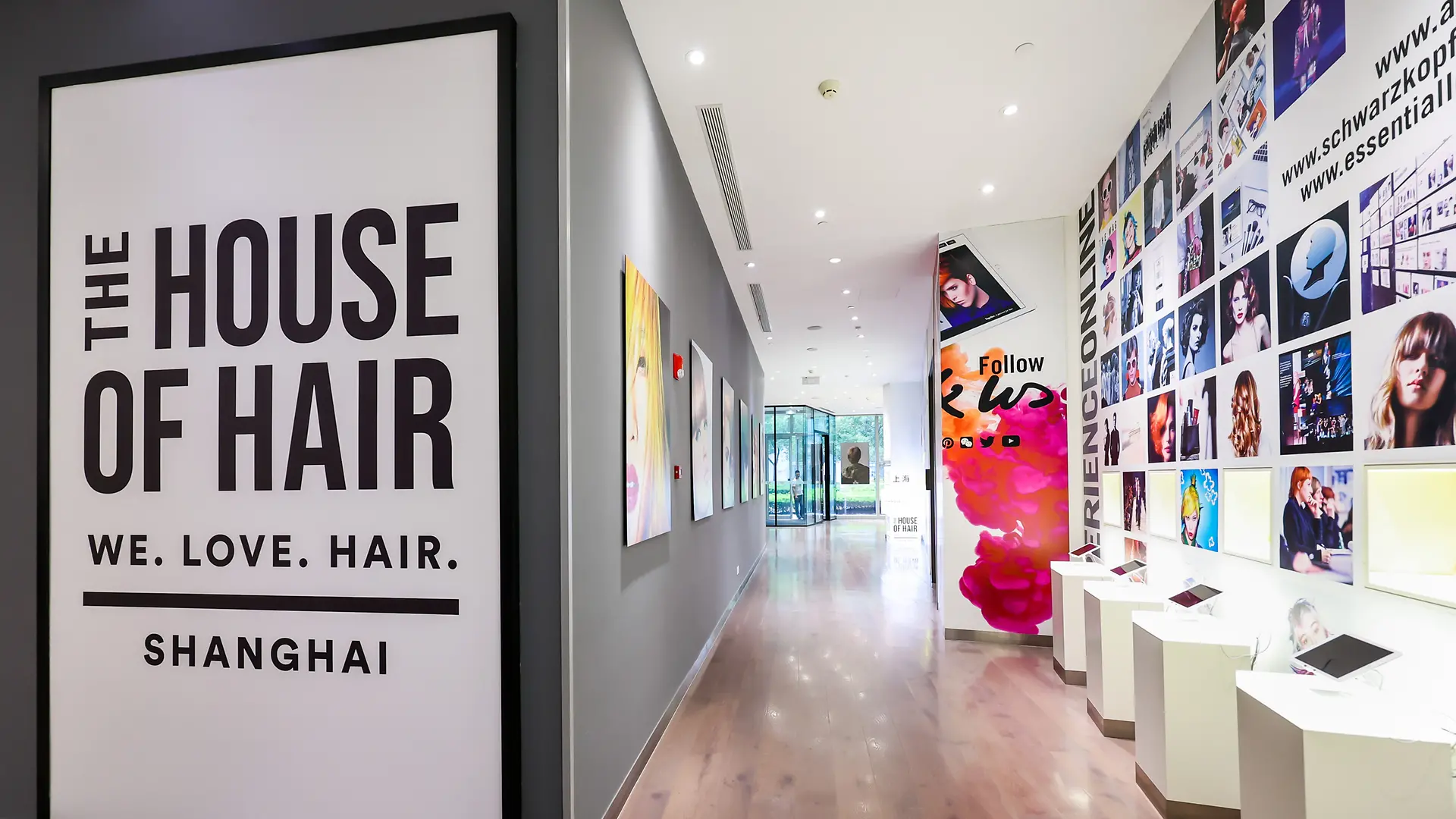
In addition to the opening of the House of Hair Hamburg in February 2025, four more locations in Los Angeles (California, USA), Guadalajara (Mexico), Shanghai (China) and Tokyo (Japan) followed the same year. Together, they form a network of innovation hubs that promote global knowledge transfer.

![A package of Perwoll detergent is positioned in the center of the poster, standing in front of two pieces of clothing. Across the top portion, the text reads: “Die Persilwerke bringen für feine Wäsche und alles Zarte” (“The makers of Persil present [a product] for fine laundry and all delicate items”). At the bottom, the slogan “Zum Säubermachen – Henkelsachen!” (“For cleaning – Henkel products!”) is displayed.](/resource/image/2064484/16x9/1920/1080/4e0394c8703e7756262189d5db160fc3/2165F6B74B62F6D7419B058C1BF5FECB/1949-plakat-perwoll.webp)