
Home is where the heart is. But big environmental footprints are often lurking in houses and buildings too. The construction sector uses a large volume of the planet’s resources, while also generating a high amount of waste and CO2 emissions. In response, governments and regulatory bodies are now sharpening their focus on the building industry – and raising expectations for more sustainable practices. Innovators at Henkel are empowering builders to get ahead of this trend by offering a growing range of bio-based, recycled and low-carbon technologies for several key points in the construction process. And they deliver outstanding performance too…
Success Story
Bio-based, recycled and low-carbon technologies that enable more sustainable homes and buildings
Short on time? Dive into the key chapter of your interest:

ETICS is an innovative solution that combines excellent performance with measurable sustainability contributions – and that’s the real future of construction.
Jaroslaw Dabrowski, Head of Market Strategy Building Construction, Henkel Adhesive Technologies

Henkel’s innovators work closely with partners from across the global construction industry to understand their needs and create outstanding adhesives for engineered wood.
Olga Golgor, Head of Sales Europe Engineered Wood, Henkel Adhesive Technologies

Our adhesives deliver trusted performance to make amazing wood construction projects possible, while also boosting safety and sustainability.
Benôit Canoine, Certification Manager Engineered Wood, Henkel Adhesive Technologies

We’re maximizing the sustainability impact of our Cool Roof technology by bringing it to more locations and adapting it to additional parts of buildings.
Ulrich Neuhausen, Director Building Construction Innovation, Henkel Adhesive Technologies
1 of 4
Buildings are more than bricks and mortar. They are emotional spaces that host big moments in our lives. However, those spaces also account for big portions of humanity’s impact on the environment. The building and construction sector is the world’s largest source of greenhouse gas emissions, generating 37 percent of global emissions.1 That enormous footprint comes from producing materials like steel or cement, transporting those materials, installing them and disposing of them when buildings get knocked down. On top of this, energy for heating or cooling also causes CO2 emissions – particularly if buildings lack insulation.
To shrink that footprint, regulators are launching increasingly strict rules and requirements for the construction and operation of buildings. Henkel is making it possible for builders and owners to comply with those new laws and grab a big competitive advantage, while saving energy and contributing to sustainability. Our portfolio of state-of-the-art technologies for building materials covers key elements of the construction process and reduces the environmental footprint in a wide variety of ways.
How exactly are Henkel solutions making homes more sustainable? Read more…
How innovation reduces the carbon footprint
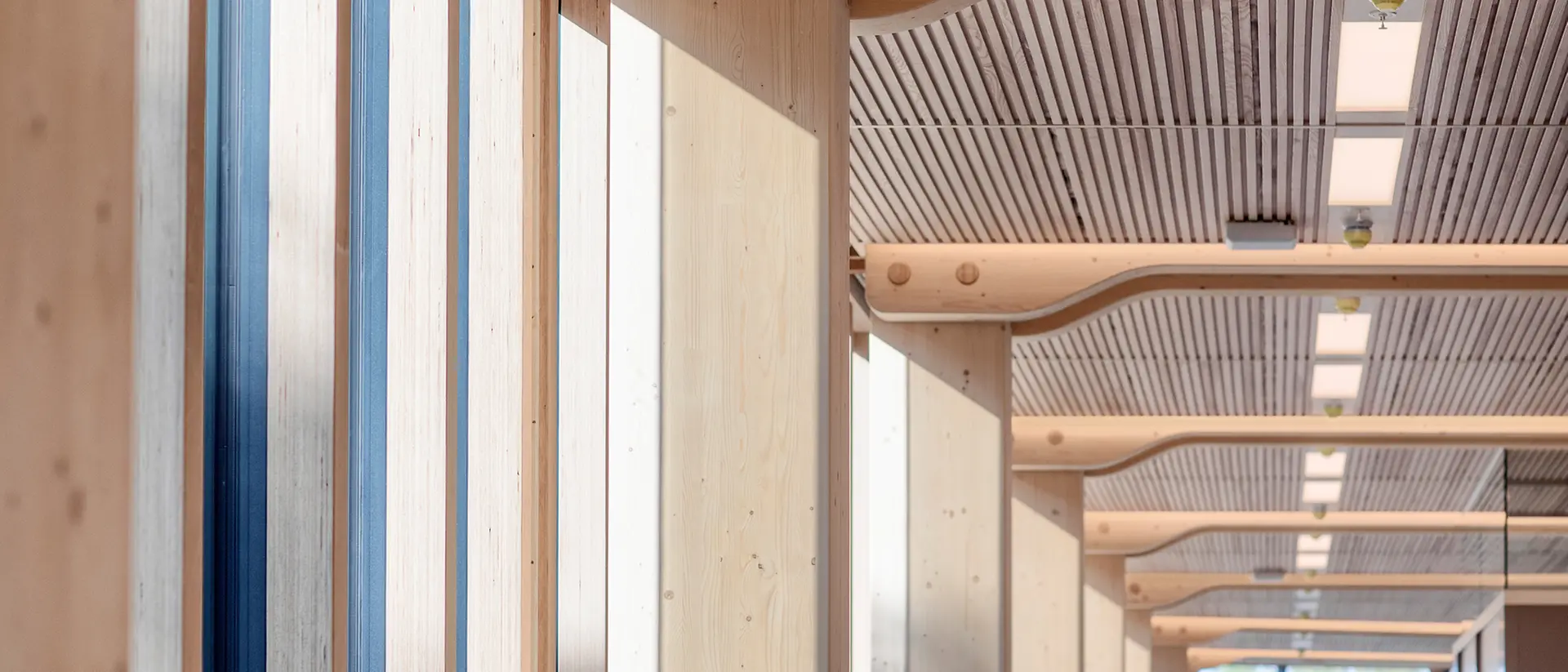
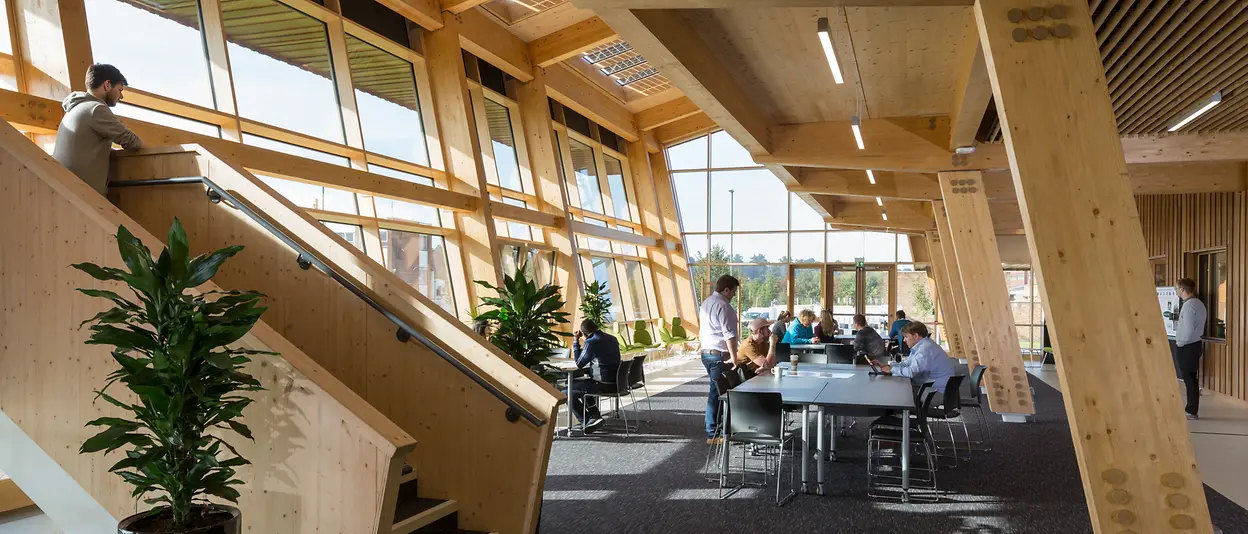
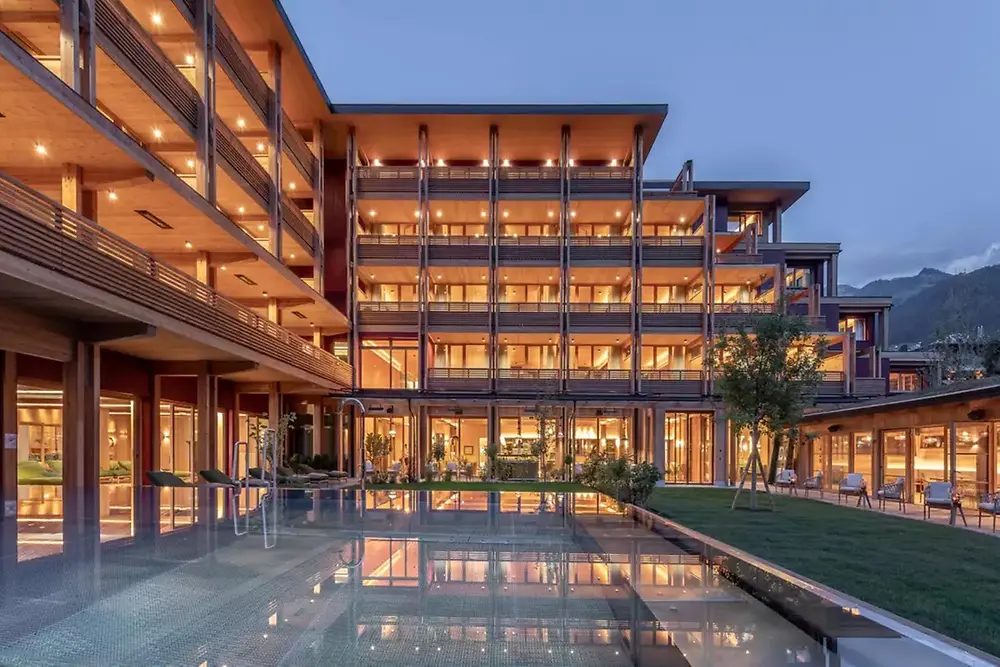
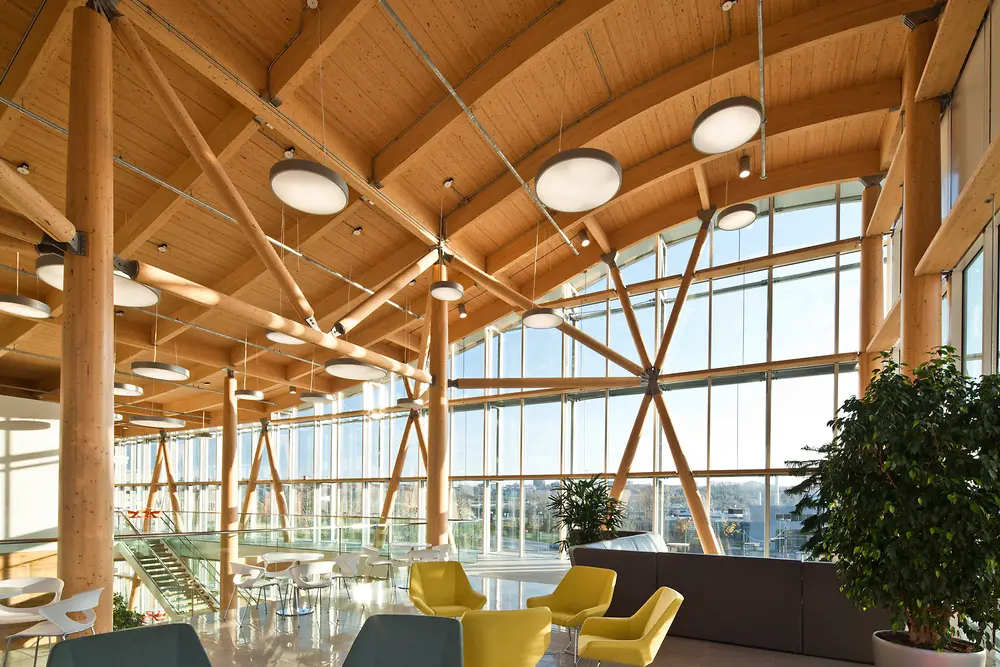
Concrete, bricks and steel are responsible for a big chunk of the environmental footprint from construction. That is why many architects and builders are switching to engineered wood instead, which has a smaller footprint because trees remove CO2 from the atmosphere. Cross-Laminated Timber (CLT) and Glued-Laminated Timber (GLT) are gaining popularity as replacements for traditional materials. Henkel is a leading provider of structural adhesives for wood construction. And many of our solutions for bonding timber now also have a smaller environmental footprint than standard glues because they contain bio-based raw materials instead of fossil-derived raw materials.
Two bio-based products are the latest additions to Henkel’s portfolio – and they both achieve the same performance as fossil-based technologies. LOCTITE HB S ECO is a one-component polyurethane (PUR) adhesive that is free of volatile organic compounds and solvents. 63 percent of the organic mass of this product is linked to bio-based materials that are certified in line with the ISCC PLUS Mass Balance approach. It reduces CO2 emissions by 66 percent compared to conventional adhesives from our LOCTITE HB S line.2
The second sustainable innovation, LOCTITE CR 821 ECO, is a two-component PUR resin for bonding structural wood to metal. It offers 62 percent3 lower CO2 emissions than the fossil-based version of this adhesive and 71 percent of the organic mass of the product is linked to bio-based materials.
66 %
reduction in CO2 emissions with LOCTITE HB S ECO compared to conventional adhesives from our LOCTITE HB S line.4
10-year
guarantee is offered by Cool Roof technologies for waterproofing and sunlight-reflective performance.
>25
million square-meters of ETICS technologies get installed worldwide each year.
Henkel's Cool Roof portfolio beats the heat
The construction industry is impacting the climate. But the climate impacts constructions too. Sunlight heats up buildings and causes people to switch on air conditioning, which consumes more energy and generates more CO₂ emissions. That means roofs of buildings play a key role in making homes more sustainable – particularly flat roofs in countries close to the Equator that get many hours of powerful sunshine each day.
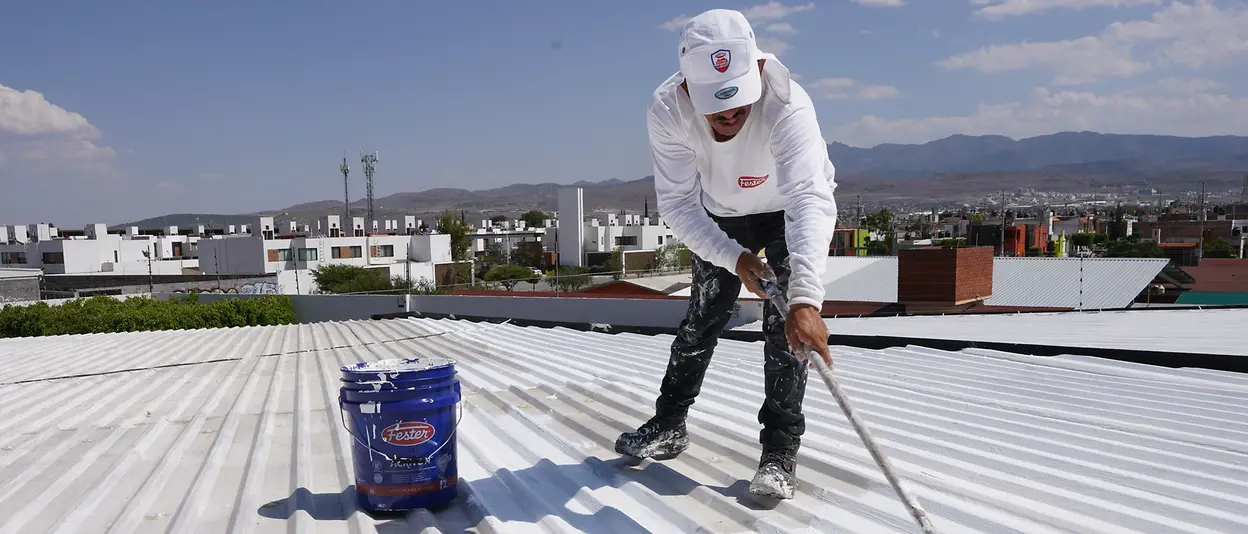
Henkel offers a wide range of sustainable technologies from its Cool Roof portfolio in selected markets. These paint-like products reflect sunlight, while also waterproofing and insulating buildings. Our latest addition to this range, Fester Acriton Green Shield, is a water-based solution that protects homes against rain and heat – while protecting the environment too. It is proven to reflect more than 85 percent of UV light from the sun and can reduce the surface temperature of a roof by up to 20 degrees Celsius compared to unprotected concrete roofs. That enables significant energy and cost savings for air conditioning, while also ensuring comfortable conditions for people inside.
On top of this, the innovative formula for Fester Acriton Green Shield features a range of additional sustainability benefits. The insulation and reflection performance of this technology, for example, is achieved via a special formula that includes micro-spheres and recycled thermoplastic. The solvent-free and ammonia-free formula also supports the reuse of rainwater in countries that experience water shortages. Rainwater can be collected from the waterproofed roof and used for watering plants, for example.
External surfaces: The key to energy savings
Henkel technologies are keeping roofs cool. They are also doing important work to save energy by insulating the walls of homes and other buildings. Our broad portfolio of External Thermal Insulation Composite Systems (ETICS), which we offer in selected markets, is applied to outside walls and helps to ensure a comfortable temperature inside. In this way, these products cut costs and reduce energy consumption for heating and cooling homes. They also protect the structure against rain, frost and other weather conditions. And they even help homeowners get a better price when they sell properties by boosting the score on the Energy Performance Certificate (EPC), which provides a standardized indication of a building’s energy efficiency.
Recently, scientists developed new and even more sustainable solutions for Henkel’s ETICS portfolio. Ceresit CT 48, CT 49 and CT 54 are façade paints that form the top layer of this building insulation system. 50 percent of the dispersion binder is based on emulsions containing materials that are certified in line with the Mass Balance approach from REDcert. Biomass materials are obtained from the planet’s natural ecosystem and are fully renewable. With this step, we have now swapped 20 percent of the product´s fossil-based materials for more sustainable ingredients that offer a much lower CO₂ footprint.
Importantly, these sustainable technologies also look great on the outside of homes and buildings. Ceresit offers solutions for all types of architectural designs, construction materials and aesthetic preferences. That includes solutions in every possible color and texture, with added functions such as resistance against mold, extra durability or slim designs for crowded spaces. That means homeowners can help protect the planet – while living in style.
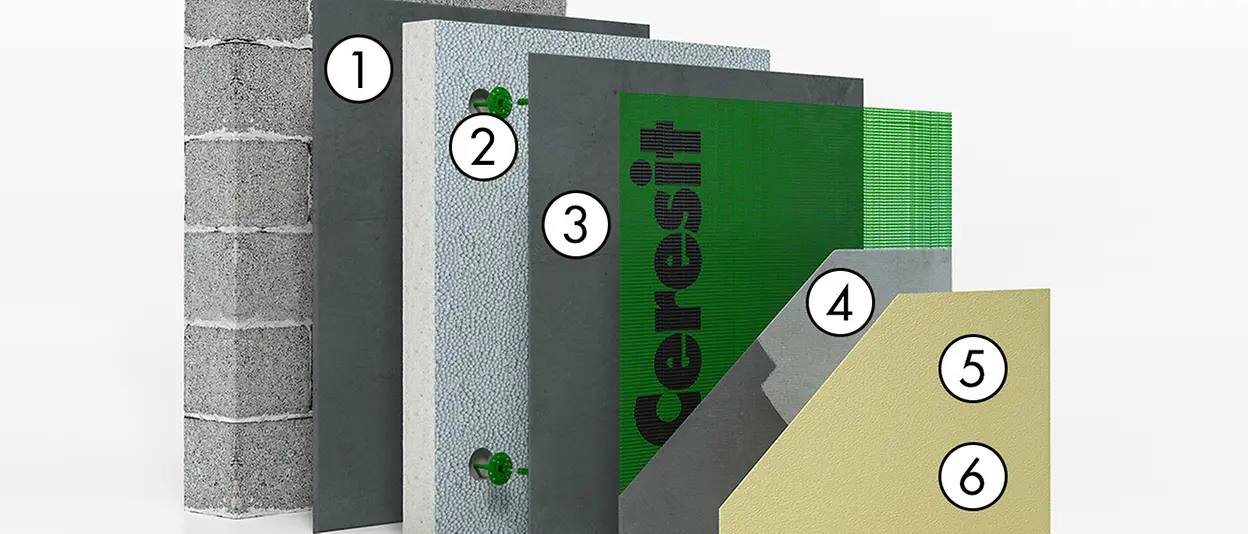
- Fixing: Ceresit ZS / Ceresit CT 83 Strong Fix / Ceresit CT 84 Express Plus
- Insulation material: EPS boards
- Reinforced layer: Ceresit ZU / Ceresit CT 85 Flex and Ceresit CT 325 Glass Fibre Mesh
- Priming paint: Ceresit CT 16 Quartz Contact Priming Paint
- Plaster*: Ceresit CT 74 Silicone/ Ceresit CT 76 Solar Protect
- Paint*: Ceresit CT 48 Silicone Self-clean / Ceresit CT 49 Silicone Reno
* Alternative Ceresit plasters: Mineral, Silicate - Silicone, Silicone, Silicate, Elastomeric
Find out more about system details.
The future is now
These bio-based, recycled and low-carbon technologies from Henkel are helping construction companies and craftspeople to embrace more sustainable practices. They are just a few selected examples of our latest innovations that directly respond to insights from the market. Our technical experts work side by side with partners from every step in the value chain to understand the specific challenges they face – and develop high-performance solutions that make a measurable contribution to protecting people and the planet.
That work also requires our teams to anticipate changing technologies, regulations and preferences. Right now, we are exploring ways to reuse the Cross-Laminated Timber and Glued-Laminated Timber elements for another building and reduce its carbon footprint. We are exploring solutions to enable timber construction materials made from a wider variety of wood species. In Europe, we are launching a new fire-resistant range of LOCTITE HB XE adhesives, taking timber construction to new heights of design and safety. In Switzerland we are building an Application Center for Engineered Wood that will provide extensive know-how through customer process simulations, advanced in-house training and debottlenecking to accelerate development and certification. And we are collaborating with thought-leaders to find fresh ways of applying our sustainable technologies to new parts of buildings to expand their positive impact on saving energy, reducing emissions and decreasing waste.
Buildings are more than bricks and mortar. They also have the potential to make a powerful contribution to sustainability. That is what we are working on. And we have already achieved exciting progress.
1 UN Environment Programme | Report: Building Materials And The Climate: Constructing A New Future
2, 3, 4 Carbon footprint calculation estimated cradle-to-gate from Henkel’s internal LCA assessment, excluding emissions in the use phase and end of life. Due to accounting for biogenic CO2 uptake and other net biogenic emissions in constituents of our adhesive, shown CO2 impact can be used only on product level, not on corporate level. Further details are required to derive resp. claims for customer-specific reporting.

Visit our Global
Innovation Centers
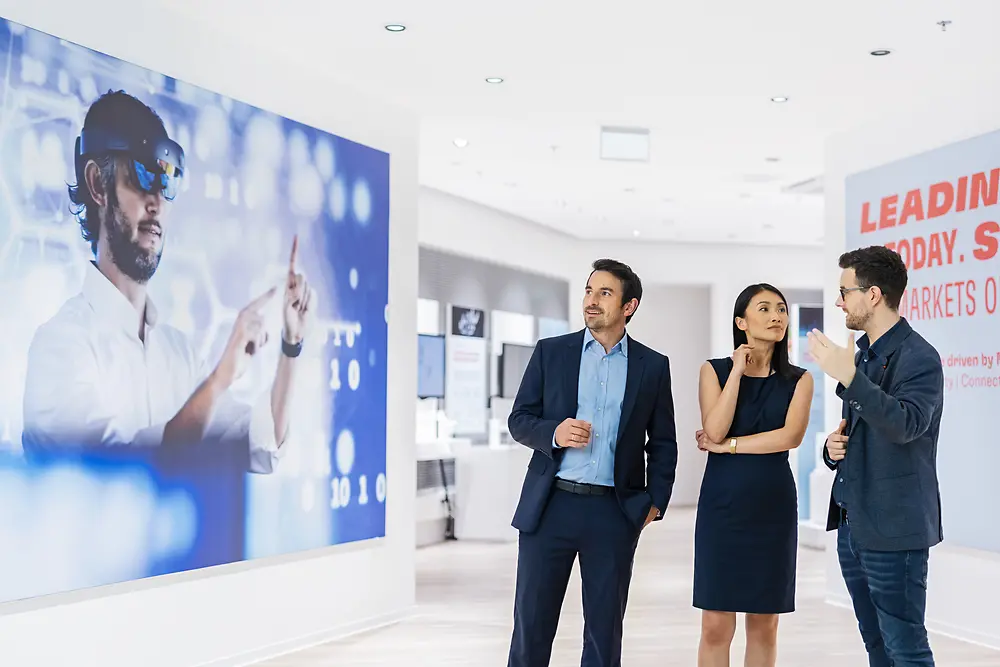
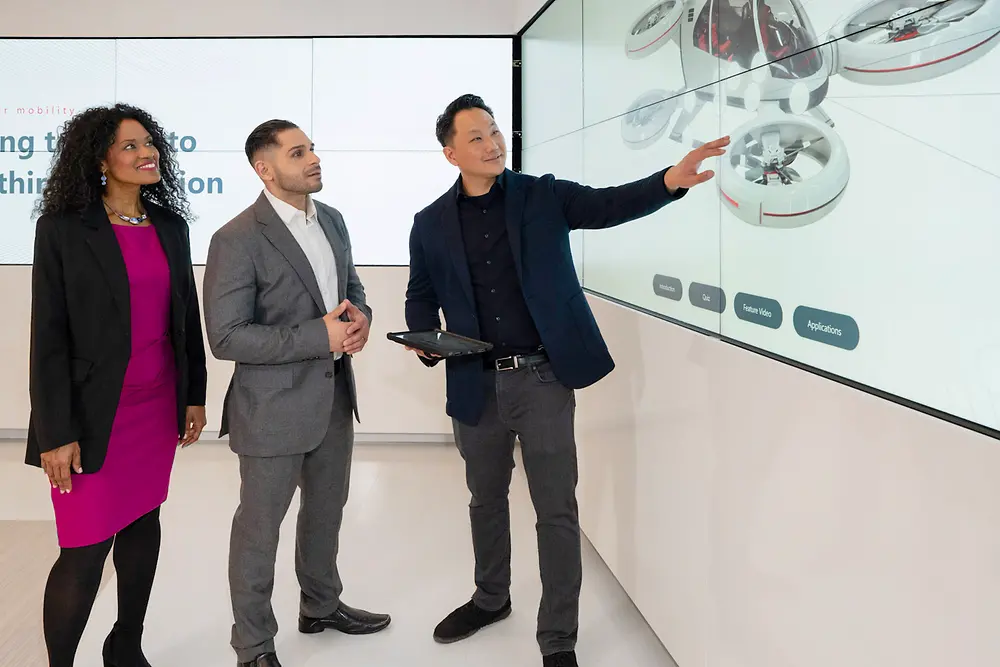
Gain hands-on experience with our latest innovations. Our experts will guide you through our cutting-edge technologies and help you develop customized solutions that meet your specific needs.


1 of 4
OUR SOLUTIONS
EXPLORE HOW
WE MAKE IT HAPPEN
Discover more about how we drive innovation and sustainability and explore even more success stories on the megatrends that inspire us.
MORE ABOUT
ADHESIVE TECHNOLOGIES
Discover the brand portfolio of our Adhesive Technologies business and learn more about the industries we operate in.