
As a global leader in adhesives, sealants and functional coatings, Henkel Adhesive Technologies is constantly driving sustainability based on its Sustainability Ambition 2030. The business unit aims to strengthen its leadership position in this area by constantly improving transparency on the sustainability impacts of individual products as well as on portfolio level. Based on reliable data and an assessment method in accordance with international standards, Henkel is building the basis for its portfolio transformation and enhances the sustainability impacts of its customers.
Feb 3, 2026 Düsseldorf / Germany
Adhesive Technologies accelerates end-to-end integration of sustainability and expands transparency towards customers
- Sustainability integration: Henkel strengthens sustainability integration into business steering and balances traditional value drivers with environmental impact
- Transparent methodology and audited results drive portfolio transformation: Newly updated assessment framework classifies products alongside sustainability performance with stricter criteria
- Enhanced transparency: The Henkel Environmental Assessment Reporting Tool (HEART) now includes use-phase emissions for greater transparency
- Customer value: New digital tools provide data-driven insights to help customers reduce emissions and optimize performance while using Henkel products
Embedding sustainability in business steering and decision-making
Since 2023, Henkel has translated its sustainability ambition into a comprehensive portfolio assessment methodology. According to the methodology, products are categorized along the value chain into four sustainability classes across sustainability topics – climate, circularity, safety, and nature – creating a clear organization-wide understanding of the sustainability performance of products across the entire portfolio. This approach is building the foundation to embed sustainability into business decision making and steering processes.
Recently, the method has been updated to reflect stricter criteria for the four sustainability classes and to ensure alignment with evolving regulations, customer expectations, and Henkel’s net-zero and responsible chemistry approach. The outcomes were audited by an independent third party. The results from 2023/2024 confirm that the first integration measures are delivering impact, marking an important step towards a well-balanced and future-ready portfolio.
For more information on the sustainability portfolio assessment and results please read the final practitioner report of 2025.
The Henkel Adhesive Technologies portfolio transformation approach is based on reliable data and a consistent measurement methodology. To ensure transparency on the sustainability impacts of individual products, the company has launched the Henkel Environmental Assessment Reporting Tool (HEART) in 2024. HEART automatically calculates cradle-to-gate Product Carbon Footprints (PCFs), enabling Henkel to share verified data with customers, while accounting for emissions associated with raw materials, production processes, packaging, and logistics. HEART has become a cornerstone in the transparency strategy, unlocking new collaboration potential and value for Henkel’s customers.
Building on HEART platform success – expanding to use-phase emissions
The launch of HEART has been a great success with a continuously growing acceptance and adoption among Henkel´s broad customer base. To date, more than 8,000 PCF reports have been exchanged with Henkel’s customers, providing valuable insights for sustainability-driven decision-making. HEART covers 71,000 products, offering industry-leading granularity and accuracy, and is verified by TÜV Rheinland in compliance with Together for Sustainability (TfS) and ISO 14067 standards.
Drawing on years of on-site experience from Henkel experts, Adhesive Technologies has now extended HEART’s scope beyond cradle-to-gate to include emissions generated during industrial processing or applying of adhesive products (use-phase). This new capability acknowledges that these emissions are closely connected to customer operations, energy demand, and overall sustainability performance. Through new digital tools, Henkel experts can model the use-phase of products based on each customer’s specific application conditions. This allows them to identify more sustainable product choices with lower energy requirements, reduced operational costs, and significantly lower emissions.
Currently available for general bonding and surface treatment products, the use-phase tool covers up to 75% of the use-phase emissions associated with Henkel Adhesive Technologies products. With these insights, Henkel can now provide all relevant customers with data-driven recommendations to reduce their emissions, optimize process performance, and support the transition to more sustainable product solutions across its portfolio.
“Henkel is committed to further drive the sustainability transformation of the adhesive industry, and these developments mark another important milestone in our journey,” added Ulla Hüppe, Vice President Sustainability at Henkel Adhesive Technologies. “By strengthening the link between sustainability and business steering, we aim to unlock even greater alignment and value creation. In addition, we constantly enhance our ability to provide customers with the data needed to improve their sustainability as well. Transparency, collaboration, and innovation will remain the core pillars of our comprehensive efforts.”
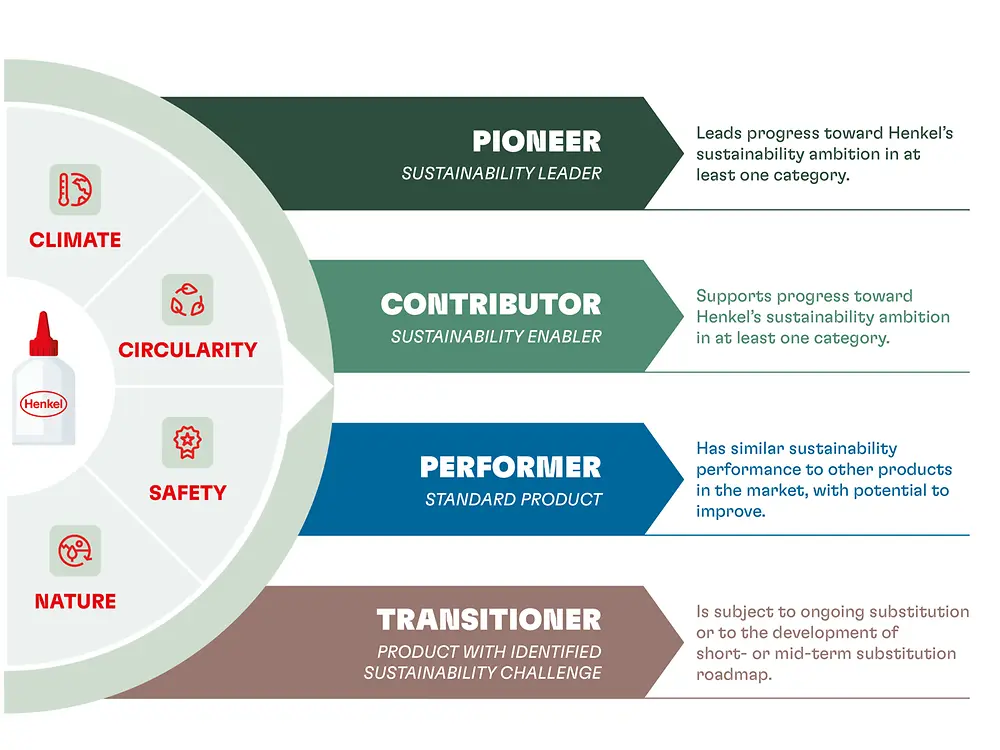
Henkel has translated its sustainability ambition into a comprehensive portfolio assessment methodology, and the outcomes were audited by an independent third party.
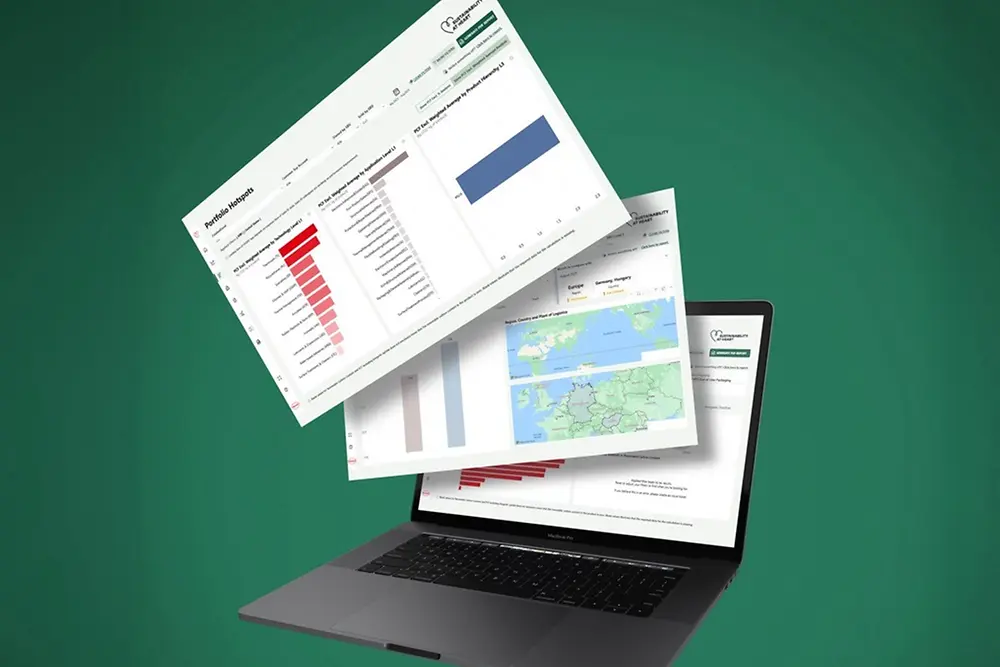
Henkel´s successful HEART-tool now also calculates use-phase emissions of products.
1 of 2
