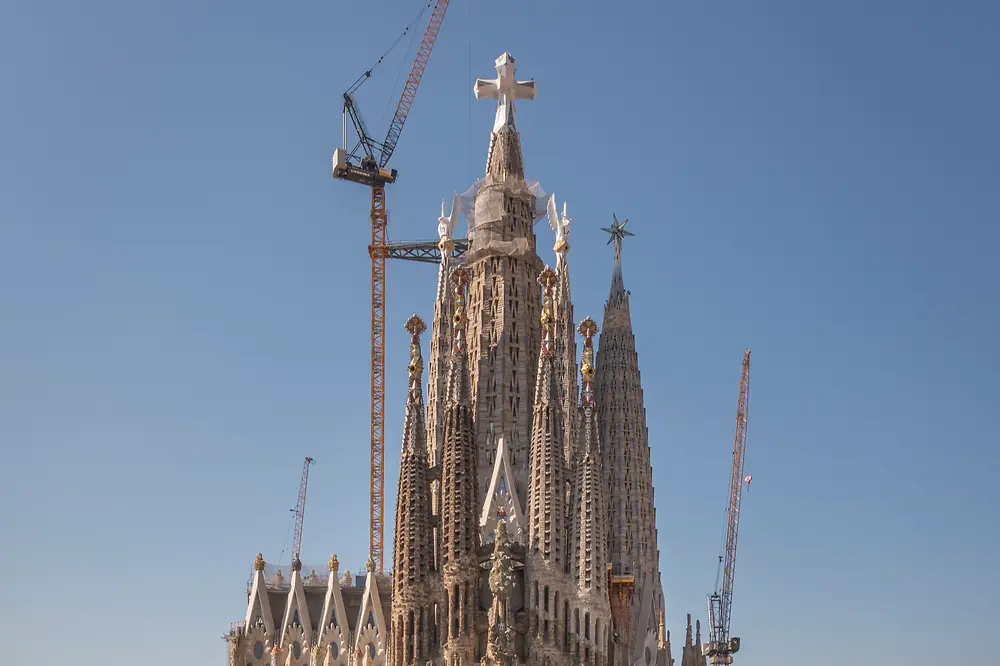
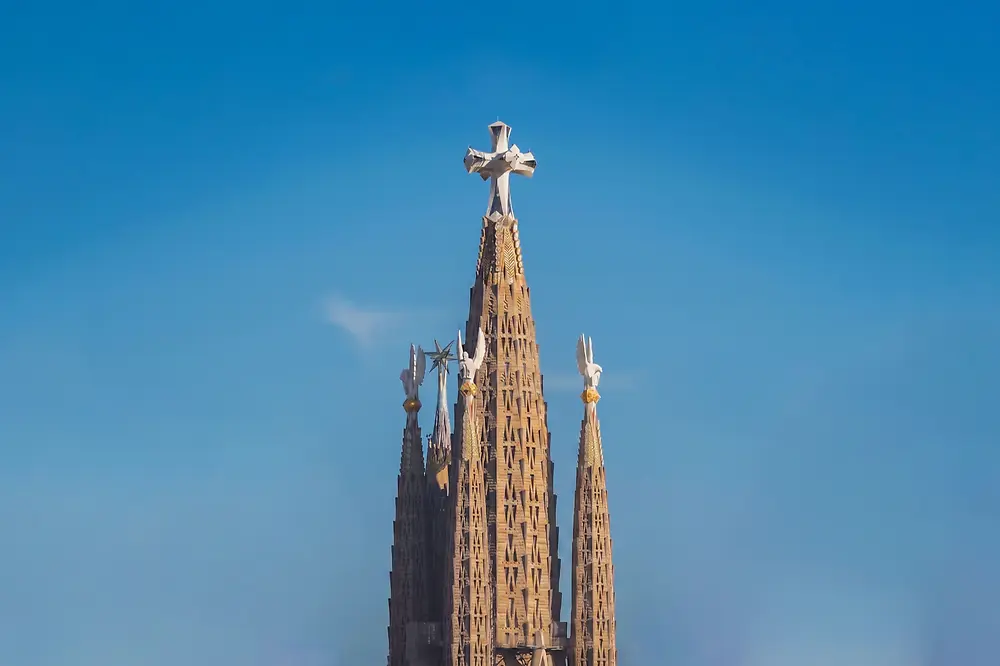
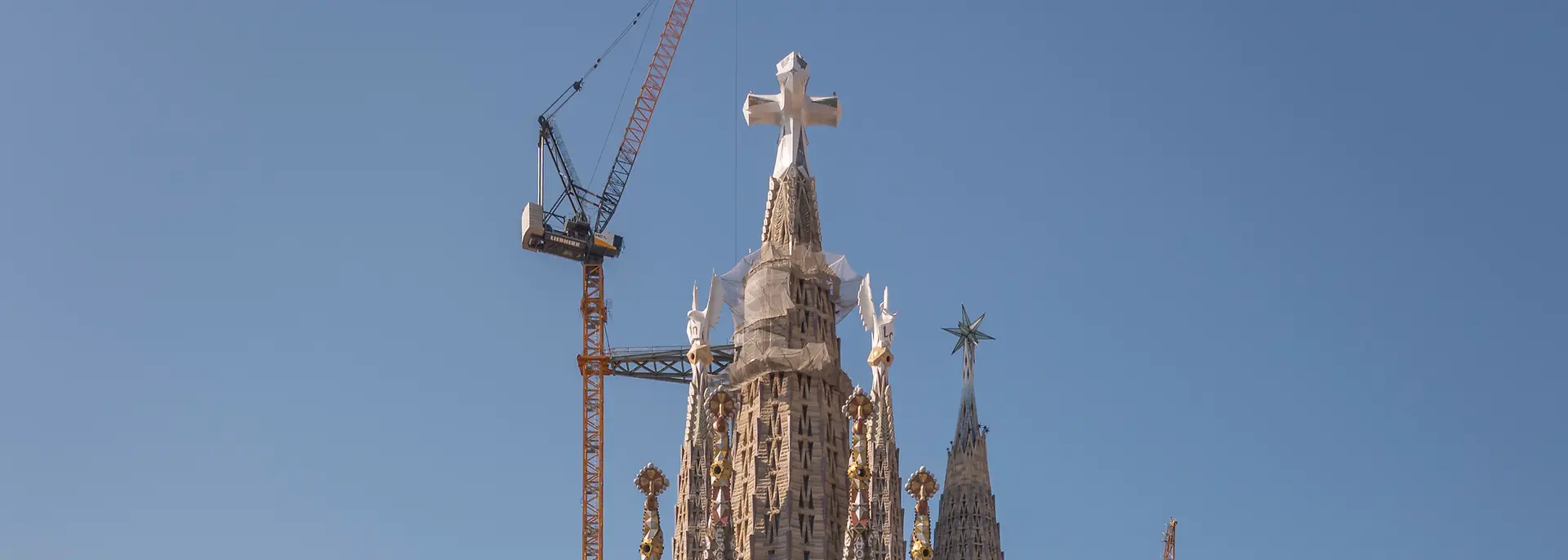
It has been under construction since 1882, across generations following a design so far ahead of its time that the technology took decades to catch up. In 2026, the moment has come: the central Tower of Jesus Christ is being completed. At 172.5 meters, the basilica is now the tallest church in the world.
Interview
A great source of pride
Some structures need no explanation. You say the name, and an image appears.
The Sagrada Familia is one of them.
In this interview, you will learn:
> How Begoña's career path led her to the Sagrada Familia project
> How adhesive technology helped bond stone and steel in the Sagrada Familia's central towers
> How engineering has become a more inclusive profession over the course of Begoña’s career
> Why contributing to the Sagrada Familia is a source of pride for her personally
Behind the construction of the Sagrada Familia are many people whose contributions often go unnoticed. Begoña Cantera is one of them. The engineer works at Henkel in Barcelona, her home city, and for more than a decade she was the technical point of contact for one of the most delicate engineering challenges of the entire build: how to bond stone and steel in the six central towers so that they behave as a single component.
Talking to Begoña about her work, one word keeps coming back: pride. It is a theme that resonates throughout the entire project, because the Sagrada Familia itself is something of a monument to pride, a design that once seemed barely achievable, and that became real all the same, because people contributed to it over generations.
Her own story carries the same thread. There is pride in a career begun 25 years ago, when women in engineering were still the exception, and evolved step by step in a field that has gradually become more open. There is pride in the craft itself, in applying an existing technology to a challenge that required extensive testing and project-specific validation. And there is pride in having contributed to a landmark that means far more to her city than architecture alone. These are three different expressions of pride, coming together in Begoña’s story.
Seen through that lens, the story becomes about more than adhesives alone. In our conversation, Begoña shares her perspective on continuity, the evolution of her field, and what it means to be part of something far larger and far longer than any single career.
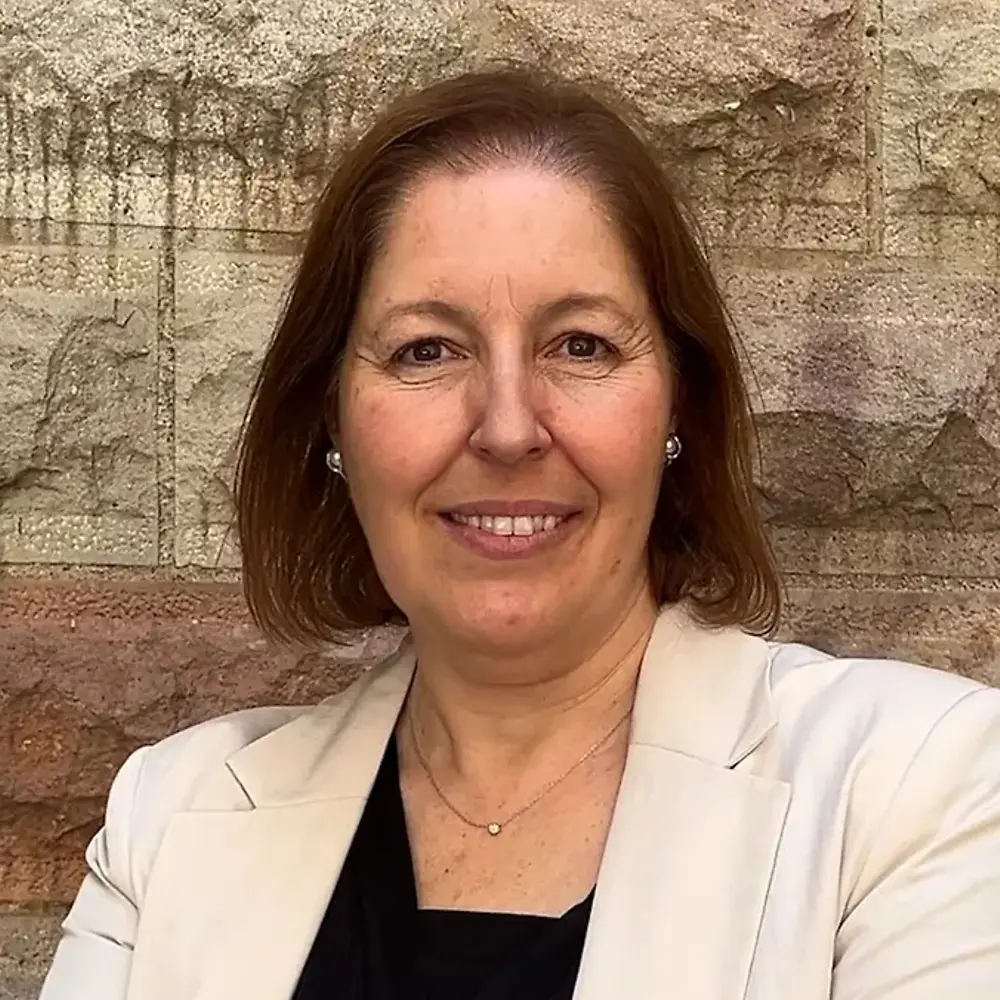
Being able to contribute with our technology and knowledge from Henkel to a project of this scale is truly impressive.
Begoña Cantera, Territory Sales Engineer at Henkel
Begoña, how did you come to engineering in the first place?
Begoña: I studied chemistry at the University of Tarragona and, during those years, I had the chance to work in companies in the petrochemical sector. That gave me direct contact with the industrial environment from a very early stage.
And after that?
Begoña: After finishing my degree, I joined an adhesives company, where I discovered an area I really enjoyed: everything related to processes, production and the practical application of materials. That led me to continue my education with a master’s degree in process and plant engineering, to strengthen my technical profile.
Today, as a Territory Sales Engineer at Henkel, what does your role involve day to day?
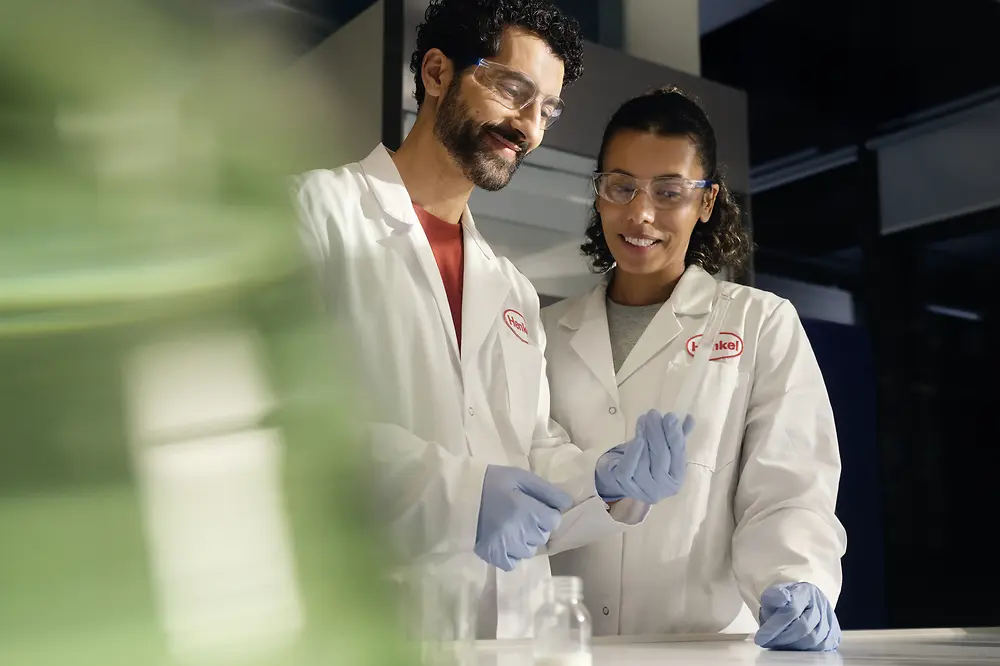
Begoña: It consists of working closely with different companies to offer them the most suitable adhesive solutions. It is not only about selling a product, but about understanding their processes and helping them implement these solutions in their production lines. I work with a wide range of sectors, such as industrial, medical and construction, adapting each proposal to their specific needs.
And how does a project like the Sagrada Familia fit into that?
Begoña: It is a unique project because of its duration and its history. In my case, the work of defining and selecting the adhesives was quite specific and thus a very important part of my work. Time consuming, but very important.
What was the central technical challenge?
Begoña: Finding a reliable way to bond stone and steel so that they behave as a single structural element. The six central towers were the most difficult part of the whole build.
Henkel could have developed a dedicated adhesive. Why did the team decide against that route?
Begoña: We considered that at first. But the Loctite portfolio is so broad that we examined existing solutions instead. After extensive testing, the choice fell on Loctite EA 9497, a structural two-component epoxy adhesive. For the project, we carried out a specific characterization to ensure its performance under real conditions.
And those conditions are demanding.
Begoña: Very. The adhesive must withstand moisture, the salty coastal climate, temperature swings of more than 20 degrees and constant vibration, right down to the metro line beneath the basilica. It bonds stone and steel, seals the joints completely, fills cavities and prevents movement. To give an idea: a single square meter theoretically bears the weight of around 100,000 adults.
What does it mean to work on something with such a long-time horizon, where progress is measured in years rather than weeks?
Begoña: What is crucial in this type of project is not only the choice of the product, but everything behind it: ensuring there is a strong company capable of guaranteeing supply, quality and consistency of the product over time. This is where the trust between the Sagrada Familia and Henkel comes into play. It is about ensuring that, over the years, both the logistics and the properties of the product remain stable and always meet the needs of the project. That level of continuity and reliability is essential in a project of this kind.
Engineering is often described as a male-dominated field. Do you see it that way from your own experience?
Begoña: It is true that, historically, engineering has been a very male-dominated field. In my case, I have been working in the industrial world for 25 years, and I have seen this evolution first-hand. At the beginning, I did feel that I had to find my place, but over time this has changed a lot.
In what way?
Begoña: Nowadays, although there is still a majority of men, I don’t notice differences in how I am treated. I work comfortably and naturally, and the environment is much more inclusive than it used to be. A wonderful testament to this shift was the project itself: one of the people I worked with most closely was a female colleague, and we collaborated side by side throughout the process. Nevertheless, I believe there is still work to be done at an earlier stage, for example in education, to inspire more young women to choose technical paths.
And where do you think the field still needs to change?
Begoña: I believe society in general has evolved in the right direction, and there is increasingly more equality in the professional environment. Once you are part of the sector, I don’t really see significant barriers, and it is possible to develop your career normally. Where I still think there is work to be done is at the foundation, in education. I would like to see more women choosing technical careers, as there is still some lack of representation. That is the key area where further progress can be made.
The Sagrada Familia is a landmark of your home city. What has it meant to you personally to contribute to it?
Begoña: On a personal level, it is a great source of pride to have contributed to a project like this. The Sagrada Familia is a symbol of Barcelona, my city, and being part of something so representative has a very special meaning for me. Being able to contribute with our technology and knowledge from Henkel to a project of this scale is truly impressive, and it makes me feel very satisfied.
Henkel was one contributor among many on this build. How do you see its part in it?
Begoña: This project was supported by a large ecosystem of partners, quarry specialists, and engineers. Henkel acted as a vital technological link, integrating the bonding of the core materials inside the towers. Within Henkel alone, a multidisciplinary team of approximately 20 professionals across technical, commercial, and logistics roles has been involved over the past decade, since the project kicked off in October 2015, to ensure its seamless execution. The success is clearly a collective one. In the six central towers sit around 24 tons of adhesive, spread across 826 panels and more than 2,100 individual stone elements. You see none of it. It simply holds.
CURIOUS FOR MORE?
Watch the video to hear Begoña explain the story behind the project.
Watch the video to hear Begoña explain the story behind the project.