
With an AI-powered data engine containing extensive formulation data, Loctite Solve generates digital twins of adhesive formulations, known as material data cards, representing both existing commercial formulations and conceptual formulations that have not yet been physically produced. These material data cards can be seamlessly integrated into component simulations using standard CAE and modeling tools.
Apr 15, 2026 Düsseldorf / Germany
Henkel launches Loctite Solve to enable fast, flexible and AI-assisted simulation of adhesive performance
Henkel has launched LOCTITE SOLVE (Loctite Solve), an AI-powered virtual materials platform that enables automotive design engineers to integrate adhesive performance data into component design simulations at the earliest development stages.
Loctite Solve allows engineers to evaluate and compare adhesive performance directly within their existing simulation workflows, enabling material selection as part of the component design process rather than as a separate, late-stage step.
By bringing reliable adhesive data into early-stage design and simulation, Loctite Solve enables design and engineering teams to assess material behavior, iterate faster, and make more informed design decisions from the outset. The result is greater confidence in adhesive selection, reduced risk of late-stage design changes, and faster validation cycles throughout the development process.
How Loctite Solve works
Loctite Solve enables users to create and export material data cards as digital twins of adhesive formulations that capture key performance properties such as thermal conductivity, tensile strength, elongation, and lap shear strength.
The platform covers a broad range of established Loctite formulations and extends these capabilities further. Powered by a proprietary AI model, it can also generate material data cards for conceptual adhesives, which do not exist as real-world products but can be devised according to engineers’ specific requirements.
Engineers can plug the material data cards into their own simulation programs, enabling them to explore performance under different design scenarios and evaluate material behavior directly within their existing CAE workflows. This enables them to reach a much stronger understanding earlier in the design process, of which adhesives would perform optimally for their component design. Component development loops become more seamless, trial-and-error is reduced, and confidence in prototype success is high, even before physical testing begins.
“Loctite Solve delivers exceptional flexibility by enabling engineers to explore a wide range of adhesive formulations through material data cards that are compatible with standard CAE and simulation tools.” says Dr. Olaf Lammerschop, Global Technology Lead for E-Mobility at Henkel. “This is already a leap forward, but what’s even more significant is the ability to use AI to explore conceptual adhesives. Now, engineers aren’t limited by a pre-existing portfolio, only by their imagination. We work with them to conceptualize and validate adhesive solutions that exactly meet their needs, and translate the virtual concept into a real, testable sample. In many cases, samples of these conceptual formulations can be developed and delivered within a matter of weeks, dramatically accelerating component design, validation, and overall development timelines.”
Supporting a new generation of automotive adhesives
Loctite Solve is particularly relevant for the automotive industry, where electrification and increasing system complexity are driving the rapid development of new components, from battery systems and automotive electronics to vehicle interiors and exteriors. These components must meet highly specialized performance requirements while being developed within increasingly compressed timelines.
By bringing adhesive intelligence directly into digital engineering workflows, Loctite Solve opens new possibilities for simulation-driven component design. Engineers can evaluate adhesive performance earlier, explore innovative material concepts, and make confident decisions before physical prototyping begins. This digital-first approach helps development teams iterate faster, reduce validation cycles, and accelerate the path from initial concept to start of production.
“Including adhesive intelligence in simulations is the next step in the rapid evolution of automotive component design,” says Dr. Tobias Knecht, Global Market Strategy Head for E-Mobility at Henkel. “It enables smarter decisions on finding the optimal adhesives for our customers applications, right from the early stages. In contrast, if all adhesive-related decisions are made after the core component has already been designed, one could easily run into unforeseen issues – and at that stage, flexibility is reduced and the cost of re-specifying can be high. Loctite Solve connects every design engineer to powerful, personalized insights into adhesive performance – unlocking virtual adhesives as an accelerator of innovation.”
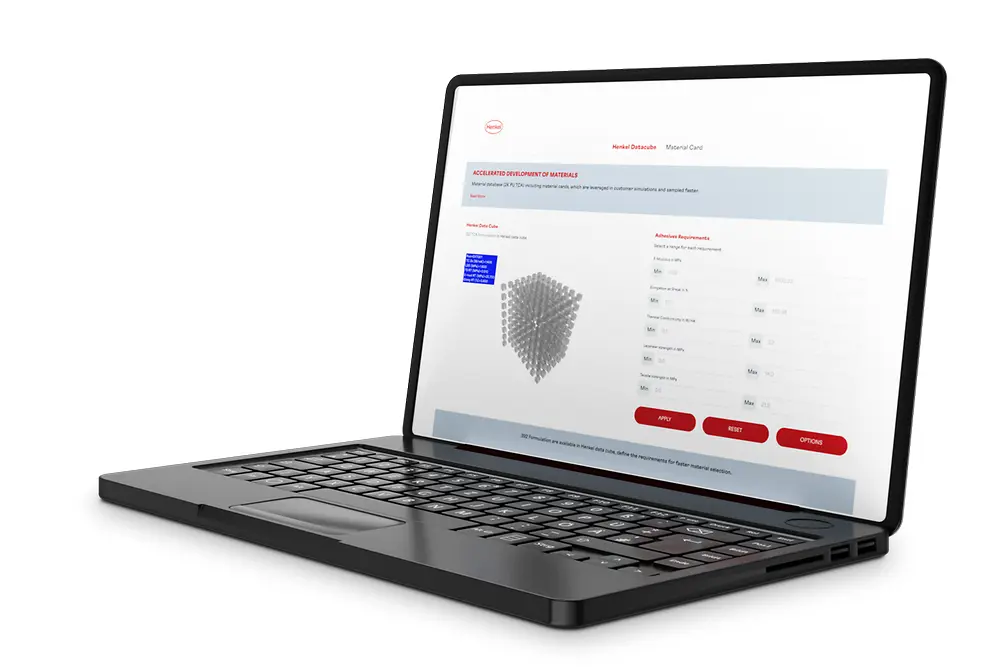
The user interface of Loctite Solve.
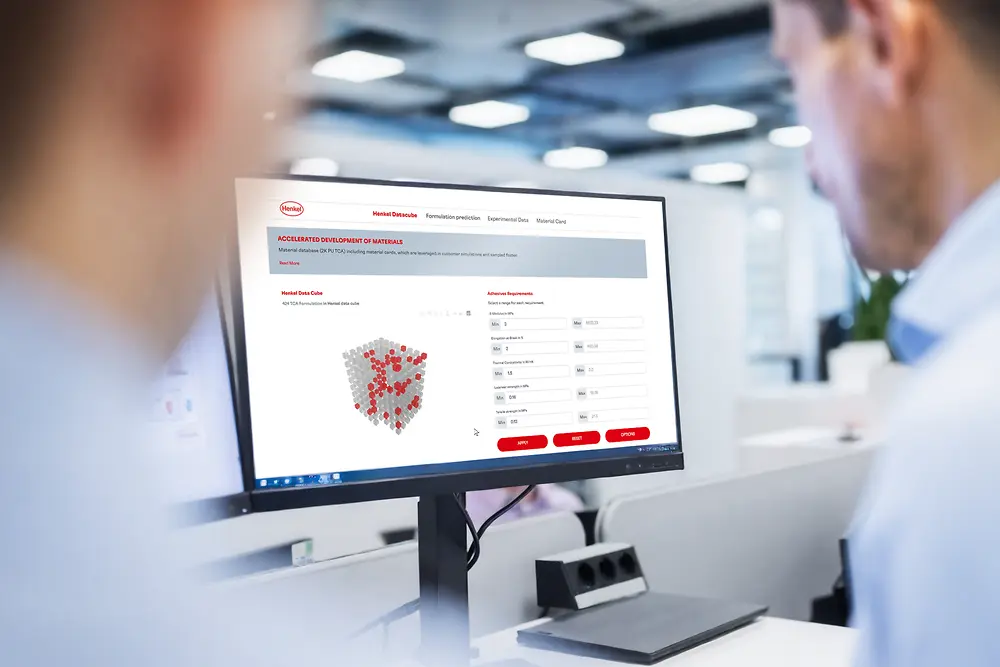
A Henkel expert using Loctite Solve to generate material data cards to evaluate adhesive performance within digital design workflows.
1 of 2
