
Behind the laboratory is a two-part team: field technicians who support processes at the customer’s site and laboratory specialists who analyse and further develop processes in the laboratory. The applications covered range from flat lamination and edge banding to profile wrapping and 3D lamination. The laboratory analyses the process requirements identified by the field service team under real-world conditions. The solutions are then implemented directly in production.
May 28, 2026 Düsseldorf / Germany
From the right product to an optimised manufacturing process
Anyone choosing an adhesive supplier today also has to decide how much process expertise will flow into their own company. At the Furniture and Building Components Laboratory in the Inspiration Centre Düsseldorf, Henkel has the infrastructure to not only supply furniture and building component manufacturers with the right product, but also to provide comprehensive support throughout the entire manufacturing process.
The company’s own machinery enables production processes to be fully replicated on in-house equipment – a key difference from many competitors. In industrial manufacturing, for example, a production line produces a complete cabinet every two seconds. Even a ten-minute troubleshooting session can result in enormous amounts of scrap. In the Furniture and Building Components Laboratory, the same process can be examined at a small scale without time pressure. The result: the technician arrives at the customer’s premises with concrete solutions already in hand.
Furthermore, the laboratory serves as a training centre. Henkel uses the equipment for fault analysis, product demonstrations, technology comparisons and troubleshooting workshops. The latter are the most intensive format: customer representatives visit the laboratory, where they work with specialists to reproduce the fault scenario on the equipment and jointly develop parameter adjustments directly on site.
The laboratory is not an end in itself but rather bridges the gap between customer requirements and technical possibilities. “We see ourselves as an interface that translates practical requirements for our chemists and vice versa,” says Sebastian Mailänder, Head of Application Engineering at Henkel. The adhesive is just the start. Henkel supports the process beyond that – with new materials, modified equipment and changing process requirements.
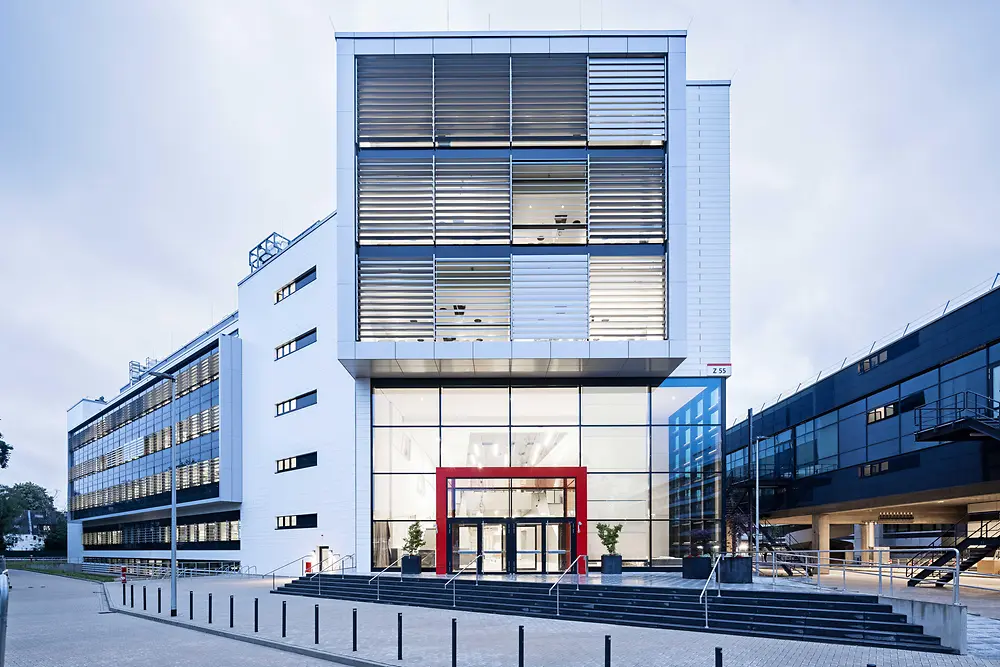

At the Furniture and Building Components Laboratory in the Inspiration Centre Düsseldorf, Henkel has the infrastructure to not only supply furniture and building component manufacturers with the right product, but also to provide comprehensive support throughout the entire manufacturing process.
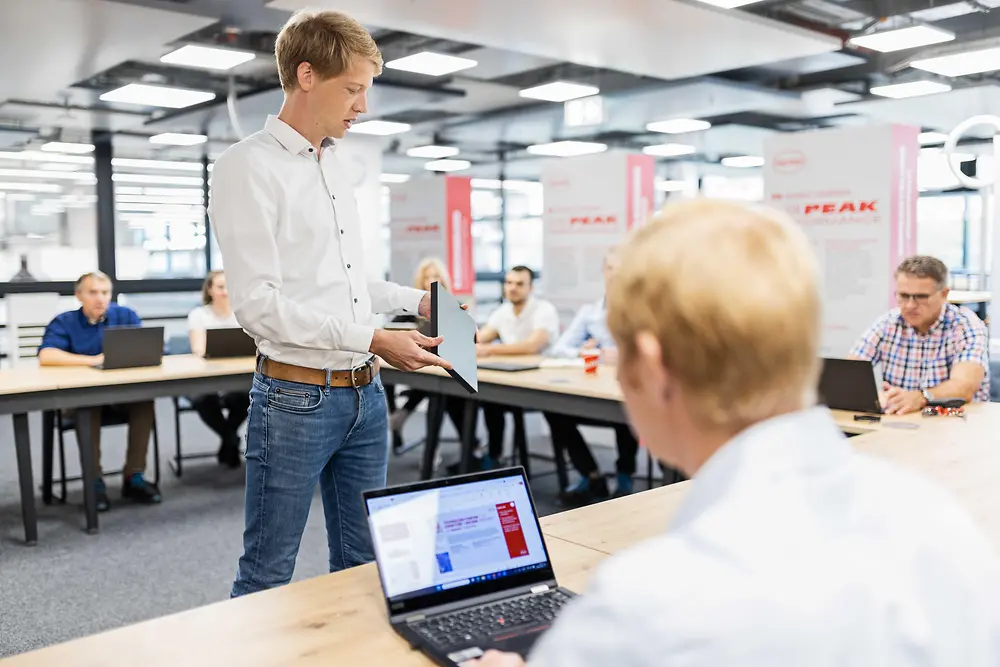

Henkel uses the equipment for fault analysis, product demonstrations, technology comparisons and troubleshooting workshops.
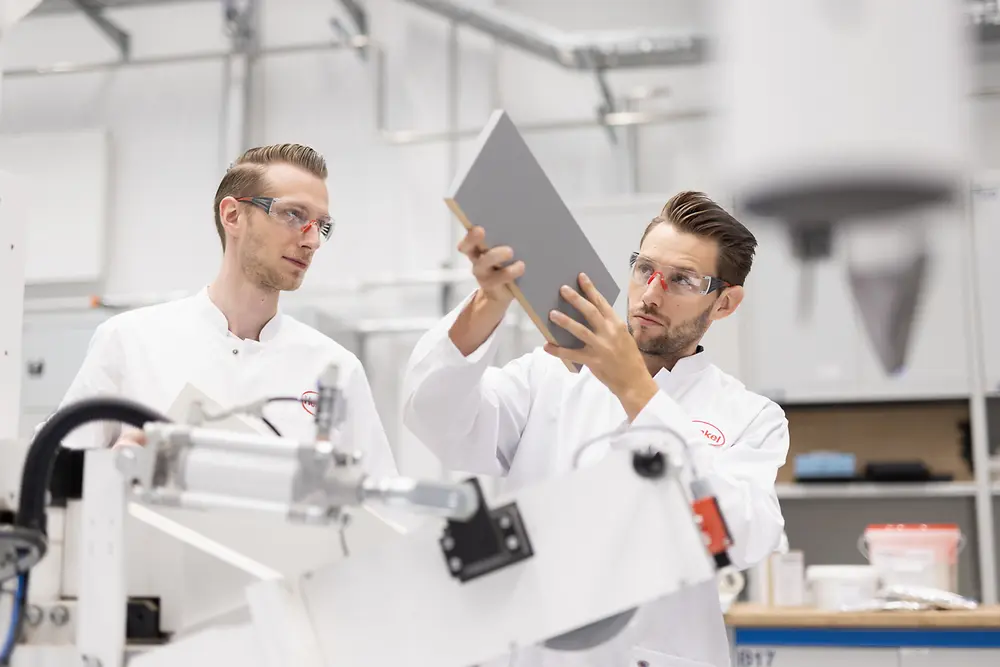
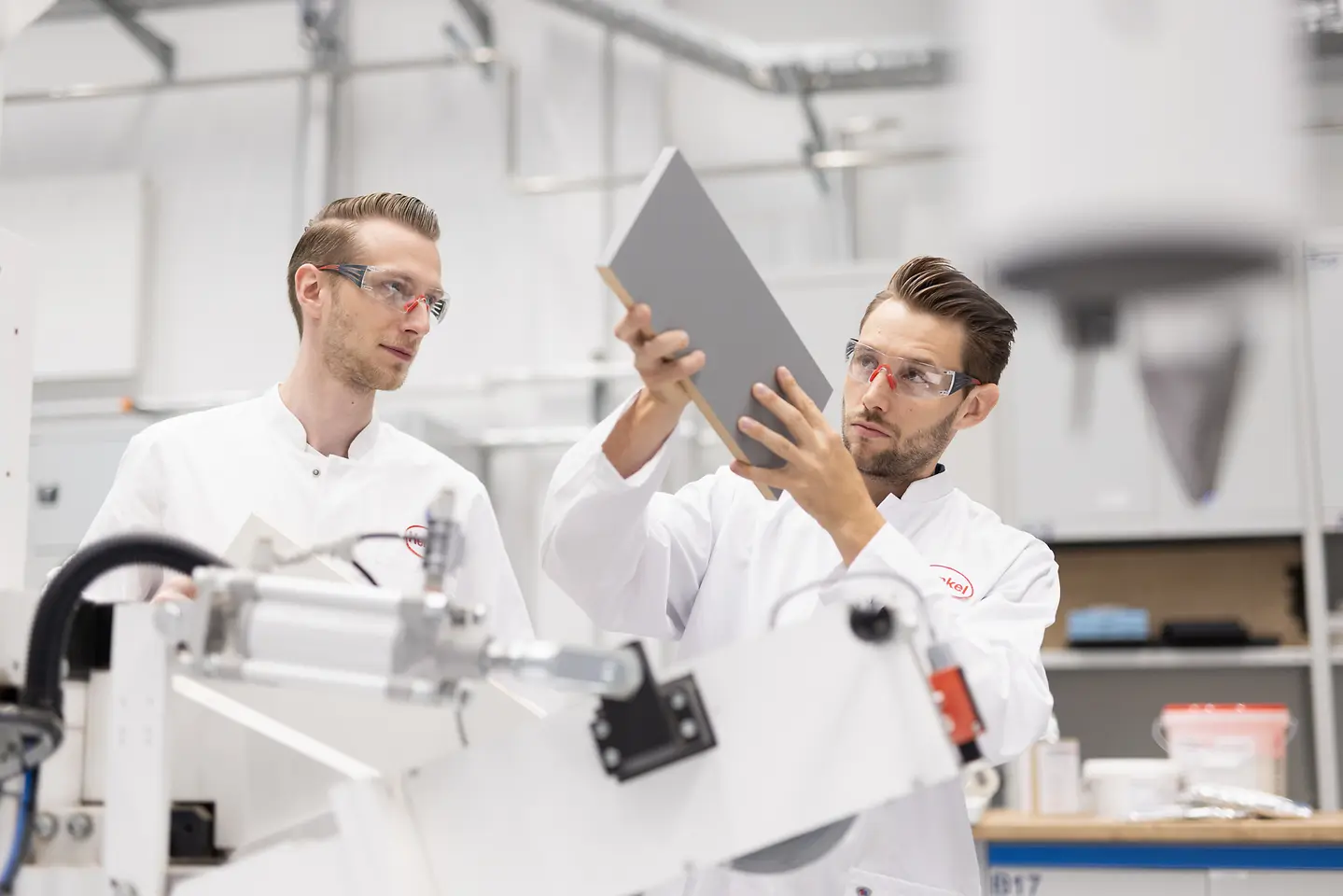
The company’s own machinery enables production processes to be fully replicated on in-house equipment, such as edge banding and the subsequent quality inspection in the laboratory.
1 of 3
