The story of a bond across generations – of stone, steel and chemistry.
Story
Pioneers across generations – How Henkel is helping to complete Gaudí's Sagrada Familia
When the first stone of the Sagrada Familia, today one of Barcelona's most important landmarks, was laid, Henkel was a young company and its founder Fritz Henkel a contemporary of Gaudí. Now, in 2026, a century after Gaudí's death, an innovation from Henkel is helping to complete the architect's vision.
On March 19, 1882, the builders in Barcelona laid the first stone of a church that would outlast generations of builders. A year later, Antoni Gaudí took over as lead architect, at just 31 years old. More than a thousand kilometers further north, another pioneer was laying the foundations of the future. Fritz Henkel had founded his company Henkel & Cie in Aachen in 1876 and relocated it to Düsseldorf two years later. In 1882, he was thirty-three, almost the same age as Gaudí.
The two men never met. Yet they were connected by a similar way of thinking. Both were innovators whose work reached far beyond their own lifetimes. The full value of what they began would only become apparent later. Gaudí knew that the technology of his era was not enough for his design. Yet, he did not adapt his vision to the limits of his time. Instead, he designed in such a way that later generations, with with greater knowledge, improved materials and more advanced methods, could complete what he had begun. Fritz Henkel ran his company on a related principle. Innovation should not only solve what is pressing right now. It should create value that lasts.
More than a century later, these two outlooks meet again. On a construction site in Barcelona.
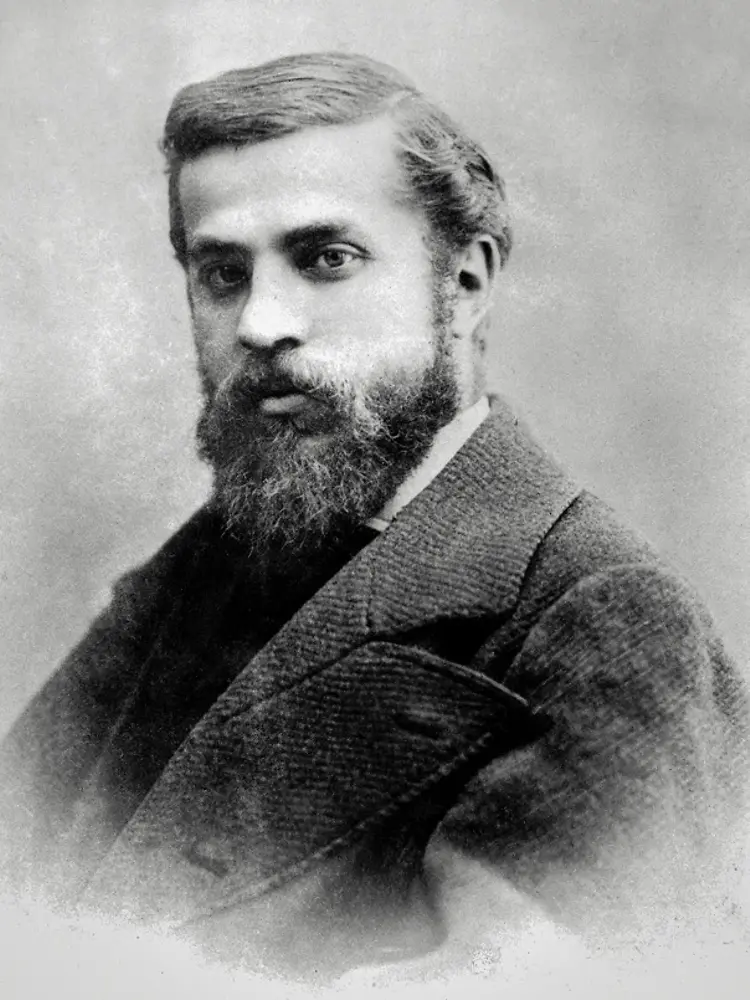
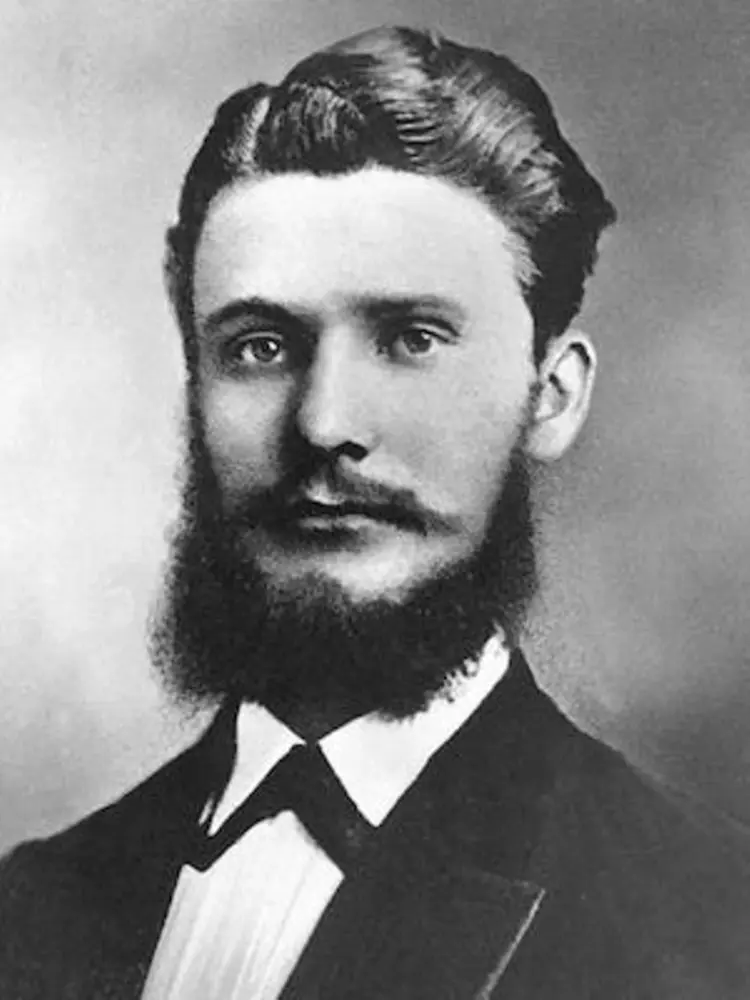
Realizing a vision across generations
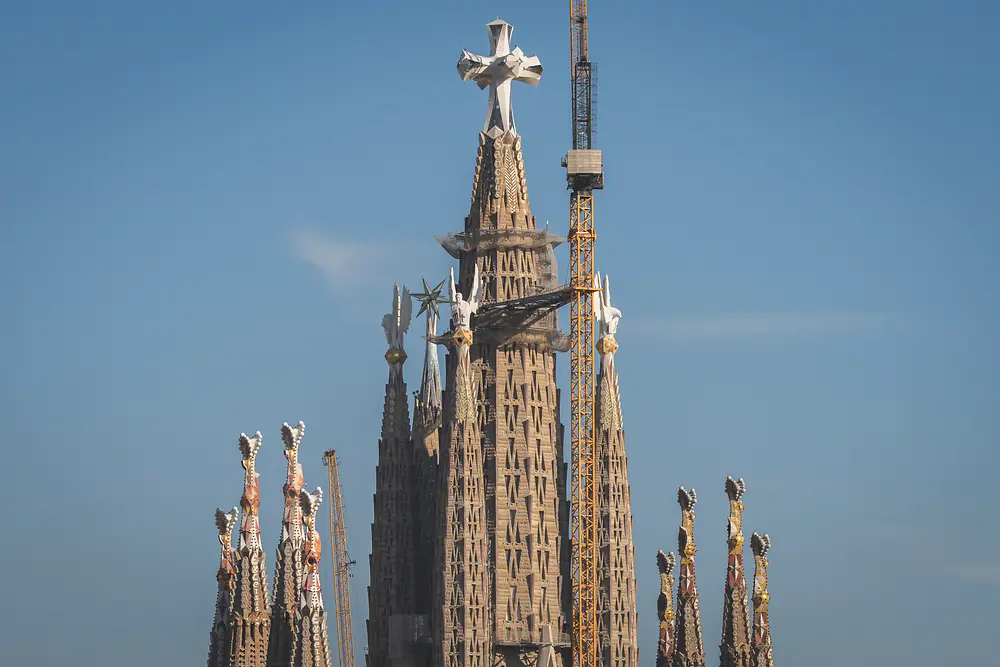
In the six central towers sit around 24 tons of adhesive, spread across 826 panels and more than 2,100 individual stone elements.
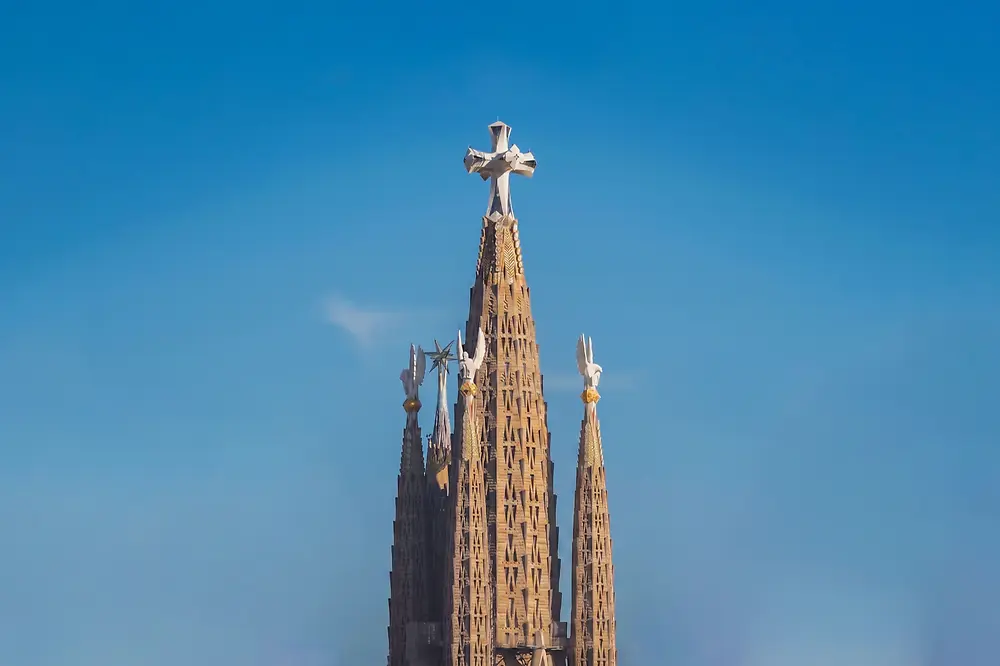
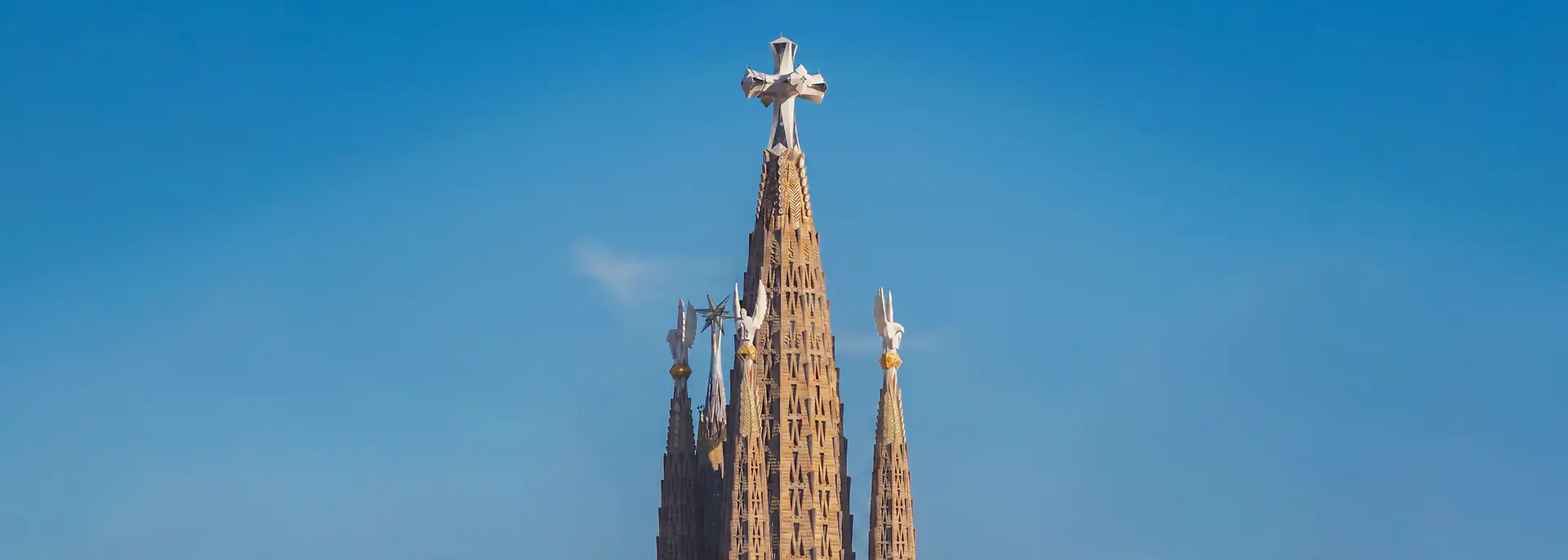
For on February 20, 2026, the builders mounted the monumental cross at its summit. It stands 17 meters tall, 13.5 meters wide and weighs around 100 tons. With it, the basilica reaches 172.5 meters and becomes the tallest church in the world.
Jordi Faulí leads the construction today. Like Gaudí before him, he joined the project at the age of 31 and became chief architect in 2012. The greatest challenge, he says, is fidelity to everything Gaudí left behind. His writings, his large models, his drawings, insofar as they survived the fire in his workshop. “Today, we are aware that we are continuing a story that began with the laying of the first stone in 1882 and that continues into the future,” says Jordi.
A closer look at the engineering behind
the Sagrada Familia's central towers
the Sagrada Familia's central towers
Turning stone into a structural system
The six central towers were the most challenging part of the entire project. Height, structural engineering and symbolism posed demands for which there was no ready-made solution. Jordi and his engineers decided to give the stone a load-bearing role while also meeting today's regulations, for instance on seismic and wind loads. The result is a system the site calls the “Tensioned Stone Panel System.” The logic resembles a construction kit. Pieces of stone are joined into panels, panels into levels, levels finally into the whole tower.
Inside the layers of stone run rods of stainless steel that tension the stone and turn it into a single structural panel. Reinforced concrete and rolled steel at the corners provide additional stability. For this system to work, stone and steel must behave as one. Every force travelling through the tower has to move reliably between different materials, requiring a bond capable of transferring loads while remaining stable for decades. This is where engineering meets adhesive innovation.
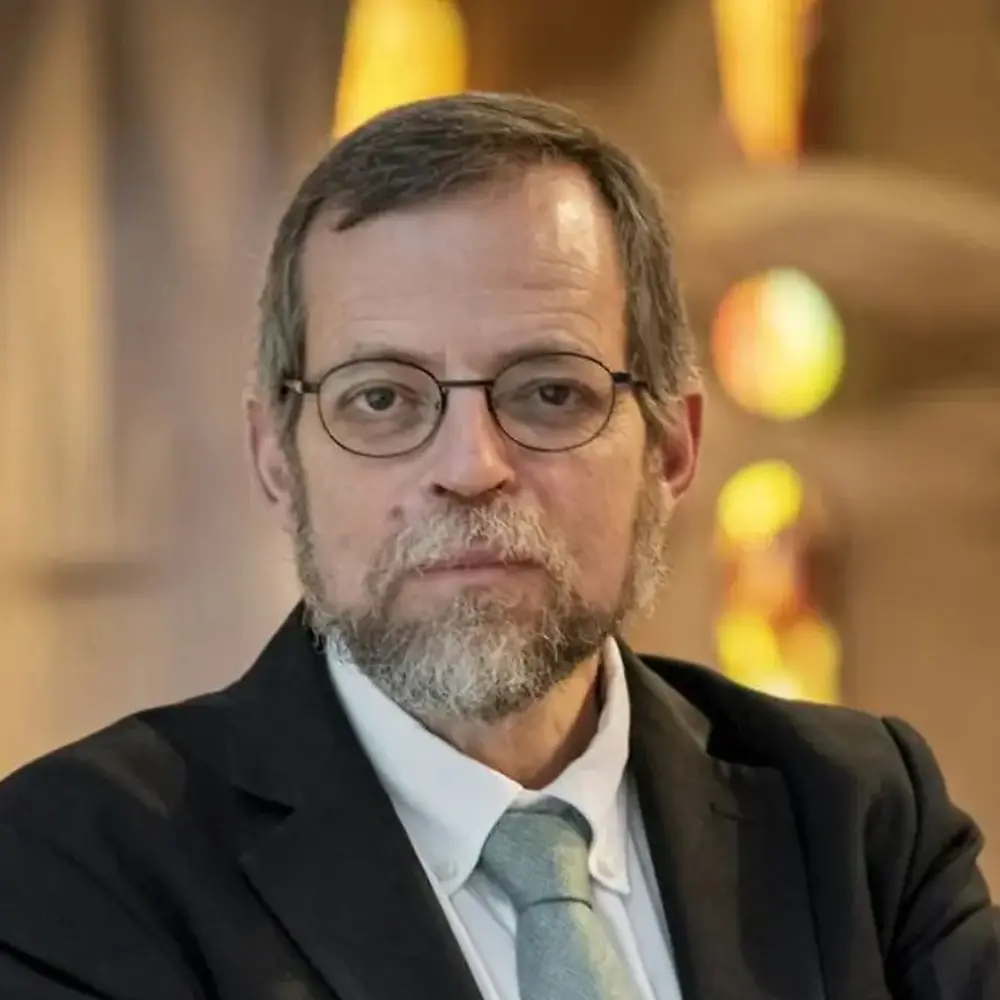
Today, we are aware that we are continuing a story that began with the laying of the first stone in 1882 and that continues into the future.
Jordi Faulí, Lead Architect of the Sagrada Familia
High-tech adhesives complete historic plans
Begoña Cantera is an engineer and has been with Henkel for almost twenty years. For over a decade she has been the technical lead on Henkel's side for this project . “The key challenge was to find a reliable way to bond stone and steel so that they behave as a single structural element,” she says.
Henkel initially considered developing a dedicated adhesive. Given the breadth of the Loctite portfolio, the team instead examined existing solutions. After extensive testing, the choice fell on Loctite EA 9497, a structural two-component epoxy adhesive. For this project, it was specially characterized, that is, tuned to the real-world conditions. Those conditions are harsh. The adhesive has to withstand moisture, the salty climate of the nearby coast, temperature swings of more than 20 degrees and constant vibration, right down to the metro line beneath the basilica. It bonds stone and steel, seals the joints completely, fills cavities and prevents movement. One square meter, Begoña explains, could theoretically support the weight of around 100,000 adults.
The dimensions of the project are enormous. The six towers consist of 826 panels and more than 2,100 individual stone elements, bonded into a single structure, with around 30 kilograms of adhesive per panel on average. Across all the towers, this adds up to around 24 tons. That is roughly 70,000 standard adhesive cartridges from the hardware store, used for a single building.
Assembling a century-long vision, piece by piece
The real effect, however, lies not in strength alone. The adhesive is what makes the modular construction possible in the first place. Large, prefabricated modules are produced away from the site and then placed with precision. This accelerates the build considerably and allows complex geometries that would otherwise be almost impossible to achieve. What would have taken 50 to 60 years using traditional construction methods was completed in just eight years. Only this made the completion of the Tower of Jesus Christ coincide with the 100th anniversary of Gaudí's death.
Henkel's role goes beyond the material it supplied. At its site in Montornès, Spain, application methods are demonstrated and testing processes supported. The injection and assembly themselves take place at the quarry, where the prefabricated elements are produced. Henkel’s specialists advise on technical matters, provide training and recommend equipment and procedures. Around twenty Henkel employees were involved over the past decade, since the project began in October 2015, in a team spanning technology, sales and logistics.
“Henkel acted as a technological link, enabling the bonding of the core materials,” says Begoña. “But the success is clearly collective.” Distributors, engineering and construction partners, specialists at the quarry and the teams of the Sagrada Familia were all part of it.
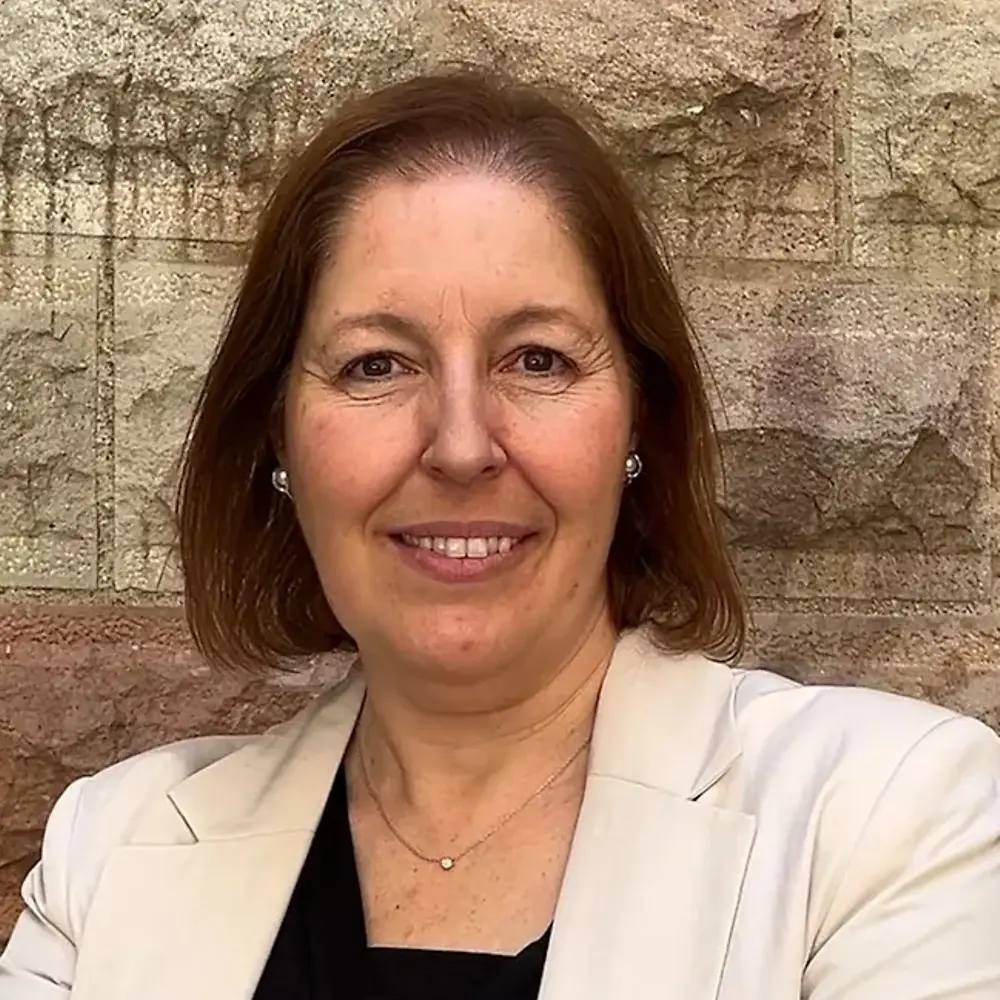
Fritz Henkel and Antoni Gaudí were contemporaries, two visionaries who each understood, in their own field, that real impact is built through long-term thinking.
Begoña Cantera, Territory Sales Engineer at Henkel
“Fritz Henkel and Antoni Gaudí were contemporaries, two visionaries who each understood, in their own field, that real impact is built through long-term thinking,” says Begoña. One designed a work he would never see completed. The other built a company meant to enrich and improve the lives of generations to come. In Barcelona, those two legacies now meet at the highest point of the Sagrada Familia.
Jordi is already looking further ahead. This year, construction begins on the Glory Façade with four more towers. There too, the tensioned-stone technique will be used, developed a step further. The construction site that began in 1882 remains a living one.