When Lukas Janßen began his marketing job for Schwarzkopf at Henkel a few years ago, the first thing he did was head down to the basement. The archive. The Schwarzkopf story is one of genuine firsts: Germany's first powder shampoo, the first hair spray, a brand that kept reinventing itself decade after decade. Hans Schwarzkopf laid that foundation.
Story
Every hairstyle has its moment. The brand remains.
125 years of Schwarzkopf. Between archive discoveries, research labs and festivals, brand leaders at Henkel
show how tradition becomes relevance – and how hair can shape culture.

In this story, you will learn:
In the archive, Lukas made another discovery that revealed something further essential about the brand and its identity. “Hans is the brand’s founder but not the only central figure behind it,” he recalls. Martha Schwarzkopf, the pharmacist’s wife, took over the company after Hans’ death in 1921 and played a decisive role in shaping the brand‘s identity. In 1927, she founded the first hair academy because she wanted to understand what truly mattered to customers. “Martha helped build Schwarzkopf into what it is today.” A woman at the center of the story – one who had never stood there before. Today, Henkel’s most important innovation award in hair research carries her name: the Martha Schwarzkopf Award for Women in Science.
EXPRESSING EVERY YOU.
FROM CARE TO CHARACTER.
FROM CARE TO CHARACTER.
Empowerment is part of the brand's core identity. To understand how, it helps to know that Schwarzkopf is a brand family spanning consumer hair care, professional coloring, styling and repair, among others. In this story, two brand experts offer an inside view into some of Schwarzkopf’s well-known product brands: Gliss, specializing in hair care and repair, and Taft, one of Europe's most recognized styling brands. The advertising for these brands has long become iconic.
The businesswoman stepping confidently off a jet. Berlin, London, New York. Her hair is perfect. In a world where women in boardrooms were still very much the exception, this was more than advertising. It was a statement. And for Gliss, the same woman stood in front of the camera for decades: Carmen San Martin, the Italian model with the dark curls, breaking the same scissors every time – regardless of whether the season called for a fizz or a sleek blow-out.
2.1 MILLION PEOPLE
USE SCHWARZKOPF PRODUCTS
EVERY DAY.
ONE PRODUCT IS
SOLD EVERY TWO SECONDS.
Many brands, one family
Lukas is Senior Marketing Manager In-Culture at Schwarzkopf and responsible for making sure these brands show up where people really are: at festivals, in fashion, in pop culture. He describes the relationship between the brands like this: Schwarzkopf as the parent, defining values and attitude. And Gliss and Taft, among other Schwarzkopf brands, as the children, carrying these values forward and making them their own. Gliss: caring. Taft: strong, empowering. All clearly from the same house.
Looking after these brands alongside Lukas are Ann-Christin Möhrle, Brand Head of Taft, one of Europe’s most storied styling brands, and Mareike Hofmann, Brand Head of Gliss, who is involved in evolving the brand and its product development. All three believe deeply in the value of their own heritage. And all three are equally focused on what comes next.
Styles change, the brand remains
Taft is a good example. Ann-Christin knows this from personal experience: The brand shaped her teenage years. She’s been using Taft since she was 14. Back then she wore the sleek geometric bob of the 2000s: “business in the front, party in the back.” Today she’s driving the brand forward. “If I’m not wearing Taft, it feels like I’m only halfway ready.” Taft has always stood for more than hold. Bold images, like the self-assured woman stepping off the jet, are still part of the brand’s identity today. Even as Taft and its idea of modern womanhood have evolved. “We’ve always been something of a pioneer when it comes to a modern image of women,” says Ann-Christin. “Today that story needs to be told differently. Because people have changed. Because everything is more diverse. We show real women in real situations. No more constructed ideals.” As for whether tradition feels like a burden or an advantage, for Ann-Christin, the answer is clear: “I see it as a great asset and opportunity. Heritage gives us credibility and a unique story – something that especially younger generations value. But to stay relevant and meaningful, a brand also needs to evolve with the times. The strongest brands honor their legacy while reflecting the values, creativity, and culture of a new generation. That’s exactly what we aim for at Taft, and what gives us the freedom to actively try new things and invest in new ideas.” The ability to take risks from a position of strength is the principle. And a core part of the identity.
A journey through the history of Schwarzkopf
1898
The beginnings of Schwarzkopf
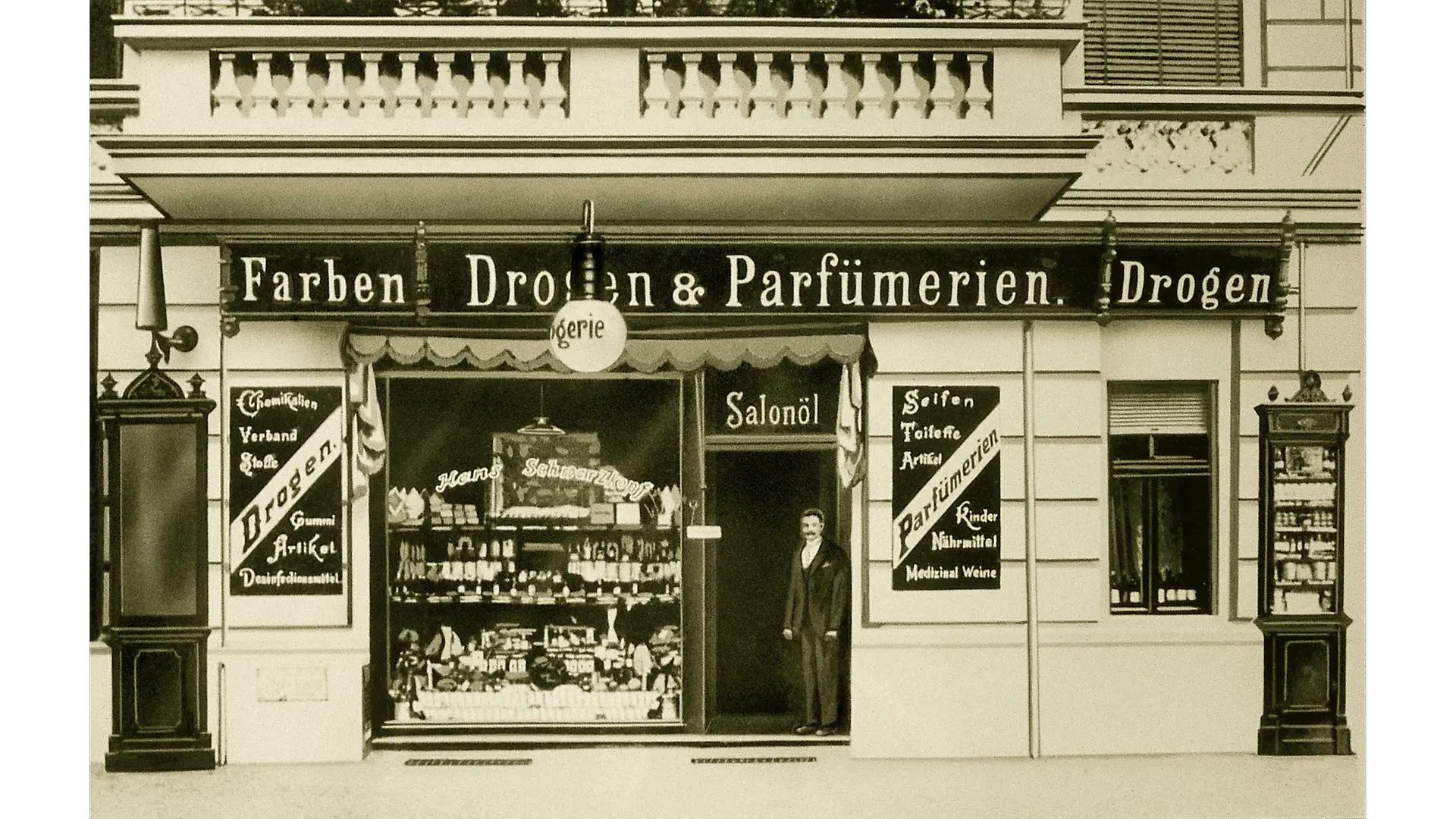
Hans Schwarzkopf, a chemist and pharmacist, opens a “paint, drug, and perfumery shop” on Passauer Street in Berlin-Charlottenburg. This marks the start of a brand that will redefine hair care.
1903
The first innovation
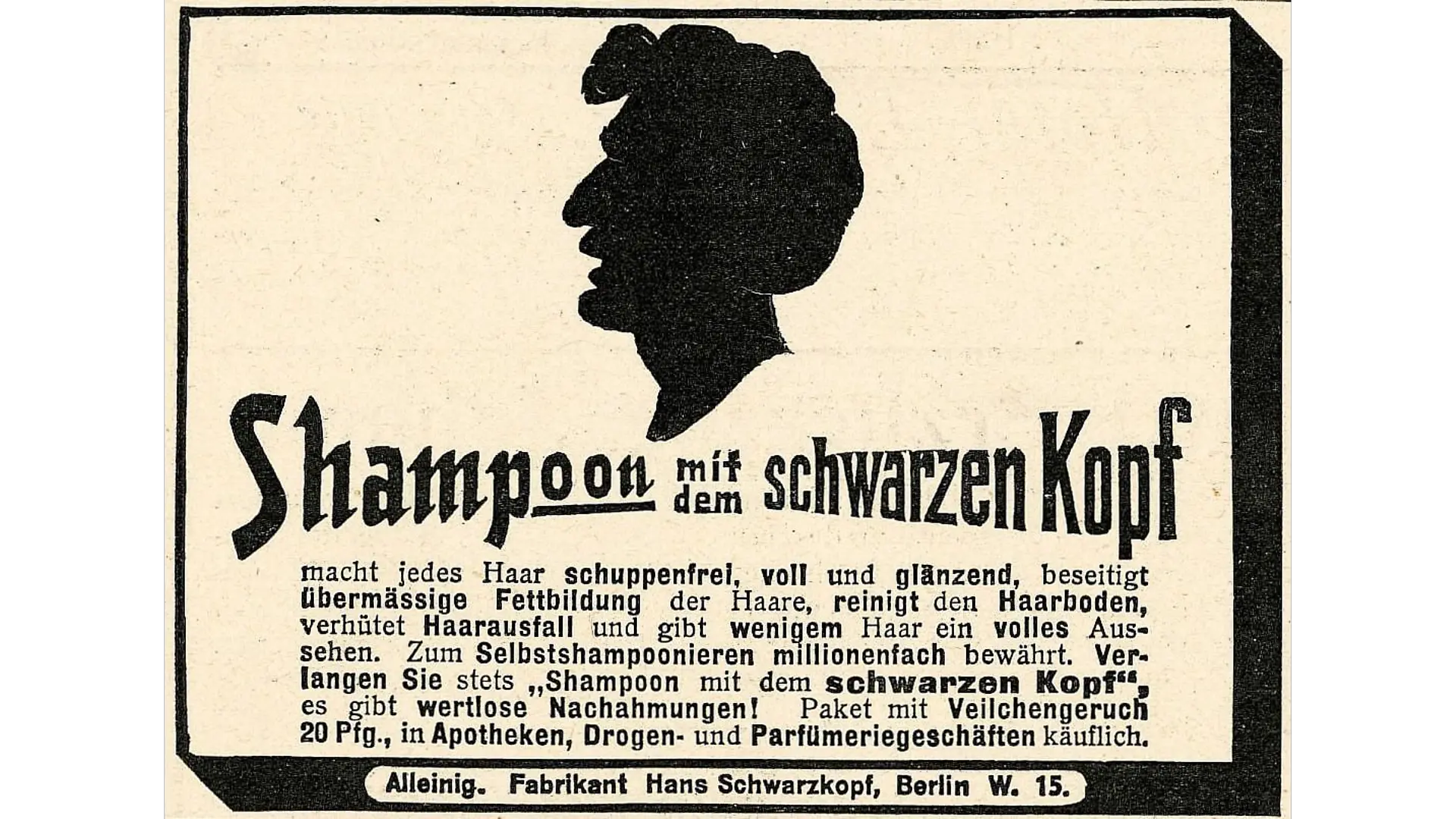
Hans Schwarzkopf launches a powdered shampoo. It costs 20 pfennigs per sachet, is dissolved in water, and quickly becomes far more popular than the hair-washing soaps available at the time. Known as the “Shampoo with the Black Head,” it becomes high in demand.
1927
Europe's first liquid shampoo
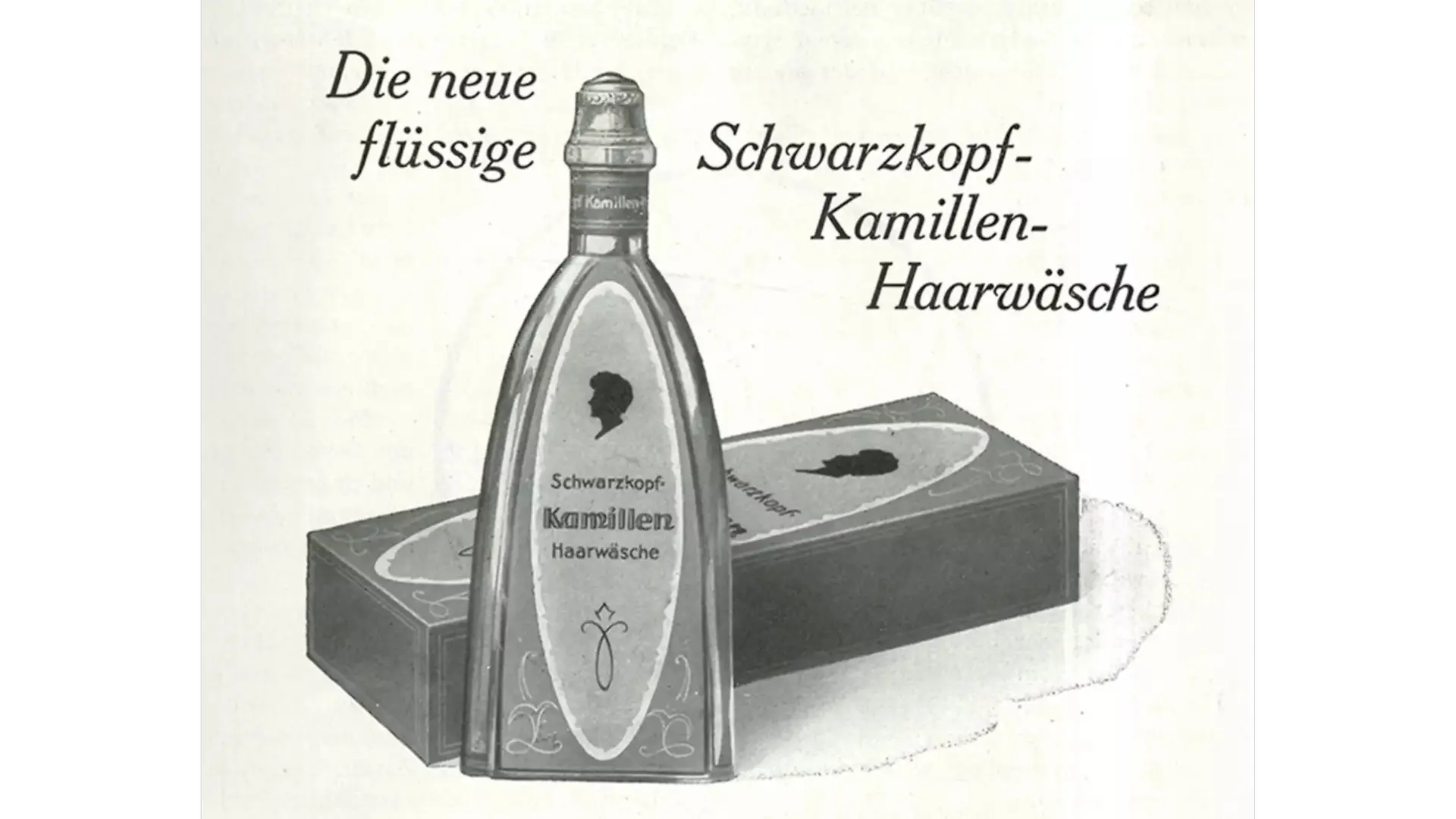
Schwarzkopf introduces the first liquid shampoo to the European market – a breakthrough that revolutionizes hair care.
1933
The foundation for THE modern shampoo
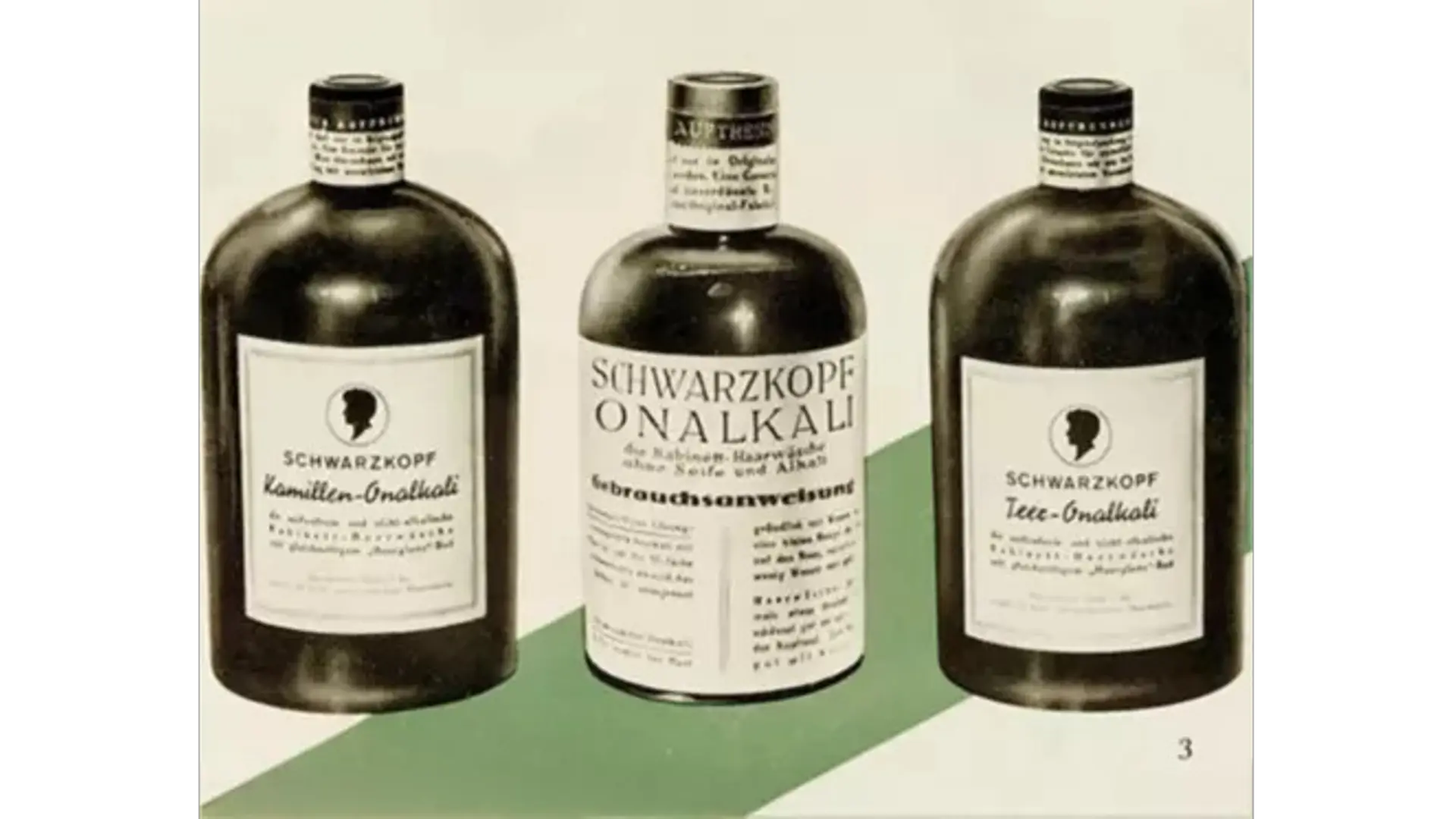
In 1933, Schwarzkopf launches the world’s first soap-free and alkali-free shampoo “Onalkali”. It is considered the foundation for all modern shampoos. In addition to hair care products, Schwarzkopf expands its range with perm solutions.
1949
The introduction of Schauma
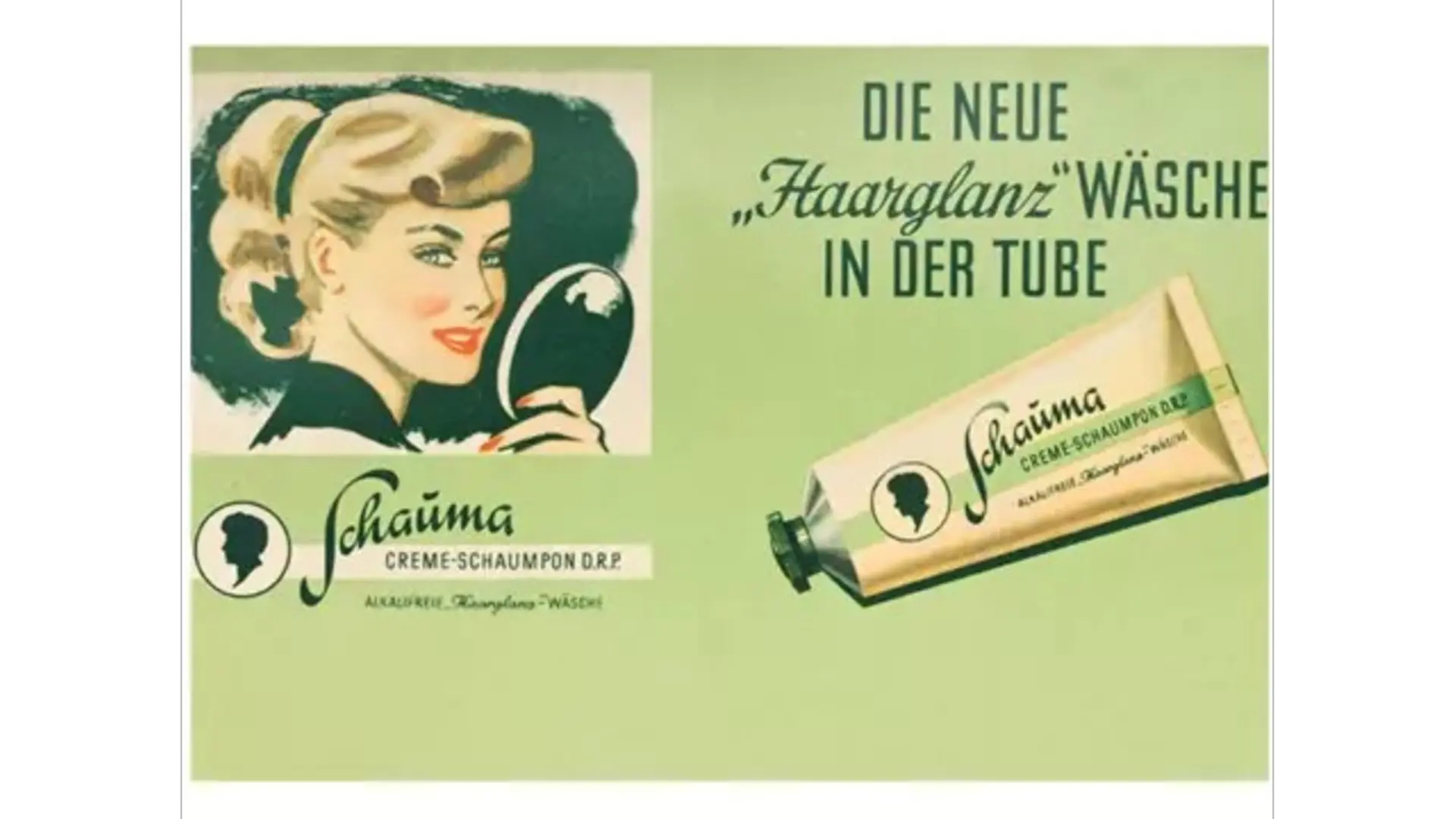
“Schauma Creme Shampoo” debuts in a tube and turn into an instant success. In West Germany, Schauma becomes synonymous with shampoo, creating a mass market for hair care.
1955
Hair styling reinvented
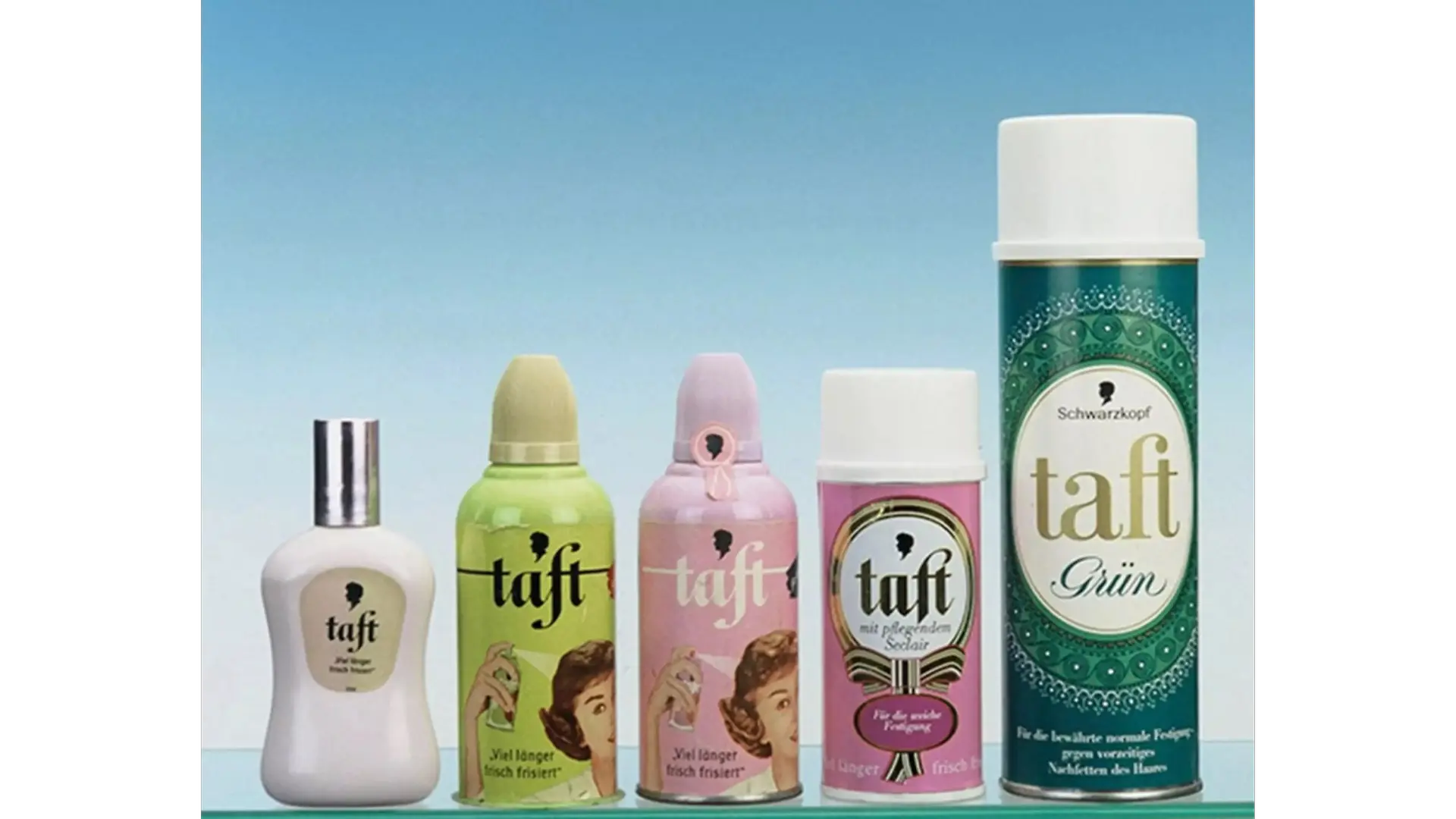
With the launch of Taft, Schwarzkopf introduces the first “liquid hairnet.” In Germany, it even inspires a new verb – “taften” – meaning to spray hair with hairspray.
1995
Henkel acquires Schwarzkopf

The Düsseldorf-based Henkel Group acquires Schwarzkopf and becomes one of Europe’s leading suppliers in the hair cosmetics sector.
2004
got2b hits the shelves
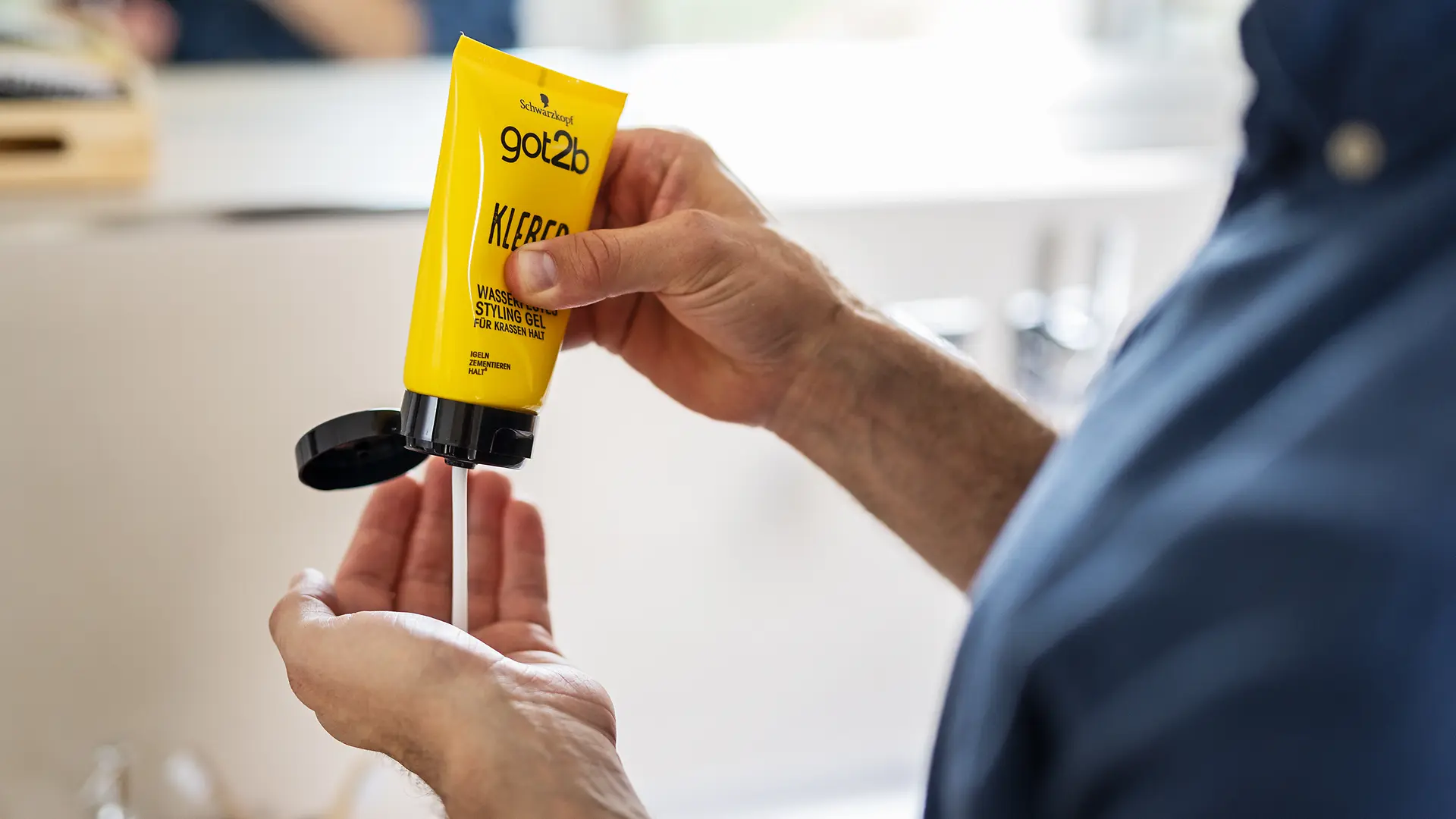
got2b, a young brand capturing street styling trends, is launched in European retail.
2025
Color meets care
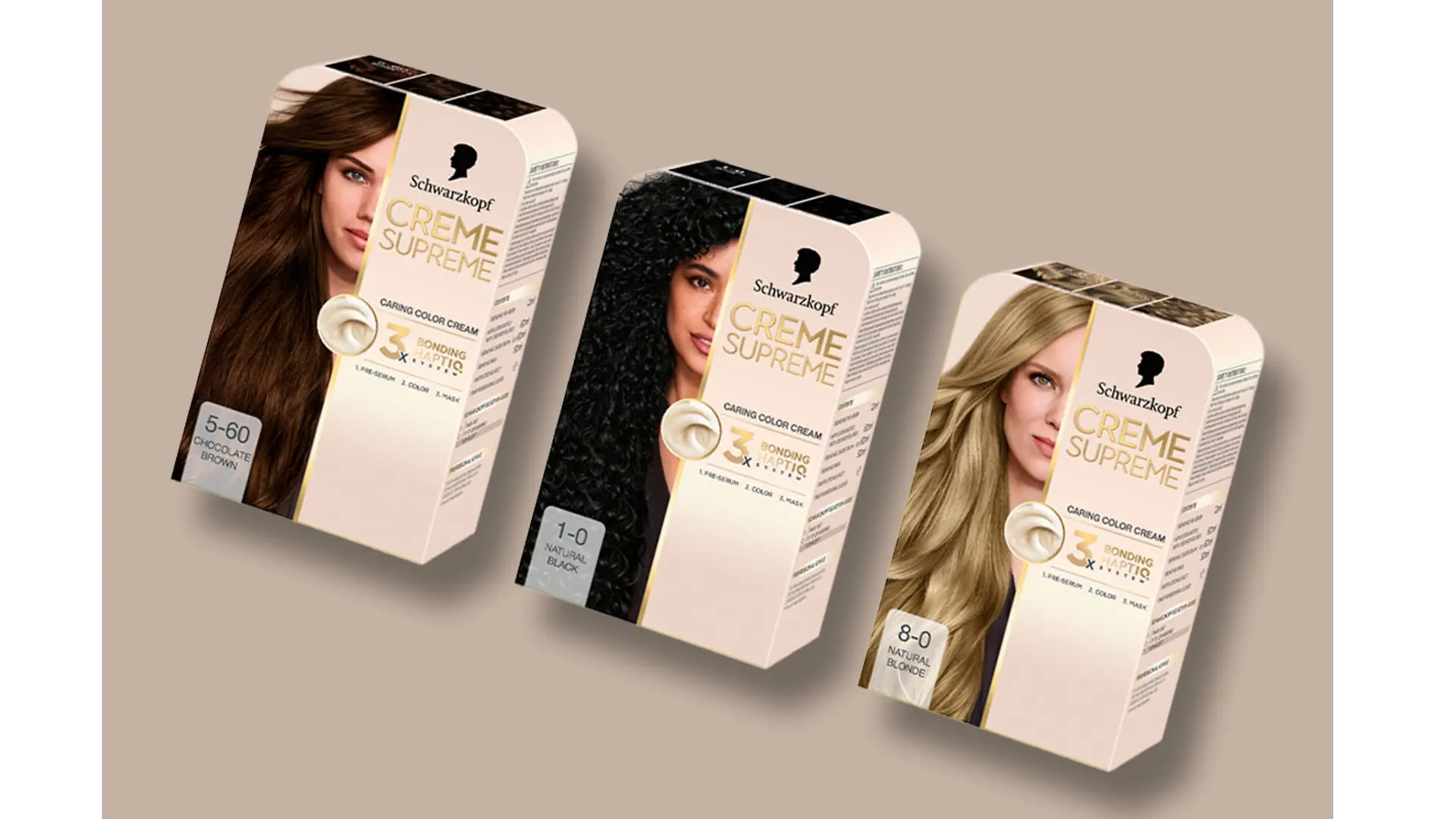
With the introduction of Creme Supreme, Schwarzkopf sets a new standard for at-home hair coloring. This premium hair dye protects and strengthens hair throughout the coloring process, combining vibrant color with advanced care.
What hair really needs
At Gliss, you can see how this principle works in product development. Mareike looks far beyond her own industry when observing trends. Glass Skin was one such moment. The trend came from South Korea and originally referred to skin so clear and hydrated that it appears like glass. Flawless, almost transparent. What began in skincare eventually carried over to hair. Suddenly, shine was no longer just a question of color, but of care. And now the next shift is emerging: longevity. A trend about living a long, healthy, vital life over decades. What does that mean for hair care? How do you build hair over years?

Consumers give us important impulses and insights which are always the starting point of a new development.
Mareike Hofmann, Head of Brand Innovation & Communication Gliss EU
Gliss brings decades of research expertise in hair technology to every new challenge – which means that when a trend emerges, the brand can move from observation to innovation faster than most. Scalp health is a good example. What started as a growing conversation on social media reflected something real: Healthy hair starts at the root. For Henkel's research and brand teams, who work in close exchange, this was familiar territory approached from a new angle. "Our starting point is always consumer needs, and when it comes to hair, the scalp plays a crucial role," says Mareike. "At the same time, R&D also brings forward new ideas: technologies that surpass anything we've done before in repair."
The HAPTIQ system is one example of exactly that. Developed by Henkel's research team, it uses micro-bond technology to reinforce the inner structure of the hair fiber – by entering deep into the hair at molecular level, it strengthens it from the inside out while creating a protective shield on the outside. This dual-action approach not only repairs existing damage but also increases resilience against future stress. The technology sits at the heart of several Gliss products, most recently the Night Elixir, as well as Schwarzkopf’s Crème Surpreme hair color range.
Consumers themselves have a seat at the table – in workshops, product tests and direct exchanges. “Consumers give us important impulses and insights which are always the starting point of a new development. We work in close collaboration with our R&D colleagues, who not only listen carefully but also translate what they hear into formulas as well as suitable and exciting packaging,” says Mareike. “But the dialogue doesn’t end there: We engage with consumers at multiple touchpoints throughout the development journey – from validating the final product concept to testing prototypes in real-life situations as the product is being developed. This ongoing exchange helps us ensure that the final product meets consumers’ needs and expectations.”

We don’t just want to take from culture. We want to give something back.
Lukas Janßen, Senior Marketing Manager In-Culture for Schwarzkopf at Henkel
Close to people. In every sense.
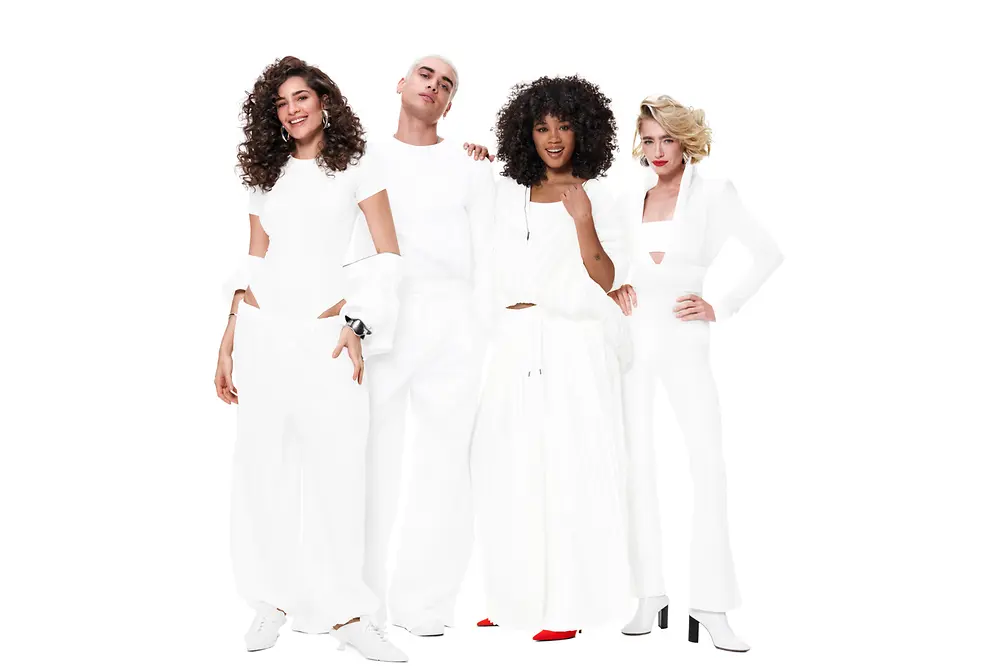
What connects all Schwarzkopf brands is captured in the claim: “For Every You.” For everyone, just as they are. With straight or curly hair, natural waves or freshly colored. Regardless of hair structure, routine or location. Because hair is never just hair. It is expression. Part of an identity shaped by music, fashion and pop culture. That’s how Lukas sees it. That is why Schwarzkopf is present at events, for example as a sponsoring partner at the Primavera Sound Festival in Barcelona, at Fashion Weeks in Paris and London. Music, fashion, film and TV are the fields where the brand shows up.
But for Lukas, it’s about more than visibility. The music sponsorship makes festivals possible and supports emerging careers. And through the global education initiative Shaping Futures, Schwarzkopf supports young adults around the world who would otherwise have no access to hairdressing training: Stylists from within the Schwarzkopf community take time off to travel and teach their craft to others. “We don’t just want to take from culture. We want to give something back.” What all of this ultimately makes possible is summed up by Ann-Christin: “When my hair really sits perfectly, when everything works in the morning: that feeling of being invincible. If you leave the house like that, it can make all the difference between a good day and a bad one.”
125 years is long enough to know what changes. And what doesn’t. Hairstyles come and go, trends rise and fall. But the feeling of looking good when you walk out the door in the morning: That was relevant in 1898, and it still is today. Martha Schwarzkopf was one of the firsts to understand it: Those who stay close to people build brands that last.